Apr 16, 2013
The ICJ, FIDH and EMHRN call on the Moroccan authorities to comprehensively reform the judiciary and to bring it in line with international standards.
Reforms should be aimed at ending effective executive control over the Higher Judicial Council, reforming the statute of magistrates, ensuring the independence of prosecutors and removing the military court’s jurisdiction over civilians.
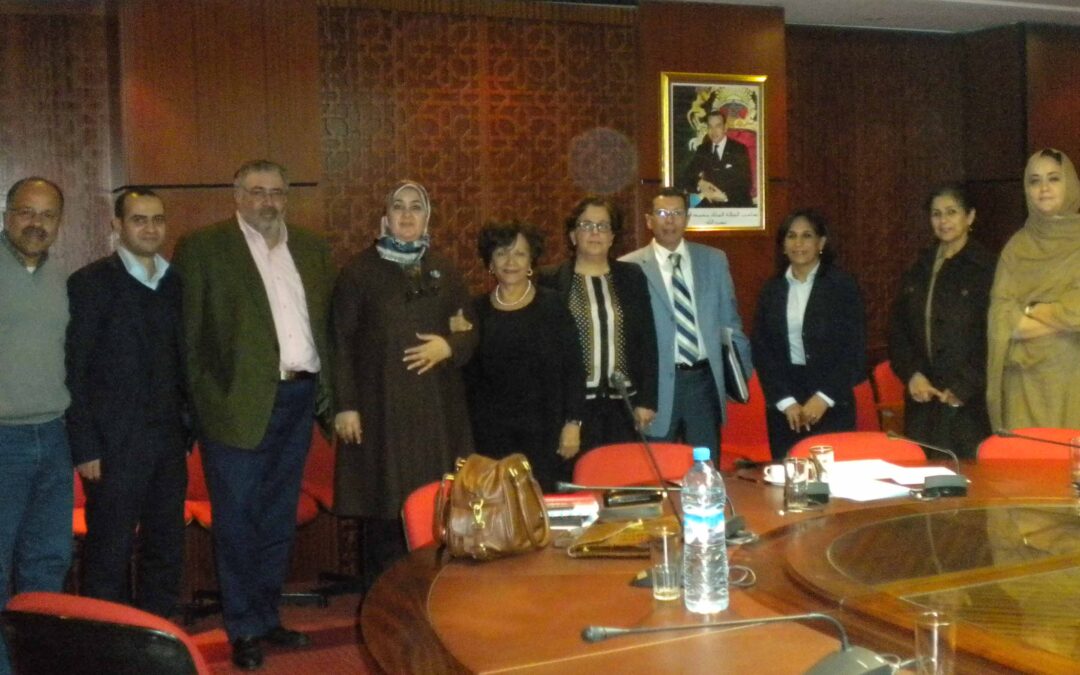
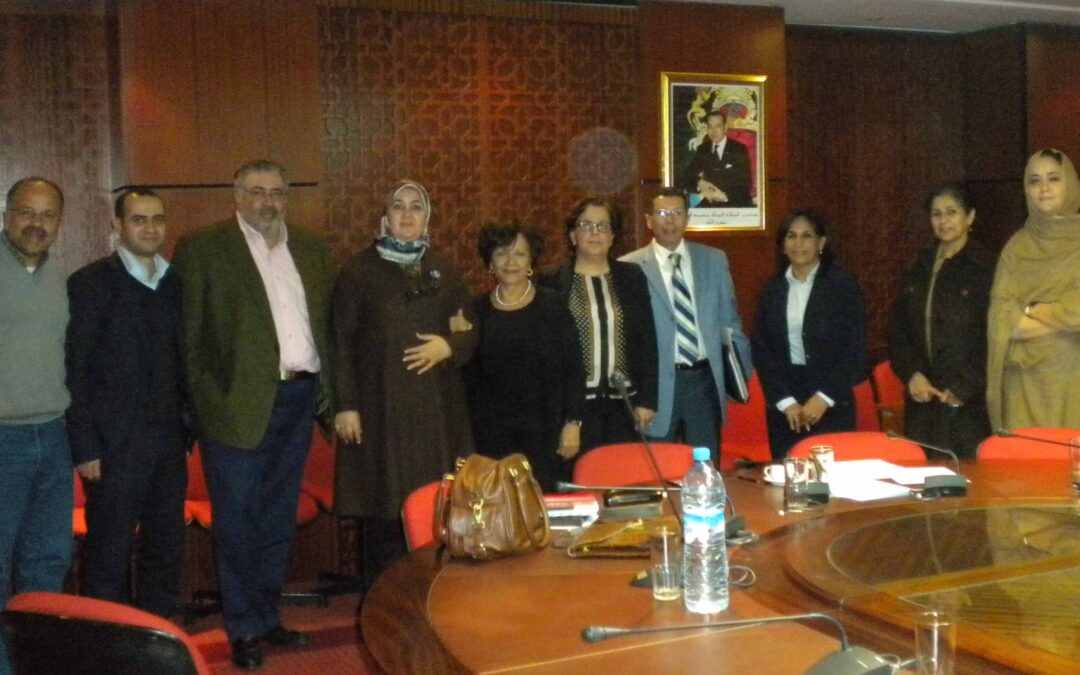
The call comes as the ICJ, the International Federation for Human Rights (FIDH) and the Euro-Mediterranean Human Rights Network (EMHRN) ended a high-level mission to Morocco to assess the current legal framework and its adherence to the principles of judicial independence, impartiality and accountability.
In a memorandum addressed to the Moroccan authorities, the three organizations formulated 20 specific recommendations for reform.
“The Moroccan authorities should amend the law to put an end to the comprehensive control the executive exercises over the career of judges, including their nomination, promotion and disciplinary proceedings against them, and should adopt a new law on the Higher Judicial Council”, said Souhayr Belhassen, FIDH president.
In addition, the Moroccan Military Code extends the jurisdiction of military tribunals to try civilians, in contravention of international law and standards. It fails to provide full guarantees of fair trial by a competent, independent and impartial tribunal, including the rights to defence and to appeal.
“The Moroccan authorities must end the use of military courts to try civilians and limit the jurisdiction of military tribunals to military offences and personnel only”, said Michel Tubiana, EMHRN president.
The organizations reiterated that the Moroccan authorities should also take immediate measures to end executive control over the Office of the Public Prosecutor.
“The subordination of Moroccan prosecutors to the Minister of Justice has had an adverse impact on the investigation and prosecution of human rights abuses. Moroccan authorities should act to ensure that prosecutors are able to carry out their duties independently, impartially and in defence of human rights”, said Said Benarbia, ICJ senior legal adviser for the Middle East and North Africa (MENA) programme.
During the mission, the delegation met with Mr. Mustapha Ramid, Minister of Justice; Mr. Karim Ghallab, President of the Deputies Assembly; Mr. Omar Dkhil, President of the Justice and Legislation Commission of the Counsellors Assembly; Mr. Driss El Yazami, President of the National Council for Human Rights; the Parliamentarian Network against the Death Penalty; and civil society representatives, including human rights organisations. These organizations have persistently called upon the Moroccan authorities to reform the judicial system.
The delegation was composed of Souhayr Belhassen, FIDH president; Michel Tubiana, EMHRN president; and Said Benarbia, ICJ senior legal adviser for the MENA programme.
Contact:
Said Benarbia, ICJ Senior Legal Adviser of the Middle East and North Africa Programme, tel: 41 22 979 38 17, e-mail: said.benarbia(a)icj.org
Morocco-Mémorandum sur la réforme du pouvoir judicaire-mission report-2013-ar (full text in pdf)
Apr 16, 2013 | Communiqués de presse, Nouvelles
Aujourd’hui, la CIJ, la FIDH et le Réseau euro-méditerranéen des droits de l’Homme (REMDH) ont appelé les autorités marocaines à réformer le système judiciaire en profondeur et à le mettre en conformité avec les normes internationales.
Les réformes devraient viser à mettre un terme au contrôle effectif de l’exécutif sur le Conseil supérieur de la magistrature ; à réformer le statut des magistrats ; garantir l’indépendance des procureurs et retirer aux tribunaux militaires leur compétence pour juger des civils.
Cette déclaration intervient au terme d’une mission de haut niveau effectuée au Maroc par les trois organisations afin d’évaluer le cadre juridique actuel et son respect des principes relatifs à l’indépendance, l’impartialité et la responsabilité du pouvoir judiciaire. Dans un mémorandum adressé aux autorités marocaines, les organisations ont formulé 20 recommandations spécifiques portant sur la réforme.
« Les autorités marocaines devraient amender la législation afin de mettre fin au contrôle global exercé sur la carrière des juges, notamment leur nomination, promotion et les procédures disciplinaires à leur encontre, et devraient adopter une nouvelle loi portant sur le Conseil supérieur de la magistrature » a déclaré Souhayr Belhassen, Présidente de la FIDH.
Par ailleurs, le code militaire marocain étend la juridiction des tribunaux militaires pour juger des civils, et ce, en contradiction avec le droit et les normes internationales. Il ne prévoit pas de garanties à un procès équitable par un tribunal compétent et indépendant, notamment les droits à la défense et de faire appel.
Morocco-Independent Judiciary-press release-2013-Fr (Communiqué de presse complet en PDF)
Morocco-Mémorandum sur la réforme du pouvoir judicaire-mission report-2013-fr (Texte complet en PDF)
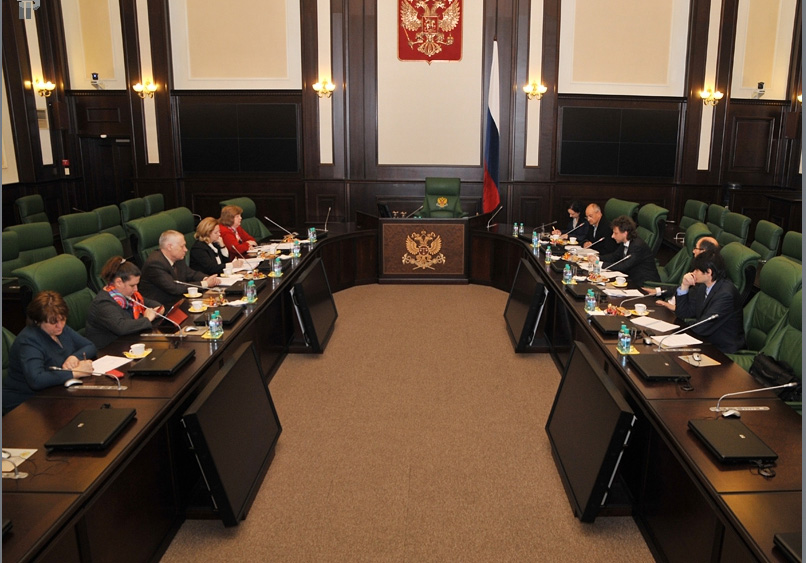
Apr 12, 2013 | News
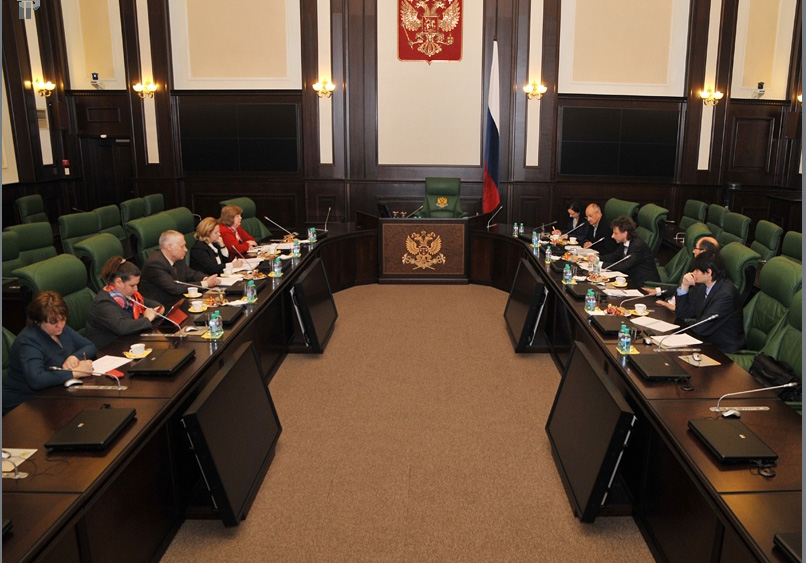 On Monday 15 April, the ICJ will hold a roundtable seminar with judges of the Russian Federation’s highest courts, on disciplinary action against judges in the Russian Federation.

Apr 5, 2013 | News
The ICJ urged the Cambodian Bar Association to make it clear that its new Code of Ethics, launched today, does not restrict the freedom of lawyers to express their opinions.
Article 17 of the new Code of Ethics states (in an informal translation by the ICJ) that “All interventions made publicly or through public media by lawyers in their capacity as lawyers may be permitted only within the framework of strict compliance with the duties of the legal profession. Such interventions require diligence.”
This language replaces Article 15 of the 1995 Code, which demanded all lawyers in Cambodia to “inform” or “consult” the Bar President before making media statements.
“The language of the new Article 17 is an improvement over the old Code, but it is ambiguous and raises fears that lawyers will not be able to exercise their right to express their opinions freely,” said Emerlynne Gil, ICJ’s International Legal Advisor on Southeast Asia. “The Cambodian Bar Association must clarify that under Article 17, lawyers, like all others, can address important legal and policy issues publicly and openly.”
The ICJ asserted that the Bar Association must clearly and publicly state that Article 17 shall not be construed to mean that lawyers must seek permission prior to engaging in public activities in their professional capacity.
The ICJ also expressed concern over the previous statements made by the Bar Association implying that lawyers could be sanctioned for expressing certain views of the country’s laws or legal reforms. During a press conference on 15 March 2013, the Bar Association said that the purpose of Article 17 was to prevent lawyers from misinterpreting the law and thus “making society chaotic”.
“The best means of increasing public awareness of the laws and strengthening the rule of law is to encourage greater public discussion,” said Emerlynne Gil. “Disagreements about the meaning of laws are part of the nature of the legal process and should be encouraged publicly.”
The ICJ recognizes the grave difficulties of facing the legal system in Cambodia, where fewer than 1000 active lawyers must provide services for a population of more than 14 million people. “We share the Cambodian Bar Association’s concerns about the need to uphold the professional competence and integrity of its members,” said Emerlynne Gil. “However, this concern should be addressed through efforts to improve legal education expertise rather than limiting the right of lawyers to freedom of expression.”
For questions and clarifications, please contact Ms. Emerlynne Gil, International Legal Adviser for Southeast Asia, tel. no. +662 619 8477, fax no. +662 6198479 or emerlynne.gil@icj.org
Apr 2, 2013 | News
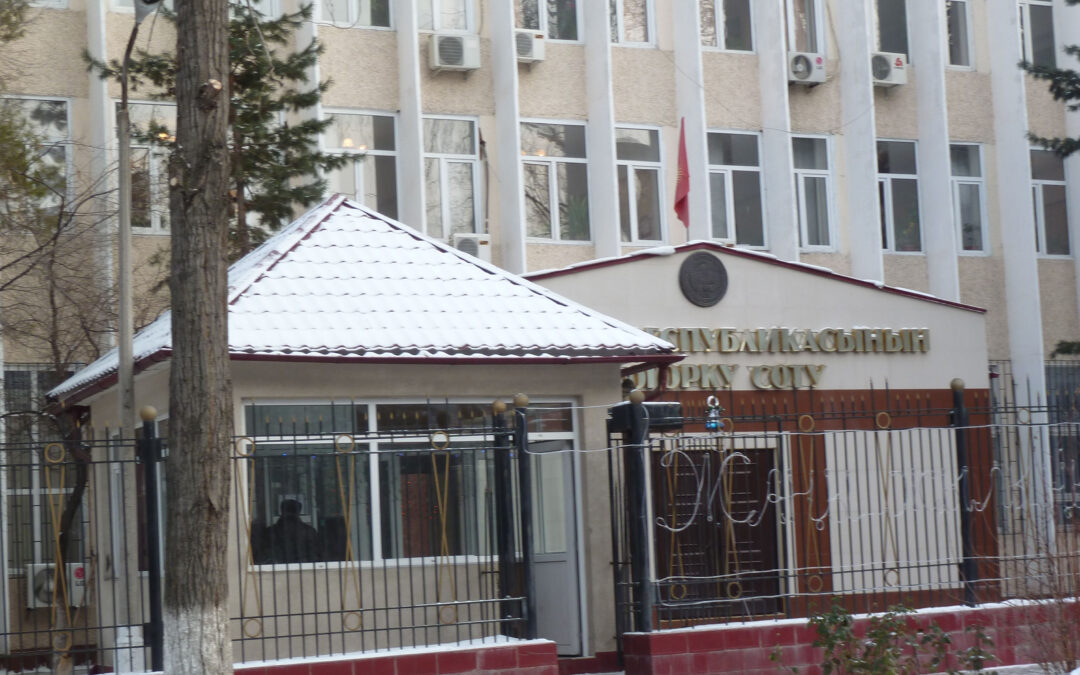
The ICJ today expressed serious concern at the physical assault of lawyers Tatiana Tomina and Ulugbek Usmanov at a Supreme Court hearing in Bishkek this morning.
The ICJ called on the Kyrgyzstan authorities to take effective measures to protect the physical security of lawyers as well as all other parties in court proceedings, and to hold accountable those responsible for today’s attacks.
The assaults took place during the Supreme Court hearing in the case against Shamshidin Niyazaliyev, who was recently acquitted of charges relating to the outbreak of widespread ethnic violence in the South of Kyrgyzstan in June 2010. During the hearing, several persons present in the courtroom subjected the two lawyers and the mother of Shamshidin Niyazaliyev to beatings. No immediate steps were taken by the Court to prevent the beatings, which continued for several minutes before security officers intervened.
“There has been a pattern of serious attacks on lawyers in Kyrgyzstan, but this is the first time that the authorities have failed to guarantee the security for lawyers at the Supreme Court”, Róisín Pillay, Director of the ICJ Europe Programme said today. “These attacks violate the international obligations of the Kyrgyz authorities to ensure the security of lawyers and to protect the right to a fair trial. No justice is possible unless all the parties to the judicial process are fully protected and lawyers are able to discharge their functions without harassment, or attack”.
International standards, including the UN Basic Principles on the Role of Lawyers, require that “where the security of lawyers is threatened as a result of discharging their functions, they shall be adequately safeguarded by the authorities”.
It is now essential for the credibility of the judicial system that today’s assaults are thoroughly and independently investigated and that those responsible are brought to justice, the ICJ emphasised.
According to lawyer Tatiana Tomina, the attacks began when about 15 men and women started insulting, pushing and punching the lawyers as they walked into the courtroom. The defendant’s mother, the only apparent supporter of the defendant allowed into the Court, was kicked and punched in the head. When the defence lawyers began to read a statement, several women attacked Tatiana Tomina and attempted to take documents from her by force. The panel of presiding judges did not attempt to prevent the beatings and security officers only appeared after several minutes had passed. Tatiana Tomina and the mother of the defendant were able to escape through the back door of the court. However Ulugbek Usmanov was unable to escape and suffered more serious injuries.
The Court adjourned the hearing for two hours. After the hearing resumed, only a few security persons were present in the courtroom and the defendant’s mother did not attend this part of the hearing. Following five minutes of deliberations the Supreme Court overturned the earlier acquittal.
Reportedly, at the hearing, defence statements were constantly interrupted, lawyers were insulted and prevented from speaking in defence of their clients and the Court refused to call any of the five witnesses of the defence. In her comments to the ICJ, lawyer Tatiana Tomina stated: “[i]n three years nothing has changed either in terms of the attitude towards lawyers or in terms of the investigation of criminal cases, which has not improved at all.” The ICJ has previously raised concerns at violence against lawyers in cases related to ethnic disturbances in the south of Kyrgyzstan in 2010.
CONTACTS
Róisín Pillay, Director, ICJ Europe Programme, roisin.pillay@icj.org
Temur Shakirov, Legal Adviser, ICJ Europe Programme, temur.shakirov@icj.org
ICJ condemns assaults on lawyers in Supreme Court (Full Text in Russian, PDF)