Nov 23, 2012 | News
 The ICJ expressed its grave concerns regarding the new Constitutional Declaration issued by President Mohamed Morsi on 22 November.
The President’s unilateral imposition of a constitutional framework on the Egyptian people, under which Constitutional Declarations, decisions, laws and acts taken by the President are shielded from any judicial review, undermines basic rule of law principles.
“Rather than establishing the rule of law and meeting the democratic aspirations of the Egyptian people, President Morsi perpetuates the practices of the old regime by denying the rights of Egyptians to fully participate in the conduct of public affairs and to challenge executive decisions and actions”, said Said Benarbia, ICJ Senior Legal Advisor for the MENA Programme. “The Egyptian authorities must change course to ensure that the new Constitution is in line with international rule of law and human rights principles, and that the drafting and adoption process is transparent and inclusive.”
Under the Declaration, the President has arrogated to himself sweeping powers “to protect the goals of the revolution, including by tearing down the structure of the former regime, excluding its symbols in the state, society and the judiciary, and purging the Sate institutions”. All decisions taken by the President, since he took office and until a new Constitution is adopted and a People’s Assembly is elected, are characterized as “final and binding and cannot be appealed by any way or to any entity. Nor shall they be suspended or cancelled and all lawsuits related to them and brought before any judicial body against these decisions are annulled”.
The ICJ also expresses its concern about the impact of the new Constitutional Declaration and the decision of President Morsi to dismiss the Prosecutor General on the independence of the judiciary.
Under international standards, all disciplinary, suspension or removal proceedings against members of the judiciary must be determined in accordance with well-established procedures that guarantee the right to a fair and transparent hearing and to an independent review.
Only an independent body can ensure the fairness of these proceedings, the ICJ stresses.
In a report published last week, the ICJ described how the Egyptian authorities have failed to ensure the drafting of a new Constitution in compliance with international principles of inclusive participation and transparency. The report concludes that the draft Constitution conflicts with Egypt’s obligations under international human rights law.
Contact:
Saïd Benarbia, Middle East & North Africa Senior Legal Adviser, ICJ, t +41 22 979 3817; e-mail: said.benarbia(at)icj.org
Alice Goodenough, Middle East & North Africa Legal Adviser, ICJ, t +41 22 979 3811; e-mail: alice.goodenough(at)icj.org

Oct 31, 2012 | News
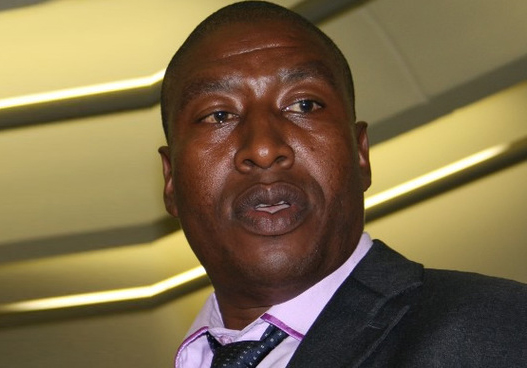 The ICJ welcomed the judgment issued on 24 October 2012 by the Zimbabwe High Court in favour of Farai Maguwu, a human rights defender and director of the Centre for Research and Development.
In September 2011, members of the Central Intelligence Organisation (CIO) confiscated a number of Farai Maguwu’s possessions, including cash, a laptop computer, a camera, and bank cards, at the Harare International Airport while he was about to depart for a human rights conference in Ireland.
The ICJ is concerned that the seizure of property may have been undertaken as an attack on Farai Maguwu for his legitimate human rights work.
According to media reports, Hon. Justice Mathonsi ordered, “the seizure of the applicant’s property by the State agents…be and is hereby declared wrongful, unlawful and unjustified”.
Since the confiscation of his property by the CIO over a year ago, no charges had been brought against Mr Maguwu, neither was his property returned.
Justice Mathonsi affirmed that deprivation of property must only be done in accordance with due process of law. Farai Maguwu had not been advised of the legal basis or reasons for the seizure of his property.
“We congratulate the judiciary of Zimbabwe for this judgment which adheres to the principles of the rule of law, justice and respect for human rights. Furthermore, it is a reminder to State agents that in carrying out their duties they ought to do so within the parameters of the rule of law,” commented Martin Masiga, Deputy Director of the ICJ Africa Regional Programme.
The ICJ calls on the Zimbabwean judiciary to continue to uphold the rule of law and fulfil their responsibility in protecting human rights in Zimbabwe.
Contact:
Martin Masiga, Deputy Director, ICJ Africa Regional Programme, t: +27 11 02482

Oct 30, 2012 | News
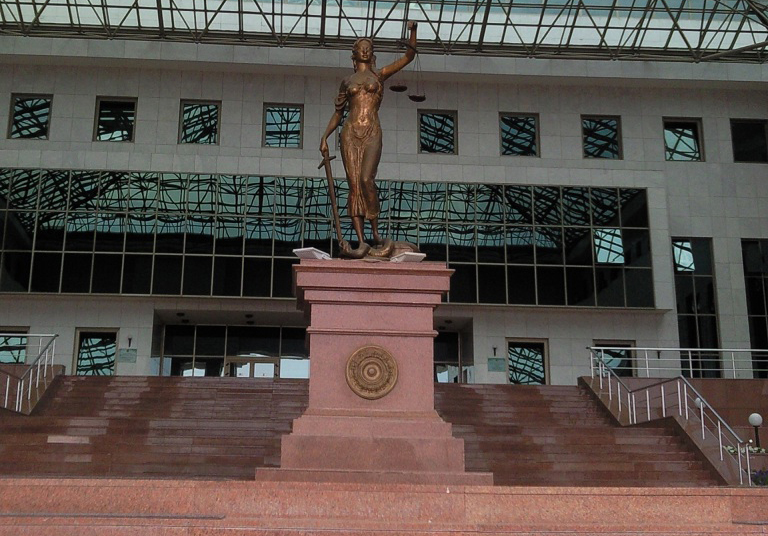 The ICJ today expressed its concern at disciplinary sanctions and threats of criminal prosecution against Judge Aliya Zhumasheva of the Kachirsk District Court of Pavlodar Region in Kazakhstan.
Oct 11, 2012
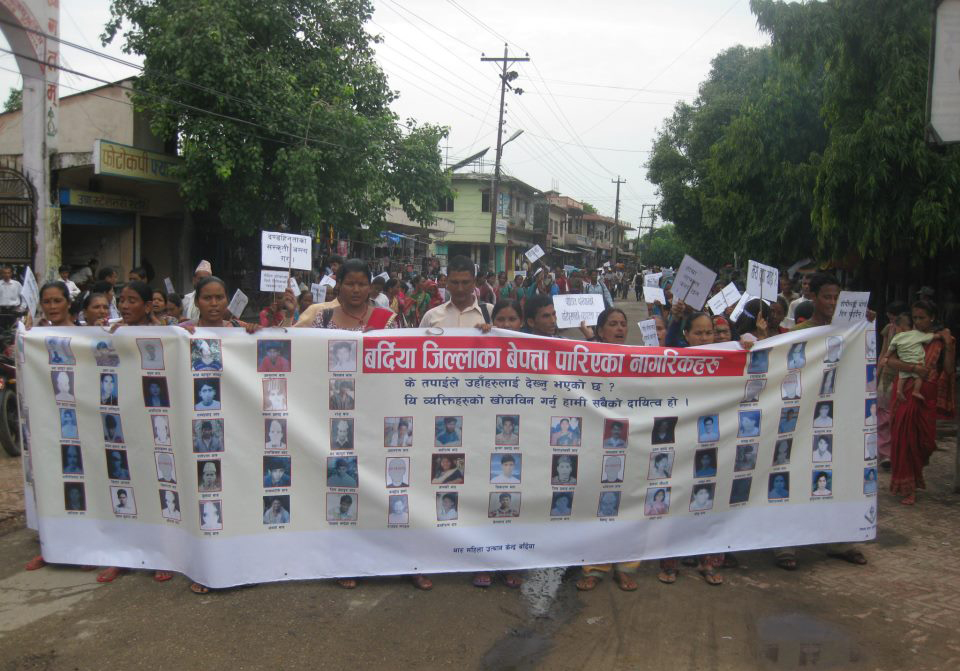 Nepal’s government must ensure accountability for the thousands of violations perpetrated by security forces and Maoists during the country’s civil war, as documented in a new report by the UN, the ICJ said today.
In a Briefing Paper “ Compromising Justice: Nepal’s Proposed Ordinance on Commission on Disappeared Persons, Truth and Reconciliation (2012)” issued today, the ICJ highlighted recent efforts by the Nepali government to undermine accountability by weakening proposed transitional justice mechanisms and promoting suspected violators.
The ICJ also welcomed the report by the Office of the High Commissioner on Human Rights (OHCHR) conflict-era human rights violations, released against the direct protest of the Government of Prime Minister Baburam Bhattarai. The “OHCHR Conflict Report” documents approximately 9000 violations, with responsibility pointing to both the State and the Maoists.
“This sobering report chronicles the devastating human impact of the human rights and humanitarian law violations that continue to burden the victims and their families,” said Sam Zarifi, ICJ’s Asia director. “We applaud the OHCHR but also urge it and the international community to not relegate this report to the shelf, but to ensure that it is introduced at all levels as a basis for advocating for truth, justice, and reparations.”
“This report is all the more important as it comes against the backdrop of systematic efforts by Nepal’s government to avoid accountability and in fact to reward some of those suspected of serious violations,” Zarifi said.
ICJ’s Briefing Paper “ Compromising Justice: Nepal’s Proposed Ordinance on Commission on Disappeared Persons, Truth and Reconciliation (2012)” highlighted the serious shortcomings of a proposed Ordinance issued by the Cabinet that backtracks on previous commitments to justice included in the country’s 2006 Comprehensive Peace Accord, the 2007 Constitution, as well as decisions of the Supreme Court.
ICJ reiterated its strong condemnation of the promotion of Kuber Singh Rana to IGP of the Nepal Police 13 September 2012, and of Raju Basnet to Brigadier General 4 October 2012. Both men have been implicated by the country’s Supreme Court in decisions ordering full investigations of their culpability.
“Instead of supporting the Nepali criminal justice system and the promised transitional justice mechanisms, the Nepali government is actively reneging on its promises to the Nepali people to provide truth, accountability and reconciliation,” Zarifi said.
As reaction has mounted against the promotions by national and international actors, the ICJ also noted with concern the growing climate of intimidation faced by judges, lawyers and human rights defenders.
There are credible reports of intimidating phone calls against those contesting the promotions.
Public demonstrations on 7 and 9 October 2012 were met with unnecessary use of force by the police, including lathi charges resulting in over a dozen injuries.
“Nepal’s international supporters should press the government to meet its commitments and its obligations under international law,” Zarifi said. “Meanwhile, all countries have an obligation to cooperate in investigation and prosecution of any individuals facing credible allegations of serious violations of international human rights law and humanitarian law, including prosecution of suspected perpetrators under the doctrine of universal jurisdiction.”
Contact:
In Kathmandu, for ICJ, Govinda Sharma: t +977-985-106-1167
In Bangkok, for ICJ Asia-Pacific, Sam Zarifi: t +66-807-819-002
Nepal-TJ Ordinance accountability-analysis brief-2012