Apr 7, 2021 | News
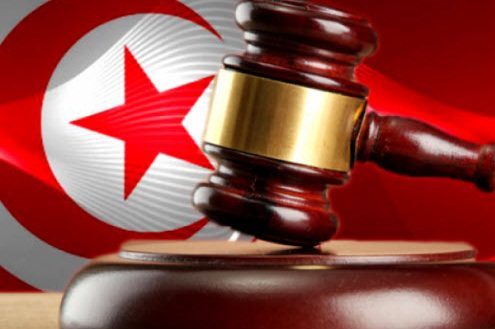
Victims of gross human rights violations must be provided with effective reparations and guarantees of non-recurrence by Tunisia’s Specialized Criminal Chambers (SCC), judges and prosecutors asserted during a workshop held by the ICJ and the Association of Tunisian Magistrates (AMT) on 3 and 4 April.
The workshop highlighted the need for the SCC to adopt restitution, compensation, rehabilitation and satisfaction measures to achieve to the fullest extent possible reparation for material and moral damage suffered by victims of gross human rights violations in Tunisia.
Participants further emphasized that SCC decisions should include recommendations on guarantees of non-recurrence, including on legal and institutional reforms.
The workshop was attended by more than 25 Tunisian judges and prosecutors attached to the 13 Specialized Criminal Chambers. Discussions involved also international experts and ICJ representatives.
“It is important that the SCC, consistent with international standards, adopt a comprehensive notion of victims and persons entitled to reparation,” said Philippe Texier, ICJ Commissioner.
“In this respect, reparative measures should focus not only on direct victims, but also indirect victims, including the immediate family or dependants of the direct victim and persons who have suffered harm in intervening to assist victims,” he added.
Federico Andreu-Guzmán, international expert, noted the non-derogable nature of the right to reparation under international law and that SCC should seek to ensure that all their decisions comply with this right.
“SCC decisions should include wide-reaching recommendations in order to guarantee that the violations will not be repeated,” said Said Benarbia, Director of ICJ’s Middle East and North Africa Programme.
The workshop also offered the opportunity to participants to discuss a set of recommendations targeting the High Judicial Council and its role in supporting the SCC.
The recommendations, which were developed by a group of SCC judges and prosecutors following the ICJ’s roundtable of 13-14 March, aim to find joint approaches to address ongoing procedural obstacles before the SCC and will be subject of future meetings and roundtable discussions organized by the ICJ and the AMT.
Contact
Valentina Cadelo, Legal Adviser, ICJ Middle East and North Africa Programme, e: valentina.cadelo(a)icj.org
Asser Khattab, Research and Communications’ Officer, ICJ Middle East and North Africa Programme, e: asser.khattab(a)icj.org
Mar 30, 2021 | News
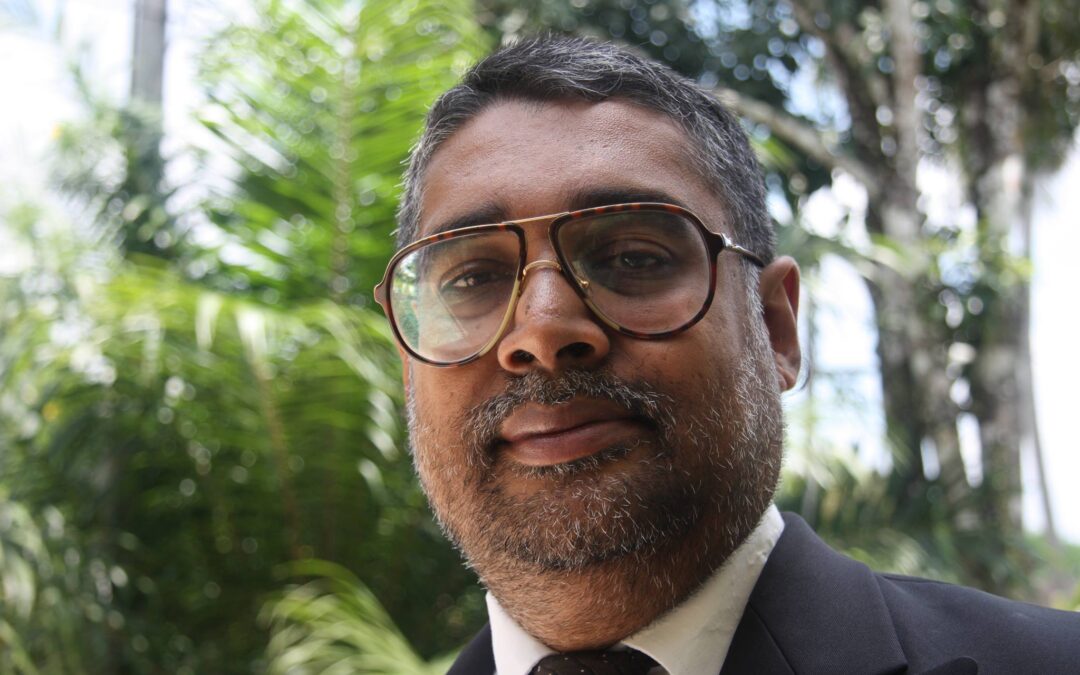
The ICJ today called for the reform of the country’s law on contempt of court to prevent their abuse and for the withdrawal of the contempt action filed against human rights lawyer Charles Hector.
Charles Hector faces potential contempt of court charges over a letter he sent to an officer of the Jerantut District Forest Office, as part of trial preparation. He is currently representing eight inhabitants of Kampung Baharu, a village in Jerantut, Pahang, in their civil lawsuit against two logging companies, Beijing Million Sdn Bhd and Rosah Timber & Trading Sdn Bhd.
The companies applied for leave to commence contempt of court proceedings against Charles Hector and the defendants. They claim that his letter violates an interlocutory injunction order prohibiting the villagers and their representatives from interfering with or causing nuisance to their work.
“Charles Hector is being harassed and intimidated through legal processes for carrying out his professional duties as a lawyer and gathering evidence in preparation for trial. The Malaysian authorities must act to protect human rights lawyers from sanctions and the threat of sanctions for the legitimate performance of their work,” said Ian Seiderman, the ICJ’s Legal and Policy Director.
The harassment of Charles Hector through legal processes violates international standards such as the UN Basic Principles on the Role of Lawyers that make clear that lawyers must be able to perform their professional functions without intimidation, hindrance, harassment or improper interference.
Contempt of court, whether civil or criminal, may result in imprisonment and fines. Malaysia’s contempt of court offense is a common law doctrine and not codified statutorily.
“Fear of contempt charges stands to cast a chilling effect on the work of human rights lawyers and defenders. This further reinforces how Malaysia’s contempt of court doctrine needs to be urgently reformed as it is incompatible with international human rights law and standards,” said Seiderman.
The ICJ calls for the reform of Malaysia’s contempt of court doctrine to ensure clarity in definition, consistency in procedural rules and sentencing limits pertaining to criminal contempt cases. This reform should be in line with recommendations by the Malaysian Bar that the law of contempt be codified statutorily to provide clear and unequivocal parameters as to what really constitutes contempt.
Background
In September 2019, the two logging companies reportedly obtained approvals from the Jerantut District Forest Office to carry out logging in the Jerantut Tambahan Forest Reserve. The eight villagers are from a community many of whose residents have been protesting against the logging. The villagers depend on the forest reserve for clean water and their livelihoods.
On 14 July 2020, the companies filed a writ of summons against the eight villagers in the Kuantan High Court. The writ stated that the plaintiffs had applied for an injunction order to stop the defendants from preventing the companies’ workers from carrying out their works and spreading “false information” online.
On 5 November 2020, the companies successfully obtained an interlocutory injunction order. It was reported that the injunction order prohibits the defendants and their representatives from interfering with the approval given to the plaintiffs by the District Forest Office or causing nuisance to the work of the plaintiffs in any manner whatsoever, including physically, online or by communication with the authorities.
On 17 December 2020 Charles Hector sent a letter on behalf of his clients to Mohd Zarin Bin Ramlan, an officer of the Jerantut District Forestry Office, seeking clarifications on a letter sent by the office on 20 February 2020.
The logging firms contend that the letter violated the injunction order. In January 2021, the companies filed an ex parte application for leave to commence contempt of court proceedings against Charles Hector and the eight villagers.
The hearing was postponed until 25 March 2021 at the Kuantan High Court. On 25 March 2021, the plaintiff’s lawyer opposed the presence and participation of Charles Hector’s lawyer on the grounds that it was an ex parte application, which was contested by Charles Hector’s lawyer. The Court decided to adjourn the hearing to 6 April 2021.
Contact
Boram Jang, International Legal Adviser, e: boram.jang(a)icj.org

Mar 28, 2021 | News
The credibility of the criminal trials currently ongoing before Tunisia’s Specialised Criminal Chambers depends on their capacity to deliver justice and reparation to victims and their families in a manner consistent with international law, said more than 25 Tunisian lawyers and human rights defenders at a workshop organized with the ICJ and international experts.
The workshop, which was held in Tunis on 25 and 26 March, aimed at enhancing the capacity of participants to use international law in the preparation and litigation of cases before the Specialized Criminal Chambers (SCC) effectively.
The participants discussed the application of international law and standards relating to the notions of victims and persons entitled to reparation before the SCC. Participants also considered the various forms of reparation, including restitution, compensation, rehabilitation and satisfaction, and guarantees of non–repetition.
The workshop was attended by international and Tunisian experts, along with ICJ representatives.
The Director of ICJ’s Middle East and North Africa Programme, Said Benarbia, emphasized the importance of guaranteeing the right of victims to effective remedies and reparations, especially in transitional justice contexts.
Mondher Cherni, the Secretary–General of the Tunisian Organization Against Torture (OCTT), underlined that reparations must be comprehensive. “Tunisian courts should ensure the adoption of a comprehensive notion of harm, while addressing the violations suffered by victims in Tunisia,” he said.
Rachel Towers, Legal Advisor at Dignity (The Danish Institute Against Torture)highlighted that there is no justice without remedies and reparations; accordingly, Tunisia should ensure that victims of gross human rights violations may enjoy these rights effectively.
Clive Baldwin, Senior Legal Advisor at Human Rights Watch, said that “Tunisia is not only bound to punish and sanction gross human rights violations, but also to prevent them from occurring in the future.” Baldwin also emphasized the importance of providing a comprehensive set of guarantees of non–repetition, including legislative and institutional reforms aiming to ensure effective civilian control of military and security forces and the independence of the judiciary.
Participants also addressed the lack of compliance in law and practice of the Tunisian transitional justice framework with international law and standards.
“The functioning and delivery of transitional justice in Tunisia has been enduring numerous and complex challenges over the last years,”said Benarbia.“The Tunisian authorities should immediately respond to these challenges with a holistic action plan, based on concrete reforms and solutions” Benarbia added.
Contact
Valentina Cadelo, Legal Adviser, ICJ Middle East and North Africa Programme, e: valentina.cadelo(a)icj.org
Asser Khattab, Research and Communications’ Officer, ICJ Middle East and North Africa Programme, e: asser.khattab(a)icj.org

Mar 19, 2021 | News
The ICJ called today on the Turkish authorities to immediately release human rights defender and lawyer Öztürk Türkdoğan, who was arrested this morning after an unlawful search of his home. The charges against him, if any, are unkown and he is currently being held without access to his lawyer.
Öztürk Türkdoğan is the chair of the Human Rights Association and a lawyer and member of the Ankara Bar Association.
“The arrest and search of Öztürk Türkdoğan’s continues a systematic pattern of misuse of the criminal law to harass and persecute human rights defenders and lawyers in Turkey in recent years,” said Roisin Pillay, ICJ’s Europe and Central Asia Programme Director. “Öztürk Türkdoğan must be released immediately. If he remains in detention then he must be ensured immediate and confidential access to a lawyer, and be informed of the nature of any charges against him and brought promptly before a court.”
The arrest occurred during a search of Öztürk Türkdoğan’s home without the presence of a lawyer, which is in direct contravention of Turkish criminal procedural law.
While no information has been made available on the charges against Öztürk Türkdoğan, he is currently being detained without access to a lawyer for 24 hours, which indicates that the charges are likely related to terrorism or to offences against the State. These offences, contrary to obligations under international human rights law, are vaguely and broadly defined and have been long used and abused by prosecutors in Turkey to suppress human rights defenders, lawyers and political opponents.
Under international human rights law, anyone arrested has a right to prompt and confidential access to a lawyer, and to information on the charges against them. Arrests and searches of homes must not be arbitrary and must be carried out in compliance with international standards and national laws and procedures.
“Hundreds of lawyers, judges and prosecutors have been improperly arrested, harassed and detained in the past few years by Turkish authorities ” said Roisin Pillay. “Using the criminal justice system in this way is contrary to the most fundamental principles of the rule of law.”
Background
Systematic violations of human rights in investigation and prosecution of counter-terrorism offences in Turkey have also been documented by the UN Special Rapporteur on the promotion and protection of human rights while countering terrorism, the UN Special Rapporteur on the situation of human rights defenders, the UN Special Rapporteur on the independence of judges and lawyers, theWorking Group on Arbitrary Detention, the Special Rapporteur on the rights to freedom of peaceful assembly and of association and the Special Rapporteur on the promotion and protection of the right to freedom of opinion and expression, and the Commissioner for Human Rights of the Council of Europe.
The ICJ has extensively documented these violations:

Mar 9, 2021 | News
Tunisian authorities must respect the rights to freedom of expression, association and peaceful assembly, and stop the systematic targeting of protesters, lawyers and civil society activists, said the ICJ today.
البيان الصحفي باللغة العربية مرفق أدناه
Since the outbreak of social justice protests on 15 January 2021, Tunisian security forces have systematically targeted protesters, including minors, lawyers and civil society activists.
Over the last weeks, reports of abuses at the hands of the Tunisian security forces have included: hundreds of arbitrary arrests; deaths in custody in disputed circumstances; physical assaults; rape and death threats; and refusing detainees access to legal counsel. While to date more than half of the people arrested since the beginning of the protests have been released, only a few prosecutions arising from the security forces’ systematic campaign of arrests have taken place, and hundreds of people are still in custody awaiting to be brought before a judge. According to the information available to the ICJ, individuals are being prosecuted under different charges, including “insulting the police” and “abuse of morals”.
“The systematic targeting of peaceful protesters and the other abuses that we have witnessed in recent weeks are clear instances of the wider impunity that Tunisian security forces have continued to enjoy over decades,” said Said Benarbia, the ICJ’s MENA Programme Director
“The Tunisian authorities should immediately halt these practices by reforming the country’s security legislation and open independent and impartial investigations into these abuses.”
To date, Tunisia has failed to adopt a comprehensive reform of its security legislation in line with the Constitution and the country’s obligations under international human rights law and standards.
As reported on multiple occasions, investigations into reports of human rights violations by Tunisian security forces have rarely led to successful prosecutions of perpetrators in the past. Moreover, while since 2018 prosecutions arising from police abuses committed under the previous regime have started before the Specialized Criminal Chambers, numerous obstacles continue to affect the progress of trials, and no verdict has been delivered to date.
“It is time for the Tunisian authorities to abide by the Constitution and international human rights law and standards and commit to a complete end to the security forces’ oppressive practices,” Benarbia added.
“Only by undertaking a full review of Tunisia’s security laws and bringing perpetrators of human rights violations to justice will the country be able to break this cycle of abuses and ensure full respect for fundamental freedoms and human rights.”
Contact
Said Benarbia, Director, ICJ Middle East and North Africa Programme, t: +41-22-979-3817; e: said.benarbia(a)icj.org
Valentina Cadelo, Legal Adviser, ICJ Middle East and North Africa Programme, e: valentina.cadelo(a)icj.org
Asser Khattab, Research and Communications’ Officer, ICJ Middle East and North Africa Programme, e: asser.khattab(a)icj.org
Download
Press release in English and Arabic.