Nov 15, 2020 | News
The removal of Peru’s President Martin Vizcarra by the country’s Congress has undermined respect for the principle of separation of powers and precipitated a rule of law crisis, the ICJ said today.
On 9 November, Peru’s Congress used the seldom-used article 113(2) of the country’s constitution to ‘vacate’ Vizcarra’s term on the ground of “permanent moral incapacity” for office and swore in the President of the Congress, Manuel Merino, as President of the country.
The underlying justification for Vizcarra’s removal was allegations of corruption stemming from the time when he was Governor of Moquequa state in 2011-2014. Those allegations are already under investigation by the Office of the Prosecutor.
The ICJ notes that Peru’s Constitutional Court has a pending case to review the constitutional consistency of the use of the grounds of “permanent moral incapacity” clause for ordinary crimes. The Peruvian Constitution contemplates a separate procedure of impeachment that has not been followed in this case. Yet Congress applied the clause of “moral incapacity” in hasty proceedings with that decision pending.
“Peru’s congress has preempted the decision of the Constitutional Court and applied an overly expansive and highly contested legal interpretation of article 113(2) to oust a president, thus implicating the authority of the Judicial branch as well as the Executive,” said ICJ Secretary General Sam Zarifi.
“This overreach by the Legislative branch has launched the country into a rule of law crisis that also threatens respect for human rights in the country,” he added.
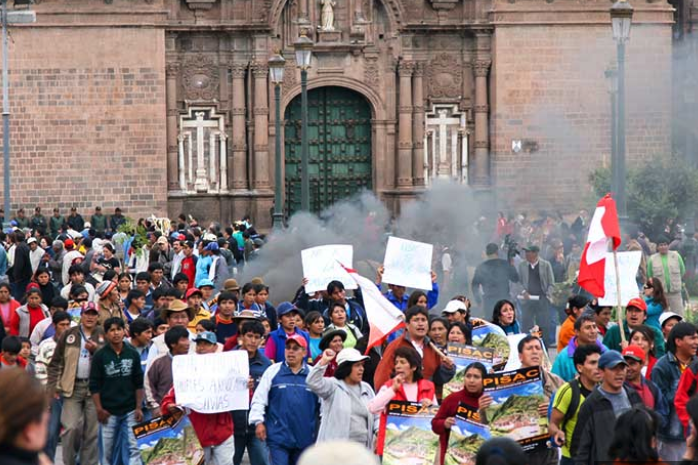
Protesters demonstrating against Vizcarra’s removal have faced ill-treatment and arbitrary arrest by police and security forces.
The ICJ calls on the Peruvian authorities to respect the right to freedom of assembly and peaceful protest and to desist from any form of unlawful use of force. Allegations of violations of ill-treatment and other human rights violations must be investigated promptly, thoroughly and impartially. The ICJ also urges respect of the independence of the judiciary, particularly as concerns the Constitutional Court and its functions.
Nov 12, 2020 | News
The ICJ, the Cairo Institute for Human Rights Studies (CIHRS), the Defender Center for Human Rights (DCHR), Lawyers for Justice in Libya (LFJL) and the Libyan Women’s Platform for Peace (LWPP) have issued today a joint statement on the assassination of lawyer and political activist Hanan al-Barassi .
The undersigned human rights groups are appalled by the assassination of lawyer and political activist Hanan al-Barassi in Benghazi on 10 November 2020, and call on the competent authorities to launch an independent, impartial and effective investigation into the killing and bring those responsible to justice through fair trials.
On 10 November, a group of unknown armed men shot al-Barassi in Benghazi city centre in broad daylight. Al-Barassi was known for her political engagement and criticism of the human rights violations and abuses and corruption allegedly committed by authorities in Eastern Libya and their affiliated militias. Al-Barassi was active on social media, and often posted videos on Facebook in which she criticised the Libyan Arab Armed Forces (LAAF). Her last video was posted a few hours before her killing.
Al-Barassi’s murder follows a disturbing pattern in recent years of violent attacks against prominent women activists who are critical of the authorities and affiliated militias. In June 2014, gunmen assassinated prominent human rights activist and lawyer Salwa Bugaighis. This was followed by the killing of former Derna Congress member Fariha Al-Berkawi on 17 July 2014, and human rights activist Entisar El Hassari on 24 February 2015. Women’s rights defender and member of the Tobruk-based House of Representatives Seham Sergiwa was abducted from her home by armed men on 17 July 2019, and her whereabouts remains unknown.
The failure of Libyan authorities to effectively investigate these attacks, despite public commitments to do so, has created an environment of impunity, in which women are frequently targeted, both online and offline, with threats, smear campaigns and violence for their political or human rights views. Al-Barassi’s assassination is also a stark demonstration of how online violence against women can carry over to have lethal consequences on the ground.
Such atrocities are prevalent in Libya today. The pattern of violence including enforced disappearances and assassinations of activists, human rights defenders, judges and journalists across the country is alarming, and will only continue in the absence of any effective, independent and impartial investigations. Addressing these crimes by holding the perpetrators to account must be a priority, including within any political process.
Al-Barassi’s killing has taken place as the Libyan Political Dialogue Forum (LPDF) continues talks aimed at ending the conflict and preparing for national elections, underscoring the importance of ensuring accountability and justice in the country. There can be no meaningful democratic transition in Libya until the basic security and human rights of the population are guaranteed.
Given the absence of any real commitment to effectively investigating ongoing crimes under international law being committed in Libya, the newly established Independent Fact-Finding Mission (FFM) on Libya must be urgently provided with the necessary resources to begin its investigations and preserve evidence without delay. We urge the Libyan authorities to fully cooperate with the FFM, and UN Member States to swiftly provide the needed support and adequate resources.
Signatories
- International Commission of Jurists (ICJ)
- Cairo Institute for Human Rights Studies (CIHRS)
- Defender Center for Human Rights (DCHR)
- Lawyers for Justice in Libya (LFJL)
- Libyan Women’s Platform for Peace (LWPP)
Find the Joint Statement in Arabic and English here:
Lybia-Hanan_Albarassi -JointStatement-2020-ARA
Lybia-Hanan_Albarassi -JointStatement-2020-ENG
Nov 2, 2020 | Advocacy, Cases, Legal submissions
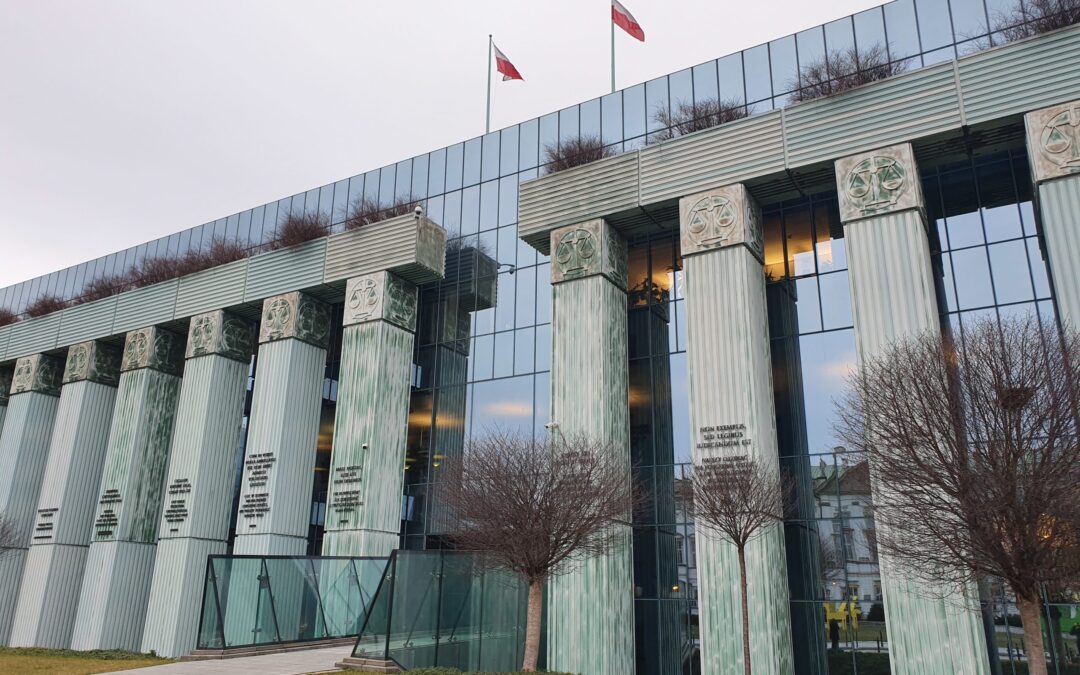
The ICJ submitted today a third party intervention to the European Court of Human Rights in a key case challenging the independence of the Disciplinary and Extraordinary Chambers of Poland’s Supreme Court.
In the case of Reczkowicz and Others v. Poland, the European Court of Human Rights will consider whether the recently established Disciplinary and Extraordinary Chambers of the Supreme Court of Poland may be considered an “independent and impartial tribunal” in order to satisfy the requirements of the right to a fair trial under article 6 of the European Convention on Human Rights (ECHR).
In its third party intervention, the International Commission of Jurists has submitted that a court cannot be considered as independent whenever the body that has appointed its members lacks guarantees of independence from the executive and legislative powers as enshrined in standards of the Council of Europe and the United Nations, including that at least half of its members be judges elected by their peers.
It further concluded that a court composed by judges appointed by a non-independent body or via a non-independent procedure will not be capable of constituting an independent and impartial tribunal under article 6 ECHR.
Poland- ECtHR-Reczkowicz and Others v Poland – TPI – ICJ – 2020 -ENG (download the third party intervention)
Oct 30, 2020
As the country votes in a referendum Sunday, the ICJ called on the Algerian authorities to withdraw proposed constitutional amendments and reboot the flawed and inadequate amendment process so as to ensure wide public participation and debate in achieving reform.
In a briefing paper published today, the ICJ emphasized that central objective of the process should be to ensure that the amendments and the rule of law and human rights provisions in particular fully comply with Algeria’s international law obligations.
On 7 May, a set of draft Constitutional amendments were released by the Committee of experts, established by the President, Abdelmadjid Tebboune, in response to the mass protest movement (Hirak) that erupted across Algeria since February 2019.
The final draft was approved by the Algerian Parliament on 10 September and will be voted on by the Algerian people in a referendum on 1 November.
ICJ’s briefing paper analyses both the drafting process and the content of the proposed draft Constitution in light of international law and standards, providing a number of recommendations to the Algerian authorities to bring the process of amending the Constitution into compliance.
The ICJ is concerned that such process has failed to respect the principles of inclusiveness, participation and transparency. The arrangements relating to the role and powers of the President, the military and judiciary stand as an obstacle to a clean break form authoritarianism and decades of poor human rights practices in Algeria.
The ICJ called for a Constitution that lays the foundations for the establishment of the rule of law, the separation of powers and judicial independence.
“Under the constitutional amendments, the military is unaccountable, the president’s powers are unbridled, and the judiciary is subordinated to the President and the executive,” said Said Benarbia, the ICJ’s MENA Programme Director.
“The amendments are a roadmap to the past, not to a genuine democracy in Algeria,” he added.
The consultation process took place hastily and briefly in the middle of the Covid-19 pandemic and with restrictions on the right to freedom of assembly, against the backdrop of the government’s crackdown on the Hirak leaders, activists and journalists.
“Only a constitutional reform process that allows for the requisite public participation and direct discussion to take place can lead to a Constitution reflective of the views of large categories of the society,” said Benarbia.
“The failure to satisfy this standard undermines the right of all Algerians to take part in the conduct of public affairs and to freely determine and choose the form of their Constitution and government.”
Background
In the briefing paper, the ICJ makes a number of recommendations to the Algerian authorities, including to ensure:
- Adequate time and facilities are provided for the Constitution-making process to allow for a comprehensive public dialogue and the production of a draft Constitution that fully represents the views of Algerians.
- The full accountability and civilian oversight of the armed forces and their effective subordination to a legally constituted civilian authority, and that their role is adequately defined in the Constitution and specifically limited to matters of national defence.
- The rule of law is fully embedded in the framework for the functioning of the State, including by ensuring the clear separation of powers, attribution of competences and checks and balances between the legislature, the executive and the judiciary.
- That the High Judicial Council is independent from the executive, including by amending its composition to exclude the President from its membership and ensuring that the majority of members are from the legal profession and are elected by judges; that it is pluralistic and gender representative; and that it is empowered to uphold the independence of the judiciary.
- The primacy of international human rights law over domestic law. To this end, unequivocally assert that internal law, including the Constitution, cannot be invoked or deployed as a justification for non-compliance with human rights treaties to which Algeria is a party or customary international law.
- That permissible limitations or restrictions to human rights are undertaken only for a legitimate purpose as defined in international human rights law, are precise, free of ambiguity, limited in time and necessary and proportionate to the legitimate purpose.
Contact:
Said Benarbia, Director, ICJ Middle East and North Africa Programme, t: +41-22-979-3817; e: said.benarbia(a)icj.org
Download
Algeria-NewConstitution-Advocacy-Analysis Brief-2020-ENG (full briefing paper, English, in PDF)
Algeria- New Constitution-News-2020-ARA (full story, Arabic, in PDF)
Algeria- New Constitution-Advocacy-Analysis Brief-2020-ARA (full briefing paper, Arabic, in PDF)
Oct 27, 2020 | Advocacy, Cases, Legal submissions
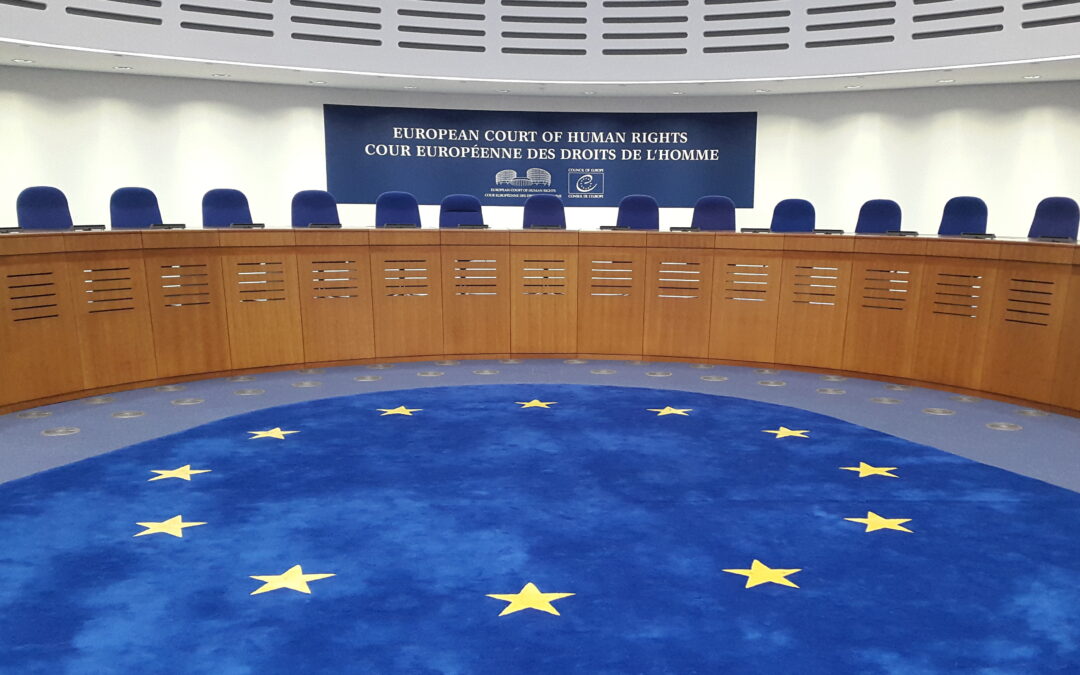
The ICJ and Amnesty International have presented today a third party intervention before the European Court of Human Rights in the case of the premature dismissal of Judge Waldemar Zurek from his position in the National Judicial Council.
In the case Zurek v. Poland, the ICJ and Amnesty International presented submissions on the scope of application of the right to a fair trial under Article 6.1 of the European Convention on Human Rights (ECHR) in cases relating to the role of an independent judiciary and its members through self-governance mechanisms (such as the National Council of the Judiciary) in light of international standards on judicial councils, judicial appointments, the judicial career and security of tenure; of the Court’s Convention jurisprudence; and of general principles on the rule of law and the role and independence of the judiciary.
They further submitted obervations on the scope of the right to freedom of expression under Article 10 ECHR as applied to judges, including those engaged in the administration of the judiciary.
ECtHR-AmicusBrief-Zurek_v_Poland-Advocacy-Legal-Submission-2020-ENG (download the third party intervention)