Oct 27, 2020 | News
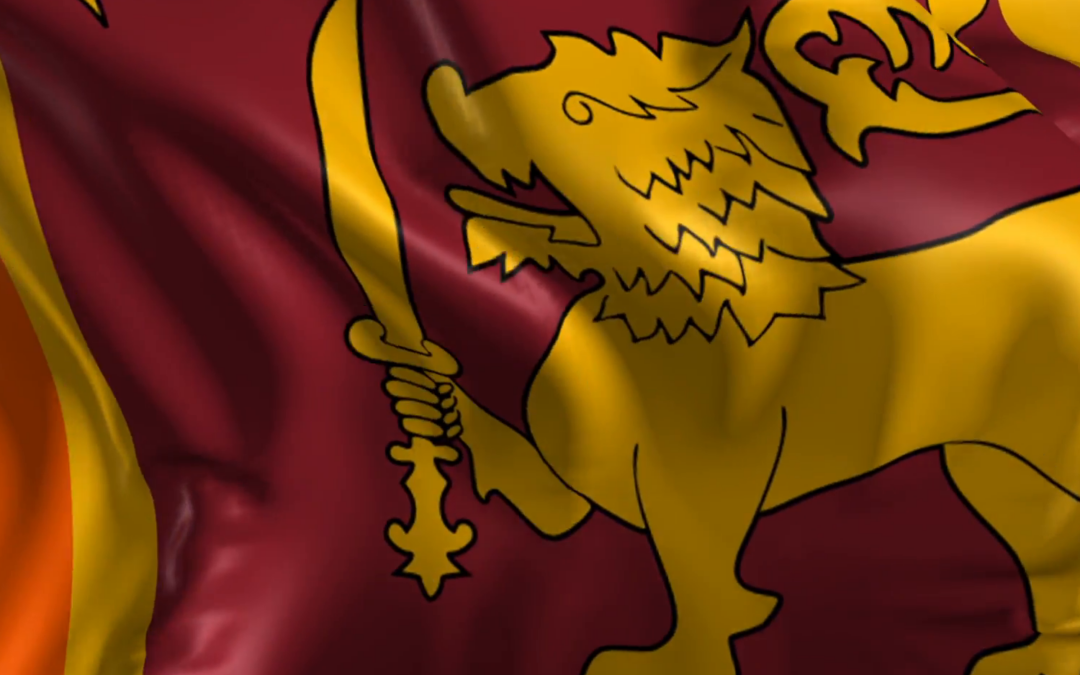
The ICJ today condemned the adoption of amendments to the Sri Lankan Constitution, which serve to expand the powers of the President, while encroaching on the powers of the parliament and courts.
The 20th Amendment to the Constitution was passed into law on 22 October, with 156 of the 225 parliamentarians voting in favour of the amendment, after a mere two-day debate, overruling the Opposition’s request for at least four days of deliberation.
The ICJ noted that the Amendment undoes most of the reforms brought about by the 19th Amendment adopted only in 2015. Critically, it introduces judicial appointment procedures which are incompatible with principles of the justice by reintroducing the Parliamentary Council, consisting only of political actors.
That body serves to merely advise the President, regarding appointments to the judiciary and other key public institutions.
The 20th amendment gives the President sole and unfettered discretion to appoint all judges of the superior courts. Under international standards, appointments to the judiciary should not be vested solely with the executive.
Given the gravity of the constitutional changes, the ICJ expressed regret that the Government had suspended Standing Order 50 (2), which requires every bill to be referred to the relevant Sectoral Oversight Committee for consideration prior to being debated in parliament.
“It is appalling that Constitutional amendments with such far reaching consequences on the constitutional governance of the country were rushed through in such haste, especially at a time Sri Lanka battles with its largest COVID-19 outbreak to date,” said Ian Seiderman, ICJ’s Legal and Policy Director.
The ICJ welcomes the alteration made to some of the problematic provisions of the 20th Amendment Bill during Committee Stage, particularly in relation to presidential immunity and the time period within which the president can dissolve Parliament.
The ICJ nonetheless is particularly concerned with the decision of the Minister of Justice to introduce entirely new provisions at Committee Stage, particularly in relation to the increase of the number superior court judges. The Supreme Court Bench will be increased from 11 to 17 and Court of Appeal from 12 to 20. These substantive amendments were not part of the gazetted 20th Amendment bill, the provisions of which were challenged before the Supreme Court by as many as 39 petitioners.
“While an increased number of judges may reduce court delays and expedite the judicial process, introducing substantive amendments such as this at Committee Stage is problematic at multiple levels,” Seiderman added.
“Sneaking in substantial changes at the last stage of the legislative process where there is no opportunity for public comment or judicial review is not consistent with democratic processes under the rule of law.”

Oct 22, 2020
In a publication released today, the ICJ called on the Lebanese authorities to remove obstacles and eradicate harmful practices in the administration of justice impeding the realization of women’s and girls’ access to justice for sexual and gender-based violence (SGBV).
This includes ensuring the rights of victims to an effective remedy and reparation, and by combatting the prevailing impunity in the country for such offences.
The report Accountability for Sexual and Gender-Based Violence in Lebanon: Guidance and Recommendations for Criminal Justice Actors (available in English and Arabic) concludes that legislative and procedural gaps within the Lebanese framework for the investigation, prosecution and adjudication of SGBV offences foster and perpetuate a systematic denial of effective legal protection and access to justice and effective remedies for women and girl victims of SGBV.
Moreover, the inadequacy of criminal justice responses to SGBV victims has been compounded by the 2020 Coronavirus pandemic, with studies finding that SGBV has surged amid government-imposed confinement measures.
Recalling the recommendations issued in its July 2019 report, Gender-based Violence in Lebanon: Inadequate Framework, Ineffective Remedies – which called on the Lebanese authorities to fully criminalize and sanction violations of women’s human rights, including by repealing and amending provisions that discriminate against women – the present memorandum aims to furnish Lebanon’s criminal justice system actors with guidance and recommendations to maximize the effectiveness of the investigation, prosecution and adjudication of SGBV cases, until the authorities adopt comprehensive legislative amendments and necessary protocols.
While efforts by the Lebanese authorities to combat SGBV are laudable, they have been piecemeal, and major obstacles continue to result in access to justice failings.
In their present form, existing laws and policies are inadequate and ineffective, and fail to sufficiently address the complexities and multiple facets of the SGBV phenomenon, ultimately entrenching impunity for SGBV offences.
“Delivering justice to victims/survivors of SGBV in a meaningful way involves not only developing a legal framework that robustly protects women’s human rights, but also ensuring effective policies and practices in the administration of justice,” said Said Benarbia, Director of the ICJ’s Middle East and North Africa Programme.
“The Lebanese authorities should overhaul the legal framework and procedures governing criminal justice responses to SGBV with a view to adopting timely protective measures for all SGBV victims without discrimination, and to making clear, gender-sensitive guidelines and protocols available to criminal justice actors and healthcare practitioners dealing with SGBV victims.”
The new memorandum concludes that criminal investigations and prosecutions of SGBV offences are frequently undercut by discriminatory practices and bias against women – including attitudes that tend to trivialize, justify or deny SGBV – and by false narratives about victims’ backgrounds and behaviours thriving, in part, because of the absence of professionalized gender-sensitive investigations and prosecutions, including evidence-gathering procedures.
“Those conducting criminal investigations and prosecutions must minimize the burden on victims so as to avoid their secondary victimization, and refrain from engaging in gender stereotyping, victim-blaming and other harmful practices that undermine the rights of victims,” Benarbia added.
“Criminal justice actors must also challenge disproportionately lenient sentences, including those resulting from the unwarranted or unexplained use of so-called mitigating circumstances.”
Contact
Said Benarbia, Director of the ICJ Middle East and North Africa Programme, t: +41 22 979 38 17; e: said.benarbia(a)icj.org.
Download
Lebanon-GBV Guidance-Publications-Reports-Thematic report-2020-ENG (full report in English, in PDF)
Lebanon-GBV Memo story-News-2020-ARA (full story in Arabic, in PDF)
Lebanon-GBV Guidance-Publications-Reports-Thematic report-2020-ARA (full report in Arabic, in PDF)

Oct 22, 2020
Proposed legislation to regulate the operations and functions of the legal profession in Eswatini does not comply with international and regional standards and would severely undermine the right to an independent lawyer, the two organizations said.
The Eswatini Government is reportedly seeking to introduce a bill to Parliament to establish a Legal Services Regulatory Authority which would be responsible for issuing practicing certificates to lawyers, disciplining lawyers in case of unethical conduct, and developing and enforcing performance standards for legal practitioners.
If enacted into law, the bill would severely undermine the independence of lawyers in Eswatini and may set a dangerous precedent for other countries in the SADC region.
The ICJ jointly with Lawyers for Lawyers sent a letter addressing these concerns to the Eswatini Ministry of Justice and Constitutional Affairs.
Eswatini-Support to lawyers-Advocacy-open letters-2020-ENG (full letter, in PDF)
Oct 21, 2020 | News
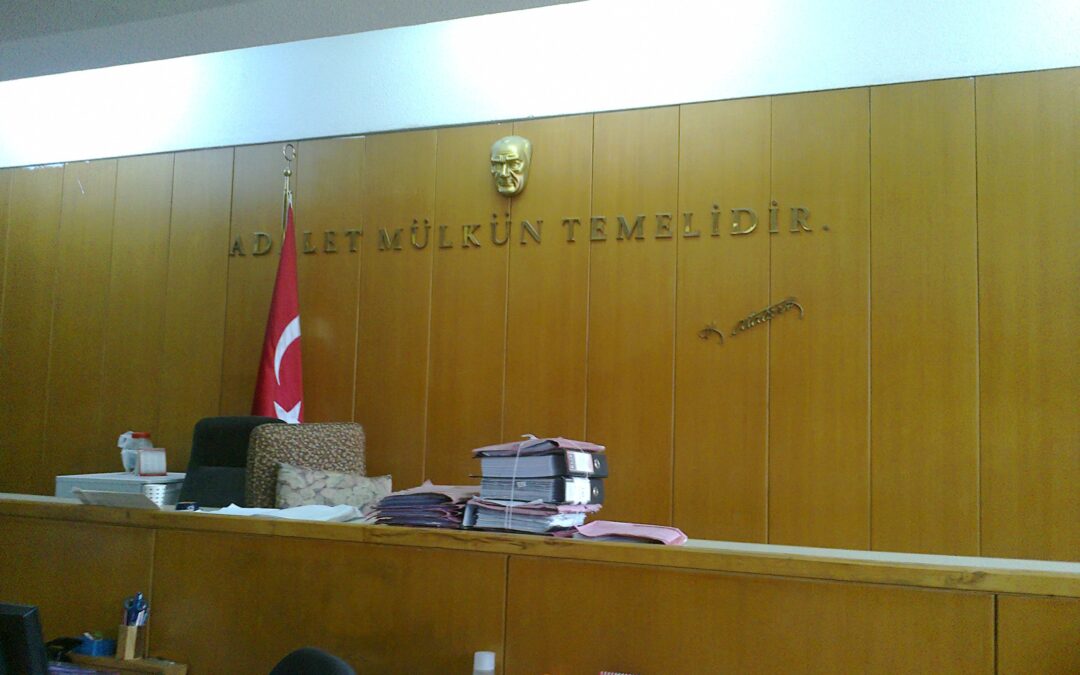
The ICJ condemned the dismissal of eight judges and three prosecutors by Turkey’s Council of Judges and Prosecutors (CJP) on 14 October 2020, for alleged membership of or connections with the Gülenist movement as a violation their right to a fair trial.
The ICJ calls on the CJP to revoke its order. In case any further is to be taken, the cases should be re-examined under the ordinary dismissal procedures. The ICJ also urges the Turkish Government and Parliament to modify the constitutional rules on the CJP to ensure its full independence.
“This decision not only affects the rights of the judges and prosecutors at stake, but also the Turkish population as whole, which damages the functioning of a fair and independent justice system bound by the rule of law,” said Massimo Frigo, Senior Legal Adviser with the ICJ Europe and Central Asia Programme.
The decision by the Council of Judges and Prosecutors (CJP) is particularly problematic because it was not accompanied by any reasoning on the individual situation of each judge and prosecutor.
International law provides that judges may be dismissed only through a fair hearing before an independent authority. The lack of individual reasoning in dismissal decisions strikes at the heart of the right to a fair hearing.
As the ICJ demonstrated in the 2018 report Justice Suspended, within the current constitutional framework, the Council of Judges and Prosecutors (CJP) is itself not provided with the guarantees necessary to ensure its institutional independence.
Despite the state of emergency having been lifted since July 2018, extraordinary powers given to the Council of Judges and Prosecutors to dismiss judges and prosecutors during the State of Emergency still apply, having been extended for three years by Law no. 7145.
“It is unacceptable in a State governed by the rule of law that judges and prosecutors – whatever charges may be against them – be dismissed without a fair procedure, in disregard of international law,” added Massimo Frigo.
Background
On 14 October the Council of Judges and Prosecutors made use of special powers to dismiss judges and prosecutors without complying with the ordinary procedure, invoking extraordinary powers enacted by Law No 7145 of 31.07.2018. The decision was issued in the Official Gazette on 30 October 2020. This legislation inserted into ordinary law several powers that had previously applied under the state of emergency legislation. More than 30 judges have so far been dismissed under this procedure since the end of the state of emergency.
One of the amendments made by Law No 7145 of 31.07.2018 was to the Decree Law No 375 dated 1989. A Temporary Article (Article 35) was added to the Decree. On the basis of this article, the General Assembly of the Constitutional Court, the Presidency Councils of Court of Appeal, the Council of State, the General Assembly of the Council of Judges and Prosecutors, a Commission set up by the Ministry of National Security, and the Presidency of the Court of Audit, were each authorized to take dismissal decisions for public officials/judges and prosecutors under their mandate for three years from the date of the endorsement of the law No 7145
The decision to dismiss the nine judges and two prosecutors was made on 14 October 2020 and published in the Official Gazette on 20 October 2020. After recalling Law no 7145 that enables the dismissal of judges and prosecutors by the Board, the decision states that all defendants have asked to submit their written defences. The decision also indicates that this is not a criminal conviction. The decision is based on complaints received and refers to investigations on their social environment, criminal investigations and prosecutors conducted by judicial authorities in general on the Gülenist organisation/FETÖ, minutes of hearings, contents of the communication app Bylock, statements by witnesses and suspects. However, the decision does not include any reasoning relating to the individual situation of each judge or prosecutor.
International law and standards provide that disciplinary proceedings should be conducted by an independent authority or a court with all the guarantees of a fair trial and provide the judge with the right to challenge the decision and sanction. Disciplinary sanctions should be proportionate.
The UN Basic Principles on the independence of the judiciary set out international standards for discipline, suspension and removal of judges, including in order to ensure impartiality and independence of courts and tribunals as required by international law, including the International Covenant on Civil and Political Rights and the European Convention on Human Rights. The Basic Principles state that a “charge or complaint made against a judge in his/her judicial and professional capacity shall be processed expeditiously and fairly under an appropriate procedure. The judge shall have the right to a fair hearing. The examination of the matter at its initial stage shall be kept confidential, unless otherwise requested by the judge.”
The Consultative Council of European Judges (CCJE) adds that “a Head of State, Minister of Justice or any other representative of political authorities cannot take part in the disciplinary body.”
Contact
Massimo Frigo, ICJ Senior Legal Adviser for the Europe and Central Asia Programme, t: +41 22 979 3805, e: massimo.frigo(a)icj.org
Oct 21, 2020 | News
The ICJ calls on the Belarus authorities to revoke the disbarment of lawyer Aleksandr Pylchenko and to end harassment or other interference with the work of lawyers in the country.
His disbarment appears to be arbitrary and in violation of rights to freedom of expression as well as international standards on the role of lawyers.
The decision of 15 October 2020 of the Ministry of Justice to disbar the lawyer is clearly related to his work in defence of human rights and his representation of clients, including, opposition leaders or protesters.
This disbarment is part of a pattern of increasing obstruction of lawyers who represent those associated with recent protests in Belarus, including through arrests and detention of lawyers, and prevention of their access to clients.
Aleksandr Pylchenko represented Viktor Babariko and Maria Kolesnikova, two leaders of the opposition in Belarus.
Disbarment proceedings against Mr Pylchenko started as a result of his public criticism of the response of the law enforcement authorities to claims of ill-treatment of protesters.
On 14 August 2020, in a media interview Mr Pylchenko called on the Prosecutor General’s Office to take action, in particular to launch criminal investigations into the ill-treatment of protesters by the police and to remove the Minister of Interior and other officials from their posts because of their involvement in human rights violations.
According to the Ministry of Justice, Mr Pylchenko called for “illegal actions, including blocking and disarming military units” and his statements “mislead the public about the powers of state bodies and do not comply with procedural norms”.
Belarus has obligations under international law to protect the right to freedom of expression (Article 19 ICCPR). Lawyers have a particular role in publicly raising concerns about violations of the human rights of their clients, or problems in the justice system that lead to violations of human rights.
The UN Basic Principles on the Role of Lawyers affirm that lawyers, like others, are entitled to freedom of expression and in particular, have the right to take part in public discussion of matters concerning the law, the administration of justice and the promotion and protection of human rights.
Furthermore, the UN Basic Principles on the Role of Lawyers provide that governments must ensure that lawyers ‘are able to perform all of their professional functions without intimidation, hindrance, harassment or improper interference”. (Principle 23). Lawyers should not suffer, or be threatened with, prosecution or administrative, economic or other sanctions for any action taken in accordance with recognized professional duties, standards and ethics (Principle 16). They should never be identified with their clients’ causes.
Background:
Following the presidential elections of 9 August 2020 in Belarus, widespread protests across Belarus took place.
On 18 June and 7 September 2020, Victor Babaryka and Maria Kolesnikova, opposition leaders in Belarus, were detained.
There are reports that defence lawyers were denied access to those arrested including in high-profile cases, such as the case of the former presidential candidate Victor Babaryka whose lawyer was not allowed to see his client in the detention centre for significant period of time.
On 9 September 2020, lawyers Ilya Salei and Maxim Znak, were detained allegedly on politically motivated charges.
On 25 September 2020, the Minsk city Oktyabrsky District Court sentenced Luidmila Kazak, lawyer of Maria Kolesnikova, to a fine (220 Euro) for “disobeyance to a lawful order” of a police officer (Article 23.4 of the Code of Administrative Offences). The lawyer stated that the arrest and administrative fine are connected to her legal representation of the opposition leader Maria Kolesnikova.
The ICJ has previously called on Belarus to comply with its international human rights obligations, including by releasing those arbitrarily detained and ceasing abusive prosecutions as well as harassment of lawyers.