Sep 7, 2020 | News
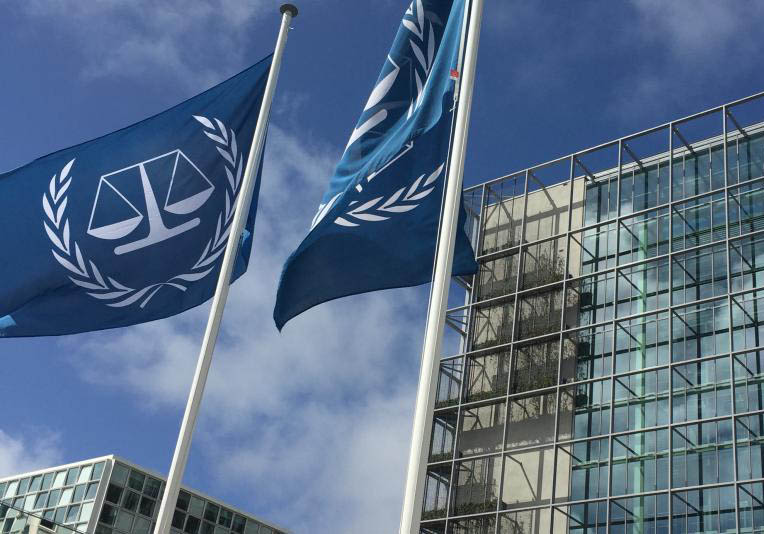
Ongoing attacks by United States officials on the International Criminal Court (ICC) and its staff amount to a full-frontal assault on international justice and the rule of law, said the ICJ, today.
On 2 September 2020, the US Secretary of State, Michael Pompeo, describing the ICC as a “thoroughly broken and corrupted institution,” indicated that the US would place on sanctions on ICC Prosecutor Fatou Bensouda, and the ICC’s Head of Jurisdiction, Complementary, and Cooperation Division, Phakiso Mochochoko, “for having materially assisted Prosecutor Bensouda” pursuant to the President’s 11 June 2020 Executive Order.
“The US must end these despicable and destabilizing attempts to interfere with the independence of the ICC and the functioning of its mandate to pursue justice for victims of the most serious crimes under international law,” said Kingsley Abbott, Coordinator of the ICJ’s Global Accountability Initiative.
“It is imperative that the 123 countries that are States Parties to the Rome Statute continue to work in solidarity to defend the Court and show the world that even individuals from a global superpower are subject to the rule of law.”
“Retaliating against individual ICC staff for merely working to fulfill the mandate of the Court sets a dangerous precedent and must be condemned specifically in the strongest possible terms,” added Abbott.
Background
On 21 September 2018, the ICJ, together with ten other organisations, sent a joint letter to UN Special Procedures regarding threats made by the then US National Security Adviser, John Bolton, against the ICC and its staff.
On 22 March 2019, the UN Special Rapporteur on the situation of human rights defenders, Michel Forst, and the Special Rapporteur on the Independence of Judges and Lawyers, Diego García-Sayán, issued a press release expressing concern at Bolton’s remarks, reaffirming the important mandate of the ICC and saying they were in contact with the US authorities on the issue.
On 11 June 2020, the ICC issued a statement expressing “profound regret at the announcement of further threats and coercive actions, including financial measures, against the Court and its officials, made earlier today by the Government of the United States.” The Court said the US action “represents an attack against the interests of victims of atrocity crimes, for many of whom the Court represents the last hope for justice.”
On 18 June 2020, the ICJ urged the United Nations Human Rights Council’s Special Procedures to act in response to steps taken by the United States against staff of the International Criminal Court (ICC) and their families.
On 25 June 2020, UN Human Rights Special Procedures experts issued a statement condemning US attacks on the ICC and its staff saying they “have been in contact with the US authorities on the issues.”
On 2 September 2020, the ICC issued a statement condemning the economic sanctions imposed on the Prosecutor and Phakiso Mochochoko, saying that the attacks “are unprecedented and constitute serious attacks against the Court, the Rome Statute system of international criminal justice, and the rule of law more generally.”
Contact
Kingsley Abbott, Coordinator of the ICJ’s Global Accountability Initiative, t: +66 94 470 1345; e: kingsley.abbott(a)icj.org
Sep 1, 2020 | Noticias
Hoy, la CIJ llamó a la Organización de los Estados Americanos (OEA) a respetar la autonomía e independencia de la Comisión Interamericana de Derechos Humanos (CIDH), como órgano encargado de promover la observancia de los derechos humanos en las Américas, incluso respecto de sus funciones administrativas básicas.
El Secretario General de la OEA se ha negado a respaldar la decisión unánime tomada por la Comisión Interamericana en enero de 2020, de renovar el mandato del Secretario Ejecutivo de la CIDH, Paulo Abrão, cuyo mandato expiró el 15 de agosto.
La negativa a renovar un mandato no puede hacerse sobre la base de denuncias presentadas, sino que éstas deben ser previamente resueltas en un plazo razonablemente breve, con base en los principios del debido proceso para todas las partes interesadas.
La CIJ señala la importancia de tramitar oportunamente las quejas realizadas por el personal conforme a los principios del debido proceso para todas las partes, y de contar con procedimientos transparentes e independientes para ello.
La CIJ recuerda que es fundamental asegurar la independencia y la autonomía de la Comisión Interamericana, lo que necesariamente incluye su Secretaría Ejecutiva y las funciones relacionadas con el proceso de nombramiento de su titular.
El Secretario General de la CIJ, Sam Zarifi, mencionó que “la CIDH ha desempeñado un papel fundamental en las Américas para promover los derechos humanos y proteger a las víctimas de violaciones de derechos humanos”. Agregó que “la situación requiere una resolución urgente que garantice el respeto de los principios de independencia y autonomía de la CIDH”.
Sep 1, 2020 | Advocacy, News
Today the ICJ called on the Organization of American States (OAS) to respect the autonomy and independence of the Inter-American Commission on Human Rights (IACHR) as the body in charge of promoting the observance of human rights in the Americas, including in respect of its core administration functions.
The OAS Secretary-General has declined to endorse the unanimous decision taken in January by the seven-person IACHR to renew the mandate of its Executive Secretary, Paulo Abrão, whose term expired on 15 August.
The Secretary General indicated that his action was motivated by concern at internal complaints that are still to be resolved.
The refusal to renew this mandate, however, must not be made on the basis of pending complaints, which must nonetheless be resolved in a reasonably short period of time, based on the principles of due process for all parties concerned
The ICJ recognizes the importance of processing the staffs’ complaints in a timely manner which respects the due process rights of the parties concerned through an independent and transparent process.
The ICJ recalls that it is essential to ensure the independence and autonomy of the Inter-American Commission, which necessarily includes the functions related to the appointment process of the Executive Secretary.
“The IACHR has played a critical role in the Americas to advance human rights and to protect victims of human rights violations,” said ICJ Secretary General Sam Zarifi.
He also mentioned that “the situation requires an urgent resolution that guarantees respect for the principles of independence and autonomy of the IACHR.”
Sep 1, 2020 | News
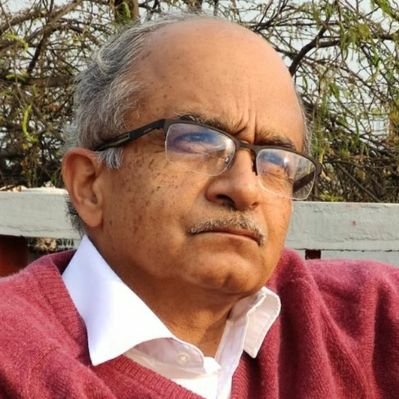
The ICJ today expressed its concern regarding the 31 August 2020 and 14 August 2020 decisions of the Indian Supreme Court to convict prominent human rights lawyer Prashant Bhushan for criminal contempt of court, on the basis of two twitter posts in which the lawyer criticized the performance of the Indian judiciary.
While the Court only imposed a symbolic fine of one rupee, rather than imprisonment, the ICJ considers that the conviction appears to be inconsistent with international standards on freedom of expression and the role of lawyers.
The ICJ stressed that the ruling risks having a chilling effect on the exercise of protected freedom of expression in India and urged a review of the laws and standards on criminal contempt as applied by the Indian courts.
The two tweets published by Prashant Bhushan referred to the Chief Justice of India riding an expensive motorbike belonging to a BJP leader “when he keeps the SC in Lockdown mode denying citizens their fundamental right to access justice” and asserted that the Supreme Court and the last four Chief Justices of India had contributed to how, in his view, “democracy has been destroyed in India even without a formal Emergency”
The Court in its 31 August judgment held that the tweets were a serious attempt to “denigrate the reputation of the institution of administration of justice” which, it said, is “capable of shaking the very edifice of the judicial administration and also shaking the faith of common man in the administration of justice.”
The Court considered that its ruling was consistent with freedom of speech and expression under Article 19 of the Indian Constitution, saying that it will have to balance its exercise of power to punish for contempt for itself (Article 129) with freedom of speech and expression.
The ICJ is concerned, however, that the conviction appears inconsistent with international law on freedom of expression as guaranteed by the International Covenant on Civil and Political Rights (Article 19, ICCPR) to which India is a party.
While some restrictions of freedom of expression are permitted by international standards, a particularly wide scope must be preserved for debate and discussion about such matters as the role of the judiciary, access to justice, and democracy, by members of the public, including through public commentary on the courts.
Any restrictions must be strictly necessary and proportionate to meet a legitimate purpose, such as protecting public order or the rights and reputations of others.
“There is a general concern that the protection of freedom of expression is rapidly eroding in India,” said Ian Seiderman, ICJ Legal and Policy Director.
“We have seen this recently around the COVID 19 crisis in relation to the imprisonment of human rights defenders, on draconian charges of sedition, rioting and unlawful assembly for protesting against the Citizenship (Amendment) Act.”
“While the Indian Supreme Court has over the years generally been an institution that has served to advance human rights in India and globally, we fear it now may be perceived as silencing criticism and freedom of expression by invoking outdated criminal contempt laws,” Seiderman added.
The ICJ joins the 1800 Indian lawyers in calling for the Supreme Court “to review the standards of criminal contempt”, emphasizing that the law is overbroad and should be aligned with international law and standards on the limited scope for restrictions on freedom of expression and criminal contempt.
“Prashant Bhushan is a lawyer and lawyers being part of the legal system have a ring-side view and understanding of the state of the court. Convicting a leading lawyer for contempt for expressing his views in this manner may have a chilling effect on lawyers, in particular considering his involvement in many public interest litigation cases,” said Mandira Sharma, ICJ South Asia Senior Legal Adviser.
Contact
Ian Seiderman – ICJ Legal and Policy Director; e: ian.seiderman(a)icj.org , t: +41 22 979 38 00
Matt Pollard – ICJ Senior Legal Adviser, Director, ICJ Centre for the Independence of Judges and Lawyers; e: matt.pollard(a)icj.org, t: +41 79 246 54 75
Download
India-Criminal-Contempt-of-Court-Press-Release-2020-ENG (PDF, with additional background information)

Aug 21, 2020 | News
The order of the Magistrates’ Court of Zimbabwe barring lawyer Beatrice Mtetwa from continuing as defence legal counsel for journalist Hopewell Chin’ono is a violation of Chin’ono’s right to a fair trial and Mtetwa’s right to express her opinions freely, said the ICJ today.
“Hopewell Chin’ono is already facing persecution because of his reporting on alleged corruption and now his lawyer is prevented from defending him properly. The Magistrate Court’s decision violates Zimbabwe’s domestic, international and regional legal obligations regarding freedom of expression and the right to a fair trial,” said ICJ Secretary General Sam Zarifi.
Hopewell Chin’ono, a prominent Zimbabwean journalist, is currently in custody and is facing trial on charges of inciting public violence, related to his reporting on corruption.
He appointed Beatrice Mtetwa, a prominent Zimbabwean human rights lawyer to act as his defence legal counsel.
After Hopewell Chin’ono was denied bail, it is alleged that a Facebook page by the name “Beatrice Mtetwa and The Rule of Law” posted the following statements:
“Where is the outrage from the international community that Hopewell Chin’ono is being held as a political prisoner? His life is in serious peril. Raise awareness about his unlawful imprisonment. Do not let him to be forgotten. You or someone you love could be the next one abducted from your home and put in leg irons.”
On account of these alleged statements and at the instance of an application by the State, the Magistrates’ court barred Beatrice Mtetwa from continuing as defense legal counsel on grounds that she made statements which demonstrates that “she is no longer detached from the case to continue appearing in it” and has lost the “requisite objectivity of an officer of the court”.
The full judgment by the court can be accessed here.
Beatrice Mtetwa denied ownership of or control over the said Facebook page. Filmmaker Lorie Conway is listed as the only administrator of the said Facebook page. Despite this, the Magistrate’s Court ruled that Beatrice Mtetwa is aware of the page, approved its creation and therefore, these statements are attributable to her.
“Regardless of whether or not these statements can be attributed to Beatrice Mtetwa, the International Commission of Jurists is concerned about the chilling effect which the judgment has on the exercise of freedom of expression by lawyers, the accused persons’ right to legal representation and the right to fair trial. The judgment seems to suggest that if a lawyer makes public statements such as those allegedly attributed to Beatrice Mtetwa, the lawyer should be barred from continuing as legal counsel in the matter—and that is contrary to international standards regarding the role of lawyers,” Zarifi said.
This right is underscored in Principle 23 of the United Nations Basic Principles on the Role of Lawyers which states that:
“Lawyers like other citizens are entitled to freedom of expression, belief, association and assembly. In particular, they shall have the right to take part in public discussion of matters concerning the law, the administration of justice and the promotion and protection of human rights…”
The right to legal representation is recognised in section 70(1)(d) of the Constitution of Zimbabwe. This guarantees an accused person the right to appoint a legal practitioner of their choice to act as their defence attorney. The same right is underscored in article 14(3)(b) of the ICCPR and article 7(1) of the African Charter. The right to legal representation is an integral element of the right to fair trial as elaborately explained under the Principles and Guidelines on the Right to a Fair Trial and Legal Assistance in Africa.
Contact
Shaazia Ebrahim (Media Officer) email: Shaazia.Ebrahim(a)icj.org