Jul 11, 2019 | News
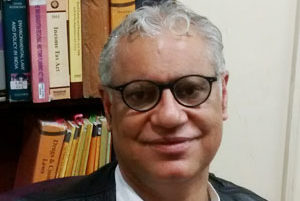
The ICJ today condemned the raids on 11 July by India’s Central Bureau of Investigation (CBI) on the homes and offices of Anand Grover and Indira Jaising, two lawyers prominent for frequently challenging the Indian government’s failures to respect and promote the rights of all people in India.
Grover and Jaising are both Supreme Court lawyers and co-founders of the Lawyers Collective, a non-governmental organization.
These raids were reportedly conducted pursuant to CBI’s registration of criminal charges into alleged violations of Foreign Contribution (Regulation) Act (FCRA), a much criticized law frequently used to target human rights defenders and critics of the Indian government.
“This raid seems designed to harass and intimidate two tireless advocates of Constitutional and international rights in India,” said Sam Zarifi, Secretary-General of the ICJ.
“The Indian government must immediately cease harassment of the Lawyers Collective and its founders Anand Grover and Indira Jaising,” he added.
The CBI raids appears to be based on a 2016 Ministry of Home Affairs report, now under appeal in the Bombay High Court, and without any material change in circumstances since its release.
The raid has also been conducted notwithstanding a National Human Rights Commission statement seeking a status report from the CBI by 21 July 2019 to ensure that the investigation is “non-discriminatory and to avoid arbitrariness”.
The attack is emblematic of a broader pattern of official threats to and harassment of Indian civil society in general, and the Lawyers Collective in particular.
Lawyers Collective’s FCRA license was cancelled in November 2016, a decision that is under appeal in the Bombay High Court. The action relied upon overly broad and vague legal provisions of the FCRA that violate India’s legal obligation to respect and protect the rights to freedom of expression, association and peaceful assembly.
“The repeated use of the FCRA to target civil society including Lawyers Collective has had a devastating chilling effect on public comment about the government,” said Zarifi.
“The law should be repealed, or substantially amended to include safeguards against arbitrary use of its provisions, and to protect freedom of expression and association,” he added.
The ICJ supports the 2016 call by three United Nations Special Rapporteurs to the Indian Government to repeal FCRA, which decried the FCRA’s use to “silence organisations involved in advocating civil, political, economic, social, environmental or cultural priorities, which may differ from those backed by the Government”.

Jul 8, 2019 | Artículos, Noticias
La CIJ anuncia que llevará a cabo una misión para observar el proceso de elección de magistrados de Corte Suprema de Justicia y Salas de Apelaciones. Para el efecto, ya se encuentra en el país, el Comisionado de nacionalidad chilena Alejandro Salinas (foto), quien permanecerá en el país, hasta el viernes 12 de julio.
La misión tendrá reuniones con el Procurador de Derechos Humanos, Diputados del Frente Parlamentario por la Transparencia y contra la Corrupción y miembros del Sector Académico, Gremio de Abogados y representantes del Sector de Justicia, que participarán en las próximas comisiones de postulación.
El objetivo de esta misión es promover la mayor transparencia del proceso de elección de las y los magistrados de la Corte Suprema de Justicia y Salas de Apelaciones, para que dichos procesos de elección logren que los próximos magistrados/as sean electos por méritos y no por compadrazgos políticos y así, que exista la mayor independencia posible en el Poder Judicial y por lo tanto, mayor respeto de los derechos humanos.
Se espera que la misión haga públicas sus conclusiones el viernes 12 de julio, después de implementar la agenda respectiva.
Además, el 11 de julio, llevará a cabo un foro público, para estimular el debate social sobre la necesidad de un Poder Judicial independiente, que cuente con magistrados imparciales, idóneos y honestos.
Ramón Cadena, Director de la CIJ para Centroamérica expresó: “En las elecciones del año 2009, las acciones de la Comisión Internacional contra la Impunidad en Guatemala (CICIG), conjuntamente con las de la sociedad guatemalteca, permitieron que el proceso en sí mismo, se constituyera en un mecanismo de depuración, ya que el Congreso de la República tuvo que dar marcha atrás y no nombrar como Magistrados de Corte Suprema de Justicia a tres personas. En 2014, la CICIG conjuntamente con el Ministerio Público, llevaron a juicio después de las elecciones, a tres magistrados de Corte Suprema de Justicia, recién electos, que tuvieron que renunciar al cargo. Las elecciones de este año, estarán marcadas por la ausencia de la CICIG, lo cual significará enfrentar mayores desafíos para lograr avances en la lucha contra la impunidad, durante todo el proceso de elección.”
Jul 3, 2019 | Advocacy, Non-legal submissions
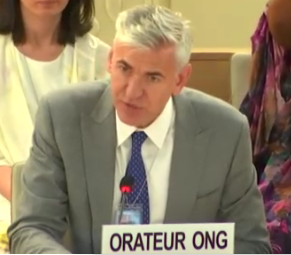
The ICJ today highlighted rising threats to the rule of law in Europe, specifically mentioning Poland, Hungary, Turkey, and Kazakhstan in a statement to the UN Human Rights Council in Geneva.
The statement read as follows:
“The International Commission of Jurists (ICJ) adopted a Declaration on Reinforcing the Rule of Law last March at its 19th World Congress in Tunis.
The Tunis Declaration (link) stresses that not only are human rights and the Rule of Law indispensable to the betterment of the human condition, but to address such contemporary challenges as catastrophic climate change and the effects of digital technology.
Against these standards, however, the ICJ is concerned at the increasing and serious threats to the Rule of Law and those who defend it around the world, including across Europe.
In Poland, the attacks on the judiciary continue under the guise of disciplinary proceedings against judges who took recourse to EU institutions to defend the Rule of Law.
Hungarian authorities, while pausing their reforms of administrative courts, have not abandoned unjustified restrictions on the judiciary’s independence and on civil society.
Finally, in Turkey, the judiciary continues to have no guarantees in law to guarantee its independent functioning.
Across Central Asia, lawyers may face disciplinary or criminal persecution for discharging their profession independently. For example, in Kazakhstan, Sergey Sizintsev was disbarred on arbitrary grounds for criticizing a problematic reform of the legal profession.
The ICJ urges the Council to give attention to these developments of extreme concern.

Jun 25, 2019 | News, Publications, Reports
Colombia’s transitional justice tribunal, the Special Jurisdiction for Peace (JEP in its Spanish acronym) has made progress in fighting impunity, but can do more to address the needs and demands of victims of the country’s long civil war, the ICJ said in a report released in Bogota today.
The report Jurisdicción Especial para la Paz: análisis a un año de su entrada en funcionamiento (available only in Spanish) will be presented by a high-level mission composed of the President of the ICJ, Prof Robert Goldman (former President of Inter-American Commission on Human Rights), the Vice President of the ICJ, Carlos Ayala (former President of the Inter-American Commission on Human Rights), and ICJ Commissioner Philippe Texier, former judge of the Court of Cassation of France.
The commissioners will meet with different Colombian authorities including the President of Colombia, Iván Duque Márquez, and the President of the JEP, Patricia Linares Prieto.
They will also meet with victims and other members of civil society.
The JEP is charged with prosecuting and punishing gross violations of human rights and serious violations of international humanitarian law committed during the country’s civil war.
The JEP was established by the Peace Agreement entered into between the Colombian government and the former armed group FARC-EP, on November 24 of 2016.
“The JEP has made progress in guaranteeing victims’ rights and fighting impunity for gross violations of human rights and serious violations of international humanitarian law,” said Prof Robert Goldman, ICJ’s President.
“But the JEP must do more to strengthen the effective participation of victims in its procedures, as well as to guarantee victims’ rights to justice and full reparation in compliance with international standards,” he added.
Accordingly, the report identifies ways by which the JEP can achieve these goals.
The ICJ also expresses concern about security threats faced by human rights defenders and victims and witnesses appearing before the JEP. The ICJ urges the JEP and other Colombian public authorities to adopt effective measures to guarantee their safety.
The ICJ also considers it is necessary to ensure respect for the judicial independence of the JEP against external pressures to ensure the proper performance of its functions.
The report describes the findings of a mission carried out by ICJ Commissioners Carlos Ayala, Wilder Tayler and Philippe Texier in January 2019. The report includes an analysis of the main actions and decisions taken by the JEP as well as relevant decisions of other public authorities. It reflects developments up to June 7, 2019.

Jun 25, 2019 | Comunicados de prensa, Informes, Noticias, Publicaciones
La Jurisdicción Especial para la Paz (JEP) es el tribunal de justicia transicional diseñado por el Acuerdo Final de Paz suscrito entre el Gobierno Colombiano y la guerrilla de las FARC-EP, con el fin de investigar y sancionar las graves violaciones a los derechos humanos y al derecho internacional humanitario cometidas en el conflicto colombiano.
En Bogotá, durante la semana del 24 de junio de 2019, será presentado el informe Jurisdicción Especial para la Paz, análisis a un año y medio de su entrada en funcionamiento, por una misión de alto nivel compuesta por el Presidente de la CIJ, Robert Goldman, el Vicepresidente de la CIJ, Carlos Ayala, y el comisionado de la CIJ Philippe Texier, ex juez de la Corte de Casación de Francia.
Para ello, se reunirán con diferentes autoridades colombianas incluidas, el Presidente de Colombia, Iván Duque Márquez y la Presidenta de la JEP, Patricia Linares Prieto. También se reunirán con víctimas y otros miembros de la sociedad civil.
En el informe “la CIJ reconoce los avances realizados por la JEP para garantizar los derechos de las víctimas y combatir la impunidad de las graves violaciones a los derechos humanos y del derecho internacional humanitario”, señala el profesor Robert Goldman, Presidente de la CIJ.
Al mismo tiempo, el profesor Goldman advierte que “la JEP debe avanzar en la adopción de acciones concretas para fortalecer la participación efectiva de las víctimas en sus procedimientos, así como para garantizar su derecho a la justicia y a la reparación integral, conforme a los estándares internacionales”.
Asimismo, la CIJ expresa preocupación por la situación de seguridad que enfrentan las víctimas y los testigos que comparecen ante la JEP. Por ello, exhorta a que la JEP y las demás autoridades competentes para que adopten medidas efectivas que garanticen su seguridad dentro de los trámites de la Jurisdicción.
En esa línea, la CIJ resalta en el documento que, aunque la JEP enfrenta varios desafíos y todavía tiene un largo camino que recorrer, es una institución fundamental para la consolidación de la paz en Colombia. En ese sentido, desde una perspectiva crítica pero propositiva, el informe ofrece insumos para que la JEP fortalezca y desarrolle sus funciones con plena observancia de los estándares internacionales, en particular respecto de los derechos de las víctimas y la sanción efectiva de los responsables.
Por otra parte, en el informe también se concluye que no son necesarias reformas legislativas al marco jurídico de la JEP; sino que solo es necesario que la JEP realice una interpretación de su normativa encaminada a desarrollar, profundizar e implementar, de mejor manera, los derechos de las víctimas, conforme con los estándares internacionales.
Por último, la CIJ también considera esencial que se garantice la independencia judicial de la JEP frente a presiones externas para asegurar el correcto ejercicio de sus funciones.
El informe presenta los hallazgos encontrados por una misión de la CIJ integrada por los comisionados Carlos Ayala, Wilder Tayler y Philippe Texier, la cual se realizó en enero de 2019. Estos hallazgos fueron ampliados y complementados con un análisis de las principales actuaciones realizadas por la JEP, así como, con un seguimiento a las actuaciones desarrolladas por otras autoridades.
La fecha de corte del informe es el 7 de junio de 2019.
Colombia-Jurisd para la paz-PUBLICATIONS-Reports-Fact-finding mission report-2019-SPA (Informe en PDF)

![Smoke rises after an Israeli air strike on the village of Taybeh in southern Lebanon [Source: Al Jazeera]](https://www.icj.org/wp-content/uploads/2026/03/Screenshot-2026-03-20-at-15.56.24-300x200.png)