Jul 11, 2018 | News
Today, the ICJ expressed concern at the adoption of a new law on lawyers in Kazakhstan.
The Law ‘On the Professional Activities of Advocates and Legal Assistance’, signed into law on 10 July 2018, contradicts international law and standards on the independence of the legal profession, by enabling the executive to influence or to have control over who is allowed to practice law and substantial influence on disciplinary proceedings against lawyers.
The law will have negative repercussions for protection of human rights and the rule of law in the Republic of Kazakhstan.
“Some of the key provisions of the adopted law undermine the independence of the legal profession, a cornerstone of the rule of law,” Temur Shakirov, ICJ Europe Program Senior Legal Adviser said today.
“Not only does the law weaken the legal profession, it sends an unfortunate message to the public that, as a result, their human rights, including their right to a fair trial, may be harder to uphold within the legal system,” he added.
More specifically, the ICJ is concerned that, under the new law, the role of the independent Bar Association in the composition of the disciplinary commissions is reduced.
Besides lawyers, the Disciplinary Commission will now include ‘representatives of the public’ designated by the Ministry of Justice. While the law does not specify how these members of the Disciplinary Commission would be selected, the selection is to be made by the Ministry of Justice.
The same procedure is not excluded to select members who are retired judges, which the Law requires also be part of disciplinary commissions.
While many of the specific procedures are unclear, it is apparent that these provisions would give the Ministry extensive influence over the Disciplinary Commission, especially as the law does not explicitly require these members perform their duties independently from the instructions of the Ministry of Justice.
The influence of the executive over the disciplinary proceedings of the Bar Association is contrary to the principles of independence of lawyers.
The UN Basic Principles on the Role of Lawyers provide that disciplinary proceedings against lawyers are to be brought before an impartial disciplinary committee established by the legal profession, before an independent statutory authority, or before a court, and shall be subject to an independent judicial review.
Furthermore, the law continues to give the Ministry of Justice control over admission to the practice of law.
It stipulates that prospective lawyers who have completed their professional training are to be assessed by the Commission for admission to practice established by territorial bodies of the Ministry of Justice.
The commissions consist of seven members, of which only three are members of the Bar Association. The composition of the commissions and the principles of their work are to be approved by the orders of the Minister of Justice of the Republic of Kazakhstan.
The Law therefore preserves the previous procedure on admission to the profession criticized by the ICJ earlier, according to which the attestation of applicants for obtaining the membership to the Bar Association and issuing a license were within the exclusive competence of the Ministry of Justice of the Republic of Kazakhstan.
At the same time, many defense rights listed in the Law are curtailed or compromised by the wording that would allow for enactment of restrictions by secondary legislation, including that the adopted Law would not allow lawyers to freely and without interference collect evidence in defense of their clients or that lawyer’s inquiries can be subject to limitation where they seek to obtain “restricted information”.
The ICJ notes that according to the UN Basic Principles on the Role of Lawyers, States must ensure lawyers have access to appropriate information, files and documents in their possession or control in sufficient time to enable lawyers to provide effective legal assistance to their clients. Such access should be provided at the earliest appropriate time (Principle 21).
Read the full text in English here
Read the full text in Russian here

Jul 4, 2018 | News
The ICJ condemned today the forced retirement of 27 out of 72 judges of the Supreme Court of Poland in defiance of the most basic principles on the independence of the judiciary.
“The forced retirement of a third of the Supreme Court under the new law on the judiciary amounts to an arbitrary dismissal of judges” said Róisín Pillay, Director of the ICJ Europe and Central Asia Programme, “It is a flagrant breach of a basic tenet of the independence of the judiciary, the security of tenure of judges.”
The government claims the law and its implementing measure of forced retirements are aimed at improving the administration of justice. However, the ICJ considers them to be a deliberate attempt to destroy judicial independence and install executive control.
“We call on the Polish authorities to follow the EU’s recommendations, abolish this draconian legislation and immediately reinstate the Supreme Court justices. Not to do so strikes at the very core of judicial independence”, said Róisín Pillay.
“Universal principles of judicial independence guaranteeing security of tenure were developed long ago exactly to safeguard the kind of abuse of political authority driving this forced retirement measure, whereby judges would serve at the pleasure of the government of the day,” she added.
The ICJ considers that the implementation of the new law on the Supreme Court and the dismissal of the 27 Supreme Court Justices directly contravenes the security of tenure of judges and, hence, the principle of judicial independence, as expressed in the UN Basic Principles on the Independence of the Judiciary, Council of Europe standards, the European Court of Human Rights’ jurisprudence and the rule of law principle of the EU Treaties.
Poland-Attacks on judiciary-News-web stories-2018-ENG (full story – with additional background information – in PDF)
Jun 29, 2018 | Advocacy, Non-legal submissions
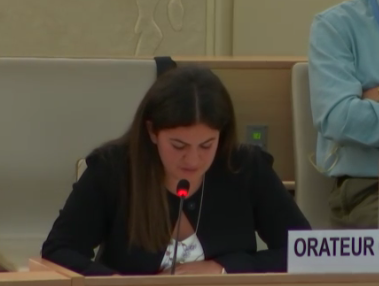
The ICJ today raised concerns for the independence of the judiciary in Serbia, in a statement to the United Nations.
The statement was delivered during the discussion of the outcome of the Universal Periodic Review (UPR) of Serbia, at the UN Human Rights Council in Geneva.
It read as follows:
“The International Commission of Jurists (ICJ) congratulates Serbia on the completion of its Third Cycle Universal Periodic Review.
The ICJ welcomes the acceptance by Serbia of all recommendations to strengthen the rule of law and judicial independence, including by limiting political influence over judicial appointments (Norway, 6.1; Sweden, 6.2; France, 6.3; Australia, 6.20; Germany, 6.22; Morocco, 6.23; Estonia, 6.24; Republic of Korea, 6.25; Singapore, 6.26; Canada, 6.27).
The ICJ regrets, however, that constitutional amendments currently under discussion in Serbia run counter to these recommendations.
The amendments would empower the National Assembly to determine appointments and dismissals of judges of the Constitutional Court, as well as for half of the members of the High Judicial Council, five members of the High Prosecutorial Council, the Supreme Public Prosecutor and public prosecutors.
The independence and autonomy of the Constitutional Court, High Judicial Council and State Prosecutorial Council, would be better secured by reducing or eliminating the role of political bodies such as the National Assembly, particularly as regards dismissals.
The ICJ stresses that the judiciary and the prosecution service must exercise their functions free from direct or indirect external influences, threats or interferences, including from the legislative and executive powers.
While welcoming reforms for life tenure of judges and deputy prosecutors, the ICJ urges Serbia to implement the accepted recommendations by precluding involvement of the National Assembly in the appointment and dismissal of judges, court presidents, public prosecutors, and deputy public prosecutors.”

Jun 28, 2018 | News
The ICJ is deeply concerned with the allegations that the former Chief Justice and other officials infringed the freedom of expression and freedom of association of individual judges in South Korea.
The ICJ urges the Republic of Korea to ensure the individual independence of judges in the country.
The ICJ received information that in 2015, the National Court Administration (NCA), under the term of former Chief Justice Yang Sung-tae, submitted proposals to the government of South Korea to create a ‘second Supreme Court,’ arguing that it would assist in relieving the existing Supreme Court with its caseload.
This proposal was met with numerous criticisms from the general public and several individual judges.
Allegedly, judges who criticized this proposal were placed by the NCA under surveillance, both in their professional and personal dealings.
Moreover, they were prevented from joining international conferences and national professional organizations. Some were also either sidelined for promotions or were not given preference for educational opportunities abroad.
On March 2017, during the term of former Chief Justice Yang, the Supreme Court, through the NCA, created an internal committee to conduct an investigation to look into these allegations.
Two other subsequent separate committees were formed to investigate.
Finally, on Mary 2018, under the term of the current Chief Justice Kim Myeong-soo, the latest committee, without releasing a full report, said that it did not find basis to file criminal charges against the NCA and former Chief Justice Yang.
On 18 June 2018, the Seoul Central District Prosecutor’s Office initiated its own investigation into the allegations, including the possibility of filing criminal charges against former Chief Justice Yang and some NCA judges.
The rights of freedom of expression and association of judges is recognized in the UN Basic Principles on the Independence of the Judiciary and other relevant standards, which also provide for appropriate and fair procedures for holding judges to account for misconduct.
In principle, in matters touching on alleged misconduct by a judge related to the discharge of his or her duties, the ICJ considers that international standards and best practices concerning judicial independence and accountability would require at the minimum that a prosecutor seek permission of a judicial council or current Chief Justice, or other similar superior judicial authority, before commencing a formal criminal investigation or proceedings against a sitting judge.
The ICJ calls on the prosecutors’ office to seek such permission and to take steps to demonstrate that it will remain impartial and independent in the conduct of its own investigation.
The ICJ also calls on the Supreme Court to initiate a new investigation of its own, including to consider the issues from a judicial professional conduct perspective.
Finally, the ICJ urges the Supreme Court to ensure that interferences into the individual independence of judges in South Korea would never happen again.
Contact
Emerlynne Gil, ICJ Senior International Legal Adviser, t: +662 619 8477 (ext. 206) ; e: emerlynne.gil@icj.org
South Korea-Independence of Judges-News-Web Story-2018-ENG (full story in PDF)
Jun 24, 2018 | News
“Judges from the High Risk Tribunals in Guatemala, including Ericka Aifán, Yassmín Barrios, Miguel Ángel Gálvez and Pablo Xitumul, are facing unjustified disciplinary hearings,” nine Latin American Commissioners from the ICJ, meeting in Bogotá on 24 June, stated today.
The Commissioners understand that these judges are facing unjustified disciplinary hearings instigated by groups or persons who are displeased with judicial rulings in high-impact cases involving transitional justice or corruption.
They expressed serious concern about the precarious state of the independence of the judiciary in Guatemala. Judges are subjected to on-going attacks that seek to impact their work as honourable and impartial justice operators.
According to international standards, judges should exercise their functions free of any extraneous influence and with total impartiality; without any limitations, inducements, pressures, threats or interference, direct or indirect, from any quarter or any reason.
The Commissioners also expressed their complete support for Commissioner Iván Velásquez, head of the International Commission against Impunity in Guatemala (CICIG), who because of the exercise of his functions, has also suffered from a series of hostile acts and smear campaigns.
The ICJ Commissioners extend their full support to the CICIG in its struggle against impunity and corruption.
The Commissioners request that the international community continues to support the CICIG with sufficient human and financial resources.
At the same time, the Commissioners call upon the Inter-American Commission of Human Rights, the Sub-Committee of Human Rights of the European Parliament and the UN Special Rapporteur on the Independence of Judges and Lawyers, to visit Guatemala and to verify “in situ” the precarious state of judicial independence in the country.
The nine ICJ commissioners who issued the statement
Carlos Ayala, Vice-President of the International Commission of Jurists (Venezuela)
Mónica Pinto, Commissioner (Argentina)
Miguel Carbonnel, Commissioner (Mexico)
Victor Rodriguez Rescia Commissioner (Costa Rica)
Wilder Tayler, Commissioner (Uruguay)
Belisário dos Santos, Commissioner Brazil
Juan Mendez, Commissioner (Argentina)
Roberto Garretón, Commissioner (Chile)

![Smoke rises after an Israeli air strike on the village of Taybeh in southern Lebanon [Source: Al Jazeera]](https://www.icj.org/wp-content/uploads/2026/03/Screenshot-2026-03-20-at-15.56.24-300x200.png)