Apr 30, 2013
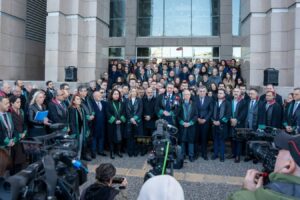
The ICJ has submitted to the Human Rights Committee information in preparation for the Committee’s examination of the initial report of Malawi under the International Covenant on Civil and Political Rights (ICCPR).
During its session in July 2013, the Committee is to adopt a List of Issues for the examination in 2014 of the initial report of Malawi under the ICCPR. The ICJ’s submission raises issues and suggested questions to be put to the Government of Malawi in preparation for the examination in 2014. The ICJ’s submission addresses:
- Malawi’s obligation to give effect to the provisions of the ICCPR;
- The right to life;
- The prohibition against torture and other ill-treatment;
- Conditions of detention;
- Rights to privacy and non-discrimination, focusing on the situation of lesbian, gay, bisexual and transgender persons; and
- Right to family.
Malawi-HRCttee108-LOl-LegalSubmission-2013 (download submission in PDF)
Apr 29, 2013 | News
The Bahrain authorities must fully cooperate with the UN mechanisms and implement the recommendations of the Bahrain Independent Commission of Inquiry (BICI) set up by the Government of Bahrain in June 2011.
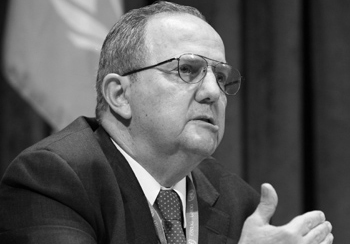
The ICJ further calls on the Bahrain authorities to ensure that the recommendations from the UN Universal Periodic Review process in September 2012 are implemented in full and in good faith and, to this end, immediately extend an invitation with specific dates to the UN Special Rapporteur on torture, Juan E. Méndez (photo).
The statement comes as the authorities in Bahrain effectively cancelled a visit of the Special Rapporteur for the second time, a previous visit in March 2012 also having been postponed at the last minute.
“As a former member of the BICI, I find it extremely disappointing that Bahrain has taken this decision for the second time. It keeps dangling the possibility of a visit when it is under pressure to do something about implementing the BICI recommendations,” said Sir Nigel Rodley, President of the ICJ. “One does not have to be a cynic to infer that once the pressure eases – for example, because the Human Rights Council has concluded its review of Bahrain’s human rights performance or the Formula One race is over – it can then withdraw its invitation. I hope the international community will take account of this pattern, when reacting to positive assurances from the authorities. Promises are no substitute for implementation.”
The report of the BICI, published in November 2011, documented numerous cases of torture and ill-treatment.
It further made crucial recommendations for reform so as to prevent these and other violations in the future, including effective investigations into all cases of torture and ill-treatment by an independent and impartial body; the establishment of a standing independent body to examine all complaints of torture or ill-treatment, excessive use of force or other abuses at the hands of the authorities; and the compensation and provision of remedies for all victims.
“The BICI’s recommendations included ones to address the serious problem of torture in Bahrain, a problem I had identified in the 1990s when I held the mandate Juan Mendez now discharges with consummate professionalism. One may perhaps be pardoned for considering that the only threat posed by the visit to the political situation is the fear of what information would be uncovered by the visit,” Sir Nigel Rodley concluded.
Contact:
Said Benarbia, ICJ Senior Legal Adviser of the Middle East and North Africa Programme, t: +41 22 979 3817, e-mail: said.benarbia(a)icj.org
UN Photo/Rick Bajornas
Mar 26, 2013 | Plaidoyer
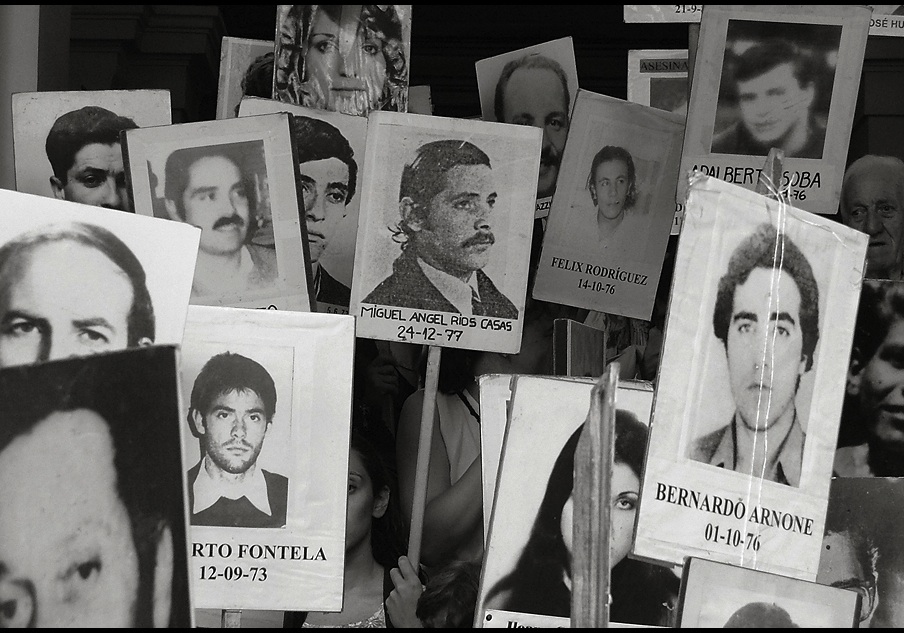
La CIJ, TRIAL, FIACAT, ACAT-France et le CFDA ont présenté au Comité des Nations Unies contre les Disparitions Forcées une soumission sur le respect par la France de la Convention internationale pour la protection de toutes les personnes contre les disparitions forcées.
Le document se concentre autant sur la législation actuellement en vigueur en France et ses pratiques que sur le projet de loi (Projet de loi No.250) en instance face à la législature d’Etat qui vise à mettre le système légal français en conformité avec les obligations inscrites dans la Convention.
France-UNCED-JointSubmission-2013-français (Téléchargez le document complet en français)
Photo credit: © Montecruz Foto (L’auteur de la photo n’au aucun lien avec, ni ne soutient, cette soumission)
Mar 26, 2013
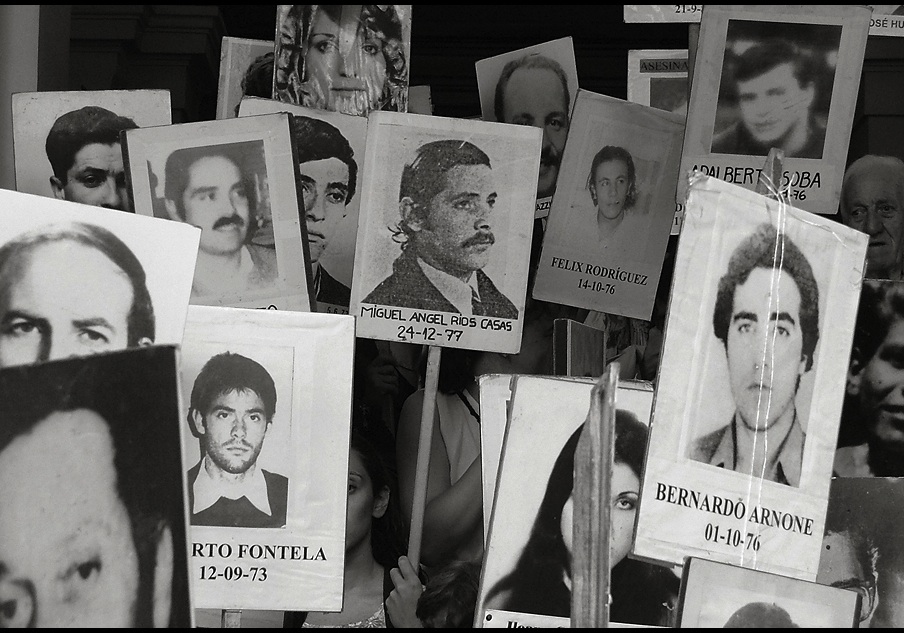
The ICJ, TRIAL, FIACAT, ACAT-France and CFDA have presented to the UN Committee on Enforced Disappearances a submission on the respect by France of the International Convention for the Protection of All Persons from Enforced Disappearance.
The joint submission focuses on both current French legislation and practice and a draft law (Projet de loi No. 250), pending before the State’s legislature, which aims to bring the French legal system into compliance with the obligations enshrined in the Convention.
France-UNCED-JointSubmission-2013-français (download the submission in French)
France-UNCED-SummarizedSubmission-2013-english (download the summarized submission in English)
Photo credit: © Montecruz Foto (the author of the picture has no involvement in nor does support this submission)
Mar 21, 2013 | News
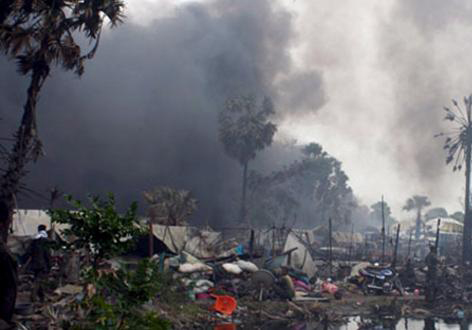
A resolution adopted today by the UN Human Rights Council highlights the Sri Lankan Government’s ongoing failure to provide accountability for serious violations of human rights and the laws of war, the ICJ said.
“The ICJ welcomes this resolution as it underscores the international community’s continuing concern about the horrific atrocities committed by all sides to the Sri Lankan conflict,” said Alex Conte, Director of ICJ’s International Law and Protection Programmes. “The UN, as well as the Commonwealth and other international organizations interested in helping the Sri Lankan people, should now press and assist the Sri Lankan Government to show tangible implementation of their oft-repeated promises.”
Twenty-five States supported the resolution, following from a similar resolution adopted by the Council on Sri Lanka last year.
The resolution reiterates the need for the Sri Lankan Government to demonstrate tangible steps to ensure accountability for violations of human rights and the laws of war, especially during the final months of the three-decade long conflict in 2009.
In particular, the resolution calls on the Sri Lankan Government to implement the recommendations of its own Lessons Learnt and Reconciliation Commission (LLRC).
The LLRC was widely criticized by Sri Lankan civil society as well as international observers as falling short of international standards of providing accountability.
“Sri Lanka has a long history of promising justice but delivering impunity, and the LLRC is only the most recent example of that. With this resolution, the international community shows it wants to see concrete action,” Conte added. “Not only has the Sri Lankan Government not addressed the violations of the past, but there are strong indications that the rule of law has significantly deteriorated.”
The resolution notes with concern the ongoing reports of human rights violations being committed with impunity in Sri Lanka, including enforced disappearances, extrajudicial killings and torture.
In October 2012, the ICJ released a 150-page report Authority without Accountability: The Crisis of Impunity in Sri Lanka, documenting the systematic erosion of accountability mechanisms in Sri Lanka.
In recent months, Sri Lanka’s Government has stepped up its assaults on the independent functioning of the judiciary. In particular, the country’s Chief Justice was removed from office after she had challenged the legality of Government efforts to consolidate authority. The heavily politicized impeachment process was declared unconstitutional by the Supreme Court of Sri Lanka and was inconsistent with international human rights law and standards.
“In light of this resolution and the situation in Sri Lanka, the Commonwealth should change its plans to hold the 2013 Commonwealth Heads of Government Meeting in Colombo,” said Conte. “Sri Lanka has demonstrated its rejection of the Commonwealth Principles, notably democracy, the independence of the judiciary and human rights. This will no doubt be further confirmed when the High Commissioner for Human Rights presents her oral update to the Human Rights Council in September this year, just two months ahead of the scheduled Heads of Government Meeting.”
The ICJ has urged the Commonwealth Ministerial Action Group (CMAG), which meets next month, to address the human rights situation in Sri Lanka with the objective of removing its right to host the Heads of Government Meeting.
CONTACT:
Sam Zarifi, ICJ Asia-Pacific Regional Director, (Bangkok); t:+66(0) 807819002; email: sam.zarifi(at)icj.org
Sheila Varadan, ICJ Legal Advisor, South Asia Programme (Bangkok); t: +66 857200723; email: sheila.varadan(at)icj.org
NOTES:
- The resolution of the Council was adopted by 25 votes in favor, 13 against and 8 abstentions (with Congo, Ecuador, Indonesia, Kuweit, Maldives, Mauritania, Pakistan, Philippines, Qatar, Thailand, Uganda, United Arab Emirates and Venezuela voting against; and Angola, Botswana, Burkina Faso, Ethiopia, Japan, Kazakhstan, Kenya, Malaysia abstaining)
- The resolution was led by the United States of America and co-sponsored by Austria, Canada, Estonia, Germany, Ireland, Italy, Montenegro, Poland, Romania, Spain, and Switzerland; as well as by the following non-member States of the Council: Belgium, Bulgaria, Croatia, Denmark, Finland, France, Georgia, Greece, Hungary, Iceland, Liechtenstein, Lithuania, Malta, Monaco, Norway, Portugal, Saint Kitss and Nevis, Slovakia, Slovenia, Sweden and the United Kingdom of Great Britain and Northern Ireland.
- In January 2012, Chief Justice Dr Shirani Bandaranayake was removed in an impeachment process that violated international standards of due process and was declared unconstitutional by the Supreme Court. The impeachment was widely condemned internationally. The ICJ issued a letter supported by fifty-six senior jurists from over thirty countries worldwide.
RELATED ARTICLES:
Open letter: Sri Lanka should not host the 2013 Commonwealth Heads of Government Meeting
ICJ calls for International Commission of Inquiry on accountability in Sri Lanka
The International Commission of Jurists welcomes key Human Rights Council resolution on Sri Lanka
Sri Lanka: judges around the world condemn impeachment of Chief Justice Dr Shirani Bandaranayake