May 24, 2018 | News, Publications, Reports, Thematic reports
The widespread occurrence of sexual and gender-based violence (SGBV) in Swaziland requires prompt action to enact the Sexual Offences and Domestic Violence Bill, says the ICJ in a report released today.
The ICJ’s report found that discriminatory practices based on customary laws and traditional beliefs undermine equality between men and women and contribute to an environment in which SGBV is at crisis point in the country.
“As the Senate of Swaziland deliberates over the Sexual Offences and Domestic Violence Bill, it must recall that enactment of the Bill is an essential step in complying with recommendations of the UN Human Rights Committee and CEDAW Committee and as a means of discharging the commitments made by His Majesty’s Government during the 2016 Universal Periodic Review,” said Arnold Tsunga, Director of the ICJ Africa Regional Programme.
In earlier submissions to the Senate of Swaziland, the ICJ noted that enactment of the Bill is a matter required of the Kingdom of Swaziland pursuant to its international human rights law obligations, including those arising from the Africa region, to criminalize and sanction the perpetrators of SGBV.
His Majesty’s Vision 2022, the aims and targets of the Deputy Prime Minister’s Office and Swaziland’s consensus in the adoption of the 2030 Agenda for Sustainable Development reinforce compliance with those obligations.
The Sexual Offences and Domestic Violence Bill 2015, first drafted over ten years ago, has still not been passed into law, including because there is a perception that some of its provisions will infringe Swazi law and custom.
“Legislative and policy reform is needed as is the enhanced technical capacity and commitment of justice actors and policy makers to combat domestic and sexual violence,” Tsunga added.
Contact
Arnold Tsunga, Director, ICJ Africa Regional Programme, t: +27.73.131.8411; e: arnold.tsunga(a)icj.org
Alex Conte, ICJ Global Redress and Accountability Initiative, t: +41.79.957.2733; e: alex.conte(a)icj.org
Download
Swaziland-GRABaselineStudy-Publications-Reports-Thematic reports-2018-ENG (full report in PDF)
Mar 20, 2018 | Advocacy
The ICJ today submitted a briefing note to the Senate of Swaziland calling for its urgent adoption of the Sexual Offences and Domestic Violence Bill 2015.
The ICJ’s briefing note concludes that enactment of the Bill is a matter required of the Kingdom of of Swaziland pursuant to its regional and universal human rights law obligations to criminalize and sanction the perpetrators of sexual and gender-based violence. Compliance with those obligations is reinforced by the ‘Vision 2022’ of His Majesty King Mswati III, the aims and targets of the Deputy Prime Minister’s Office and Swaziland’s consensus in the adoption of the 2030 Agenda for Sustainable Development.
The ICJ’s briefing note also concludes that, ten years after initial drafting of the Bill, its enactment during the current session of the Parliament of Swaziland is an essential step in complying with recommendations of the UN Human Rights Committee and CEDAW Committee and as a means of discharging the commitments made by His Majesty’s Government during the 2016 Universal Periodic Review.
Swaziland-SOADVBill-Advocacy-ParliamentaryBriefingNote-2018-ENG (Parliamentary Briefing Note, in PDF)
Feb 26, 2018 | Events
On 28 February 2018, the ICJ is holding a workshop on combatting sexual and gender-based violence (SGBV) in Swaziland, in cooperation with Women and Law in Southern African – Swaziland (WLSA Swaziland) and the Swaziland Action Group Against Abuse (SWAGAA).
The workshop, held as part of the ICJ’s Global Redress and Accountability Initiative, will consider the prevalence of SGBV in Swaziland, and contributing factors, and will focus on the extent to which perpetrators of such violence are, and can be, held accountable in law and in practice and the means by which victims of SGBV may better access effective remedies and reparation.
Participants will also discuss opportunities for engagement with UN mechanisms on addressing SGBV in the Kingdom of Swaziland.
The workshop is set against the backdrop of urgent recommendations adopted by the UN Human Rights Committee in 2017 on the combatting of violence against women, in respect of which Swaziland must report to the Committee by July 2018.
It comes ahead of Swaziland’s anticipated report, also due in July 2018, to the UN Committee on the Elimination of All Forms of Discrimination Against Women which in 2014 also adopted several recommendations on the combatting of violence against women.
The workshop also comes as national debates continue on the enactment of the Sexual Offences and Domestic Violence Bill, which Swaziland had committed to enact without delay at its 2016 Universal Periodic Review.
Workshop Agenda
Feb 8, 2018
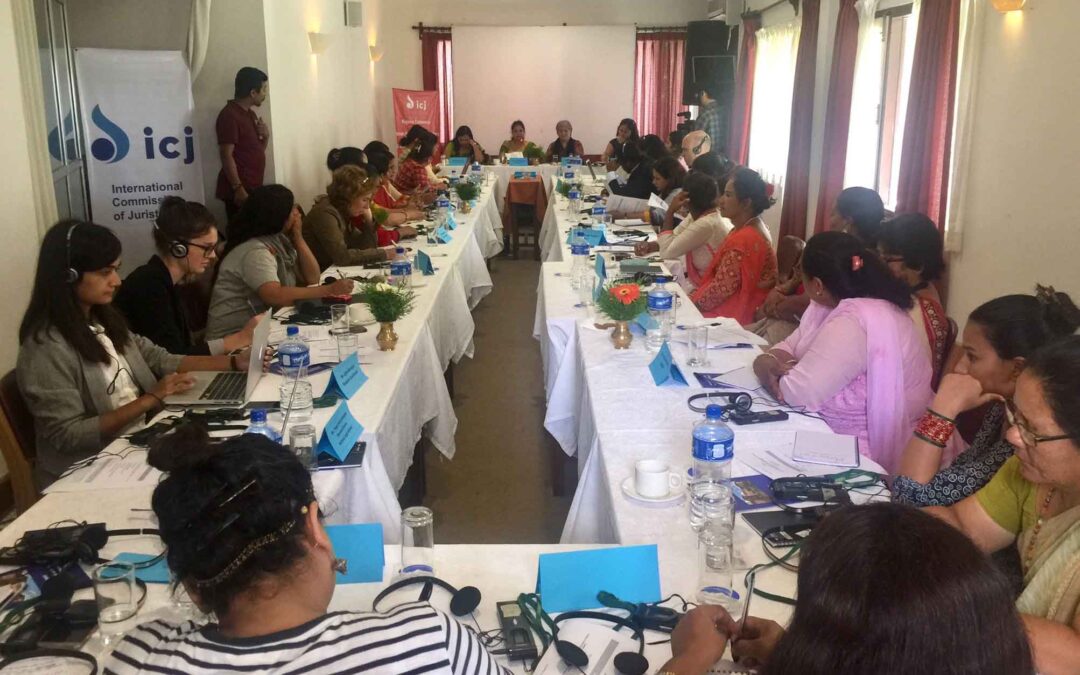
Today, the ICJ released a new briefing paper concerning its Regional Conference on Women Human Rights Defenders as Political Actors (28-29 August 2017), which brought together women human rights defenders (WHRDs) from all over Nepal who were elected in May 2017.
The conference focused on how newly-elected WHRDs could continue to advance human rights in their new roles as elected officials, with specific attention paid to encouraging equal participation of women in public affairs and furthering their advocacy for human rights.
The attached briefing paper lays out the key points of the conference and offers a set of future actions aimed at supporting WHRDs in their role as political actors pursuing a human rights agenda.
Nepal-WHRD-Advocacy-Analysis brief-2018-ENG (Briefing Paper in PDF)
Dec 21, 2017 | News
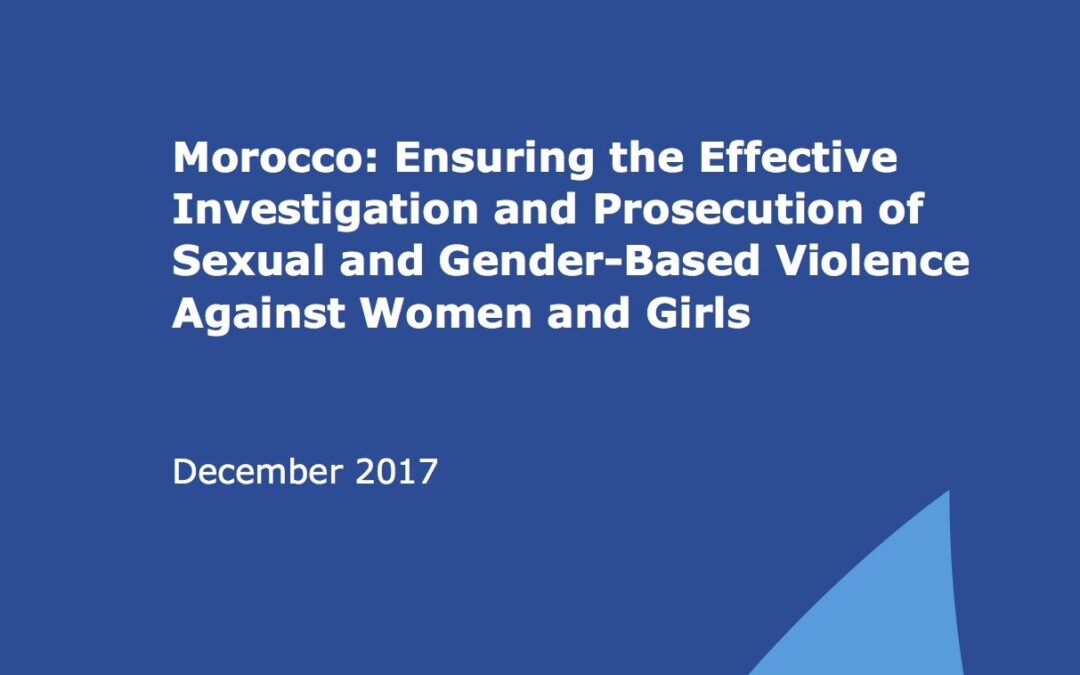
The ICJ today called on the Moroccan authorities to effectively investigate and prosecute sexual and gender-based violence (SGBV) offences, including by ensuring the rights of victims to effective remedies and reparation and by combatting the impunity prevailing in Morocco over such offences.
The statement came following a high-level mission to Morocco from 18 to 21 December 2017 in which the ICJ launched its memorandum Morocco: ensuring the effective investigation and prosecution of sexual and gender-based violence against women and girls, and engaged with members of the government, the Parliament and the judiciary on the findings and recommendations of the memorandum.
Based on a review of 75 judgments handed down by Moroccan First Instance Tribunal and Courts of Appeal in cases involving SGBV offences, and on interviews with various actors in the justice system, the ICJ documented how the lack of guidelines on investigating and prosecuting SGBV, combined with the inadequacy of evidentiary rules and procedures, frustrate the successful prosecution of SGBV cases in Morocco.
Cases are often dismissed on grounds of insufficient evidence; and sentences, in those cases brought to trial, are often disproportionately lenient. This is partly due to the prevalence of judicial stereotyping, reduction of sentence when the defendant marries the victim (a practice that itself raises human rights concerns), and the arbitrary or unexplained application of mitigating circumstances such as the “social situation of the defendant” or “the relative seriousness of the acts that were committed”.
“Moroccan authorities should overhaul the framework and procedures on investigation and prosecution of SGBV,” said Saïd Benarbia, Director of the ICJ Middle East and North Africa Programme. “They should ensure effective and timely protective measures for the victims; provide for clear guidelines and protocols for law enforcement officers, prosecutors, doctors and other health professionals, and consolidate and supplement the victims’ testimony with additional evidence, in particular medico-legal and forensic evidence.”
“Those in charge of investigations and prosecutions must also minimize the burden on the victims with a view to avoiding their secondary victimization; refrain from stereotyping, victims’ blaming and other harmful practices that undermine the rights of the victims, and challenge, by way of appeal, disproportionately lenient sentences,” concluded Martine Comte, honorary judge and former President of the Court of Appeal of Orléans, France, who led the ICJ Mission.
Contact:
Saïd Benarbia, Director of the ICJ Middle East and North Africa Programme, t: +41.22.979.3817, e: said.benarbia(a)icj.org
Additional information
The mission was led by Martine Comte, honorary judge and former President of the Court of Appeal of Orléans, France, and included Saïd Benarbia, Director of the ICJ MENA programme, and Giulia Soldan, Programme Manager of the ICJ MENA programme.
The ICJ delegation met with Mr Mohamed Aujjar, Minister of Justice; Mr Adil El Bitar, President of the Commission on Justice, Legislation, and Human Rights at the Chamber of Deputies; Mr Mohamed Abdennabaoui, President of the Office of the Public Prosecutor and Prosecutor General of the Cassation Court; and representatives of civil society.
This Press Release is also available in Arabic (in PDF format), here: MOR Mission Dec PR ARABIC
The memorandum Morocco: ensuring the effective investigation and prosecution of sexual and gender-based violence against women and girls is available (PDF format):