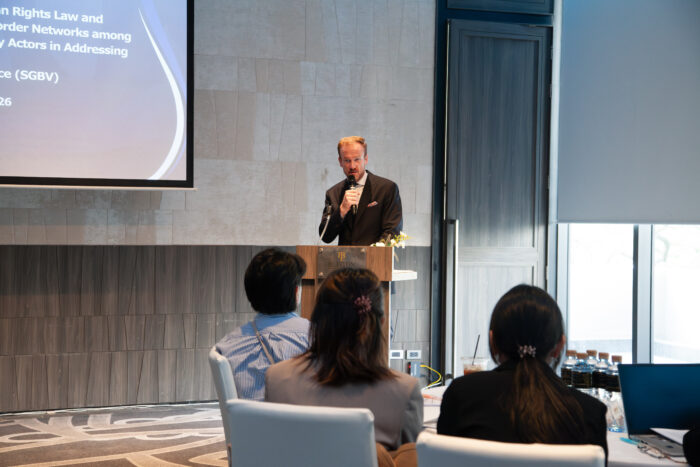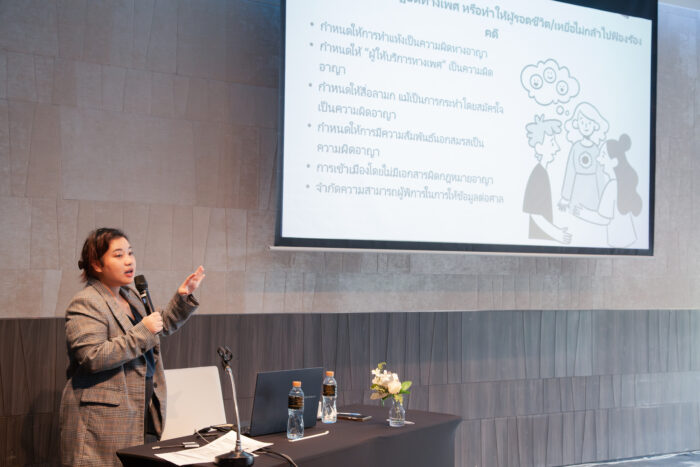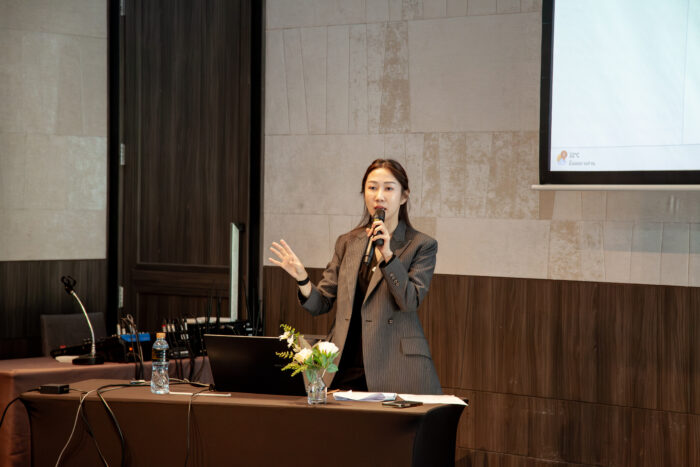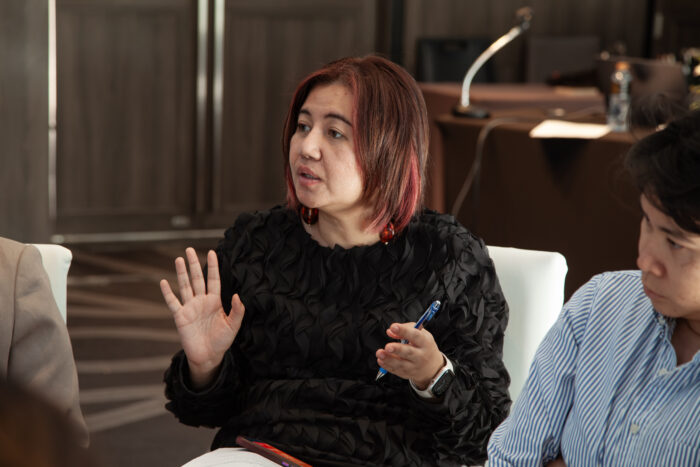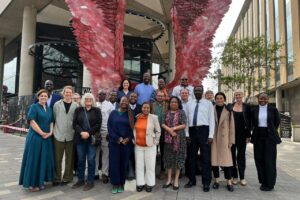
On 23–24 March 2026, the International Commission of Jurists (ICJ), with the support of the Embassy of the Netherlands in Bangkok, hosted a closed-door, two-day cross-border workshop in Bangkok to discuss ways to strengthen legal and institutional responses to sexual and gender-based violence (SGBV), including its transnational and technology-facilitated dimensions.
The workshop brought together 23 lawyers, civil society representatives, and frontline advocates from Lao PDR and Thailand. Through an intensive exchange, participants examined the practical barriers survivors face in accessing justice and how to harness international human rights law and standards as tools for advocacy and redress.
The workshop was convened as a direct positive response to a recommendation by the ICJ in the recently launched Baseline Study on Access to Justice for SGBV in Lao PDR and Thailand, namely the need for training for justice sector actors on the application of international human rights law and standards to the investigation, prosecution, adjudication, and sentencing of SGBV-related offences, and on preventing and countering gender stereotyping.
The workshop took account of the study’s findings on the legal and policy frameworks of both countries, their implementation in practice, the gaps identified therein, and their compliance with international human rights obligations.
The workshop considered the gaps identified in both countries through the findings of the Baseline Study, including excessively narrow legal definitions and evidentiary barriers, under-resourced support services, and the growing complexity of cross-border and technology-facilitated gender-based violence (TFGBV). Participants identified common barriers across both jurisdictions, including narrow statutory definitions of sexual offences, persistent reliance on proof of force or physical resistance rather than the absence of consent, gender stereotyping in evidentiary practices, and limited remedies for survivors and victims.
A dedicated legal session of the workshop examined rape provisions in both countries against the standards set out in the Convention on the Elimination of All Forms of Discrimination against Women (CEDAW) and its related guidelines.
The workshop also considered the widespread overreliance on alternative dispute resolution (ADR) mechanisms in both countries — such as community-based justice systems and religious dispute resolution — which, in several cases, have served to obstruct formal justice processes and undermine survivors’ access to justice and effective remedies. Participants analysed whether the use of ADR in their respective countries complies with international human rights law and standards, including the CEDAW, and discussed how such mechanisms should be regulated to ensure their compliance.
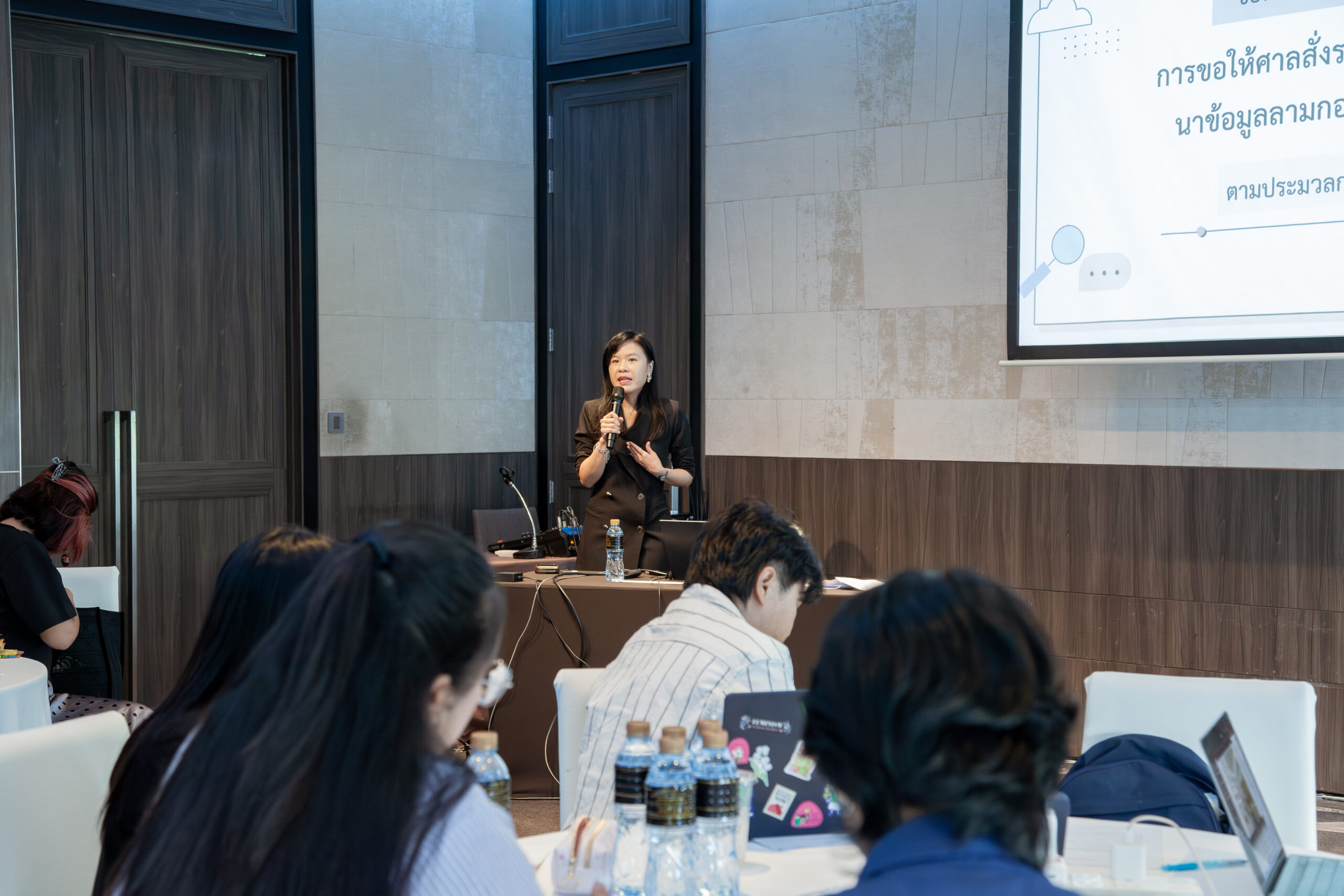
The workshop featured a panel discussion with two members of the Thai judiciary and a representative of the Lao Bar Association: Ampassacha Disatha-Amnarj, Presiding Judge of Nonthaburi Provincial Court; Varamon Ramangkura, Judge of the Court of First Instance, Office of the President of the Supreme Court; and Thipphasone Luangaphay, Head of the Administration Office, Lao Bar Association.
Judge Disatha-Amnarj underscored Thai courts’ obligation to treat SGBV victims and survivors with dignity, prevent re-traumatization, and ensure survivor-centred proceedings. She highlighted ongoing efforts through the establishment of a dedicated gender unit, a working group conducting research to improve gender-sensitive approaches and eliminate gender stereotyping in Thai courts when handling SGBV cases.
Judge Ramangkura introduced a newly established system allowing electronic petitions to courts to order the suspension and removal of “obscene material” from computer systems in cases of TFGBV. The session also included an exchange on how both Thai and Lao victims and survivors may access and make use of this mechanism.
Luangaphay presented recent developments in the protection of SGBV victims and survivors, highlighting that the Lao Bar Association has established a women’s and children’s rights lawyer group, developed a UN-supported Gender Action Plan, and deployed provincial legal aid lawyers to extend access to justice for women in remote areas.
The workshop closed with a forward-looking session on cross-border cooperation. Participants discussed potential areas of collaboration, including the use of Thailand’s SGBV-focused digital platform — which was said to provide trusted information, referrals, and safer pathways for those affected by SGBV — in both Thai and Lao contexts. Participants also agreed on the need for a follow-up virtual workshop to address areas requiring further discussion, which ICJ intends to convene in May.
Further readings
Lao PDR: Addressing gaps in access to justice for survivors of sexual and gender-based violence
Contact
Sanhawan Srisod, Senior Legal Adviser, Legal and Policy Office, e: sanhawan.srisod@icj.org
Saovanee Kaewjullakarn, Associate Legal Adviser, ICJ Asia and the Pacific Programme, e: saovanee.kaewjullakarn@icj.org