Sep 5, 2018 | News
The ICJ today signed a joint statement with other international organizations based in Europe that cooperate on Guatemala condemning the decision of Jimmy Morales not to renew the mandate of the International Commission against Impunity in Guatemala (CICIG).
The statement also repudiates the subsequent decision by President Morales to bar the CICIG Commissioner Iván Velásquez from returning back to the country.
The CICIG has made a significant contribution to the work of the Public Prosecutor’s Office, the strengthening of the rule of law and the fight against corruption networks.
The statement expresses grave concern that on 31 August 2018 the government used tanks and heavily armed policemen to intimidate CICIG personnel as well as Guatemalan citizens, while announcing the decision not to renew the mandate of the CICIG. “The image of President Jimmy Morales surrounded by the military and police at the press conference evokes the memory of the coup d’état and the military dictatorships during the dark years of the internal armed conflict,” the statement adds.
The organisations signing the statement call on the European Union and its Member States to demand that the state of Guatemala complies with its international obligations and guarantees the necessary conditions for Commissioner Iván Velásquez and the CICIG to continue their work safely and independently.
The full statement is available here: Guatemala-Statement on decision about CICIG and Velasquez-News-2018-ENG
Sep 5, 2018 | Events, News
The ICJ will participate in the side event “Accountability and the need to end impunity for human rights violations in Yemen,” organized by the CIVICUS, FIDH, CIHRS in cooperation with Mwatana for Human Rights and the Gulf Centre for Human Rights (GCHR).
This side event at the Human Rights Council will take place on Monday, 10 September 2018 from 12:00 – 13:00 in room XXIV of the Palais des Nations.
The issue of human rights defenders including bloggers, Internet activists, and journalists who are at extreme risk of persecution will be discussed.
Speakers:
- Radhya Al-Mutawakel, Co-founder and Chairperson of Mwatana for Human Rights
- Khalid Ibrahim, Executive Director, Gulf Centre for Human Rights (GCHR)
- Vito Todeschini, Associate Legal Adviser, International Commission of Jurists (ICJ)
- Miriam Puttick, Head of MENA Programmes, Ceasefire for Civilians Rights
Moderator:
Antoine Madelin, International Advocacy Director, International Federation for Human Rights (FIDH)
Yemen-Side event at HRC-News-events-2018-ENG (download the flyer)
Sep 5, 2018 | Noticias
Hoy la CIJ firmó una declaración conjuntamente con una docena de otras organizaciones internacionales basadas en Europa que cooperan en Guatemala, condenando la decisión del Presidente Jimmy Morales de no renovar el mandato de la Comisión Internacional Contra la Impunidad en Guatemala (CICIG).
La declaración también repudia la decisión subsecuente del Presidente Morales de impedirle al Comisionado Iván Velásquez (foto) regresar al país.
La CICIG ha realizado contribuciones significativas al trabajo de la Fiscalía, el reforzamiento del estado de derecho y la lucha contra las redes de corrupción.
La declaración expresa una gran preocupación de que, el 31 de agosto del 2018, el gobierno haya recurrido a tanques y policías fuertemente armados afín de intimidar al personal de la CICIG y además a ciudadanos/as guatemaltecos/as, al anunciar la decisión de no renovar el mandato de la CICIJ.
La declaración agrega: “La imagen del Presidente Jimmy Morales rodeado de militares y policías en la conferencia de prensa evoca memorias de golpes de estado y dictaduras militares durante los años negros de conflictos armados internos”.
Las organizaciones firmantes hacen un llamado a la Unión Europea y sus Estados miembros para exigir que el Estado de Guatemala cumpla con sus obligaciones internacionales y que garantice las condiciones necesarias para que el Comisionado Iván Velásquez y la CIGIC puedan continuar su trabajo de manera segura e independiente.
Guatemala-Statement on decision about CICIG and Velasquez-News-2018-SPA (texto completo de la declaración, en pdf)
Sep 4, 2018 | News
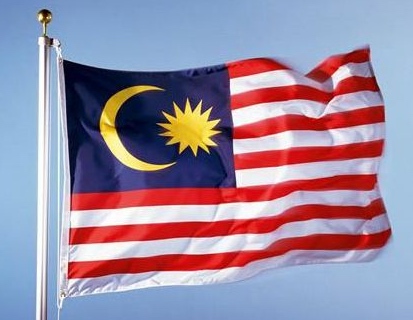
The ICJ today condemned the public caning of two women, a punishment imposed upon them by the Terengganu High Court after conviction on charges of ‘attempting to have sexual intercourse’.
The ICJ called on the Government of Malaysia to immediately abolish the practice of caning as it constitutes a form of cruel, inhuman or degrading punishment prohibited under international human rights law and standards.
Furthermore, it also called on the Government to ensure that its laws, policies and practices at the local, state, and federal levels are in full compliance with its international legal obligations, including under the Convention on the Elimination of all forms of Discrimination against Women (CEDAW).
On 3 September 2018, two women, aged 23 and 33, were publicly caned in front of a hundred people in Terengganu, a coastal state of Malaysia, located northeast of Kuala Lumpur.
The two women were convicted under Section 30 of the Syariah Criminal Offences (Terengganu) Enactment 2001, for the crime of ‘Musahaqah’ (sexual relations between female persons).
“This punishment is a clear violation of Malaysia’s obligations to prevent, prohibit and prosecute all forms of torture and other cruel, inhuman or degrading treatment or punishment. The Government of Malaysia should immediately abolish the practice of corporal punishment, which has been condemned by international authorities such as the UN Human Rights Council’s Special Rapporteur on torture,” said Emerlynne Gil, ICJ’s Senior International Legal Adviser.
“It is equally deplorable that Malaysia continues to criminalize consensual same sex relations. The criminalization of private consensual sexual activities – whatever the sex, gender identity and sexual proclivities of those involved, and whatever the actual sexual practices – violates international human rights law. It also undermines women’s enjoyment of their rights to privacy, personal integrity, and equality,” she added.
The Human Rights Committee has said that criminalizing private sexual acts between consenting adults constitutes an arbitrary interference with privacy and cannot be justified.
It has also observed in a number of Concluding Observations that the criminalization of private consensual sexual activities between adults of the same sex violates the prohibition of discrimination, and the right of equality before the law.
The ICJ also notes that early this year, the CEDAW Committee recommended to Malaysia to “take effective measures to ensure that civil law and Syariah law are in full compliance with the provisions of the Convention at local, state, and federal levels” so as to guarantee the rights of all women throughout the country.
The ICJ calls on the Government of Malaysia to abide by its obligations under international law and follow through with its commitment to human rights, non-discrimination and equality by abolishing the sentence of caning and the criminalization of consensual same sex relations in the country.
Contact
Emerlynne Gil, ICJ Senior International Legal Adviser, t: +66 840923575, e: emerlynne.gil(a)icj.org
Background
On 8 April 2018, religious state authorities arrested the two women who were in a car and accused them of preparing to ‘commit sexual acts’, which is an offense in the State of Terengganu, under the Syariah Criminal Offences (Terengganu) Enactment 2001. The women pleaded guilty to the offence without being represented by a lawyer and did not appeal their case.
On 12 August 2018, the two women pleaded guilty and were sentenced by the Terengganu Shariah to a fine of RM3,300 ($800 USD) and six strokes of caning for attempting to have sexual intercourse.
This is the first case of caning of women for ‘Musahaqah’ (sexual relations between female persons) crime and its attempt in Malaysia and it marks a steady decline in Malaysia’s commitment to protect the rights of its sexual minorities and the members of the LGBTIQA community.
In Malaysia’s Criminal Procedure Code, under Federal law, it states that
“No sentence of whipping shall be executed by installments, and none of the following persons shall be punishable with whipping: (a) females;”
Malaysia’s Federal Constitution provides that Islamic law falls under the matters of State law, with the exception of the Federal States.
It is concerning that the Syariah legal system in Malaysia continues to carry out caning in a manner that is discriminatory against women, and women sexual minorities, as seen in the 2010 case, where three women were found guilty of ‘illicit sex’ by the Kuala Lumpur Syariah Court, as well as the continuing use of Syariah legal enactments to harass, intimidate and prosecute the transgender community in Malaysia.
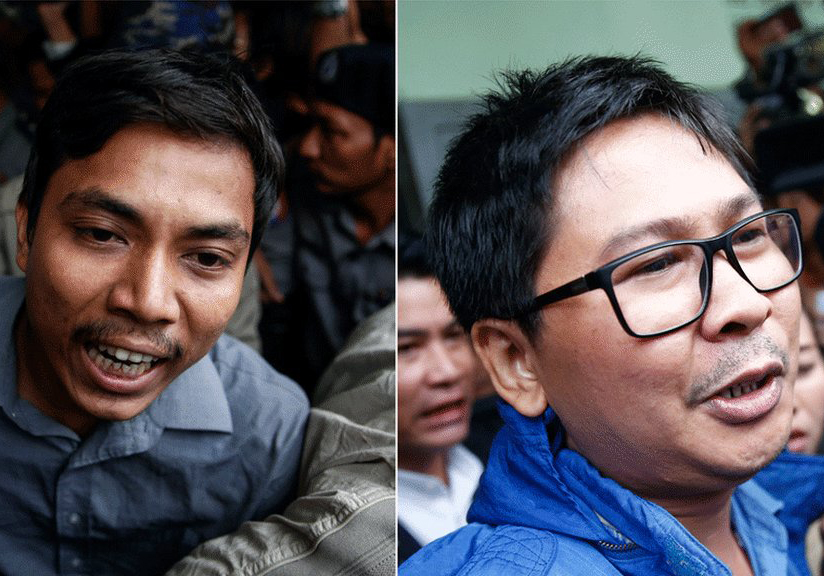
Sep 3, 2018 | News
The Yangon District Court’s decision today to sentence Reuters journalists Wa Lone and Kyaw Soe Oo to seven years’ imprisonment for violating the Official Secrets Act deals a massive blow to human rights and the rule of law in Myanmar, said the ICJ.
“The Court’s decision effectively punishes these two courageous journalists for exposing human rights violations, following a grossly unfair trial,” said Frederick Rawski, Asia Pacific Director for the ICJ.
“The decision is a miscarriage of justice that inflicts needless suffering on them and their families, threatens freedom of expression, damages Myanmar’s global standing, and undermines its justice institutions all at once,” he added.
The ICJ has monitored the case since the journalists’ initial detention in December 2017.
As previously noted by the ICJ, the detention and trial has violated numerous basic fair trial guarantees.
The prosecutors had a duty to drop charges and the judge should have dismissed the case given the lack of evidence and the unlawfulness of detention because of fair trail rights violations.
“The case is emblematic of how the justice system ends up reinforcing rather than challenging military impunity,” said Rawski.
“The result undermines government claims that it can deliver accountability for human rights violations on its own, and does nothing to build trust that justice system can act independently and impartially after emerging from decades of military rule,” he added.
Members of security forces generally enjoy impunity for the perpetration of human rights violations, including for crimes under international law.
The ICJ has previously reported that victims and their families, as well as journalists, often face retaliation for publicizing human rights violations by the military.
Wa Lone and Kyaw Soe Oo were arrested in December 2017, and held incommunicado for nearly two weeks, before being charged under the colonial-era Official Secrets Act for allegedly possessing documents related to the operations of security forces in northern Rakhine State, during “clearance operations.”
The two reporters had been reporting on human rights violations in Rakhine State, including the killing of Rohingya by the military in Inn Dinn Village.
In a report issued just last week, the UN Independent International Fact Finding Mission found that security forces had perpetrated crimes under international law during these operations, including crimes against humanity and possibly the crime of genocide.
The detention and prosecution of anyone, including journalists, based solely on the collection and publication of evidence relevant to serious human rights violations, is a violation of international law and standards on freedom of expression, the right to participation in public affairs and on the role of human rights defenders.
Legal options remaining for the journalists include appealing of today’s decision, and requesting a Presidential amnesty.