Jul 26, 2018 | News
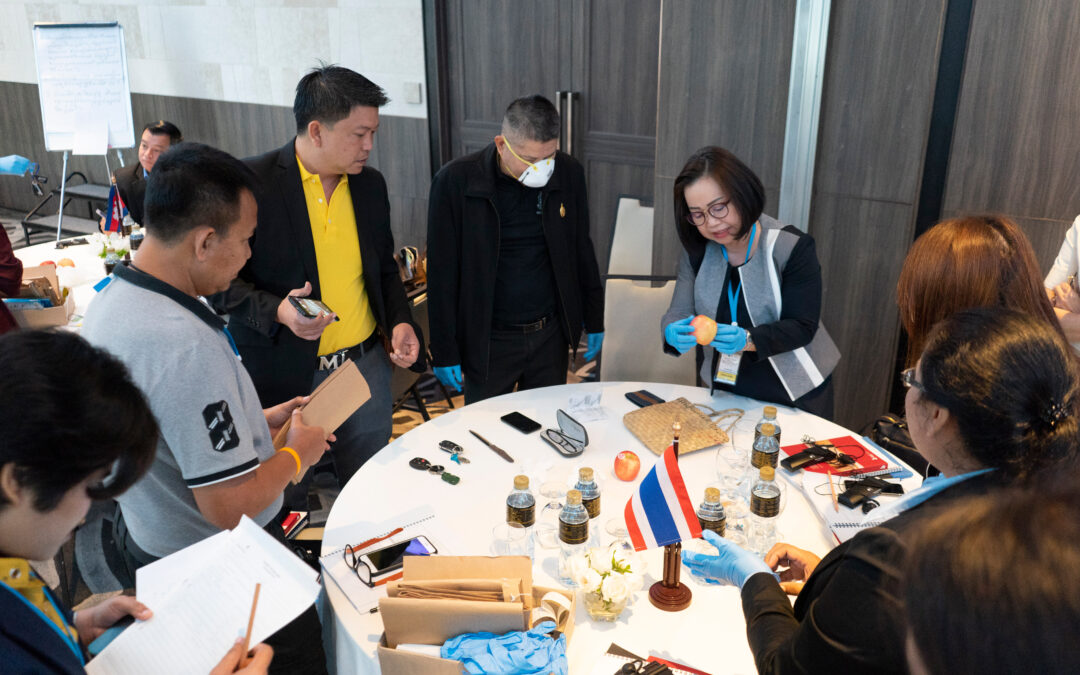
From 24 to 26 July 2018, the ICJ co-hosted a workshop for authorities from Thailand, Cambodia, and Myanmar.
The theme of the workshop was on conducting investigations of potentially unlawful deaths and enforced disappearance in accordance with international human rights law and standards.
The workshop was co-hosted with Thailand’s Ministry of Justice, the United Nations Office of the High Commissioner for Human Rights (OHCHR) and the New Zealand Embassy in Bangkok.
The participants included 25 criminal investigators, public prosecutors and representatives of the Cambodian Ministry of Justice and the Thai Ministry of Justice.
The event commenced with opening remarks by James Andersen, Deputy Head of Mission, Embassy of New Zealand in Bangkok; Aim-orn Siangyai, Deputy Director General of Thailand’s Rights and Liberties Protection Department, Ministry of Justice; Frederick Rawski, Asia Pacific Regional Director, ICJ; and Shivani Verma, Human Rights Officer, OHCHR Regional Office for South-East Asia.
Kingsley Abbott, Senior Legal Adviser at the ICJ, gave a summary of the international human rights legal framework that applies to the investigation of unlawful deaths and enforced disappearance.
He then provided an outline of the revised Minnesota Protocol on the Investigation of Potentially Unlawful Death (2016), which was launched in Thailand on 25 May 2017 and which formed the core of the materials used at the workshop.
Other speakers included Glenn Williams, Detective Inspector, Field Crime Manager, New Zealand Police National Headquarters, who addressed the investigation process including crime scene management; Sean Buckley, International Investigator, who addressed witness interviews; Shivani Verma of the Office of the High Commissioner for Human Rights who addressed Witness Protection; and Dr. Pornthip Rojanasunan, Adviser of Thailand’s Central Institute of Forensic Science (CIFS), who addressed the issue of forensic pathology.
This workshop followed three workshops the ICJ co-hosted between 5 to 8 December 2017 and 30 May to 1 June 2018 in Thailand on the investigation of potentially unlawful deaths and enforced disappearance for lawyers from Thailand and India, academics and State authorities from Thailand, Cambodia, Myanmar and Nepal.
Contact
Kingsley Abbott, Senior International Legal Adviser, ICJ Asia Pacific Regional Office, t: +66 94 470 1345, e: kingsley.abbott(a)icj.org
Jul 24, 2018 | Advocacy, Analysis briefs, News
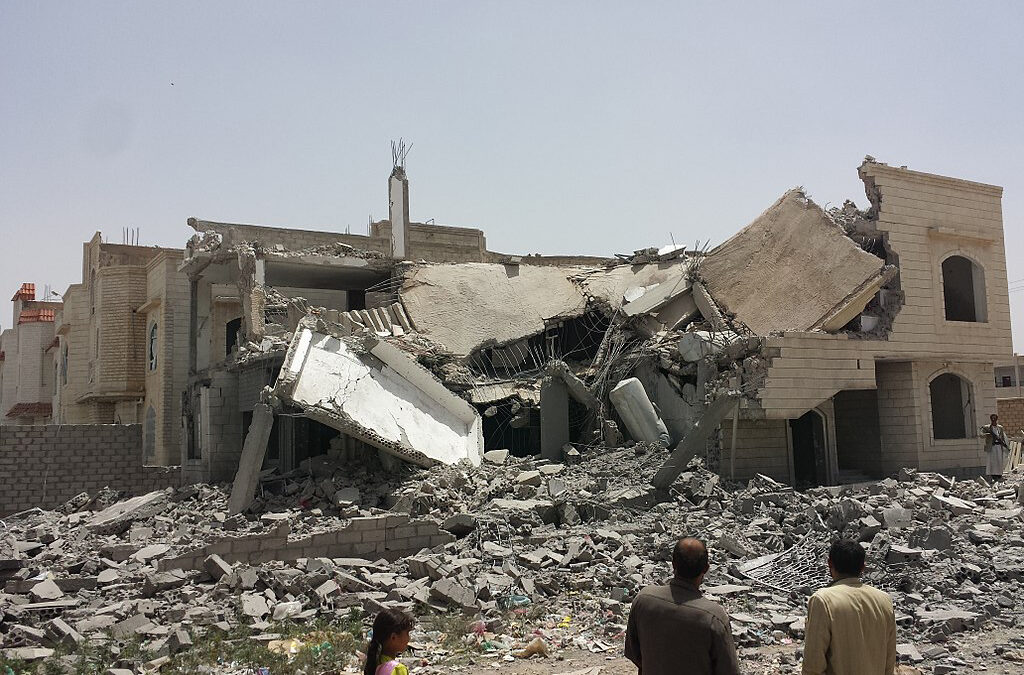
In a briefing paper published today, the ICJ called on the parties to the conflict in Yemen to take immediate and effective measures to ensure the protection of the civilian population, including against human rights abuses and international humanitarian law violations.
Serious violations of international humanitarian law committed in Yemen include direct and indiscriminate attacks against civilians and the impediment of access to humanitarian relief of the civilian population.
Gross human rights violations and abuses include widespread instances of arbitrary arrest and detention, torture and ill-treatment, and enforced disappearances.
The ICJ has called for persons responsible for such violations to be held to account.
“All parties to the conflict in Yemen have acted in blatant disregard of the most basic rules of international humanitarian law and human rights law,” said Said Benarbia, ICJ MENA Director.
“The top priority is to end these violations and in particular to protect the civilian population,” he added.
In its briefing paper, the ICJ analyses international law violations committed in the conduct of hostilities and against persons deprived of their liberty.
The Saudi Arabia-led coalition and the Houthis are allegedly responsible for direct, indiscriminate or disproportionate attacks against civilians and civilian objects, including local markets, food storage sites, water installations and medical facilities.
The United Arab Emirates, the internationally recognized government of Yemen and the Houthis have allegedly engaged in arbitrary arrest and detention, torture and ill-treatment, and enforced disappearances.
The ICJ briefing paper also examines the potential legal implications of the blockade imposed by the Saudi Arabia-led coalition on Yemen and the sieges laid by the Houthis against several towns and localities, which impede the civilian population to access humanitarian relief.
The ICJ briefing paper further assesses the potential responsibility of third States for transferring arms to the parties to the conflict.
Under numerous instruments, including the Arms Trade Treaty, States are prohibited from selling arms to the parties to an armed conflict whenever a risk exists that the end-user could commit international law violations.
Arms transfers may even engage the exporting States’ international responsibility for aiding or assisting in the commission of such violations.
“Victims must have access to effective legal remedies and be provided with adequate reparation,” Benarbia said.
“The international community must state loud and clear that impunity is not an option. The Security Council should refer the situation in Yemen to the International Criminal Court and third States should consider, where feasible, the exercise of universal jurisdiction to prosecute relevant crimes under international law,” he added.
Contact
Vito Todeschini, Associate Legal Adviser, ICJ Middle East and North Africa Programme, t: +216-71-962-287; e: vito.todeschini(a)icj.org
Said Benarbia, Director of the ICJ Middle East and North Africa Programme, t: +41-22-979-3817; e: said.benarbia(a)icj.org
Yemen-War briefing-News-web story-2018-ENG (full story with background information, English, PDF)
Yemen-War impact on populations-Advocacy-Analysis Brief-2018-ENG (Analysis Brief in English, PDF)
Yemen-War briefing-News-web story-2018-ARA (full story with background information, Arabic, PDF)
Yemen-War impact on populations-Advocacy-Analysis Brief-2018-ARA (Analysis Brief in Arabic, PDF)
Jul 24, 2018 | Artículos, Noticias
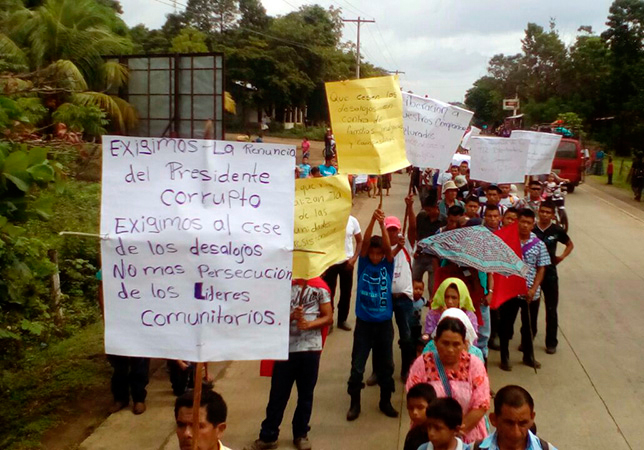
Desde hace años, las y los defensores del departamento de Izabal han sido víctimas de persecución por oponerse al proyecto minero Fénix de la empresa guatemalteca CGN.
La CIJ visitó el departamento de Izabal del 18 al 20 de julio.
El 19 de julio, la CIJ acompañó al periodista Jerson Xitumul, quien participó en una audiencia de sobreseimiento de su caso, conjuntamente con sus abogados, en el Juzgado de Instancia Penal, Narcoactividad y Delitos contra el Ambiente de Puerto Barrios.
Posteriormente, la CIJ realizó un encuentro con la Gremial de Pescadores de Izabal, en el que recibió información acerca de la difícil situación de represión que enfrenta dicha gremial.
El 20 de julio, la CIJ sostuvo una entrevista con el Vice Presidente de la Gremial de Pescadores Eduardo Bin Poou, perseguido y detenido arbitrariamente en el centro de detención de Puerto Barrios.
La CIJ expresa su honda preocupación por la persecusión de que son víctimas los defensores de derechos humanos por el hecho de expresarse y por no estar de acuerdo con la explotación minera que se está llevando a cabo en dicho departamento, debido a que causa graves daños al medio ambiente y un daño irreparable al Lago de Izabal.
La resistencia pacífica de los pobladores de Izabal, contrasta con la persecución violenta de que son objeto.
La CIJ considera que no se trata de hechos aislados, sino de una política de persecución por parte del Estado, quien lleva a cabo estos actos ilegales para beneficiar a la empresa CGN, que explota nickel en el departamento.
En vez de proteger a los defensores de derechos humanos, el Sistema de Justicia guatemalteco ha tomado varias acciones en su contra. Así, varios periodistas pertenecientes a la Prensa Comunitaria, han sido detenidos o tienen orden de captura.
Entre ellos el caso del periodista Jerson Xitumul, cuyo caso fue finalmente sobreseído, por no existir ninguna prueba de que cometió algún hecho delictivo.
Por otro lado, recientemente fue detenido Eduardo Bin Poou, Vicepresidente de la Junta Directiva de la Gremial de Pescadores y acusado falsamente y sin pruebas de que haya cometido delito alguno.
El objetivo principal ha sido afectar a aquellos que ejercitan el derecho a la resistencia, establecido en el artículo 45 de la Constitución Política de la República de Guatemala.
Asimismo, no puede pasar desapercibido que el 27 de mayo de 2017, fue asesinado un dirigente de la Gremial de Pescadores Carlos Maas Coc y herido también el pescador Alfredo Maquín Cocul, casos que hasta el momento se encuentran impunes.
La CIJ ha señalado en varias oportunidades que las autoridades guatemaltecas criminalizan y persiguen a defensores y defensoras del derecho a la tierra, mediante la imputación del delito de usurpación y usurpación agravada.
Asimismo, la CIJ ha señalado que las autoridades guatemaltecas pretenden criminalizar el legítimo ejercicio del derecho a la resistencia, consagrado en el artículo 45 de la Constitución Política de Guatemala, acusando a los defensores del medio ambiente y otros, de delitos como instigación a delinquir, detención ilegal, amenazas, daños, reuniones y manifestaciones ilícitas y otros ilícitos.
Asimismo, esta práctica estatal penaliza y castiga el legítimo ejercicio de las libertades de expresión y reunión.
Preocupa de sobremanera a la CIJ, el papel que juegan las y los jueces en el departamento de Izabal, en la criminalización de defensoras y defensores de derechos humanos.
Un ejemplo lo constituye el caso del Juez Edgar Aníbal Arteaga López, quien utilizando la función pública, suele abusar del poder de que está investido e imponer castigos ejemplares a los defensores de derechos humanos.
Así, con sus resoluciones arbitrarias dicho juez ha afectado a periodistas, pescadores organizados en la Gremial de Pescadores, dirigentes comunitarios, defensores del derecho a la tierra y todo aquel que se opone a la explotación de níquel o que defiende los derechos colectivos de las comunidades en dicho departamento.
Asimismo, en otros casos defensores y defensoras de derechos humanos han sido criminalizados y existe un número considerable de órdenes de captura en todo el país, que afectan a personas que ejercitan el derecho a la libertad de expresión, para defender derechos comunitarios.
Ramón Cadena, Director de la CIJ expresó:
“Urge que el Estado de Guatemala detenga la criminalización y persecución de que son objeto dirigentes comunitarios, periodistas y en general defensores y defensoras de derechos humanos en el departamento de Izabal. Para ello, se debe aplicar el régimen disciplinario interno a jueces que con su actuación, contribuyen a perseguir a estas personas, sólo por su forma de pensar y por ejercer legítimamente sus derechos y libertades. El Estado de Guatemala, deberá reparar los daños y perjuicios causados a defensoras y defensores de derechos humanos, por la actuación de sus autoridades y la CICIG debería investigar estos hechos, para aclarar la verdad de lo sucedido.”
Guatemala-Criminalización Izabal-News-2018-SPA (artículo completo, en PDF)
Jul 24, 2018 | News
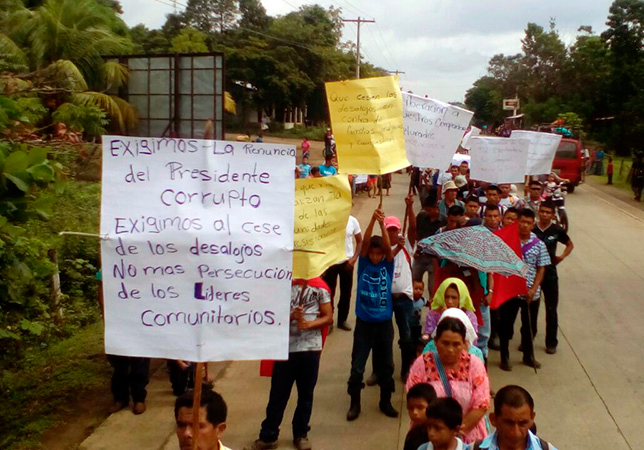
For many years, human rights defenders in Izabal have been the victims of persecution because of their opposition to the Phoenix nickel mining project.
This project has been operated by the Guatemalan Nickel Company (CGN), formally owned by Hudbay and now owned by the Solway Group.
“The ICJ expresses its deep concern about the persecution of human rights defenders opposing to nickel mining operations that are causing serious environmental damage and irreparable harm to the Lake of Izabal.
The local communities’ peaceful resistance contrasts with the violent repression that they face,” Ramon Cadena, Director of the Central American Office of the ICJ, said today.
Ramon Cadena added: “the Guatemalan government must urgently put an end to the criminalization and persecution of community leaders, journalists and all human rights defenders in the Department of Izabal.
Internal disciplinary measures should be taken against judges who through their acts contribute to the persecution of persons exercising their legitimate rights and freedoms.
The State should provide reparations for the harm and prejudice caused to human rights defenders by the public authorities. Furthermore, the International Commission against Corruption and Impunity in Guatemala (CICIG) should fully investigate these acts.“
Eduardo Bin Poou, Vice-President of the Izabal Fishers’ Association was recently detained and falsely accused without any evidence that he had committed any crime.
Last year, on 27 May 2017, Carlos Maas Coc, a leader of the Fishers’ Association was assassinated, and another fisherman, Alfredo Maquín Cocul, was wounded and these crimes remain in impunity today.
From 18-20 July, 2018, the ICJ carried out a visit to the Department of Izabal. On 19 July, the ICJ observed the hearing when the case against Jerson Xitumul, a community journalist, was dismissed for lack of evidence of any wrongdoing, at the Court for Criminal, Narcotics and Environmental Offences in Puerto Barrios.
The ICJ then held a meeting with the Izabal Fishers’ Association and on 20 July, the ICJ interviewed the Vice President of the same Association, Eduardo Bin Poou, arbitrarily detained in the Puerto Barrios prison.
The ICJ is deeply concerned by the role that judges in the Department of Izabal have played in the criminalization of human rights defenders.
Judge Edgar Aníbal Arteaga López has often abused his office by imposing exemplary punishments against human rights defenders.
This judge has handed down arbitrary sentences against journalists, fishermen, community leaders, land rights’ defenders and all those opposed to the nickel operations or who defend community rights in the Department.
For example, because of the arbitrary actions of Judge Arteaga, the community leader, Abelardo Chub Caal, remains in detention although there is no evidence that he has committed any crime.
There are other cases including that of Maria Magdalena Cuc Choc, from the Chabilchoch community, who was detained on 17 January 2018 in Puerto Barrios.
The single Judge for Criminal Proceedings, Narcotics and Environmental Offences in Puerto Barrios, Ana Leticia Peña Ayala, despite the evidence, absolved the retired Colonel Mynor Ronaldo Padilla González (former chief of security for the CGN nickel company) of all charges and ordered his immediate liberty.
During the court case, the Judge Peña Ayala prohibited the public and journalists from entering the court room for so-called “security reasons”, so that most of the proceedings were carried out behind closed doors. With this ruling, the assassination of Adolfo Ich remains in impunity and those responsible have not been punished.
In this same case, Germán Chub was left quadriplegic and the circumstances of the attack against him have never been resolved.
In the hearing on 19 July in the case of Jerson Xitumul, without any justification, Judge Arteaga also prohibited the presence of journalists and international and national observers in the court room.
Both judges flagrantly violated the principle of public hearings established in the Guatemalan Penal Code. A formal complaint was submitted to the Auxiliary of the Human Rights Attorney of the Department of Izabal concerning the actions of Judge Arteaga on 19 July.
The ICJ has stated on a number of occasions that the Guatemalan authorities have persecuted human rights defenders by charging them with crimes of land appropriation or aggravated land appropriation.
In this way, the Guatemalan authorities seek to criminalize the legitimate right to resist, enshrined in article 45 of the Guatemalan Constitution, accusing environmental human rights defenders and others of crimes such as incitement to crime, illegal detention, threats, damages, illicit meetings and marches and other acts. In practice, the State is penalizing the legitimate exercise of the rights of expression and association.
Jul 24, 2018 | Events, News
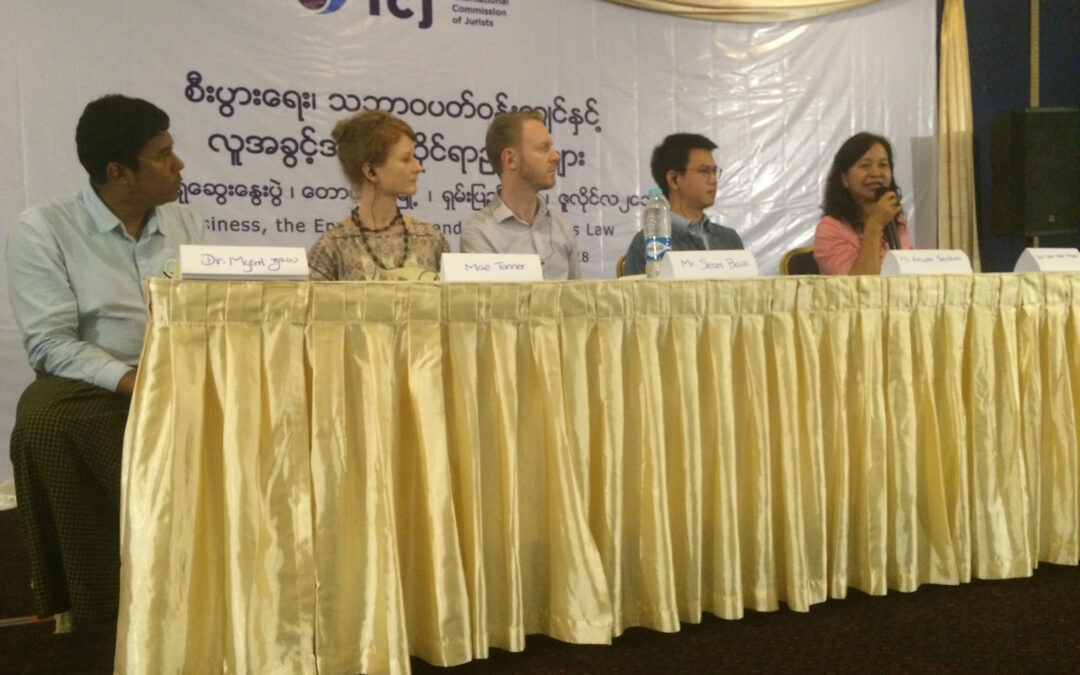
On 22 and 23 July the ICJ convened a workshop on Business, the Environment and Human Rights Law in Taunggyi, the capital of Myanmar’s Shan State.
This followed meetings between the ICJ’s legal advisers and the Shan State High Court and also with the State Advocate General on 13 July, to discuss rule of law developments.
The workshop aimed to identify ways to address the impacts of business activities on human rights and the environment, through legal advocacy including strategic litigation, and to provide a forum for cooperation and experience sharing among participants.
More than 50 lawyers, parliamentarians, human rights defenders and civil society representatives attended from Shan, Kayah and Mon states – provinces that together border Thailand, Laos and China.
An overview of the investment context was provided by Dr Myint Zaw of Paung Ku Myanmar, who also shared lessons from environmental activism in Myanmar.
As well as highlighting weaknesses in domestic law and policy, he presented concerns around lack of transparency and information sharing between the legislature and executive branches of government.
Australian lawyer and ICJ consultant Mae Tanner gave an overview of international human rights law and standards relevant to business activities and environmental protection, particularly emphasizing the obligations assumed by Myanmar in ratifying the International Covenant on Economic, Social and Cultural Rights.
She offered insights as to how UN mechanisms can be used by civil society to advance their advocacy on business and human rights in Myanmar.
Senior Advocate U Myint Thwin drew on his extensive litigation experience to share perspectives on the complex and confusing array of land laws in Myanmar and emphasized the importance of legal knowledge and training to combat corruption and achieve accountability.
The ICJ’s legal adviser Mr Sean Bain outlined the domestic laws relevant to investment and environmental protection in Myanmar and highlighted some key provisions that offer protection against human rights violations and abuses.
He noted the government’s stated aim of promoting the rule of law in Myanmar and emphasized the importance of demanding accountability, transparency and justice in this context.
Amarin Saichan, lawyer with Thai NGO EnLAW, shared experiences of pursuing strategic litigation to address unlawful and harmful business activities in Thailand, stressing the need for creativity in using the law to seek justice and accountability.
He also raised concerns around the use by government of strategic litigation against public participation in Thailand and explained how Thai lawyers are using the courts to guarantee the right protest against harmful development projects.
Participants had the opportunity to discuss how the strategies they shared could be used in the context of issues faced by their communities.
These included human rights and environmental concerns raised by energy and extractive projects, restrictions on shifting agriculture, and violations of the right to freedom of expression and assembly faced by communities who oppose state-backed developments.
They considered advocacy strategies for four case studies selected by participants from across Shan, Kayah and Mon states.
Throughout the workshop speakers and participants highlighted the importance of cooperation between civil society and lawyers, and the need to use Myanmar’s legal system more proactively as part of their broader advocacy strategies.
This workshop is part of the ICJ’s ongoing support to lawyers and civil society in Myanmar.