Jul 24, 2018 | Advocacy, Open letters
The ICJ has submitted recommendations to Thailand’s Criminal Justice Reform Committee concerning the Draft Amending Criminal Procedure Code Act and the Draft Act On Judicial Process Timeframe, which were scheduled for public consultation today.
The ICJ welcomed the Criminal Justice Reform Committee’s efforts to enhance the effectiveness and fairness of the criminal justice system in Thailand, through proposed amendments to Thailand’s Criminal Procedure Code B.E. 2551 (2008) and the Judicial Process Timeframe Act.
The ICJ noted, however, that modifications would be necessary to some of these amendments to ensure they optimally served the ends of justice and were in conformity with international standards.
In particular, the ICJ commended the Committee’s inclusion within the Draft Amending Criminal Procedure Code Act of the following provisions and made recommendations as to how these provisions could be further strengthened:
- Section 13/1. Video and audio recordings of arrests and/or searches
- Section 13/2. Prohibitions against violation of the presumption of innocence
- Sections 121/2, 123 and 124/2. Lodging of criminal complaint with the public prosecutor, at any location and through email or other online medium
- Section 136. Video and audio recordings of inquiry or interrogation
- Section 161/1. Right of the court to dismiss a case where it is filed in bad faith or with misrepresentation of facts in order to harass or take advantage of a defendant
- Section 165/1. Allowing the defendant to submit a defence plea and produce supporting evidence in court
- Section 179/1. Trial in absentia
Contact
Kingsley Abbott, ICJ Senior Legal Adviser, e: kingsley.abbott(a)icj.org
Full letter in English (PDF): Thailand-CPC-Amendments-Advocacy-Open-letters-2018-ENG
Full letter in Thai (PDF): Thailand-CPC-Amendments-Advocacy-Open-letters-2018-THA.pdf

Jul 22, 2018 | News
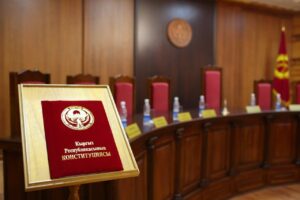
The Supreme Court’s election of a person who is not suitable for the position of substitute judge on the Constitutional Court is deeply concerning for the sound administration of justice and the effective application of the rule of law, the ICJ said today.
Ramon Cadena, the Director of the Central American office of the ICJ added: “with this election, the SCJ has contributed to deepening the crisis in the judicial system and it will affect the little credibility that the Guatemalan people still retain in the justice system.”
The position of substitute judge on the Constitutional Court (CC) had become vacant when the former substitute judge was appointed Attorney General by the President, Jimmy Morales.
The eight judges of the SCJ who voted in favour of the substitute judge of the CC did not comply with international norms and standards on the administration of justice.
The Basic Principles on the Independence of the Judiciary state that “Persons selected for judicial office shall be individuals of integrity and ability with appropriate training or qualifications in law.”
The ICJ has been able to verify that the SCJ judges elected a person who:
- in 2010 was dismissed as Attorney General by the CC shortly after assuming office because the person was deemed not suitable;
- openly opposes the International Commission against Corruption and Impunity (ICCIG) despite the good work that the Commission undertakes to address corruption and impunity;
- in 2010, after assuming the office of Attorney General was accused of intervening in cases concerning corruption and impunity and impairing evidence in these cases.
The ICJ recalls that the CC stated that the acts carried out by Congress on 11 September 2017 were susceptible of causing “irreparable harm to the justice system”.
The ICJ considers that the election by the SCJ of the substitute judge to the CC should also be considered an act of irreparable harm to the justice system.
The ICJ therefore urges the CC to once again protect the rule of law in Guatemala.

Jul 22, 2018 | Artículos, Noticias
La reciente elección del magistrado suplente de la Corte de Constitucionalidad, llevada a cabo por la Corte Suprema de Justicia (CSJ), pone en grave riesgo la justicia constitucional y su imparcialidad.
En efecto, días atrás, la Corte Suprema de Justicia eligió al magistrado suplente de la Corte de Constitucionalidad (CC), puesto que había quedado vacante luego de que la magistrada suplente anterior, fuese electa como Fiscal General por el Presidente de la República.
Los ocho magistrados de la CSJ que votaron a favor del profesional electo como magistrado suplente de la Corte de Constitucionalidad, no han observado las normas y estándares internacionales en materia de administración de justicia.
Los Principios Básicos relativos a la Independencia de la Judicatura estipulan que “Las personas seleccionadas para ocupar cargos judiciales serán personas íntegras e idóneas y tendrán la formación o las calificaciones jurídicas apropiadas.”
No obstante, la CIJ ha podido constatar que los magistrados de la CSJ nombraron a una persona:
a) que en el año 2010, fue destituido como Fiscal General por la propia Corte de Constitucionalidad cuando recién había asumido el cargo, por haber sido considerado una persona no idónea para ocupar tan importante cargo;
b) que abiertamente ha estado en contra de la presencia de la Comisión Internacional contra la Impunidad (CICIG) en el país, a pesar del buen trabajo que ha realizado dicha comisión en la lucha contra la impunidad y la corrupción;
c) que en el 2010, ya en su calidad de Fiscal General y luego de asumir el cargo, fue acusado de afectar casos relacionados con la lucha contra la corrupción e impunidad y de intervenir y afectar la prueba existente en dichos casos.
Por ello, en esta elección, la CIJ tiene hondas y legítimas preocupaciones sobre la verdadera voluntad de la Corte Suprema de Justicia de: a) tramitar un genuino y necesario proceso de depuración del Sistema de Justicia; y b) de apoyar las reformas constitucionales que vendrían a fortalecer el Sistema de Justicia.
Además, con esta elección, la CSJ ha contribuido a profundizar la crisis del Sistema de Justicia; su decisión viene a afectar la poca credibilidad que la población guatemalteca aún tiene en el Sistema de Justicia.
Debemos recordar que los actos del Congreso de la República del 11 de septiembre de 2017, llevaron a la Corte de Constitucionalidad a catalogarlos como actos susceptibles de causar “un daño irreparable a la justicia” en Guatemala.
Es opinión de la CIJ, que la elección del magistrado suplente de la Corte de Constitucionalidad, llevada a cabo por la Corte Suprema de Justicia, también debe ser considerada como una forma de causar un daño irreparable a la justicia.
Por ello, la CIJ tiene la esperanza de que la Corte de Constitucionalidad protegerá, una vez más, el Estado de Derecho en Guatemala.
Ramón Cadena, Director para Centro América de la CIJ expresó: “El acto de la Corte Suprema de Justicia de elegir a una persona que no es idónea para el cargo de magistrado suplente de la Corte de Constitucionalidad, resulta altamente preocupante para una recta administración de justicia y la vigencia efectiva del Estado de Derecho en Guatemala”.

Jul 20, 2018
Supreme Court’s reconsideration of Section 377’s constitutionality is a watershed opportunity to uphold the rights to freedom and equality of every LGBT person, the ICJ said today.
As India’s Supreme Court concludes a week of hearings on the constitutionality of Section 377 of the Indian Penal Code, the ICJ expressed hope that the Court will take the opportunity to invalidate the provision, and take a further step toward the recognition and protection of the full breadth of human rights of LGBT individuals.
In a Briefing Paper issued today by the ICJ on Navtej Singh Johar et al v. Union of India and Others the ICJ further urged the Indian Parliament to repeal the provision entirely.
The Section 377, in effect, criminalizes not a sexual act, but the identity of every LGBT person in India.
The importance of this case emerges from the recognition in international law and in India’s constitutional law that every human being has a right to be free and equal, regardless of one’s real or imputed sexual orientation, gender identity, and expression
The Court has heard arguments in Navtej Singh Johar et al v. Union of India and Others, in which it will reconsider its decision in Suresh Kumar Koushal that upheld the constitutional validity of Section 377, which criminalizes consensual same-sex relations.
The petitioners have argued that the existence of Section 377 deprives them of a number of rights and that the provision is vague, excessive, arbitrary and unreasonable.
“A ruling that Section 377 is unconstitutional would be truly momentous from a human rights perspective,” said Frederick Rawski, ICJ Asia-Pacific Director.
“Such a ruling would not only have impact in India, but would have transnational value, especially across other common law countries, and will provide an impetus to other countries to critically consider the lawfulness of similar provisions that criminalize consensual sexual relations, as being per se contrary to human rights,” he added.
On its face, and in its unjust and arbitrary application, Section 377 is incompatible with India’s international human rights law obligations.
In its 2017 report Unnatural Offences: Obstacles to Justice in India Based on Sexual Orientation and Gender Identity, the ICJ documented how the Indian justice system discriminated against people based on sexual orientation and gender identity, and documented the challenges queer persons face trying to access justice. In the report, it called for the repeal of Section 377.
Under international law, discrimination on the grounds of sexual orientation and/or gender identity is strictly prohibited.
As set out by the Office of the UN High Commissioner of the Human Rights (Born Free and Equal: Sexual Orientation and Gender Identity in International Human Rights Law, OHCHR, 2012), States have five core international human rights law obligations to protect LGBTI rights:
(1) protecting individuals from homophobic and trans-phobic violence; (2) preventing torture and cruel, inhuman, and degrading treatment of LGBTI persons; (3) decriminalizing homosexuality; (4) prohibiting discrimination based on sexual orientation and gender identity; and (5) respecting the freedom of expression, association and peaceful assembly of LGBTI persons. Section 377 violates them all.
“It is encouraging to note the increasing import of international human rights standards, including the Yogyakarta Principles, in relation to sexual orientation and gender identity, in Indian Courts’ jurisprudence,” said Rawski, noting the landmark cases of Naz Foundation v. Government of NCT of Delhi and Others, and National Legal Services Authority v. Union Of India and Others, which cited the Yogyakarta Principles.
The Yogyakarta Principles were also relied upon by petitioners in Navtej Singh Johar et al v. Union of India and Others.
Contact
Maitreyi Gupta (Delhi), ICJ International Legal Advisor for India, e: maitreyi.gupta(a)icj.org, t: +91 7756028369
Read also
ICJ Practitioners’ Guide No. 4: Sexual Orientation, Gender Identity and International Human Rights Law which provides legal practitioners, activists and policy-makers with detailed and practical references on international standards on sexual orientation, gender identity, gender expression, and sexual characteristics.
ICJ Comparative Law Casebook: Sexual Orientation, Gender Identity, and Justice: A Comparative Law Casebook, which provides legal practitioners, activists and policy-makers a compilation of cases and analyses on sexual orientation, gender identity, gender expression, and sexual characteristics.
ICJ India 2017 Report: “Unnatural Offences” Obstacles to Justice in India Based on Sexual Orientation and Gender Identity which provides a legal analyses of the discriminations and abuse faced by the LGBTI community in India based on over 100 interviews with LGBTI persons.
Briefing Paper on Navtej Singh Johar in English (PDF): India-Briefing Paper Navtej-Advocacy-Analysis-2018-Eng
Jul 20, 2018
The legitimacy and viability of the government of Nepal’s draft “Bill to Amend the Act on Commission on Investigation of Disappeared Persons, Truth and Reconciliation, 2014” must be questioned, said the ICJ, Amnesty International and Trial International today.
There is a lack of a meaningful consultation process and serious shortcomings when evaluated against international law and standards, the three international human rights organization say in their preliminary comments on the draft bill.
While welcoming certain aspects of the draft bill, the three organizations identified weaknesses in the draft bill from an accountability perspective that, if not addressed, will contribute to impunity.
This is especially true when it comes to the failure to address the demand for reconstituting the current transitional justice commissions, ensure punishment proportionate to the gravity of the crimes and a need to comply with not just the “letter” but also the “spirit” of decisions by Nepal’s Supreme Court.
Amnesty International, the International Commission of Jurists and TRIAL International called on the government of Nepal to heed the concerns of victims of the conflict-era human rights abuses by embarking on an effective and transparent consultative process that meets the “reparative principle of victim satisfaction”.
“There are critical flaws in the amendment related to accountability for crimes under international law, including crimes against humanity; in relation to sentencing, … and in relation to the overall architecture of the transitional justice process, which must strike a balance between the four pillars of truth, justice, reparations, and measures to avoid repetition of past crimes,” the briefing says.
The organizations also expressed concern about the lack of meaningful consultation with the victims’ community, and urged the government to ensure that the draft bill is responsive to the self-identified needs of victims and civil society.
The briefing also calls on the international community to heed “the lessons of history regarding transitional justice” and read carefully each provision within the context of the law as a whole and in relation to the broader reality on the ground – including a lack of demonstrated willingness to bring all those suspected of criminal responsibility to justice in fair trials.
“The removal of the inclusion of crimes against humanity and the lack of an explicit reference to war crimes demonstrates a weakening commitment to stand against “crimes against humanity” and war crimes, principal crimes under the Rome Statue of International Criminal Court (ICC) and customary international law” the briefing says.
Full Analysis in English (PDF): Nepal-Transitional-Justice-Advocacy-Analaysis-brief-June-2018-ENG