Jul 4, 2018
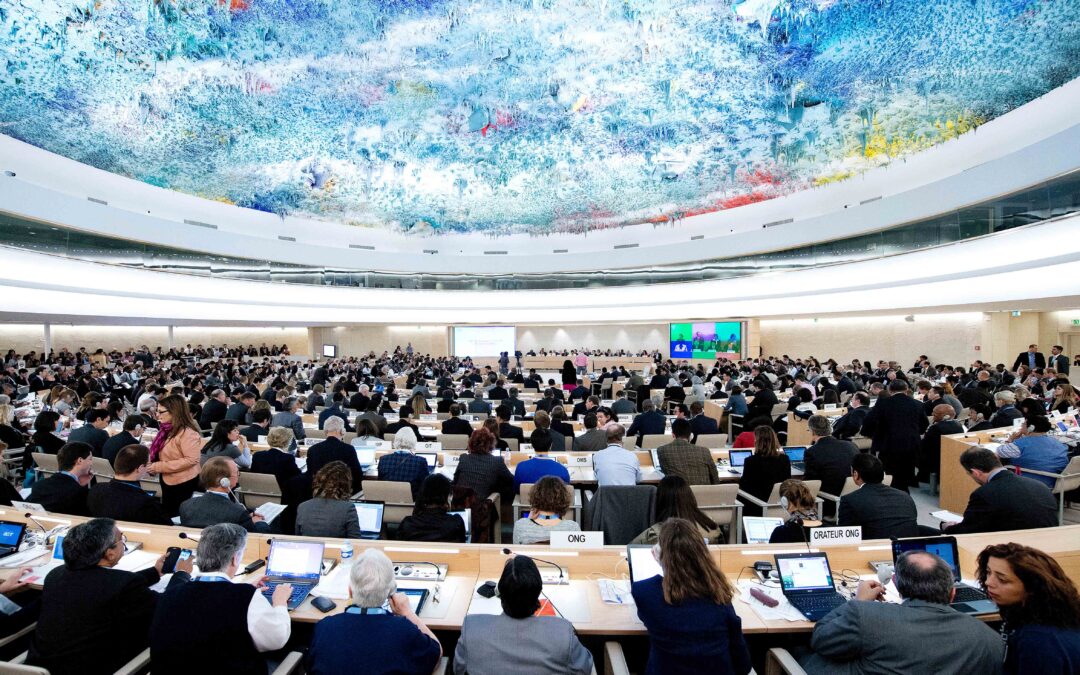
The ICJ joined 19 other NGOs to call on Member States of the UN Human Rights Council to support a resolution on civil society space and access to international and regional organisations.
The joint open letter to Member States of the UN Human Rights Council comes ahead of anticipated adoption of the resolution later this week.
The Open Letter read as follows:
“Re: Call for your support and solidarity on HRC38 resolution protecting civil society space (A/HRC/38/L.17_Rev.1)4 July 2018
Your Excellency,
We, the undersigned civil society organisations, spanning across all regions of the world call on your delegation to support of the draft resolution ‘Civil society space: engagement with international and regional organisations’ to be considered for adoption during the 38th session of the Human Rights Council (expected to be considered on 5-6 July 2018). We call on your delegation to send a clear message of support to civil society, by co-sponsoring the draft resolution as tabled, rejecting any attempts to undermine this draft resolution, and voting in favour of the resolution if a vote is called.
The resolution is presented by a cross-regional group of States (Chile, Ireland, Japan, Sierra Leone, and Tunisia) and was developed through broad consultation with States and civil society.
This draft resolution is an opportunity for your delegation to show leadership in supporting the crucial role a healthy and vibrant civil society plays in contributing to human rights, sustainable development, peace and security. It builds on the UN High Commissioner for Human Rights’ report on civil society engagement with international and regional organisations which affirms that:
“Civil society engagement ensures that international discussions and decisions are informed by what is happening on the ground, that a full range of perspectives are heard, and that decision-making is fully informed by relevant expertise and experience. Where civil society engagement is restricted, responses to security threats, development challenges, environmental disasters and disease, among others, risk being ill-informed and weaker. Civil society participation provides a critical contribution to the prevention of violence, insecurity and, in turn, conflict.”
It is also imperative to safeguard civil society actors’ unhindered exercise of the rights to freedoms of expression, opinion, assembly and association, as well as the right to unhindered access and communication with international and regional organisations.
During negotiations of this draft resolution, a number of States sought to undermine many of its essential elements, including those listed below. The core group has already made several concessions to accommodate the concerns of States during the negotiations. Efforts to reach consensus should not lead to further weakening of the draft resolution.
The text of the resolution, as tabled, is a substantive contribution to the Council’s previous work on protecting civil society space. In particular, the text:
- Recognizes the essential contribution that civil society makes to international and regional organisations and that the effective functioning of the regional and international human rights mechanisms and bodies is inexorably linked to civil society participation;
- Emphasizes the crucial importance of the active involvement of civil society in promoting good governance and their indispensable role in building peaceful and democratic societies.
- Recognizes the importance of strengthening diverse and pluralistic civil society and provides useful guidance for States and organisations to ensure that their policies ensure support to diversity of civil society participation
- Encourages UN bodies to review and update their frameworks for engagement with civil society to reflect and respond to the challenges and to support improved civil society engagement with international and regional mechanisms
- Provides useful guidance for States and organisations to review and update their national frameworks for engagement with civil society to ensure their full and effective participation including access to information and access to resources.
- Calls on States to prevent all threats, attacks, reprisals and acts of intimidation against civil society actors and to ensure access to justice and accountability
- Creates opportunities and incentives for States to voluntarily share and develop their good practices on guaranteeing a safe and enabling environment for civil society
We urge your delegation to support these positive calls in the resolution, none of which go beyond existing State obligations under international human rights law, by voting in favor of the resolution as tabled.
Conversely, we urge you to vote against adverse amendments that would significantly weaken the resolution. The proposed amendments would, among other negative impacts, restrict rather than safeguard space for civil society, including by:
- Restricting the right to freedom of association by imposing limitations on funding to civil society, contrary to the ICCPR (Article 22) and the Declaration on Human Rights Defenders (Article 13) (L.37)
- Challenging civil society engagement with international and regional organisations by imposing vague restrictions such as “respecting the sovereignty and territorial integrity of States”. Such restrictions may undermine the universality of human rights including the exercise of the right to freedom of expression and may impair the work of civil society actors working in relation to conflict zones and disputed territories. (L.38)
- Rejecting the expert guidance and practical recommendations made by the High Commissioner to protect civil society space and guarantee the full and effective engagement of civil society with regional and international organisations. (L.39)
Excellency, we ask that your delegation stands with civil society in support and solidarity by cosponsoring this progressive and valuable resolution on enhancing civil society engagement with international and regional organisations, opposing any amendment that would weaken the text, and voting in favour of the resolution if a vote is called.
Yours sincerely,
- ARTICLE 19
- Asian Forum for Human Rights and Development (FORUM-ASIA)
- Asian Legal Resource Centre (ALRC)
- Cairo Institute for Human Rights Studies (CIHRS)
- Centro de Estudios Legales y Sociales (CELS)
- Child Rights Connect
- CIVICUS:World Alliance for Citizen Participation
- Commonwealth Human Rights Initiative (CHRI)
- Conectas Direitos Humanos
- DefendDefenders (the East and Horn of Africa Human Rights Defenders Project)
-
European Center for Not-for-Profit Law
-
Front Line Defenders
- Human Rights House Foundation (HRHF)
- Human Rights Watch (HRW)
- International Commission of Jurists (ICJ)
- International Federation for Human Rights (FIDH)
- International Humanist and Ethical Union (IHEU)
- International Service for Human Rights (ISHR)
- The Irish Council for Civil Liberties
- Women’s International League for Peace and Freedom (WILPF)”
Jul 4, 2018 | News
The ICJ held a workshop in Mawlamyine on 3 July attended by religious leaders and youth activists from southern Mon State in Myanmar’s southeast.
The workshop aimed to facilitate discussion on strategic litigation options for communities adversely affected by existing and proposed investment projects.
The ICJ and civil society organizations have extensively documented how human rights abuses continue to occur in the context of business activities in Myanmar.
Communities generally have limited understanding of their rights, while government actors and businesses regularly flout their legal obligations.
The ICJ’s international legal adviser Sean Bain first set out applicable international standards, with a focus on the UN Guiding Principles on Business and Human Rights.
He identified Myanmar’s nascent legal framework for environmental protection as a key area of law with potential to deter rights abuses. He noted that while in December 2015 the Government of Myanmar issued the Environmental Impact Assessment Procedure, its provisions are rarely followed or enforced in practice.
Workshop participants, from two different areas of Mon State, shared experiences of community mobilization and ideas on how to use law to protect human rights.
Presentation on Corporate Social Responsibility
Prior to this workshop, also in Mawlamyine, on 29 June the ICJ’s legal adviser presented on Corporate Social Responsibility (CSR) at invitation of the national assembly of MATA, the Myanmar Alliance for Transparency and Accountability.
Introduced to Myanmar only in recent years, CSR activities are increasingly invoked by foreign and local companies as evidence of responsible investment.
But in reality, many companies doing CSR have been and continue to be involved in unlawful business activities, sometimes constituting human rights abuses.
Participants from different areas of Myanmar shared stories of businesses using CSR activities in a non-transparent way without accountability.
Cases were described where CSR has allegedly been associated with corruption, undermining trust and cohesion in communities affected by large investment projects.
The presentation from ICJ pointed out that while CSR activities are voluntary and without a specific legal framework, all businesses are subject to national law and should respect human rights in accordance with international law and standards, including the UN Guiding Principles.
Lawful conduct that respects human rights lies at the core of any responsible business, and CSR activities do not change these obligations.
These activities in Mon State are part of the ICJ’s ongoing support to civil society actors in Myanmar, from community-level up to national level actors.
Jul 4, 2018 | News
Today the ICJ called on Thai prosecutorial authorities to immediately end the prosecution of five persons associated with academic activities in Chiang Mai. The five have been made subject to prosecution solely for exercising their rights to free expression and assembly.
Those subject to prosecution include Pakawadee Veerapatpong, an independent writer and translator; Chaipong Samnieng, a PhD candidate at Chiang Mai University; Nontawat Machai, an undergraduate student at Chiang Mai University; Teeramon Bua-ngam, a Masters student at Chiang Mai University and news editor; and Dr. Chayan Vaddhanaphuti, a Professor at Chiang Mai University.
The ICJ also called for the revocation or amendment of all laws, orders and announcements inconsistent with Thailand’s international human rights obligations.
Today, the Region V Public Prosecutor in Chiang Mai province formally notified the five individuals that they would be prosecuted for violating HNCPO Order No. 3/2558 (2015) (‘HNCPO Order 3’) for merely expressing their opinions at an academic forum at Chiang Mai University in July 2017.
HNCPO Order 3 prohibits the gathering of five or more persons for political purposes, carrying a penalty of imprisonment not exceeding six months and/or a fine not exceeding 10,000 Baht.
“The ongoing and abusive use of HNCPO Order 3 to stifle free expression in Thailand remains indefensible and an obstacle to the full restoration of the rule of law in Thailand,” said Kingsley Abbott, Senior Legal Adviser at the ICJ.
“The decision to indict these five individuals is clearly in breach of Thailand’s international human rights obligations and should be reversed immediately together with the termination of the proceedings and the revocation of HNCPO Order 3,” he added.
The Public Prosecutor’s decision to indict the five was made against a backdrop of recently increasing repression of fundamental freedoms in the country.
This year alone, at least 132 persons were reportedly charged under HNCPO Order 3 in 10 cases and six incidents in connection with a movement calling for elections to be held this year.
Twenty-seven of these individuals were also charged with a sedition-like offence, which carries a maximum penalty of seven years’ imprisonment.
Since the military coup of 22 May 2014, at least 378 persons have been reportedly charged in relation to 50 cases of violating the ban on political gatherings of five or more persons according to a report launched on 22 June 2018 by leading Thai NGO, Thai Lawyers for Human Rights (TLHR).
In March and June 2018, at the Human Rights Council, the ICJ called on Thailand to revoke or amend all laws, orders and announcements that are contrary to the rule of law and human rights protections.
“Four years have passed since the military coup resulting in numerous unjustifiable restrictions on fundamental freedoms – it is long past time for Thailand to undertake reform necessary to prevent the legal system from being misused to harass individuals who merely exercise their human rights,” said Abbott.
Contact
Kingsley Abbott, ICJ Senior International Legal Adviser, email: kingsley.abbott@icj.org
Background
The Region V Public Prosecutor’s decision in Chiang Mai province follows charges filed against the individuals by a military officer in 2017.
Pakawadee Veerapatpong, Chaipong Samnieng and Nontawat Machai had allegedly held up three A4-sized messages which read “an academic forum is not a military barracks” at the academic conference.
Teeramon Bua-ngam had reportedly taken a picture of himself standing next to the messages and posted the same on social media.
Dr. Chayan Vaddhanaphuti had reportedly watched the display of the messages without asking for them to be removed, despite being an organizer of the conference.
Thailand is a State party to the International Covenant on Civil and Political Rights (ICCPR). Articles 19, 21 and 22 of the ICCPR guarantee the rights to freedom of opinion and expression, freedom of peaceful assembly and freedom of association.
Since the military coup, the ICJ has expressed its concern about the use of a new legal framework and pre-existing laws to clamp down on the rights to freedom of expression, association and assembly, including criminal defamation (Articles 326-328 of the Thai Criminal Code), the Computer-Related Crime Act B.E.2550 (2007), a sedition-like offence (Article 116 of the Thai Criminal Code), and HNCPO Order 3.
Read also
ICJ and TLHR Joint Submission to the UN Human Rights Committee, 13 February 2017
ICJ and TLHR Joint Follow-up Submission to the Human Rights Committee, 27 March 2018
Thailand-Academics indicted-News-Web Story-2018-THA (story in Thai, PDF)

Jul 4, 2018 | Новости, Статьи
МКЮ сегодня осудила принудительный уход 27 из 72 судей Верховного суда Польши вопреки самым элементарным принципам независимости судебной власти.
«Принудительный выход на пенсию третьей части Верховного суда в соответствии с новым законом о судебной системе означает произвольное увольнение судей», – сказала Роушин Пиллэй, директор Программы МКЮ по Европе и СНГ, «Это грубое нарушение основного принципа независимости судебной власти, безопасности пребывания в должности судей».
Правительство утверждает, что закон и его меры по принудительному выходу на пенсию направлены на улучшение отправления правосудия. Однако, МКЮ считает их преднамеренной попыткой уничтожить независимость судебной власти и установить контроль исполнительной власти .
«Мы призываем польские власти следовать рекомендациям ЕС, отменить это драконовское законодательство и немедленно восстановить судей Верховного суда. Неспособность сделать это ударяет по самому основу независимости судебных органов», – сказала Роушин Пиллэй.
«Универсальные принципы независимости судебных органов, гарантирующие безопасность пребывания в должности, были разработаны давно, чтобы защитить от злоупотребление политическими полномочиями, которые продвигают эту принудительную меру выхода на пенсию, в соответствии с которой судьи будут служить в удовольствие правительства того дня», – добавила она.
МКЮ считает, что осуществление нового закона о Верховном суде и увольнение 27 судей Верховного суда прямо противоречит безопасности пребывания в должности судей и, следовательно, принципа независимости судебных органов, как это выражено в Основных принципах ООН по Независимости судебных органов, в стандартах Совета Европы, юриспруденции Европейского суда по правам человека и принципом верховенства права в договорах ЕС.
Poland-Attacks on judiciary-News-web stories-2018-ENG (полная история – с дополнительной справочной информацией – в формате PDF, на английском)
Jul 2, 2018 | News
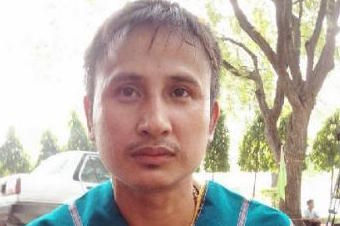
Today, the ICJ, along with Amnesty International and Human Rights Watch, made a join statement about the special investigation of the apparent enforced disappearance of Karen activist, Pholachi “Billy” Rakchongcharoen.
The investigation of the apparent enforced disappearance of Karen activist, Pholachi “Billy” Rakchongcharoen, should genuinely seek to establish Billy’s fate and whereabouts, continually and fully inform his family on developments.
The investigation should also bring persons identified as responsible, irrespective of rank or status, to justice in a fair trial, the International Commission of Jurists (ICJ), Amnesty International and Human Rights Watch said today.
The organizations also called on authorities to expedite long overdue legal and administrative measures to provide better protection against enforced disappearance, in compliance with Thailand’s international human rights obligations.
On 28 June 2018, following a meeting of the Special Case Committee No. 1/2018, the Ministry of Justice’s Department of Special Investigations (“DSI”) made the welcome announcement that it had decided to recognize the apparent enforced disappearance of Pholachi “Billy” Rakchongcharoen an ethnic Karen activist, as a “Special Case” that must be “investigated in accordance with the Special Case Investigation Act, B.E. 2547 (2004)”, that is, by the DSI itself.
Pholachi “Billy” Rakchongcharoen was last seen on 17 April 2014 in the custody of Kaeng Krachan National Park officials in Thailand’s Phetchaburi province.
At the time of his apparent enforced disappearance, Billy had been working with ethnic Karen villagers and activists on legal complaints against the National Park officials for purportedly burning and destroying their houses, farms, and other properties.
The DSI’s announcement followed a long-standing request by Billy’s wife, Phinnapha Phrueksaphan, and years of advocacy by the ICJ, Amnesty International and Human Rights Watch calling on the DSI to assume jurisdiction over the case.
They are also calling the DSI to conduct a prompt, independent, impartial and effective investigation into his fate or whereabouts consistent with international law and standards, including the revised Minnesota Protocol on the Investigation of Potentially Unlawful Death (2016), which was launched in collaboration with the Thai Ministry of Justice on 25 May 2017.
The revised Minnesota Protocol states that if investigators are unable to locate a body or remains, they should continue to gather other direct and circumstantial evidence which may suffice for identifying the perpetrator(s).
Despite the existence of a wealth of information relevant to the circumstances surrounding Billy’s apparent enforced disappearance, the four-year-old police investigation has been marked by a significant lack of progress.
At the same time, Thailand has yet to honor its repeated commitments to ratify the International Convention for the Protection of All Persons from Enforced Disappearance (ICPPED), which it signed on 9 January 2012.
Thai authorities have failed to implement Thailand’s international legal obligations to provide justice for the victims of enforced disappearance and their families. Perpetrators are able to evade penalties, at least in part because Thai laws still do not make enforced disappearance a specific criminal offence.
The Convention affirms that “no one shall be subjected to enforced disappearance” and places an obligation on states to investigate acts of enforced disappearance, to bring those responsible to justice, and make it a criminal offence punishable by appropriate penalties that take into account its “extreme seriousness”.
On 10 March 2017, Thailand’s legislative body, the National Legislative Assembly (NLA), voted in favor of ratifying the ICPPED. However, on 6 September 2017, the ICJ was informed by Thailand’s Ministry of Foreign Affairs that a decision had been taken to delay the ratification of the ICPPED until legislation had been enacted to give domestic effect to the treaty.
Irrespective of ICPPED ratification, Thailand is also obliged to effectively investigate and prosecute the crime of enforced disappearance under the International Covenant on Civil and Political Rights (ICCPR) and the UN Convention against Torture (CAT).
Efforts to pass a law making torture, other acts of ill-treatment and enforced disappearance specific offences in Thai law have also stalled.
Thailand’s Ministry of Justice notes that a second round of public consultations on a Draft Prevention and Suppression of Torture and Enforced Disappearance Act (‘Draft Act’) has been concluded and that it is now in the process of evaluating the consultations.
The ICJ, Amnesty International and Human Rights Watch urge that this process be hastened.
The ICJ, Amnesty International and Human Rights Watch have reviewed several versions of the Draft Act and are seriously concerned that adoption of the Draft Act as it currently stands will fail to bring the law into compliance with Thailand’s international human rights obligations.
On 30 August 2017, 23 November 2017, and 12 March 2018, civil society organizations, including the ICJ, Amnesty International and Human Rights Watch, sent open letters to the Government, including to Thailand’s Minister of Justice, outlining amendments that would be necessary to bring the Draft Act in line with Thailand’s international human rights obligations.
Contact
Kingsley Abbott, Senior Legal Adviser, ICJ Asia Pacific Programme, t: +66 94 470 1345, e: kingley.abbott(a)icj.org
Full statement in English (PDF): Thailand-Special-investigation-Billy-News-Press-releases-June-2018-ENG
Full statement in Thai (PDF): Thailand-Special-investigation-Billy-News-Press-releases-June-2018-THA