Jun 12, 2018 | Advocacy, Cases, Legal submissions
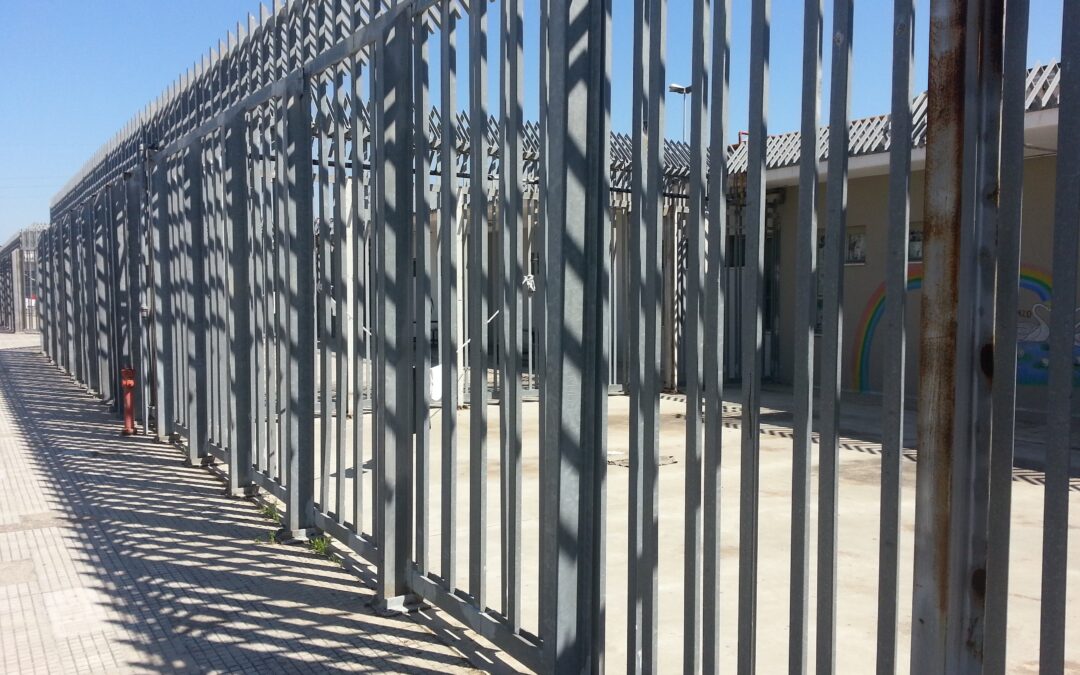
The ICJ and others intervened before the European Court of Human Rights in a case of thirteen undocumented children held in a hotspot in Italy.
The International Commission of Jurists (ICJ), the European Council on Refugees and Exiles (ECRE), the Dutch Council for Refugees and the AIRE Centre jointly intervened in the case of Trawalli and others v. Italy.
In this case, the European Court of Human Rights is called to rule, among other issues, on whether their detention and reception conditions were lawful and/or constituted an inhuman or degrading treatment under the European Convention on Human Rights.
In their third party intervention, the three human rights organizations submitted the following arguments:
a) Taking into consideration migrant children’s status as persons in situations of vulnerability and the principle of the best interests of the child, article 5 ECHR should be read in light of the rising consensus in international law towards a prohibition of detention of children on immigration grounds, in particular based on the consolidated and clear position of the UN Committee on the Rights of the Child. This applies to all instances of deprivation of liberty irrespective of their classification under domestic law.
b) In addition to the above, detention under article 5.1 ECHR will in any event be unlawful and arbitrary where it lacks a clear and accessible legal basis, outlining the permissible grounds of detention as well as the relevant procedural guarantees and remedies available to detainees, including judicial review and access to legal advice and assistance. In light of the obligations of EU Member States under EU law, the interveners submit that detention of asylum seeking children falling within the scope of the recast Reception Conditions Directive will result in a breach of the Convention standards also where it is not used as a measure of last resort, but rather is imposed without consideration of less onerous alternative measures and where the child’s best interests assessment has not been carried out and reflected in this decision.
c) Due to children’s extreme vulnerability, their detention for immigration purposes risks leading to a violation of Article 3 ECHR because of inadequate living conditions and/or to a violation of Article 8 ECHR because of a disproportionate and unnecessary interference with their development and personal autonomy, as protected under Article 8. In this sense, Article 8 must be regarded as affording protection from conditions of detention which would not reach the level of severity required to engage Article 3.
d) When the authorities deprive or seek to deprive a child of her or his liberty, they must ensure that he/she effectively benefits from an enhanced set of guarantees in addition to undertaking the diligent assessment of her/his best interest noted above. The guarantees include: prompt identification and appointment of a competent guardian; a child-sensitive due process framework, including the child’s rights to receive information in a child-friendly language, the right to be heard and have her/his views taken into due consideration depending on his/her age and maturity, to have access to justice and to challenge the detention conditions and lawfulness before a judge; free legal assistance and representation, interpretation and translation. The Contracting Parties must also immediately provide the child access to an effective remedy.
e) In order to fully comply with their obligations under the Convention, Contracting Parties must guarantee that asylum seeking children are accommodated in reception facilities which are adapted to their specific needs and provide adequate material conditions adapted to their age, condition of dependency and enhanced vulnerability. To do otherwise results in a failure by States to comply with their obligations under Article 3 ECHR and their specific obligations under EU law.
Italy-icj&others-Trawalli&others-Advocacy-legal submission-2018-ENG (download the intervention)
Jun 11, 2018
The ICJ today called on the Egyptian authorities to ensure that the framework on the state of emergency is comprehensively reformed consistent with the country’s international human rights obligations.
The ICJ is particularly concerned that Egypt seems to be returning to the continuous and permanent state of emergency that prevailed in Egypt, uninterrupted, from 1981 until 2012, and that resulted in grave and systematic human rights violations.
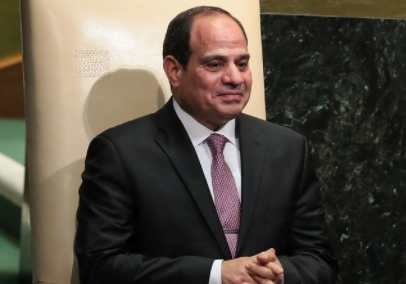
Since April 2017, President El- Sisi (photo) declared the state of emergency, renewed it, and then declared a new state of emergency five consecutive times.
“In declaring and renewing exceptional measures under the state of emergency, Egypt has consistently failed to demonstrate that the situation ‘threatens the life of the nation’, the threshold for such measures under international law,” said Said Benarbia, ICJ MENA Director.
Egypt has also failed to set out clear and precise conditions in which the President is allowed to declare the state of emergency and in which measures derogating from human rights under the state of emergency can be declared, the ICJ says.
It has also failed to ensure that each such measure is strictly limited and proportionate to the exigencies of the specific emergency, specify which rights can or cannot be subject to derogation, and notify relevant stakeholders of such derogations, the Geneva-based organization adds.
“Repealing or amending emergency measures to ensure they are limited in time and scope and are not used to curtail rights or to crush dissent, is a prerequisite to establishing and upholding the rule of law in Egypt,” added Benarbia.
The ICJ’s findings and recommendations are based on a position paper published today, in which the ICJ analyses the framework on the state of emergency and assesses its impact on certain aspects of the administration of justice, including those relating to the use of emergency state security courts and to the right to liberty and to fair trial.
Under the framework of the state of emergency, Prime Minister Sherif Ismail issued a decree on No. 2165/2017 through which numerous crimes, including those related to protest, assembly, terrorism and labour law have been placed under the jurisdiction of the emergency state security courts.
These courts have mainly been used to try students, human rights defenders, political activists, union members and those suspected of opposing the government in proceedings that fall short of international standards on fair trial.
“Authorities must abolish the emergency state security courts and ensure that any existing proceedings before them should be either nullified or transferred to the ordinary courts,” said Benarbia.
Contact
Said Benarbia, Director of ICJ’s Middle East and North Africa Programme, t: +41-22-979-3817 ; e: said.benarbia(a)icj.org
Egypt-Return to State of Emergency-Advocacy-Analysis brief-2018-ENG (full memo in English, PDF)
Egypt-State of emergency-News-Press releases-2018-ARA (full story in Arabic, PDF)
Egypt-Return-State-of-Emergency-Advocacy-Analysis-brief-2018-ARA (full memo in Arabic, PDF)

Jun 8, 2018 | News
The ICJ strongly condemns the draft bill of the Congressional Commission on Legislation and Constitutional Affairs to propose reforms to the Law of National Reconciliation (Congressional Decree 145-96) and grant amnesty in cases of gross human rights violations.
“The amnesty included in this draft bill is unconstitutional and flagrantly violates Guatemala’s international obligations. It seeks to place more obstacles in the way of victims of serious human rights violations in their search for justice and truth,” said Ramón Cadena, Director of the Central American Office of the ICJ.
“Justice must be delivered in these important cases because it is the basis for political stability, the rule of law and democracy. Guatemalan authorities should demonstrate that they have an unquestionable commitment to the struggle against impunity. Unfortunately, this draft bill demonstrates the exact opposite,” he added.
This decision flagrantly contravenes Guatemala’s international obligations to prosecute and punish those responsible for gross violations of human rights and guarantee the rights to justice, truth and reparation for victims of these crimes.
International bodies, including the Inter-American Court of Human Rights in numerous judgments, have condemned Guatemala for gross human rights violations; and on repeated occasions have stated that it is prohibited to grant amnesties in cases of gross violations of human rights and international crimes, such as crimes against humanity, genocide and war crimes.
This draft bill could open the doors to allow impunity to continue, at a time when the judicial system is fighting against impunity in historic cases of gross human rights violations and international crimes and in so doing provide guarantees for the victims’ rights to justice.
The ICJ considers that the administration of justice in cases of gross violations of human rights and international crimes by independent judges in cases of “transitional justice” should be supported, not only by the Legislature but also by the Executive Branch, as well as, self-evidently, by the Judicial Branch itself.
The Supreme Court of Justice has the obligation to support independent judges that through their rulings are proving to be impartial, objective and independent and should take the necessary measures to protect judges from any interference or attack that affects the smooth exercise of their duties.
The ICJ recalls that it is a State’s inalienable obligation under international law to investigate gross violations of human rights and international crimes and to prosecute and punish those responsible.
Jun 7, 2018
In a memorandum published today, the ICJ called on the Lebanese authorities to introduce comprehensive legal and institutional reforms with a view to ensuring that the Office of the Public Prosecutor (OPP) is strictly separated from the judiciary and judicial functions.
The reforms must also guarantee that the OPP’s independence and impartiality is fully safeguarded consistent with internationals standards, the ICJ says.
“The structure of the OPP, its role, status and functions are not in compliance with international standards on the independent and impartial functioning of prosecutors,” said Said Benarbia, ICJ MENA Director.
“The Lebanese authorities must ensure that the functions of judges and prosecutors are clearly separated and distinct and that prosecutors are not granted any powers to take decisions of a judicial character, including those relating to renewing police custody and ensuring oversight over police custody’s facilities, periods and conditions,” he added.
In the memorandum, the ICJ also formulates recommendations for amendment and reform of law and practice with a view to ensuring the administration of criminal justice in a manner that respects and protects human rights, due process and the rule of law.
The Code of Criminal Procedure and Decree-Law No. 150/83 on the Organization of the Judiciary do not provide for appropriate safeguards and limitations on internal and external instructions to prosecutors, do not adequately limit the power of the Minister of Justice in relation to the conduct of prosecutions, and, therefore, do not safeguard the real and perceived independence of the prosecution services.
If public faith and confidence in the integrity of the justice system is to be restored, the functional independence of prosecutors must be safeguarded from any undue or improper interference, including those emanating from within the OPP itself.
“The Lebanese authorities must ensure that the executive is prohibited from issuing instructions not to prosecute or requiring prosecution in a specific case,” said Benarbia.
“Any instructions to individual prosecutors regarding the conduct of a prosecution must be in writing, exercised transparently, and take into account established prosecution guidelines and the interests of victims and other interested parties,” he added.
Contact
Rola Assi, Associate Legal Adviser, t: 0096170821670 ; e: rola.assi(a)icj.org
Lebanon-Memo re prosecutors-Advocacy-Analysis Brief-2018-ENG (full memo in English, PDF)
Lebanon-Prosecutors memo launch-News-2018-ARA (full story in Arabic, PDF)
Lebanon-Memo prosecutors-Advocacy-Analysis Brief-2018-ARA (full memo in Arabic, PDF)

Jun 6, 2018 | Artículos, Noticias
Después de más de 30 años de búsqueda de justicia por parte de la familia Molina Theissen, el Tribunal de Mayor Riesgo C emitió sentencia condenatoria , cometida en octubre de 1981, durante el conflicto armado interno.
Por la desaparición forzada del niño Marco Antonio Molina Theissen (de 14 años), así como por la detención ilegal, tortura y violación sexual de su hermana Emma Guadalupe Molina Theissen, fueron condenados el 23 de mayo de 2018, los militares de alto rango (en retiro) General de Brigada Benedicto Lucas García, Coronel Hugo Ramiro Zaldaña Rojas, Coronel Manuel Antonio Callejas y Callejas y Coronel Francisco Luis Gordillo Martínez.
En esa misma sentencia, el Tribunal absolvió al coronel Edilberto Letona Linares.
La CIJ observó todo el desarrollo del juicio público.
Como resultado de esta labor de observación, la CIJ considera que, una vez más, se pudo comprobar, que para lograr romper con la impunidad que existe en estos casos de la llamada “justicia transicional”, se requiere indispensablemente que el Sistema de Justicia esté integrado por jueces independientes, imparciales, competentes, idóneos y de incuestionable integridad moral.
Asimismo, de su observación del juicio y estudio de la Sentencia, la CIJ puede concluir que la defensa de los militares procesados llevó a cabo un litigio de mala fe, que buscó apartar del juicio al Juez Pablo Xitumul, Presidente del Tribunal, por medio de recusaciones abusivas y sin ninguna base legal.
Este tipo de prácticas atentan contra una recta administración de justicia y constituyen una violación de la obligación que tienen los abogados de mantener el honor y la dignidad de su profesión y de actuar de conformidad con las normas éticas reconocidas que rigen su profesión, como lo prescriben los Principios Básicos sobre la Función de los Abogados, de las Naciones Unidas.
La CIJ expresa su rechazo por este tipo de estrategias de defensa, que ya han sido implementadas en otros casos de “justicia transicional” en el pasado y que, además, se están haciendo evidentes en casos recientes vinculados a la lucha contra la corrupción.
Además, durante el juicio, la CIJ pudo constatar las siguientes situaciones:
- Presiones y campañas de difamación de diferente naturaleza, que atacaron y cuestionaron la independencia de las y los juzgadores, su idoneidad e imparcialidad;
- Ataques, estigmatizaciones, difamación y cuestionamientos infundados contra la familia Molina Theissen, por sectores cercanos al Ejército de Guatemala; y
- Ataques y estigmatizaciones contra de las organizaciones de derechos humanos y de los abogados y abogadas de la Familia Molina Theissen, así como en contra del Ministerio Público.
La CIJ se permite recordar que:
- La familia Molina Theissen buscó justicia infructuosamente durante más de 30 años, acudiendo a las autoridades judiciales guatemaltecas;
- Ante la denegación de justicia, la familia Molina Theissen tuvo que recurrir al Sistema Interamericano de Derechos Humanos; y,
- La Corte Interamericana de Derechos Humanos, en Sentencia de 4 de Mayo de 2004, condenó al Estado de Guatemala por violaciones a los derechos humanos y le ordenó investigar, procesar y castigar a los responsables de dichos crímenes.
Ramón Cadena, Director de la CIJ para Centroamérica expresó: “Apoyamos al Presidente del Tribunal Juez Pablo Xitumul, a los otros dos jueces que integran el Tribunal de Mayor Riesgo C y a todos los jueces independientes, imparciales, idóneos e íntegros de Guatemala, que con su trabajo tratan de devolverle la credibilidad al Organismo Judicial.”
“Nos complace esta sentencia, ya que sienta un precedente para que una práctica sistemática tan grave, como la desaparición forzada de personas, no vuelva a repetirse en Guatemala. Existen en Guatemala más de 40,000 personas detenidas desaparecidas y el Ejército de Guatemala debería demostrar voluntad política, proporcionando información veraz, para que los familiares encuentren a sus seres queridos, desaparecidos desde hace más de 30 años, durante el conflicto armado interno,” concluyó Ramón Cadena.