Apr 25, 2018 | News
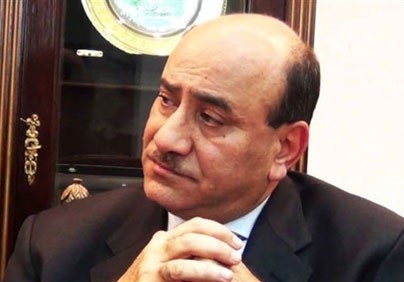
The ICJ today called on the Egyptian authorities to quash the conviction of, and immediately release Hisham Geneina, a former judge and former head of the Central Auditing Authority in Egypt.
A Cairo military court convicted Geneina on Tuesday 24 April and sentenced him to five years in prison for “publishing false information harmful to the national security.”
The charges were related to a media interview in which Geneina criticized the interference of the Egyptian authorities in the election process and referred to the existence of documents that incriminate political and military leaders since 2011, including in cases of human rights violations.
The first hearing of the military trial took place on 18 April.
At the defense request, it was adjourned to 20 April so that the lawyers can have access the case file. The judgement was issued 4 days later.
“Genina’s detention, prosecution and conviction solely for peacefully and legitimately exercising his right to the freedom of expression is a testament to the length to which Egypt’s military and government would go to silence critical voices,” said Saïd Benarbia, ICJ MENA Director.
“After a grossly unfair trial before a military court that he should never have been prosecuted before in the first place, Egyptian authorities must stop the charade and immediately and unconditionally release Hisham Geneina,” he added.
Egypt – Geneina – News – Webstory – 2018 – ARA (Arabic translation in PDF)
Background
Hesham Genena was arrested on 13 February following a media interview in which he claimed, among other things, that the former Chief-of-staff Sami Annan was in possession of documents incriminating the country’s political and military leadership.
One day before his arrest, the military spokesperson said that Genena’s statement casts doubts on the State and its institutions in the time where the armed forces are combating terrorism in Sinai.
He added that the armed forces will use their rights as provided for in the Constitution and the law to protect national security, and that they will refer the matter to the relevant authorities to take legal action.
According to information provided by his lawyer, Geneina is currently in solitary confinement in the Cairo Appeal Prison and his health condition is deteriorating due to injuries related to a physical attack against him on 27 January, for which he needs surgical intervention.
Apr 17, 2018 | Events, Multimedia items, News, Video clips
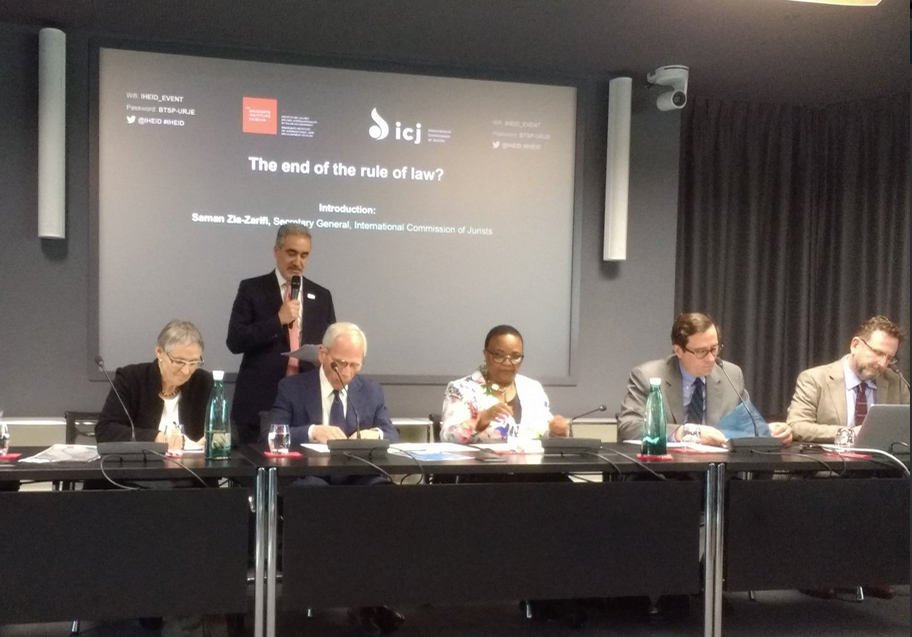
International commitment to the rule of law is under assault around the world, said a global panel of eminent academics, diplomats, and jurists.
The panelists, speaking at a public event by the ICJ and the Geneva Graduate Institute, commented that this assault is threatening to reverse the progress made over the last 70 years since the Universal Declaration of Human Rights(UDHR) came into force.
The panelists addressed progress in asserting the rule of law since the UDHR, for instance through the development of the International Criminal Court and greater awareness and commitment to rights, but also highlighted current challenges at the national level, such as in Venezuela, and at the global level, with ongoing discrimination and violence against women.
“The rule of law is a principle that helps the world and also helps individuals,” said ICJ Secretary General Saman Zia-Zarifi, in his introductory remarks.
“It is a principle that elevates democracy from mob rule and is necessary to harness the energy of democracy and give it a direction and progression towards the protection and promotion of human rights and sustainable development for the betterment of the lives of people around the world,” he added.
Professor Carlos Ayala, ICJ Vice-President and former President of the Inter-American Commission on Human Rights, spoke about the importance of having regional rights frameworks that were accessible to individuals when the rule of law has been eradicated at a national level.
Speaking in relation to Venezuela, Professor Ayala explained that the rule of law cannot be simply overturned by a political party, even with a majority, as the erosion of the rule of law puts all human rights at risk and these rights must be safeguarded regionally and internationally.
Next Patricia Schulz, member of the UN Committee on the Elimination of Discrimination against Women, pointed out that in many countries, the rule of law has been weak or never even properly existed.
She addressed failings where access to justice is undermined by systems that are gender discriminatory and explained that in almost all countries, even where the rule of law seems strong, there is a lack of will and/or means to fight gender-based violence.
Professor Andrew Clapham, Professor of Public International Law at the Graduate Institute and member of the UN Commission on Human Rights in South Sudan, evaluated issues of accountability and the rule of law in the context of international criminal law.
He noted the important role international criminal law and its operational mechanisms have in holding individuals to account, but warned that focusing on prosecution and focusing on issues such as genocide and the use of chemical weapons ran the risk of undermining the universality of ideas enshrined in the UDHR.
His Excellency Luis Gallegos, the Permanent Representative of Ecuador to the United Nations, raised concerns about the politicization of human rights and the capacity of UN mechanisms to address transnational rights issues such as migration.
He said that addressing the rule of law was not a simple question but that states had to come together to consistently and systematically address the rights violations that arose from a break-down in the rule of law.
Final panelist, Sanji Monageng, ICJ Commissioner and Justice of the International Criminal Court, spoke about the need for international organizations to rethink their approach to the rule of law and the way they apply this to cases, to avoid focusing narrowly on singular issues when rights violations need to be addressed homogenously.
Justice Monageng explained that for victims, sexual violence, for instance, is rarely a singular incident but part of broader array of rights violations that have far-reaching impacts.
In his concluding remarks, Professor Robert Goldman, who moderated the event, said that “the rule of law deals with a central tenet of any just society, not only equal protection and equal access but it is something that protects the vulnerable.”
He explained that the treat to the rule of law today is endemic and it is global, but the ICJ is uniquely placed to robustly address these difficult questions and to continue to use the rule of law to defend and advance rights protections.
The event, which took place at the Graduate Institute at the Maison de la Paix, promoted by the Permanent Mission of Germany, was attended by 150 persons including academics, diplomats, lawyers and representatives of civil society and international rights mechanisms. The event was also streamed online by RIDH Global.
You can watch the full event here.
https://www.facebook.com/ridhglobal/videos/10158134493084616/UzpfSTQ3MTQ2NzA4NjIyMTM3MzoxOTk5MjM0NDc2Nzc3OTUy/
https://www.youtube.com/watch?v=ije_iAegxFs&feature=youtu.be

Apr 17, 2018 | Advocacy, Cases, Legal submissions, News
The ICJ and other NGOs jointly intervened before the Grand Chamber of the European Court of Human Rights in a case against Spain on the denial of entry of asylum seekers in the enclave of Melilla.
The ICJ, the European Council on Refugees and Exiles, the AIRE Centre, Amnesty International and the Dutch Refugee Council argued that the European Convention on Human Rights prohibits refusal of entry, and/or return of a person to face serious violations of human rights, including of the right to life, the prohibition of torture or inhuman or degrading treatment or punishment, or flagrant denial of justice and of the right to liberty.
They submitted that these refusals of entry are also contrary to the rights set out in the EU Charter of Fundamental Rights (CFR) and the prohibition on non-refoulement found in the 1951 Geneva Convention on the Status of Refugees (Refugee Convention).
The joint interventions presents the argument that, for these prohibitions to be practical and effective and not theoretical and illusory, Contracting Parties must have in place effective systems for identifying people within their jurisdiction who are entitled to benefit from the prohibition on refusing entry.
Spain-ICJ&others-AmicusBrief-ND&NT-ECtHR-GC-legalsubmission-2018 (download the thirty party intervention)
Apr 17, 2018 | Новости, Статьи
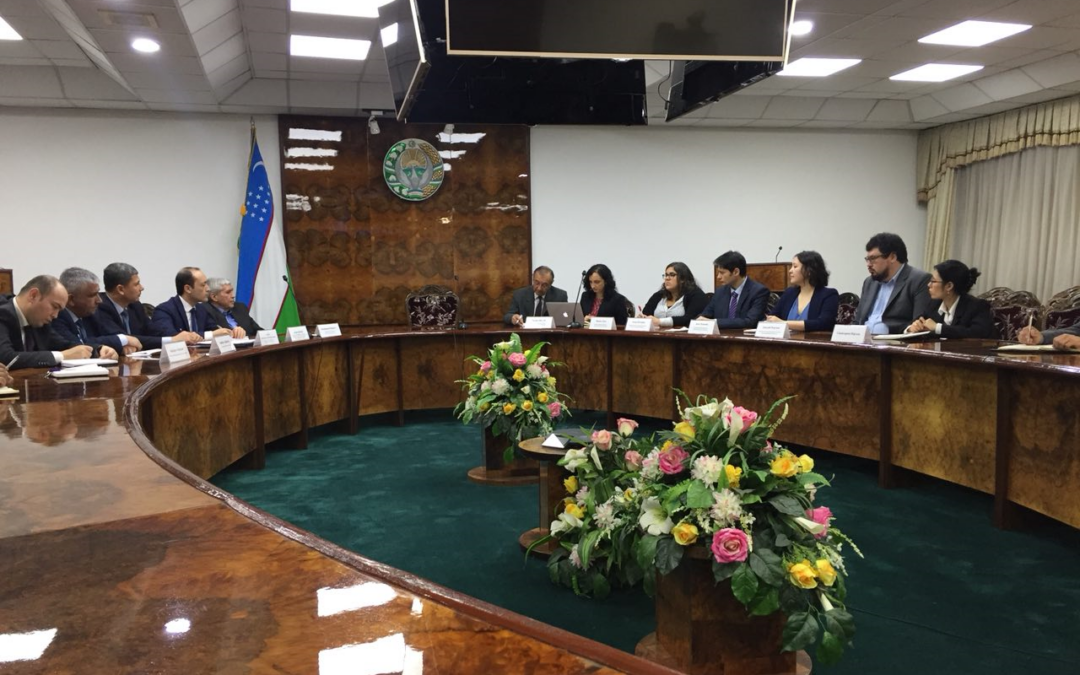
С 16 по 20 апреля МКЮ проводит исследовательскую миссию в Узбекистане для определения приоритетных вопросов прав ЭСК, которые будут в центре ее проекта по доступу к экономическим, социальным и культурным (ЭСК) правам (проект “ACCESS” / “Доступ”).
В ходе миссии эксперты МКЮ будут встречаться с ключевыми заинтересованными сторонами, включая соответствующие государственные органы, ОГО, правовых экспертов, международные организации в Узбекистане и других участников для обсуждения правовых и практических аспектов обеспечения доступа к правосудию для прав ЭСК.
В ходе встреч, среди прочего, будут рассмотрены следующие вопросы:
- действующее законодательство, обеспечивающее права ЭСК в Узбекистане;
- текущие и запланированные реформы в обеспечении прав ЭСК;
- правовая защита прав ЭСК и препятствия на пути их осуществления;
- обсуждение возможных правовых, практических аспектов, связанных с доступом к правосудию в области прав ЭСК.
МКЮ будет опираться на международные стандарты в области прав ЭСК, в частности Международный пакт об экономических, социальных и культурных правах (МПЭСКП), участником которого является Узбекистан.
Результаты миссии составят базовый отчет, который будет информировать о развитии и реализации проекта ACCESS.
МКЮ признателена за содействие правительства и Европейского союза, которые поддерживают этот проект, в организации встреч с соответствующими государственными учреждениями.
Контакт:
Темур Шакиров, temur.shakirov(a)icj.org
Apr 17, 2018 | News
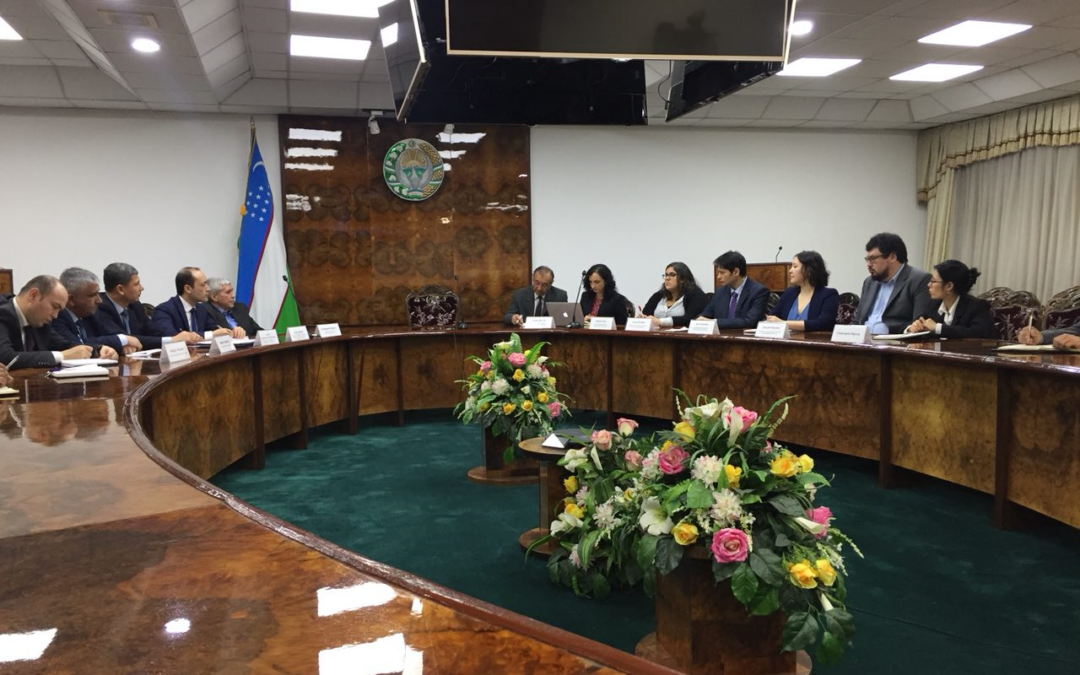
From April 16 to 20, the ICJ is conducting a research mission to Uzbekistan to identify the priority ESC rights issues which will be the focus of its project on access to the economic, social and cultural (ESC) rights (ACCESS project).
During the mission, ICJ experts will meet with key stakeholders, including relevant State bodies, CSOs, legal experts, international organizations in Uzbekistan and other actors to discuss legal and practical aspects of ensuring access to justice for ESC rights.
During the meetings, among others, the following issues will be addressed:
- current legislation ensuring ESC rights in Uzbekistan;
- ongoing and planned reforms in ensuring ESC rights;
- legal protection of ESC rights and barriers to their enjoyment;
- discussion of possible legal, practical aspects related to access to justice in the field of ESC rights.
The ICJ will rely on international standards in the area of ESC rights, in particular, the International Covenant on Economic, Social and Cultural Rights (ICESCR), to which Uzbekistan is a party.
The results of the mission will form a baseline report which will inform the construction and implementation of the ACCESS project.
The ICJ appreciates the facilitation of the Government and of the European Union, which supports the project, in arranging meetings with relevant State institutions.
Contact:
Temur Shakirov, temur.shakirov@icj.org