Apr 12, 2018
Today the ICJ launched its report The Trial of Civilians by Military Courts in Venezuela (available only in Spanish).
The report analyzes the constitutional and legal framework of Venezuela’s military justice system, its structure, integration and scope of jurisdiction.
The report addresses the serious problems regarding the independence of the Venezuelan military justice system and the practice of prosecuting civilians by the military courts of that country, in light of international standards and the principles of the rule of law.
It also highlights the recommendations on the administration of justice by military courts that have been made to Venezuela by various international authorities charged with the protection of human rights, both within the United Nations and within the Inter-American System.
The report concludes that the Venezuelan military tribunals do not meet the necessary conditions for a fair administration of justice, including as provided by Article 14 of the International Covenant on Civil and Political Rights.
In particular, it underscores that the trial of civilians by military courts constitutes a violation of the right to an independent, impartial and competent tribunal and is incompatible with international law and standards on the administration of justice.
Venezuela-Civiles Tribunales Militares-Publications-Reports-Thematic Reports-2018-SPA (Full report, in Spanish, in PDF)
Apr 10, 2018 | News
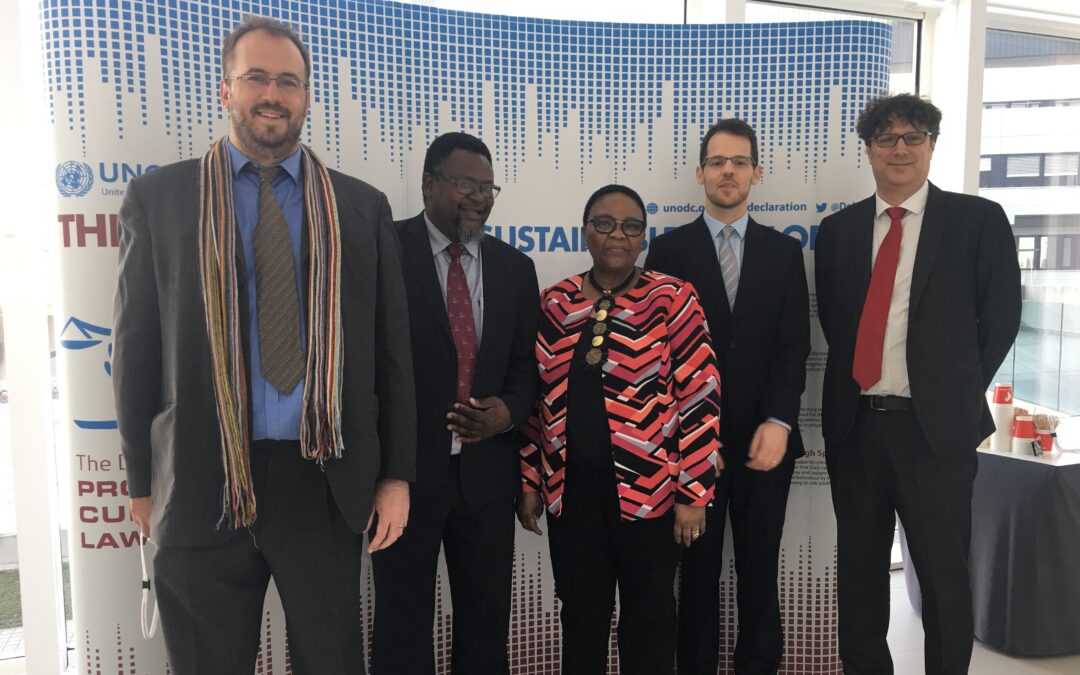
The ICJ and its partner the Democracy Governance and Rights Unit (DGRU) of the University of Cape Town are holding a panel discussion on selection and appointment of judges within the auspices of the Launch of the Global Judicial Integrity Network.
This new Network is being launched by the UN Office on Drugs and Crime (UNODC) in Vienna, Austria on today.
The panel is aimed at discussing the implementation and monitoring of guidelines on the best practice for the appointment of judges (“guidelines”).
The Southern Africa Chief Justices’ Forum (SACJF) mandated the development of these guidelines through its Concluding Communiqué during the 2015 Annual Conference of East and Southern Africa Chief Justices, held at Victoria Falls in Zimbabwe.
The ICJ and the DGRU have been working on developing the guidelines, together with a subcommittee of the SACJF, with the aim of seeing them adopted at the SACJF’s annual general meeting to be held this year between August and September in Malawi.
“The UNODC Judicial Integrity Network launch in Vienna, Austria 9-10 April 2018 gives us an excellent opportunity to start thinking a bit further down the line, and identify, anticipate and develop responses to problems that may be experienced in implementing the guidelines at a national level,” said Arnold Tsunga, Africa Director of the ICJ.
While many very good standards have been developed and adopted in Africa in the field of human rights, rule of law, and good governance, a major challenge has been to see the standards implemented in practice.
“In addition to highlighting relevant global standards, the ICJ will also present its experiences from around the world in monitoring and overcoming obstacles to implementation of such guidelines,” said Matt Pollard the Director of the Centre for Independence of Judges and Lawyers at the ICJ.
“This should contribute to planning for effective implementation of the Southern African guidelines, and be of interest to the broader audience at the launch of the UNODC global network on judicial integrity.”
The panel to be moderated by Arnold Tsunga includes Hon. Sanji Monageng, ICJ Commissioner and Justice, International Criminal Court; Mr. Jan van Zyl Smit, Associate Senior Research Fellow, Bingham Centre for the Rule of Law; Mr. Christopher Oxtoby, Senior Researcher, Democratic Governance and Rights Unit, University of Cape Town; Mr Matt Pollard, Senior Legal Adviser and Director, CIJL, ICJ.
Fore more information contact Arnold Tsunga on arnold.tsunga@icj.org (+27716405926) or Matt Pollard on <matt.pollard@icj.org> (+41 79 246 54 75)
Universal – Vienna Panel on Selection – News – Webstory – ENG – 2018 (Further information in PDF)
Apr 10, 2018 | News
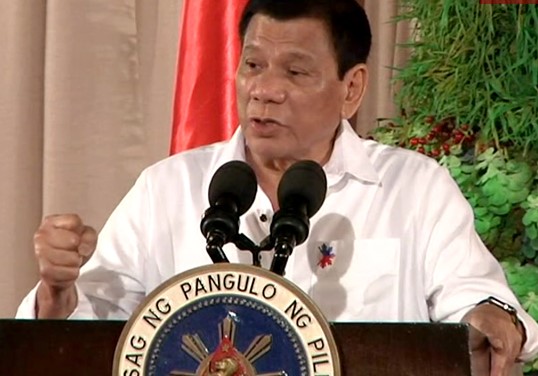
The ICJ today condemned a threatening statement made by Philippine President Rodrigo Duterte attacking Chief Justice Maria Lourdes Sereno of the Philippines Supreme Court.
The ICJ said that the President’s remarks constituted an assault not just on the Chief Justice, but on the independence of the judiciary in the country.
The ICJ urged President Duterte to respect judicial independence and not to exert political pressure on any government official or agency to undermine the independence of the judiciary.
In a press conference on 9 April 2018, President Duterte told reporters: “I’m putting you on notice that I’m your enemy and you have to be out of the Supreme Court.”
He also called on the House of Representatives to expedite impeachment proceedings presently underway against Chief Justice Sereno.
“It is absolutely unacceptable for President Duterte to make such a statement not only because it constitutes direct intimidation of the Chief Justice, but the chilling effect it may have on other independent judges who carry out their professional duties,” said Emerlynne Gil, Senior International Legal Adviser of ICJ.
“By expressing his personal feelings against the Chief Justice and by directing the House of Representatives to accelerate the impeachment proceedings, the President is actively influencing and interfering with the functions of other co-equal branches of government,” Gil added.
The ICJ reminds President Duterte that as enunciated in the UN Basic Principles on the Independence of the Judiciary, “[i]t is the duty of all governmental and other institutions to respect and observe the independence of the judiciary.”
The Principles affirm that the judiciary must be able to carry out its work “without any restrictions, improper influences, inducements, pressures, threats or interferences, direct or indirect, from any quarter or for any reason.”
The ICJ strongly urges President Duterte to retract his comments and to refrain in the future from making any statements attacking individual judges or in any way interfering with the independence of the judiciary.
Contact
Emerlynne Gil, Senior International Legal Adviser, t: +662 619 8477 (ext. 206) ; e: emerlynne.gil@icj.org.
Background
In September 2017, two impeachment complaints against the Chief Justice were filed before the Committee of Justice of the House of Representatives, the Lower House of Congress.
The Committee of Justice approved only one of the complaints, which is scheduled to be put before the plenary of the House of Representatives in May 2018 when Congress resumes its session.
If it obtains one-third vote of all members in the House of Representatives, the articles of impeachment will be transmitted to the Senate, which is the Upper House of Congress.
Any impeachable officer may be removed from office by a vote of two-thirds of all the members of the Senate sitting as the impeachment court.
Some of the points raised in the approved impeachment complaint are the Chief Justice’s failure to report certain income in her statements of assets, liabilities and net worth (SALN), allegations of use of public funds to finance her extravagant and lavish lifestyle, and manipulation of judicial appointments for personal and political reasons, among others.
The Chief Justice maintains she correctly filed her SALNs. She also further claims that the other allegations in the impeachment complaint are baseless or mere fabrications.
In March 2018, the Philippines’ Solicitor General Jose Calida filed a petition before the Supreme Court questioning the Chief Justice’s appointment due to her alleged failure to fully disclose her wealth. Oral arguments on this petition were made on 10 April 2018.
Apr 9, 2018 | News
Prior to this workshop, on 6 April the ICJ met with the Mon State High Court, including its Chief Justice.
Legal advisers from the ICJ had a constructive discussion with the justices about judicial reform in Myanmar, including the role of lawyers and civil society, as well as jurists, in advancing accountability and access to justice.
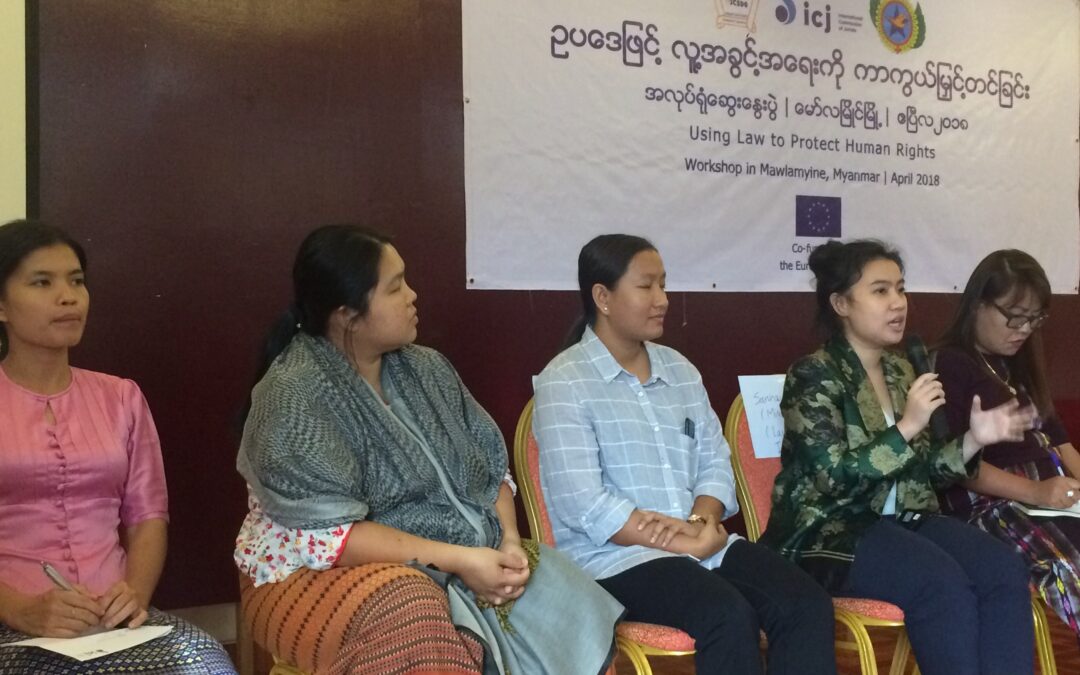
The two-day workshop aimed to identify challenges and opportunities for human rights advocacy using law, and to encourage the building of relationships and networks between lawyers and civil society.
The workshop considered strategic litigation concepts and case studies in the region. It also discussed the landscape of rule of law and justice in Myanmar, particularly the experiences regarding access to justice of some sixty participants from Mon State.
Apr 5, 2018
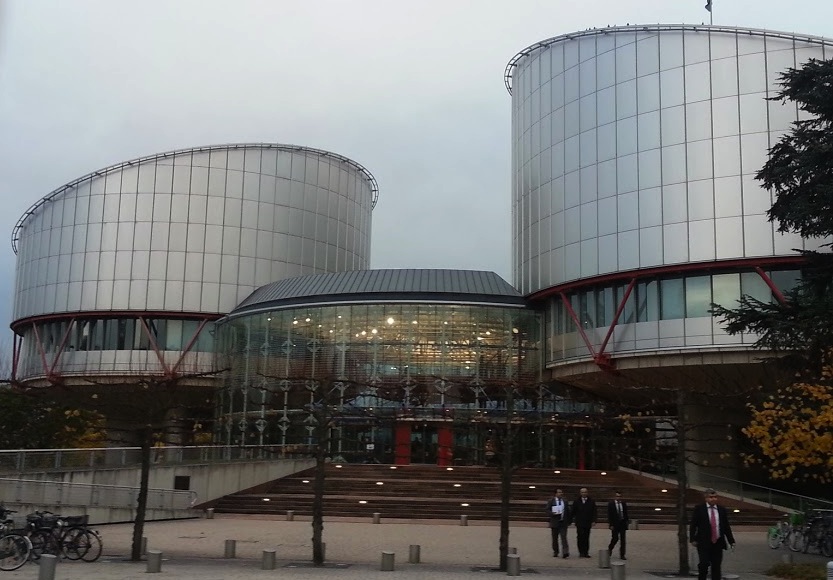
The ICJ, together with other NGOs, has responded to a consultation on how classified documents are taken into consideration before the European Court of Human Rights.
In the submission, the AIRE Centre, Amnesty International, the International Commission of Jurists, REDRESS and the World Organisation Against Torture (OMCT) respond to the Court’s Standing Committee on the Rules of Court’s proposal to amend the Court’s Rules of Procedure by introducing a new Rule 44F.
The organisations urge the Court not to adopt a mechanism whereby the Court could receive and rely on or otherwise take into consideration information not disclosed to the applicant and his or her representative of choice.
The organisations emphasise that the right to an effective remedy for claims of human rights violations incorporates the right of access to a fair procedure and the right of victims and the public to the truth about human rights violations, including serious violations such as torture, enforced disappearances and extra-judicial executions or other unlawful killings.
In cases before the Court, the applicant victim’s interest in disclosure of evidence regarding violations of Convention rights should always outweigh any purported national security or other similar public interests in its non-disclosure.
The submission also analyses and makes recommendations on the specific wording of the proposed new Rule 44 F.
JointSubmission-ECtHR-Rule44F-LegalSubmission-2018-ENG (download the submission)