Using UN human rights mechanisms: workshop for lawyers from South-east Asia

Using UN human rights mechanisms: workshop for lawyers from South-east Asia

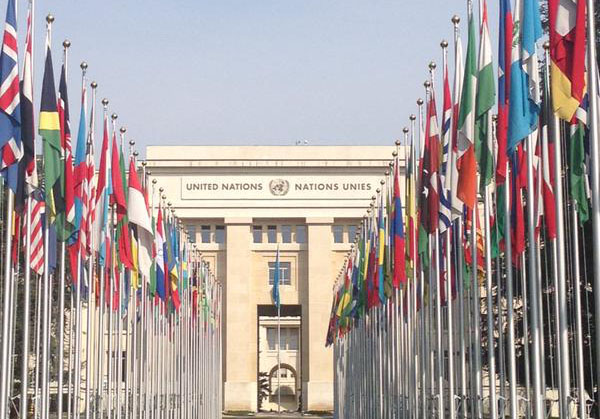
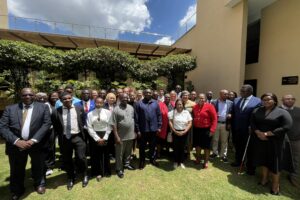
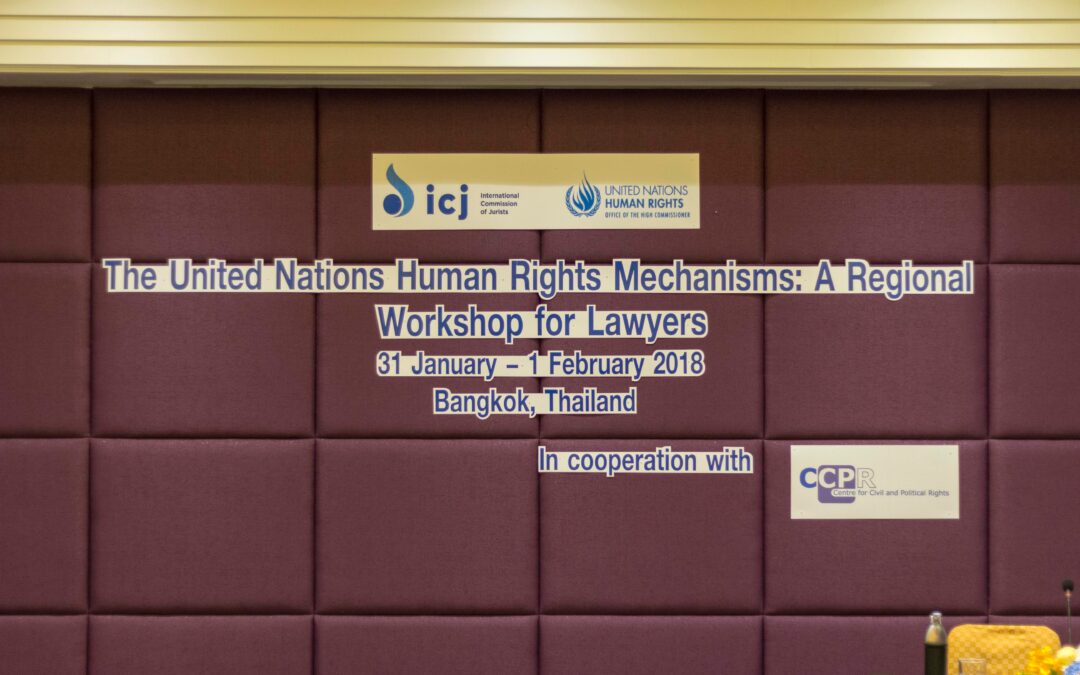
The ICJ, in collaboration with the UN High Commissioner for Human Rights Regional Office for South-East Asia (OHCHR), and the Centre for Civil and Political Rights, organised a workshop for  lawyers from southeast Asia, on engaging with UN human rights mechanisms.

The two-day workshop provided some thirty lawyers from Thailand, Cambodia, Vietnam, and Lao PDR with knowledge, practical skills and expert advice about UN human rights mechanisms, with the participants themselves sharing their own experiences and expertise.

In addition to explaining what the UN mechanisms are and how they work, the workshop discussed how lawyers can use the outputs of UN human rights mechanisms in their professional activities, as well as how to communicate with and participate in UN human rights mechanisms in order to ensure good cooperation and to best serve the interests of their clients.

Sessions were introduced by presentations by the ICJ’s Main Representative to the United Nations in Geneva and OHCHR officials, followed by discussions and practical exercises in which all participants were encouraged to contribute questions and their own observations.

A special discussion of effective engagement of lawyers with Treaty Bodies was led by Professor Yuval Shany, a member of the Human Rights Committee established to interpret and apply the International Covenant on Civil and Political Rights (ICCPR).

The workshop also aimed to encourage the building of relationships and networks between the lawyers from across the region.

The workshop forms part of a broader project of awareness-raising and capacity-building for lawyers from the region, about UN mechanisms.

A similar workshop was held in January 2017 for lawyers from Myanmar.

The project has also published (unofficial) translations of key UN publications into relevant languages, and is hosting lawyers in a mentorship programme in Geneva.

More details are available by contacting UN Representative Matt Pollard (matt.pollard(a)icj.org) or by clicking here: https://www.icj.org/accesstojusticeunmechanisms/

Kenyan Appeals Court strongly affirms that al-Bashir cannot claim immunity as a defense against the ICC’s arrest warrants

Kenyan Appeals Court strongly affirms that al-Bashir cannot claim immunity as a defense against the ICC’s arrest warrants

An opinion editorial by Tim Fish Hodgson, ICJ Legal Adviser in Johannesburg, South Africa

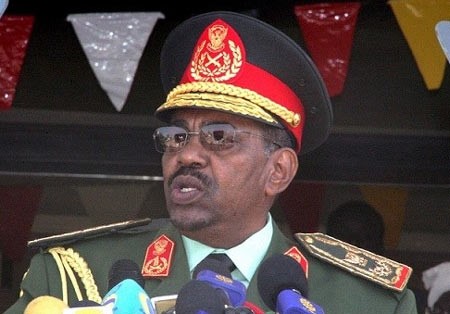
A Kenyan Court of Appeal decision handed down last week has, once again, reaffirmed the Kenyan government’s international obligation to arrest Sudanese President Omar al-Bashir should he ever return to Kenya.

The Court concluded “the Government of Kenya by inviting al Bashir to Kenya and failing to arrest him acted not only with complete impunity but also in violation of its international obligations.”

The African Union and some individual States such as South Africa, Uganda and Kenya appear to have serious concerns relating to what they perceive the conflicts between their obligations to arrest al-Bashir under the Rome Statue of the ICC and their obligation to respect his diplomatic immunity as a Head of State.

This apparent conflict is clearly expressed by both the African Union’s ‘Withdrawal Strategy Document’ and the draft International Crimes Bill introduced by the Minister of Justice to South African Parliament.

But the greatest testament to this discomfort is these and other states repeated failures to arrest al-Bashir despite their international legal obligations and pressure from local, regional and international human rights defenders.

The Kenyan Appeal Court recognized the “rare geopolitical predicament” faced by the Kenyan government in balancing its “focal role” in Sudan and “remaining true the African Union resolution not to cooperate with the [ICC]” with its obligations in terms of the international criminal law which is has domesticated in its own International Crimes Act.

Nevertheless, grounding its judgment in the historical foundations of international criminal law, the Court quotes with approval the Nuremberg Tribunal’s observation that “perpetrators cannot shelter themselves behind their official positions in order to be freed from punishment in appropriate proceedings”.

The Court notes that when a state commits acts which violate ius cogens norms it “waives any rights to immunity” and concludes that, similarly, “we have no doubt that an exception to immunity exists in cases where the individual is responsible for crimes against humanity”.

This, it reasons, is because “acts amounting to international crimes of individuals cannot be considered legitimate performance of official functions of State” capable of attracting immunity in the first place.

In taking this approach the Kenyan Court of Appeal deftly acknowledges that despite the potential political conflicts that there is no real legal conflict between provisions on the Rome Statute with respect to immunity.

This same approach was supported by the ICJ’s submission to South African Parliament signed by six former Constitutional Court Justices and Navi Pillay the former United Nations High Commissioner for Human Rights.

In a judgment that has received praise from international law experts John Dugard and Guénaël Mettraux no less, the Supreme Court of Appeal of South Africa too concurred with this approach, noting that allowing immunity to prevent arrest in such situations “would create an intolerable anomaly”.

Highlighting the irony that Kenya’s government disregard of its international obligations in inviting al-Bashir to the inauguration of Kenya’s progressive Constitution, the Court also notes that the government’s actions violate a specific provision of the Kenyan Constitution itself.

Article 143(4) of the Constitution reads “[t]he immunity of the President under this Article shall not extend to a crime for which the President may be prosecuted under any treaty to which Kenya is party and which prohibits such immunity”.

Despite these categorical statements of Kenya’s legal obligations to arrest al-Bashir pursuant to the Kenyan Constitution, the International Crimes Act and the Rome Statute of the ICC, the Court overturned the provisional arrest warrant for al-Bashir issued by the High Court on the ground the requisite urgency no longer existed at the time the order was issued.

This, it reasoned, is because section 131(1)(c) of Kenya’s International Crimes Act explicitly permits the issuing of a provisional warrant only if “it is necessary or desirable for an arrest warrant to be issued urgently”.

This aspect of the Court’s judgment, which is inconsistent with the Rome Statute, strongly implies that future applications relating to al-Bashir’s arrest would need to be heard and determined urgently before or during a visit to the country.

This despite the Court’s own observations that the Kenyan government remains bound by its international obligation to cooperate with the International Criminal Court by executing warrants the ICC had issued when al-Bashir’s visit in 2010.

Bolstering the possibility of the urgent issue of a provisional arrest warrant in a Kenyan High Court, however, the Court’s decision affirms that human rights organizations such as the Kenyan Section of the International Commission of Jurists have legal standing to approach the High Court requesting the issue of a provisional arrest warrant.

This will mean that, as with litigation initiated by the Southern Africa Litigation Centre in South Africa, the Kenyan government’s own continued indifference or deliberate resistance to its international obligations, would not prevent al-Bashir’s arrest should he return to the country.

The judgment of the Kenyan Court of Appeal is of regional and international significance in the face of increasing threats of collective withdrawal of African countries from the ICC.

Most particularly, after failing to arrest al-Bashir on a visit to South Africa in 2015, the South African government appears to be charging ahead with its intention to withdraw from the ICC by proposing the enactment of woefully inadequate domestic legislation.

As a decisive statement by an African court this judgment will be useful for human rights defenders, lawyers and judges in South Africa who are consistently accused of lacking regional legitimacy by the government in their attempts to ensure that al-Bashir is arrested and prevent South Africa’s withdrawal from the ICC.

In the South African context, it remains to be seen whether newly appointed President Cyril Ramaphosa may change the South African government’s headstrong tune in the face of considerable, consistent and widespread criticism.

Finally, to some the Kenyan Appeal Court’s decision to invalidate the provisional arrest warrant for al-Bashir may appear to provide legitimacy to the Kenyan governments action. Properly read, this is perhaps merely politically astute exercise of its powers and is clearly overshadowed by the Court’s decisive condemnations of the government’s intransigence and strong findings which make absolutely clear that the Kenyan government is obliged to cooperate in al-Bashir’s arrest should he ever return to Kenya.

In terms of 163(4) of the Kenyan Constitution decisions of the Appeal Court may be appealed to the Supreme Court of Kenya if it can be shown that the matter involves the interpretation or application the Constitution or if it is decided that it is a matter of “general public importance”.

Human rights groups call on States to hold China accountable at the UN Human Rights Council 

Human rights groups call on States to hold China accountable at the UN Human Rights Council 

In a private letter sent to select UN member states, nearly 20 human rights organizations called for clear and concrete actions to denounce China’s current rollback in respect for human rights at the UN Human Rights Council, which opens its session in Geneva today.

The groups highlight five cases of human rights defenders that would benefit from further pressure being brought to bear on the Chinese government. They include:

–        Liu Xia, a poet kept under house arrest after the death of her husband, Nobel laureate Liu Xiaobo, in July 2017;

–        Wang Quanzhang, a rights lawyer held incommunicado since July 9, 2015;

–        Gui Minhai, a Swedish citizen arbitrarily detained in China since he vanished from Thailand in October 2015;

–        Tashi Wangchuk, a Tibetan cultural rights and education advocate who has been detained more than two years on charges of inciting separatism; and

–        Yu Wensheng, a prominent human rights lawyer disbarred, then arbitrarily detained, in January 2018.

The report of the UN Special Rapporteur on Human Rights Defenders, Mr Michel Forst, to the current Human Rights Council session, describes the dire situation for human rights lawyers and other defenders in China (see paragraphs 277 to 297 of the report.

‘These are just five cases among hundreds, if not more. Taken together, they show that the ferocious crackdown on human rights defenders, including lawyers, that has intensified since President Xi Jinping assumed power continues unabated’, say the authors of the letter.

‘The Human Rights Council should take further steps to show China that undermining key legal protections for freedoms of expression and association and the rights to a fair trial, not to mention disappearing or arbitrarily detaining dissenting voices, is unacceptable behaviour – especially for a would-be “global leader”’.

In March 2016, twelve States presented a historic joint statement focused on the human rights situation in China. Following President Xi’s consolidation of power at the 19th Party Congress in November 2017, a renewed commitment to a joint statement condemning China’s human rights violations has never been more timely.

The organisations urge the governments to call for the release of all arbitrarily detained individuals; condemn the use of ‘residential surveillance in a designated location’, which the UN Committee against Torture has said ‘may amount to incommunicado detention in secret places,’; and promptly grant relevant UN experts unhindered access to all parts of the country.

‘The Council’s credibility is based on its ability to act swiftly and effectively to address human rights situations and to uphold universal values. However, this has come under attack in recent years, particularly from China and likeminded governments’.

‘In this context, it is critical for countries to demonstrate their commitment to the protection and promotion of human rights in China, and to defend the values underlying the international human rights system’.  

This year is particularly important, as human rights defenders inside and outside China prepare for the country’s next Universal Periodic Review, scheduled for November 2018.

The letter to governments concludes: ‘For human rights defenders to have the courage to engage in this important process, with all the risks that it entails, it’s critical that they know that they are not alone’.

China – UNHRC Accountability -Advocacy-Open letter – 2018 – ENG (full report in PDF)

Swaziland: workshop on sexual and gender-based violence

Swaziland: workshop on sexual and gender-based violence

On 28 February 2018, the ICJ is holding a workshop on combatting sexual and gender-based violence (SGBV) in Swaziland, in cooperation with Women and Law in Southern African – Swaziland (WLSA Swaziland) and the Swaziland Action Group Against Abuse (SWAGAA).

The workshop, held as part of the ICJ’s Global Redress and Accountability Initiative, will consider the prevalence of SGBV in Swaziland, and contributing factors, and will focus on the extent to which perpetrators of such violence are, and can be, held accountable in law and in practice and the means by which victims of SGBV may better access effective remedies and reparation.

Participants will also discuss opportunities for engagement with UN mechanisms on addressing SGBV in the Kingdom of Swaziland.

The workshop is set against the backdrop of urgent recommendations adopted by the UN Human Rights Committee in 2017 on the combatting of violence against women, in respect of which Swaziland must report to the Committee by July 2018.

It comes ahead of Swaziland’s anticipated report, also due in July 2018, to the UN Committee on the Elimination of All Forms of Discrimination Against Women which in 2014 also adopted several recommendations on the combatting of violence against women.

The workshop also comes as national debates continue on the enactment of the Sexual Offences and Domestic Violence Bill, which Swaziland had committed to enact without delay at its 2016 Universal Periodic Review.

Workshop Agenda

Syria and Russia: end attacks on Eastern Ghouta now

Syria and Russia: end attacks on Eastern Ghouta now

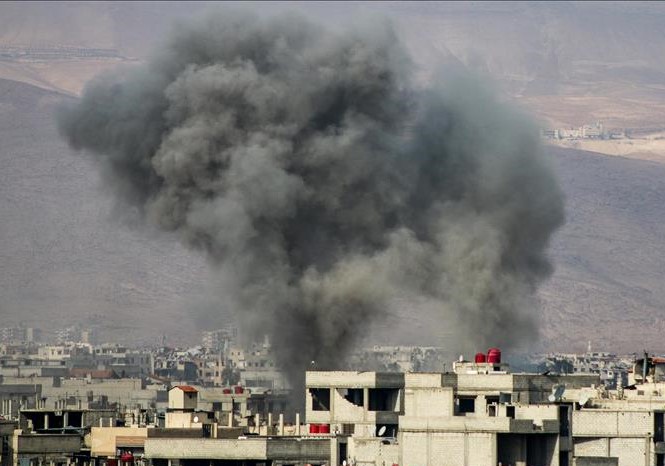
The ICJ today called on the governments of Syria and Russia to cease all attacks on the civilian population in Eastern Ghouta.

Intentionally directing attacks against the civilian population and civilian objects, including hospitals, constitutes a war crime.

All those responsible for such crimes must be held accountable.

“The UN Security Council is blatantly failing to discharge its primary responsibility for maintaining international peace and security. It’s so paralyzed by division that it cannot even enforce its own resolutions on protecting the civilian population in Syria and ensuring unimpeded humanitarian access,” said Said Benarbia, Director of the ICJ Middle East and North Africa Programme.

“After 7 years of shielding the Syrian regime from accountability for its egregious crimes, including the use of chemical weapons, Russia is joining forces with this regime’s cynical enterprise to murder and starve its own people,” he added.

The air and artillery bombing campaign conducted by the Syrian government, with the backing of Russia, have caused hundreds of victims since Sunday.

The destruction of hospitals and the lack of basic supplies and medicines are making the living conditions of the civilian population extremely dire.

Under international humanitarian law, the Syrian government and its ally Russia have obligations to protect the civilian population and to grant rapid and unimpeded passage to humanitarian relief for the residents of Eastern Ghouta.

The UN Security Council imposed a disarmament plan concerning the Syrian chemical arsenal, yet credible reports of government use of chemical weapons against civilians continued to emerge as late as January and February 2018, in particular in Eastern Ghouta and Saraqeb.

In its last report in October 2017, the OPCW-UN Joint Investigative Mechanism established the responsibility of the Syrian government for the use of chemical weapons.

In the same month, Russia vetoed a resolution to renew the Mechanism’s mandate.

“States must act individually and collectively to stop the escalation of horrors we are witnessing in Eastern Ghouta. They must also ensure, including through any means available in their national legal systems, as well as at the regional and international level, that all those responsible for the war crimes, crimes against humanity and other international crimes committed in Syria, irrespective of their nationality, rank or status, are brought to justice,” Benarbia added.

Contact

Said Benarbia, Director of the ICJ Middle East and North Africa Programme, tel: +41 798783546, e-mail: said.benarbia(a)icj.org

Syria – Ghouta Bombing – News – Webstory – 2018 – ARB (Arabic translation in PDF)

Translate »