Feb 23, 2018 | News
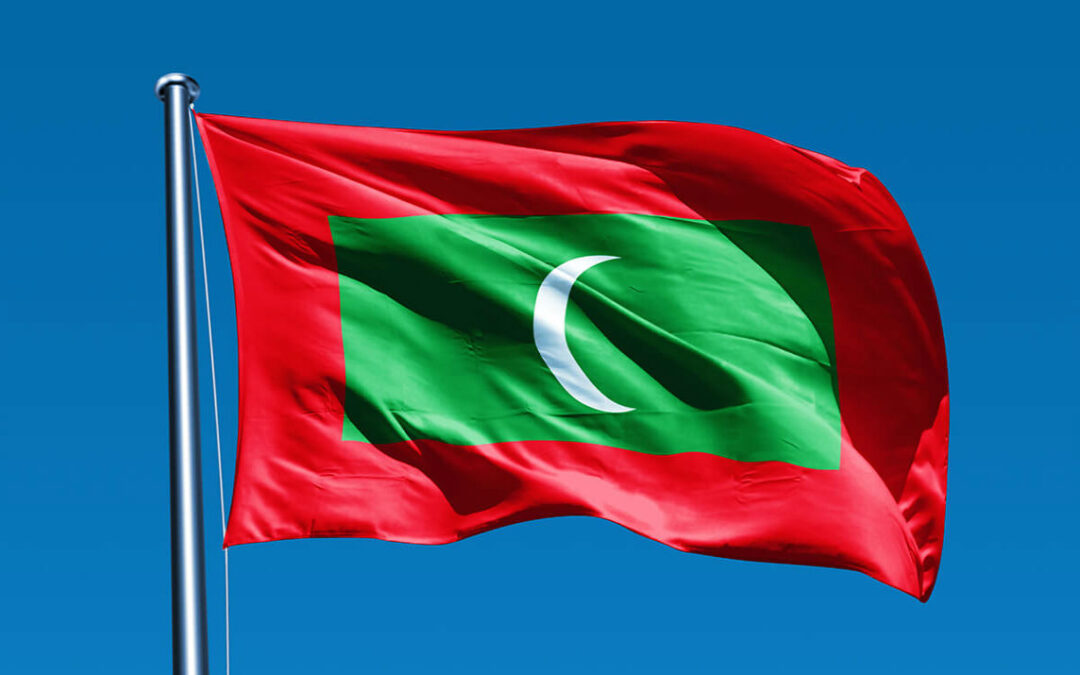
As the assault on the rule of law and human rights under the state of emergency in the Maldives continues, the ICJ expressed concerned about government reprisals taken against lawyers for performing their legitimate professional functions.
The ICJ urged the Maldivian authorities to stop obstructing the work of lawyers and respect the independence of the legal profession.
The ICJ called on the government to immediately lift the state of emergency, revoke the “suspension” of human rights protections, release judges of the Supreme Court and persons detained for political reasons, and ensure the independence of the judiciary.
On 22 February, the Department of Judicial Administration, the administrative arm of the Maldivian judiciary, suspended lawyer Hussain Shameem for an indefinite period of time, citing an ongoing investigation against him.
“No lawyer should be subject to persecution for carrying out their professional duties. Lawyers like Hussain Shameem are indispensable in ensuring human rights protection and upholding the rule of law in the Maldives, especially during a state of emergency,” said Frederick Rawski, ICJ’s Asia-Pacific Director.
The decision to suspend Shameem came only days after the Maldivian police launched an investigation against him for “obstruction of justice” and “obstruction of the administration of law and other government function”.
Hussain Shameem is representing members of the political opposition who are in detention, including former President Maumoon Abdul Gayoom and parliamentarian Faris Maumoon.
Before his suspension, Hussain Shameem had made public statements asserting that the declaration emergency declared by the Government on 5 February 2018 was unconstitutional.
He had also highlighted the poor conditions of detention of his clients.
The ICJ has learned that the police confiscated the mobile phones of another two lawyers, Mahfooz Saeed and Moosa Siraj.
Like Shameem, they were representing individuals arrested and detained during the state of emergency, including Justice Ali Hameed, who was part of the Supreme Court bench that recently issued a judgment directing the release of members of the opposition.
The police have also informed lawyers taking up cases during the state of emergency that they can only meet their clients for 30 minutes, which is an arbitrary and unlawful restriction on the fair trial rights of accused persons.
Under international standards, including the UN Basic Principles on the Role of Lawyers, governments must ensure that lawyers are able to perform all of their professional functions without intimidation, hindrance, harassment or improper interference.
International standards also provide that lawyers shall not suffer, or be threatened with, prosecution or administrative, economic or other sanctions for any action taken in accordance with recognized professional duties, standards and ethics.
“The government’s actions against these lawyers, who are just doing their job of protecting their clients’ rights, has a chilling effect on other lawyers in the country as it sends a message that any exercise of their professional responsibilities perceived as contrary to wishes of the governments will not be tolerated,” added Rawski.
Contact:
Frederick Rawski, ICJ Asia Pacific Regional Director, t: +66 64 478 1121, e: frederick.rawski(a)icj.org
Reema Omer, ICJ International Legal Adviser for Pakistan (London), t: +447889565691; e: reema.omer(a)icj.org
Additional information: the state of emergency
On 5 February, the Government of the Maldives had declared a 15-day state of emergency under Article 253 of the Constitution, suspending a range of human rights protections. The declaration of emergency followed a Supreme Court judgment on 1 February that ordered the release of at least nine members of opposition parties, who were in detention on a number of charges.
On 20 February, the Parliament extended the state of emergency for another thirty days, citing the ongoing constitutional crisis. The extension appears to have been taken in violation of Maldivian law and the Constitution as the number of parliamentarians required for such an extension was not present during the vote.
The constitutionally and internationally protected rights that have been suspended in part or in full during the state of emergency include, among others, the right to liberty; the right to freedom of assembly; and the right to privacy. Basic safeguards surrounding arrest, detention, search and seizures – including the criminal procedure code – have also been suspended.
The International Covenant on Civil and Political Rights (ICCPR), to which the Maldives is a State Party, allows for States only to derogate from full protection of only a limited number of human rights during declared “public emergency which threatens the life of the nation.” No rights can be entirely suspended. Measures of derogation may only be taken to the extent strictly necessary to meet a specific threat to the life of the nation.
Feb 20, 2018
The ICJ and seven other human rights organizations have written to the UN Secretary General, António Guterres, about the appointment of the High Commissioner for Human Rights.
Dear Secretary-General, as you begin to search for the next High Commissioner for Human Rights, we emphasize the high expectations that our organizations have for the successor to this office. Appointing a capable, strong and qualified High Commissioner is crucial at this time when fundamental principles of human rights are being challenged, and the integrity and independence of the United Nations human rights system is under attack. We urge you to vigorously defend the High Commissioner’s Office’s ability to operate without interference, and select a new High Commissioner capable of ensuring its independence.
Criteria/Qualifications for appointment
Our organizations consider that the next High Commissioner needs to be someone of the highest international standing and integrity, with a proven record of bold and principled public advocacy for human rights. She or he should be a human rights champion ready to be independent and outspoken in fulfilling the High Commissioner’s mandate. The High Commissioner should be a strong leader with a clear vision for the promotion and protection of all human rights, and bring energy, courage and commitment to the position. The High Commissioner should especially highlight human rights issues that have fallen beneath the radar, and be ready to hold States accountable without fear of repercussions. She or he should be able to inspire those working for the promotion and protection of human rights and the broader international community, and be able to navigate effectively within a complex human rights community that comprises governments, civil society and other stakeholders. Most importantly, the High Commissioner should be accessible to victims and others directly affected by human rights violations. We urge you to select an exceptionally qualified candidate capable of meeting the demands of this important post from the outset.
Selection process
The process that led to your own appointment as United Nations Secretary-General was the most transparent to date, and we believe a similar approach should be used to identify and appoint the High Commissioner for Human Rights. A robust and transparent selection process is key to ensuring the credibility of the appointment, and to identifying the most qualified candidate for the job. Transparency, accountability and professionalism are important values in the United Nations, and we urge you to strictly apply these principles to the selection of the next High Commissioner.
We recommend that a formal person specification be formulated and made public. We consider such a specification would assist in the identification of candidates and the assessment of their competencies. The selection process should include wide consultation with all stakeholders, including civil society. We consider it would be beneficial for there to be a set timetable for nominations, shortlisting and final selection to facilitate participation by all stakeholders in the selection process and ensure transparency.
Human rights are one of the pillars of the United Nations. It is vital that the next holder of this position be a compelling leader for human rights within the United Nations system and throughout the world. In the year of the 70th anniversary of the Universal Declaration of Human Rights, we urge you to put in place a process that reflects the seriousness and significance of this appointment to human rights victims and defenders worldwide.
Yours sincerely,
Amnesty International
Asian Forum for Human Rights and Development (FORUM-ASIA)
Cairo Institute for Human Rights Studies
CIVICUS
Human Rights Watch
International Commission of Jurists
International Federation for Human Rights (FIDH)
International Service for Human Rights
Feb 20, 2018 | News
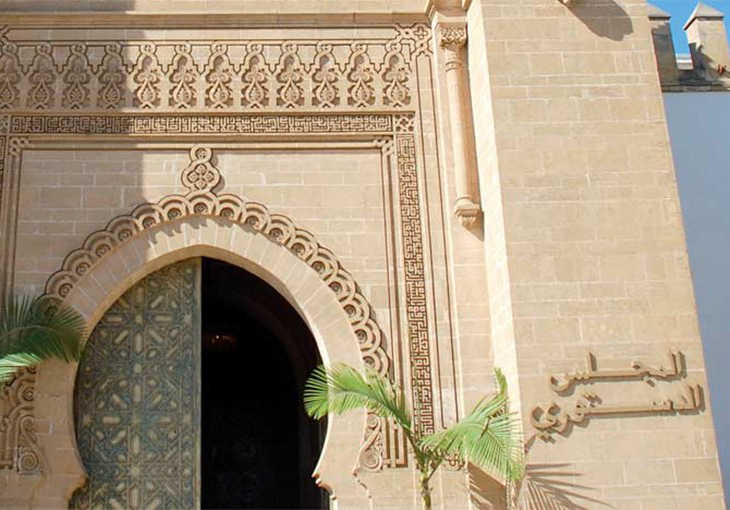
In a memo published today, the ICJ called on the Moroccan authorities to refrain from signing into Law Draft Organic Law No. 86.15 on access to the Constitutional Court with a view to amending it and ensuring its full compliance with international standards.
On 8 August 2017, the House of Representatives approved the Draft Law.
The Second Chamber of the Parliament, the House of Counselors, approved the Draft Law on 16 January 2018.
Before its promulgation, the Draft Law is due to be reviewed by the Constitutional Court to assess its compliance with the Constitution.
“The Draft Law is a missed opportunity to facilitate individuals’ access to the Constitutional Court and to remedy Morocco’s history of inadequate procedures of constitutional review,” said Said Benarbia, ICJ MENA Director.
“By providing for a two-layered admissibility system that includes vague and subjective criteria, and by omitting to extend free and competent legal assistance to those unable to pay when challenging the constitutionality of laws, the Draft Law puts undue burden on the litigants and curtails their access to the Court,” he added.
Under the Draft Law, a request to challenge the constitutionality of a law can only be introduced in the context of a litigation.
Lower courts are to refer the request to the Cassation Court after reviewing it and confirming that the formal and legal requirements set out in the Draft Law are met.
The Cassation Court shall then assess the challenge and refer it to the Constitutional Court if deemed “serious.”
The ICJ is concerned that this proposed procedure increases the likelihood that some laws and provisions may never be subjected to constitutional review, and that litigants may be blocked in their efforts to ensure the review of the constitutionality of the laws.
Moroccan authorities should provide for lower courts to immediately refer constitutionality challenges to the Constitutional Court, as well for other avenues of access, including for individuals and NGOs to be enabled to join proceedings as interested parties or to submit information as amicus curiae or through expert opinions, the ICJ says.
Under international law, anyone who alleges they have been the victim of a human rights violation has the right to access to an effective remedy, including a judicial remedy.
In Morocco, ensuring that alleged victims have access to constitutional review is of key importance to fulfilling this right within the national legal system.
Morocco-Access Const Ct-News-web story-2018-ARA (full story in Arabic, PDF)
Morocco-Access Const Ct-Advocacy-Position paper-2018-ENG (Memo in English, PDF)
Morocco-Access Const Ct-Advocacy-Position paper-2018-ARA (Memo in Arabic, PDF)
Feb 16, 2018 | Comunicados de prensa, Noticias
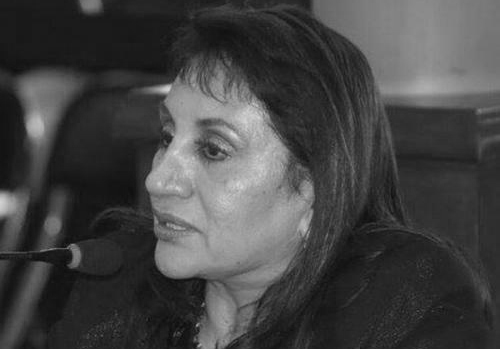
La CIJ considera que el ataque contra la Fiscal Sonia Montes constituye un grave atentado contra la justicia en el país.
La CIJ exige al Presidente de la República, como Jefe de la fuerza pública, esclarecer estos hechos a la mayor brevedad posible y tomar las medidas necesarias para que los presuntos autores de estos hechos sean llevados ante la justicia.
La CIJ destaca que el papel que viene jugando la Fiscal Sonia Montes en la búsqueda de justicia en casos de graves violaciones a los derechos humanos cometidos por miembros de las Fuerzas Armadas durante el conflicto armado interno, ha cobrado mayor relevancia en estos días, cuando el juicio por el delito de Genocidio se ha reiniciado semanas atrás.
“Este atentado constituye un ataque contra la justicia en Guatemala así como contra de todo el movimiento de derechos humanos de ese país. Este tipo de ataques pretenden afectar seriamente la Democracia y el Estado de Derecho y obstruir la justicia,” declaró Ramón Cadena, Director de la CIJ para Centroamérica.
Ante estos hechos condenables, la CIJ expresa su total solidaridad hacia la Fiscal de Derechos Humanos Sonia Montes, su familia y su motorista Néstor Valdes Antonio; asímismo, expresa su apoyo a la Fiscal General Thelma Aldana y al Comisionado de la Comisión Internacional contra la Impunidad (CICIG), Iván Velásquez y a todas y todos los fiscales y operadores de justicia, que realizan un trabajo diario y comprometido con la lucha contra la impunidad y la corrupción.
Ramón Cadena, Director de la CIJ para Centroamérica expresó:
“Exigimos al Presidente de la República Jimmy Morales una investigación pronta y eficiente, que permita individualizar la responsabilidad penal de los autores materiales e intelectuales de estos hechos. Hacemos un llamado a la ciudadanía guatemalteca, para no dejarse intimidar ante estos hechos de violencia.”
Feb 16, 2018 | News
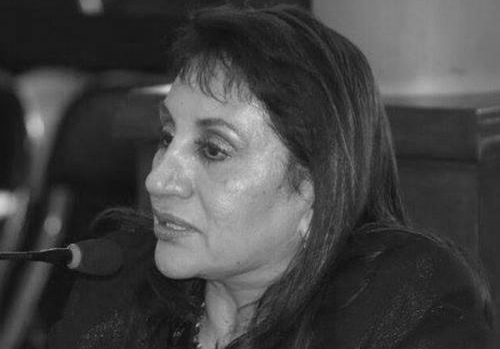
The ICJ strongly condemns the attack against the Deputy Prosecutor for Human Rights, Sonia Elizabeth Montes Valenzuela, carried out on 15 February by unknown gunmen in the central Zone 1 of Guatemala City.
Sonia Montes was on her way to work at the Public Prosecutors Office when two gunmen on motorbikes drove past and fired six bullets into the car.
Fortunately both Sonia Montes and her driver, Néstor Valdes Antonio, were unharmed.
“This is a vile attack against the justice system in Guatemala and the whole human rights movement in the country. These types of attacks seek to destabilize democracy and the rule of law,” Ramón Cadena, the ICJ Director stated.
“We call on President Jimmy Morales to carry out a full and impartial investigation in order to identify the material and moral authors of these acts,” he added.
The ICJ also expresses its solidarity with the families of the victims of the attack and with the Attorney General, Thelma Aldana, and the Commissioner of the International Commission against Impunity (CICIG), Iván Velásquez.
The Public Prosecutors’ Office and the CICIG are working tirelessly to investigate crimes and to end impunity and corruption in Guatemala.