Feb 9, 2018 | Artículos, Noticias
Hoy la CIJ y varias otras organizaciones presentaron un amicus curiae a la Corte Interamericana de Derechos Humanos (Corte IDH) en el contexto del proceso de supervisión de cumplimiento de las sentencias dictadas en los casos Barrios Altos y La Cantuta.
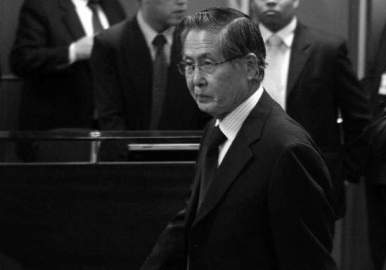
Esta supervisión se solicitó a causa de la Resolución Suprema N° 281-2017-JUS del 24 de diciembre de 2017, que concede al ex presidente Alberto Fujimori “el indulto y derecho de gracia por razones humanitarias”.
El indulto otorgado tiene como efecto que el ex mandatario se encuentre actualmente en libertad, a pesar de haber sido condenado a 25 años de prisión por la comisión de graves violaciones de derechos humanos, creando asi un incentivo a la impunidad en el país.
El amicus curiae sostiene que el indulto, tal como ha sido otorgado, es contrario a obligaciones internacionales asumidas por el Perú y, en concreto, desacata lo establecido por la Corte IDH en las sentencias de los casos Barrios Altos y La Cantuta.
El escrito plantea que la potestad presidencial para conferir indultos en el Perú debe ser ejercida en el marco de un Estado Constitucional y Democrático de Derecho.
Si bien el indulto es una atribución presidencial discrecional, ésta no debe ser ejercida arbitrariamente. Se trata de una institución que tiene límites y que debe ejercerse de manera excepcional, siguiendo las normas internas sobre la materia.
El indulto no procede en casos de graves violaciones a los derechos humanos o crímenes de lesa humanidad, como lo son Barrios Altos y La Cantuta.
Los términos en que fue concedido incumple la garantía de necesidad frente a otras medidas que pudiesen preservar la dignidad y la salud del señor Fujimori.
Amiciconcluye que el indulto y gracia otorgados a Alberto Fujimori son contrarios a las obligaciones internacionales en materia de derechos humanos asumidas por el Perú. Se pide a la Corte Interamericana ordenar al Estado dejar sin efectos la Resolución Suprema N° 281-2017-JUS.
Las otras organizaciones que presentaron el amicus curiae con la CIJ son Abogados sin Fronteras, la Clínica de Derechos Humanos de la Universidad de Ottawa, la Clínica de Derechos Humanos de la Universidad de Quebec en Montreal, la Fundación para el Debido Proceso, y el Instituto de Democracia y Derechos Humanos de la Pontificia Universidad Católica del Perú (IDEHPUCP).
Peru-Amicus Curiae CorteIDH Casos Barrios Altos y La Cantuta-Advocacy-Legal submission-2018-SPA (Amicus Curiae en PDF)
Feb 8, 2018
The ICJ has today published a compilation of international human rights standards relevant to Traditional and Customary Justice Systems.
The compilation is being published as part of an ongoing project on the relationship between traditional and customary justice systems, including indigenous justice, and human rights, access to justice, and the rule of law.
Among the sources included in the compilation are global and regional treaty provisions, UN and other declarations, and the jurisprudence and recommendations of Committees and Special Procedures established by treaties and the UN Human Rights Council.
The sources are organised by themes including the rights of women, rights of children, the role of judges and lawyers and the administration of justice, the rights of indigenous peoples, and the rights of minorities.
The 2017 ICJ Geneva Forum of Judges and Lawyers brought together judges and lawyers from around the world to discuss traditional and customary justice systems, and the ICJ is currently planning for continuing work on the theme over the next three years with the aim of producing practical global legal and policy guidance to assist actors within traditional systems, actors within State justice systems, and others to best ensure that everyone enjoys their rights of access to justice and other human rights. A report of the Forum is also available.
Contact
Matt Pollard, Senior Legal Adviser, matt.pollard@icj.org
Universal-Trad Custom Justice Compil updated-Publications-2018-ENG (Full publication in PDF)
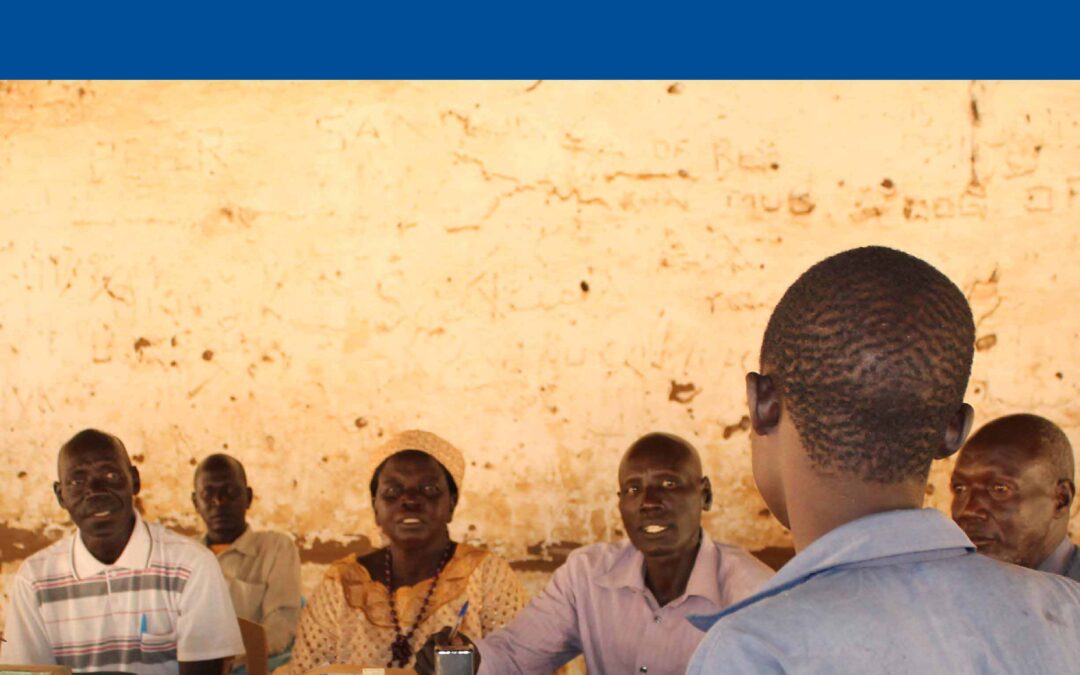
Cover Photo: Traditional leaders preside over a case in B-Court, Nyang Payam, Torit County, South Sudan. Photo Credit: UNDP South Sudan2016Angelique Reid ©2016 United Nations
Feb 8, 2018
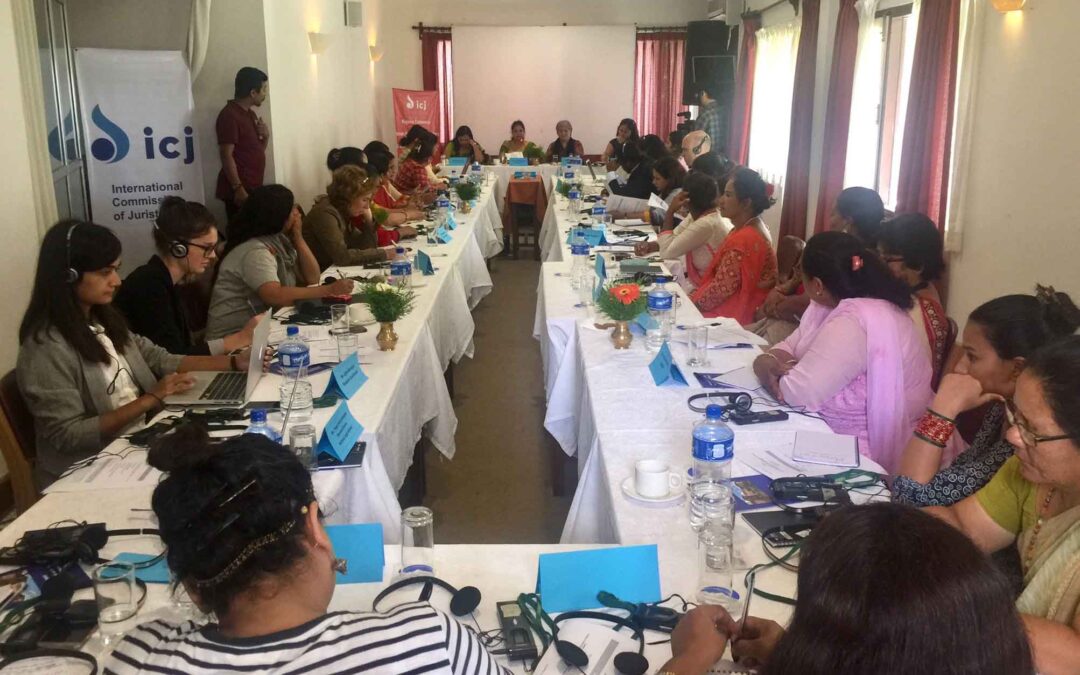
Today, the ICJ released a new briefing paper concerning its Regional Conference on Women Human Rights Defenders as Political Actors (28-29 August 2017), which brought together women human rights defenders (WHRDs) from all over Nepal who were elected in May 2017.
The conference focused on how newly-elected WHRDs could continue to advance human rights in their new roles as elected officials, with specific attention paid to encouraging equal participation of women in public affairs and furthering their advocacy for human rights.
The attached briefing paper lays out the key points of the conference and offers a set of future actions aimed at supporting WHRDs in their role as political actors pursuing a human rights agenda.
Nepal-WHRD-Advocacy-Analysis brief-2018-ENG (Briefing Paper in PDF)
Feb 8, 2018 | News
A proposed new law regulating public assembly adopted by the Philippine House of Representatives would allow for unlawful restrictions on the right to peaceful assembly, the ICJ said today.
On 5 February 2018, the House of Representatives passed on third reading House Bill 6834, which proposes to repeal the Public Assembly Act of 1985.
The law would prohibit persons below the age of 15 from organizing a public assembly and would subject participants or organizers to potential criminal liability for holding a peaceful assembly without the approval of local executives.
“This legislation deceives us into thinking that there is no more need to obtain prior permission to holding a public assembly,” said Emerlynne Gil, ICJ’s Senior International Legal Adviser for Southeast Asia.
“But in effect, organizers will still need to secure the approval of the local executive before holding a public assembly,” she added.
The proposed law states that any person or group intending to organize a public assembly will only need to serve notice to the city or municipal mayor at least three days prior to the assembly without having to secure a permit.
However, at the same time it prohibits the “holding of a public assembly at a time and place other than that approved by the city or municipal mayor.”
“The proposed law does not improve on the old one. It now increases the penalty for holding a public assembly without approval of local authorities to six (6) years,” Emerlynne Gil said.
“The law is also silent as to who may be penalized. Hence, the ICJ fears that organizers and participants alike could be held liable,” she added.
Under international standards, freedom of people to assemble should generally not require prior permission.
The law would also contravene the rights of children that are protected under the Philippines’ legal obligations.
“The provision incorporates into law the arcane and discredited attitude that ‘children should be seen but not be heard’,” said Emerlynne Gil.
“If children are prohibited from organizing a peaceful assembly, this prevents them from exercising their right to impart information freely,” she added.
Under the Convention on the Rights of the Child, children must be guaranteed the right to freedom of assembly.
The bill now goes to the Philippine Senate for its consideration.
The ICJ calls on lawmakers in the Philippines not to adopt the proposed law in its current form.
Any new legislation should conform to international standards, including on the right to freedom of assembly without prior permission and the rights of children to assemble freely, the ICJ adds.
Contact
Emerlynne Gil, Senior International Legal Adviser for Southeast Asia, tel. no. +662 619 8477 (ext. 206); e: emerlynne.gil(a)icj.org
Philippines-Public assembly act 1985-News-Web stories-2018-ENG (Full story in PDF)

Feb 7, 2018 | News
The judgment yesterday by three Supreme judges of a rump Supreme Court that overturned order of the full Supreme Court to release nine members of opposition political parties lacks legitimacy, the ICJ said today.
On 1 February, the Supreme Court had ordered the release of nine members of the opposition parties, who had been convicted for or charged with a wide range of offences, and held the cases required “retrial and judgments pursuant to the law”.
The petitioners had alleged the criminal proceedings against them were based on “political motivations” and were in violation of the Constitution of the Maldives and its international human rights obligations.
Instead of implementing the judgment, the Government responded by declaring a state of emergency and suspending a range of human rights protections.
On the night of 5 February, the national defense forces and the police forcefully entered the Supreme Court.
The Chief Justice held members of the forces in contempt of court, after which they dragged the Chief Justice out of the Court premises.
The Chief Justice and Justice Ali Hameed were later arrested on charges of corruption and “obstructing administration of law or other government function”.
On 6 February 2018, the remaining three judges of the Supreme Court overturned parts of the 1 February judgment, including the directions to release members of the opposition parties, “in light of the concerns raised by the President.”
“The judgment by three judges on Tuesday, reversing an order by the full court, lacks legitimacy. By unlawfully arresting two members of the Court, including the Chief Justice, the Government has effectively stripped the Supreme Court of all its independence and impartiality,” said Ian Seiderman, ICJ’s Legal and Policy Director.
“The arrest of judges Abdulla Saeed and Justice Ali Hameed for carrying out their proper and legitimate judicial functions would have sent a clear message to the remaining judges that any exercise of independence that was contrary to wishes of the governments would not be tolerated,” Seiderman added.
The ICJ also highlighted that conduct of the remaining judges of the Supreme Court suggests a risk that they themselves could become complicit in ongoing human rights violations.
The ICJ also expressed concern at the health of Justice Ali Hameed, who was taken to the hospital on Tuesday night and is feared to be in critical condition.
His family has reportedly been denied access to him.
The ICJ has also learned that Justice Ali Hameed’s family members have been detained and are being denied access to lawyers.
There are also credible reports that suggest Justice Ali Hameed is being detained in very small cells with poor ventilation that get very hot because of direct sun exposure for prolonged periods – which could be a possible cause of his health condition.
“The detention of judges and their family members and their possible ill-treatment smacks of retribution, which is prohibited under Maldivian and international law,” said Seiderman.
The ICJ urged the Government to immediately lift the state of emergency, release judges of the Supreme Court and all other political prisoners, implement the 1 February ruling of the Supreme Court and ensure the independence of the judiciary.
Contact:
Ian Seiderman, ICJ Legal and Policy Director, e: ian.seiderman(at)icj.org
Reema Omer, ICJ International Legal Adviser for South Asia (London), t: +447889565691; e: reema.omer(at)icj.org
Additional information
Under international standards, including the UN Basic Principles on the Independence of the Judiciary, it is the duty of all governmental and other institutions to respect and observe the independence of the judiciary.
This means that there shall not be any inappropriate or unwarranted interference with the judicial process and judges shall be free to decide cases without any restrictions, pressures, threats or interferences.
Furthermore, international standards provide that all complaints against judges in their judicial and professional capacity shall be processed expeditiously and fairly under an appropriate procedure; they shall have the right to a fair hearing; and they shall be subject to suspension or removal only for reasons of incapacity or behaviour that renders them unfit to discharge their duties.