Dec 15, 2017 | Advocacy, Cases, Legal submissions
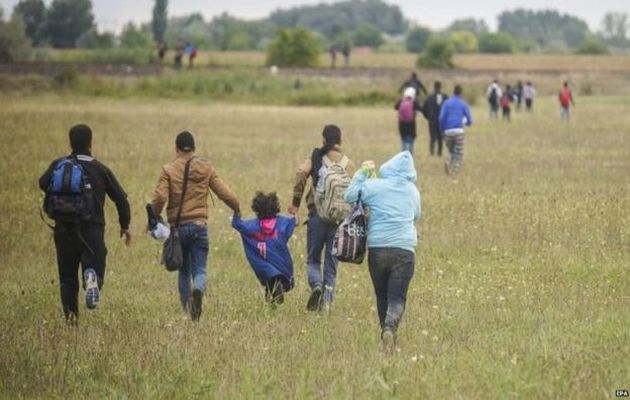
The ICJ, together with other NGOs, intervened before the European Court of Human Rights in MA v Poland, concerning interim measures to protect applicants for asylum at the Polish-Belarus border.
The case concerned a family of asylum seekers who sought to apply for international protection in Poland, at a border crossing with Belarus, but were repeatedly turned away by border guards. The European Court granted interim measures indicating that the applicants should not be returned from Poland to Belarus, and that their asylum application should be examined by the Polish authorities. These interim measures were not complied with.
In their third party intervention in the case, the ICJ, ECRE, AIRE Centre and the Dutch Council for Refugees emphasised the binding nature of the obligation to comply with interim measures of the European Court of Human Rights, supported by the jurisprudence of the Court and by comparative standards of other international human rights mechanisms.
They further submitted that, where interim measures relate to children, irrespective of whether the children are applicants in the case, the State must abide by the measure indicated with special diligence and take the appropriate protective measures which the age, level of maturity, environment and experiences of the children require.
Poland-MA-ECtHR-amicus-ICJ&others-final-eng-2017 (download the intervention)
Dec 13, 2017 | News
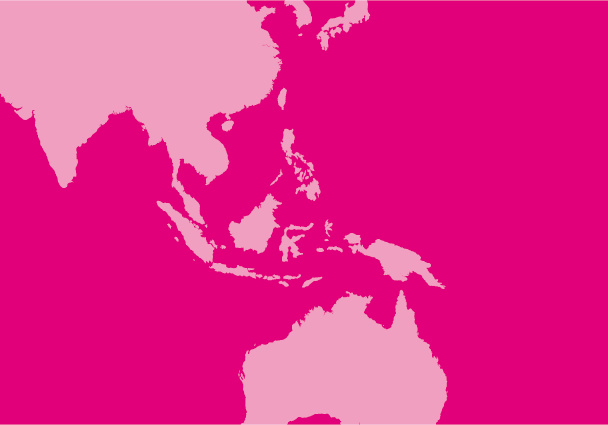
The ICJ today urged the Government of Singapore to end the harassment of human rights defender Jolovan Wham and to amend laws used to restrict his work and the work of other human rights defenders.
Jolovan Wham is to appear at a pre-trial conference on seven criminal charges today. Jolovan Wham is a well-known human rights defender in Singapore who previously worked for a group that advocates for the rights of migrant workers and plays a leading role against the death penalty and the promotion of freedom of expression.
“These charges are not only an impermissible attack on Jolovan Wham individually, but human rights work more generally in Singapore,” said Sam Zarifi, Secretary General of ICJ.
“It is an unmistakable message to other human rights defenders that they may face the same harassment and intimidation if they continue their work,” he added.
Jolovan Wham was charged in connection with facilitating a Skype conference with Hong Kong human rights defender, Joshua Wong Chi-Fung, on “civil disobedience and democracy in social change”.
Other charges relate to his organizing peaceful public assemblies, allegedly without permits, to protest the death penalty and to commemorate the day when 16 individuals were arrested by Singapore authorities in 1987 and detained without trial under the country’s Internal Security Act (ISA).
He was also charged for refusing to sign statements prepared by police authorities when he was taken in for investigation on 28 November 2017.
Most of the charges against Jolovan Wham were for alleged violations of Section 7 of the Public Order Act, which makes an offence the holding of a public assembly or public procession without a permit.
The ICJ considers that aspects of Section 7, particularly as applied to the charges against Jolvan Wham, may serve to impermissibly restrict the exercise of the right to freedom of peaceful assembly in Singapore, which is protected under international standards.
“Singapore should immediately act to amend the Public Order Act with a view to ensuring that it is consistent with international human rights law and standards, particularly as they relate to the exercise freedoms of expression and assembly,” Zarifi said.
Under international law and standards, prior authorization of assemblies is generally inconsistent with the right to freedom of peaceful assembly, except for narrow exceptions.
The UN Special Rapporteur on the rights to freedom of peaceful assembly and association, in a 2012 report, clarified that prior authorization should generally not be necessary.
At most, it should require notification that is not unduly burdensome, so as allow the authorities to facilitate the exercise of the right to peaceful assembly and to take measures to protect public safety and public order and the rights and freedoms of others.
The Declaration on the Right and Responsibility of Individuals, Groups and Organs of Society to Promote and Protect Universally Recognized Human Rights and Fundamental Freedoms (Declaration on Human Rights Defenders), emphasizes the right of human rights defenders “to meet or assemble peacefully” and “to study, discuss, form and hold opinions on the observance, both in law and in practice, of all human rights and fundamental freedoms, and through these and other appropriate means, to draft public attention to those matters
Contact:
Emerlynne Gil, ICJ Senior International Legal Adviser, t: +66 840923575 ; e: emerlynne.gil(a)icj.org
Singapore-Wham harrassment-News-Press releases-2017-ENG (full story with additional info, in PDF)
Dec 13, 2017
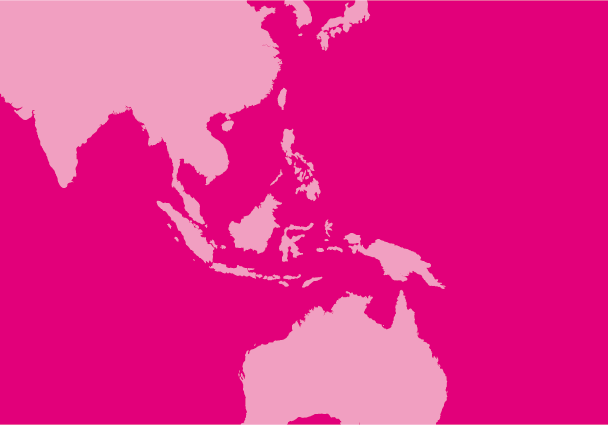
Today, the ICJ and other human rights groups urged changes to a new law in Lao PDR that would enable violations of freedom of association and other human rights.
The groups sent an open letter to the Lao PDR Government calling for the repeal of or for significant amendments to be made to the Decree on Associations that came into force in Lao PDR in November 2017. A legal brief detailing analysis of the new law was attached to the open letter.
The letter emphasized that repeal or amendments to the new law needed to be part of fundamental reform of the framework of regulation of associations in Lao PDR, in line with international human rights law and standards.
The new law supersedes the 2009 Decree on Associations, which had already included imprecise and overly broad terms leading to arbitrary restrictions on the rights to freedom of association, freedom of opinion and expression and privacy.
“The 2009 law had already imposed restrictions on fundamental freedoms which were clearly in contravention of Lao PDR’s obligations under international human rights law,” said Frederick Rawski, the ICJ’s Regional Director for Asia and the Pacific. “The new law makes things worse.”
In the attached legal brief, the ICJ and other human rights groups analyzed provisions in the decree which arbitrarily restrict or deny fundamental rights by giving government authorities in Lao PDR sweeping powers to, among other things,
- unreasonably control and/or prohibit the formation of associations;
- arbitrarily inspect, monitor and curtail the activities and finances of associations;
- order the dissolution of associations on arbitrary grounds and without right of appeal;
- discipline associations and individual members on arbitrary grounds and
- criminalize unregistered associations and allow for prosecution of their members.
The letter concluded by urging the Lao PDR Government to respect its obligations under international human rights law by removing arbitrary, overbroad and discriminatory elements from its framework of regulation of associations.
Any regulation regime should make clear that individuals are free to form private unincorporated associations without needing to notify or register with the State.
The letter further urged that for associations wishing to acquire legal personality, the law should at most provide for automatic registration upon notification and fulfillment of simple administrative requirements, rather than a system requiring prior permission of State officials.
“The rights to form and participate in associations, to freely express one’s opinions and to lead a private life are fundamental freedoms, which the Lao PDR Government has a duty to protect, promote and fulfill,” said Rawski.
Background
The Decree on Associations, dated 11 August 2017, came into force on 15 November 2017. Pursuant to its article 81, the new law supersedes the Decree on Associations (No. 115 of 2009) dated 29 April 2009 (‘2009 Decree’).
The new law only applies to local non-profit associations (NPAs) and does not govern international non-governmental organizations (INGOs) in Lao PDR, which are instead regulated by the Decree on International Non-Governmental Organizations (INGO) (No. 013 of 2010).
As a party to the International Covenant on Civil and Political Rights (ICCPR), Lao PDR has a legal obligation to respect, protect and guarantee, among others, the rights to privacy (article 17), freedom of opinion and expression (article 19), and freedom of association (article 22), which includes the right to form and join associations, subject only to narrow restrictions.
The ICCPR also requires States to implement necessary legislative, administrative or other measures for effective promotion and protection of these freedoms.
Contact
Frederick Rawski, ICJ Regional Director for Asia and the Pacific (Bangkok), e: frederick.rawski(a)icj.org
Kingsley Abbott, ICJ Senior International Legal Adviser (Bangkok), e: kingsley.abbott(a)icj.org
Lao-Decree Associations-Advocacy-open letters-2017-ENG (open letter + briefing paper, in PDF)
Dec 12, 2017 | News
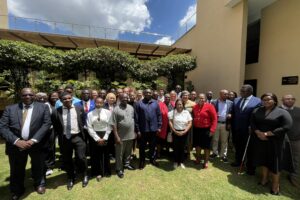
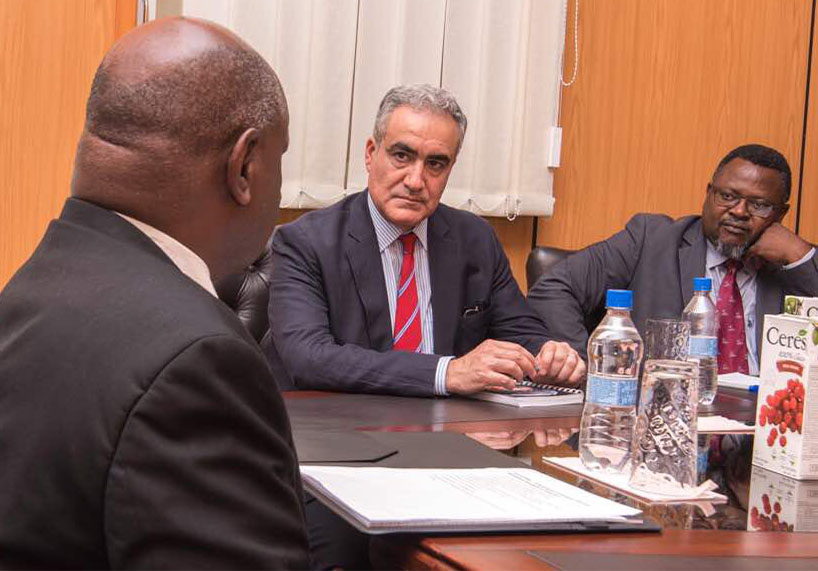
Zimbabwe’s new government must urgently restore the rule of law and ensure free and fair elections, said the ICJ at the conclusion of a visit by its Secretary General Sam Zarifi to the country.
After the recent military intervention in Zimbabwe that led to the ouster of former President Robert Mugabe, the government headed by Emmerson Mnangagwa is expected to remain in office until new elections, currently scheduled to be held before August 2018.
“The change in leaders in Zimbabwe presents an opportunity to reverse decades of damage to the rule of law and respect for human rights in the country,” said Zarifi, ICJ’s Secretary General.
“As an immediate matter, the new government must take concrete steps that demonstrate it is committed to observing the country’s obligations under international law, as well as the human rights protections of Zimbabwe’s own constitution,” he added.
The ICJ calls on the government of Zimbabwe to:
- ensure free and fair elections are held as scheduled, and the country’s electoral laws comply with the Constitution and international standards;
- accelerate measures to ensure compliance of all relevant laws with the country’s constitution and its international legal obligations;
- ensure the independence of the judiciary and the legal system;
- ensure all those arrested and detained during the military intervention are identified and brought immediately before an independent and impartial tribunal, and, where charged with recognized crimes, are given fair trials;
- investigate all allegations of unlawful deaths, torture or ill-treatment, and arbitrary arrest and detention;
- ensure the military acts within strict legal bounds, operates under civilian control, and does not engage in arrest and detention of civilians;
- ensure all security forces, including the police and the military, are subject to accountability and receive proper and adequate training in performing their duties in conformity with international human rights standards; and
- provide credible mechanisms to combat corruption in all branches of government, and ensure that anti-corruption efforts are not politicized.
“Zimbabwe’s military has played a central role in the country’s affairs for decades, while civilian institutions have suffered under intense political pressure, at great cost to the people of the country,” Zarifi said.
“Zimbabwe should grasp this opportunity to demonstrate that it can and will strengthen the rule of law and respect for human rights in order to improve the lives of all people in the country.”
Contact
Arnold Tsunga, ICJ-Director: Africa Regional Programme, t: +27716405926, e: arnold.tsunga(a)icj.org
Dec 11, 2017 | News
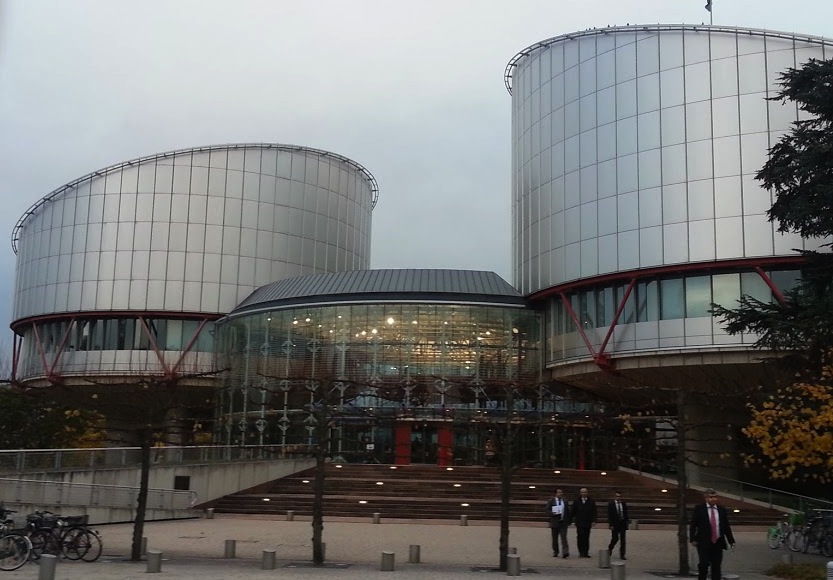
Discussions on the future of the European human rights system should focus on effective national implementation of human rights obligations and should protect the Court from undue political pressure, the ICJ and other NGOs said today.
The ICJ and other human rights NGOs that participated in the High-Level Expert Conference ‘2019 and Beyond: Taking Stock and Moving Forward from the Interlaken Process’, held in Kokkedal, Denmark from 22-24 November 2017, commended the Danish Chairmanship of the Council of Europe for its stated commitment to involving civil society throughout the process leading up to the adoption of a political Declaration on the European Convention on Human Rights’ system in April 2018.
The NGOs believe that the anticipated Copenhagen Declaration should emphasize:
- The need for enhanced measures at the national level to prevent and address violations of the Convention rights – in particular to remedy systemic and institutional problems – and to implement the Court’s judgments.
- The need for the Committee of Ministers to take more effective action to support and ensure thorough and prompt execution of judgments, through individual and general measures.
- The importance of nominating the most- qualified candidates as judges of the Court.
- That it is a fundamental principle of the rule of law that the Court should be free from political interference.
The NGOs urged the Danish Chairmanship and all Member States to refrain from any reforms that would place undue pressure on the Court in its interpretation and application of the Convention. Any undermining of established jurisprudential principles, such as the dynamic interpretation of the Convention, must be rejected.
Europe-NGO statement on ECHR reform-News-web story-2017-ENG (full story in PDF)