Nov 23, 2017 | Agendas, Events, News
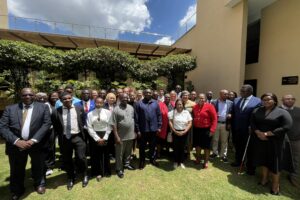
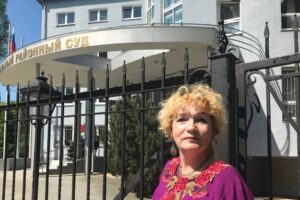
The ICJ delivers today and tomorrow a training for judges on asylum, migration and international human rights law, including non-discrimination, organised by OSCE and the Judicial Academy.
The training, that takes place in the capital Belgrade, will be delivered to judges of all level of jurisdiction of Serbian courts.
It will focus on human rights law related to the entry of migrants, including refugees, to the territory of a State, to the State’s obligations on international protection, the rules applicable to detention of foreign national and their rights, and the prohibition of non-discrimination.
Serbia-Training-MIgrationAsylum-OSCEJA-2017-eng (download the agenda in English)
Nov 22, 2017 | News
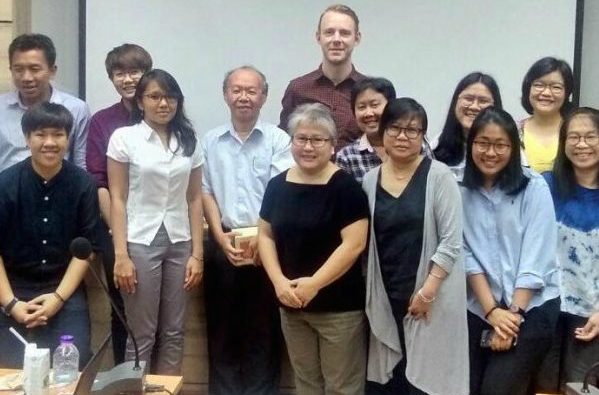
On 22 November, the ICJ, in collaboration with the Legal Research and Development Center under Chiang Mai University’s Faculty of Law, held a roundtable discussion on “Human Rights Litigation concerning the Special Economic Zones in Myanmar and Thailand”.
The objective of the discussion, held on campus at Chiang Mai University, was to identify legal issues and to share experiences regarding strategic litigation and advocacy strategies concerning human rights violations associated with the development of Special Economic Zones (SEZs) in Thailand and Myanmar.
In recent years, both the Thai and Myanmar governments have been trying to attract foreign direct investment into their countries by demarcating specific areas where special regulations concerning, inter alia, public administration, the environment, land or labour rights might be applied.
Proponents of SEZs tend to link their development with jobs and economic growth, however, there is generally limited publicly available information about their economic or public purpose rationale.
The development of SEZs, which requires a lot of land, can undermine the protection of human rights and the rule of law by creating governance structures and permitting processes less stringent than that required under national and international law.
Participants at the discussion included postgraduate students and lecturers from Chiang Mai University’s Faculty of Law, lawyers and representatives from Thai civil society organisations.
The ICJ shared with participants its report analysing the legal framework of SEZs in Myanmar and human rights concerns arising from a case study of Kyauk Phyu SEZ, ‘Special Economic Zones in Myanmar and the State Duty to Protect Human Rights’, during the discussion.
The speakers at the discussion were:
· Sean Bain, ICJ International Legal Advisor, Myanmar
· Sumitchai Hattasan, Director, Center for Protection and Revival of Local Community Rights
· Supaporn Malailoy, EEC Watch, Human Rights and Environmental Lawyer
Nov 21, 2017 | Artículos, Noticias
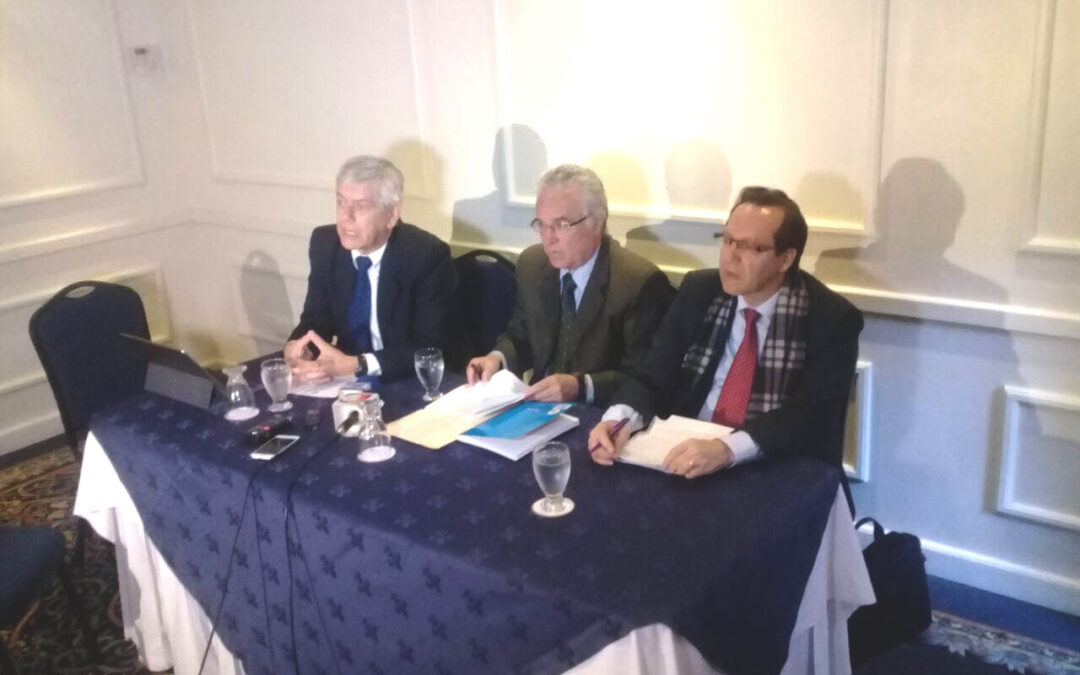
El Comisionado de la CIJ Belisario Dos Santos y el ex magistrado de la Corte Constitucional de Colombia Jaime Araujo visitaron el país, con el objeto de presentar las principales conclusiones del Informe de la CIJ sobre los desafíos que abogado-a-s enfrentan.
Los dos abogados, acompañados del Director de la CIJ para Centroamérica Ramón Cadena (foto de la primera misión), pudieron entrevistarse con el Presidente del Colegio de Abogados, con el Presidente del Tribunal de Honor de dicho colegio, con el Procurador de Derechos Humanos y con el diputado Leocadio Juracán, Sub Jefe de la Bancada Convergencia del Congreso de la República y miembro de la Comisión de Derechos Humanos.
La CIJ agradece la apertura de dichos representantes de los órganos máximos del Colegio de Abogados y Notarios de Guatemala, así como la del Procurador de Derechos Humanos y la del diputado del Congreso de la República.
Dichas conversaciones enriquecieron aún más, los puntos críticos que se presentan a continuación.
La CIJ, en sus actividades relativas a su mandato, se encarga de velar porque el Derecho Interno se adecúe y respete las normas y principios del Derecho Internacional de los Derechos Humanos.
En otras palabras, en el caso de Guatemala, la CIJ lleva a cabo actividades para supervisar que el Estado cumpla con respetar los estándares internacionales en materia de derechos humanos.
La Carta de Naciones Unidas, constituye la base del estado de derecho en el plano internacional.
Además están todas la convenciones y tratados, declaraciones y principios que la Comunidad Internacional ha aprobado, desde que se conformó la Organización de las Naciones Unidas.
Guatemala-Segunda Misión Beli-News-web stories-2017-SPA (texto completo, en PDF)

Nov 20, 2017 | Advocacy
The ICJ, with 35 other human rights organizations, today called on members and observers of the UN Human Rights Council to convene a special session on the deteriorating human rights situation in Myanmar.
In open letter to member and observer States of the Human Rights Council, delegations are urged to support holding a special session of the Council against the backdrop of serious reports of human rights violations, including crimes against humanity, committed by Myanmar security forces in northern Rakhine state.
The letter also sets out key elements that should be included in the text of a resolution adopted by the Human Rights Council at such a session, considering action that should be taken by the Government of Myanmar, as well as by neighbouring and other States and by human rights mechanisms.
The ICJ on the same day released a briefing note, entitled Questions & Answers on Human Rights Law in Rakhine State, clarifying national and international law and standards applicable to the crisis.
Myanmar Joint Civil Society Letter 20 November 2017 (download open letter in PDF format)
For a copy of the ICJ’s Q&A briefing, go to ‘Myanmar: rule of law must drive responses to Rohingya crisis’
Nov 20, 2017
Responses to the devastating human rights crisis in Rakhine State must be driven by respect for the rule of law, protection of human rights of all people without discrimination, and greater accountability and justice, the ICJ states in a briefing note published today in a Questions & Answers format.
More than 600,000 people, the vast majority of whom are Rohingya Muslims, have been displaced as a result of security operations commanded by the Myanmar military (Tatmadaw), following attacks on police posts by the Arakan Rohingya Salvation Army on 25 August.
“Credible allegations of crimes against humanity, including widespread and systematic killings, rape, and forced evictions demand a robust and immediate response from the Myanmar government, with full assistance from the international community,” said Sam Zarifi, ICJ’s Secretary General.
“The Myanmar government has so far not responded in a manner commensurate with the gravity of the situation or its obligations under international law, and the country’s military continues to enjoy de facto and de jure impunity for its actions,” he added.
Entitled Questions & Answers on Human Rights Law in Rakhine State, the 23-page (31 in Burmese) note details how members of Myanmar’s military, the Tatmadaw are largely shielded from prosecutions for human rights violations owing to provisions of constitutional and national law that codify the Tatmadaw’s dominance.
In law and in practice the Tatmadaw remains the most powerful institution in the country, largely outside the control of the civilian government.
“Constitutional arrangements in Myanmar are incompatible with the rule of law principle that security forces must be accountable to civilian authorities,” Zarifi said.
“The Tatmadaw must be held accountable for its conduct in Rakhine state, as well as its well-documented violations against other ethnic groups in the country,” he added.
The ICJ found no legal basis for the “area clearance operations” associated with widespread reports of arson, murder, rape and forcible transfer.
A lawful response to ARSA’s attacks would consist of independent and impartial investigations and public criminal prosecutions in accordance with national laws and fair trial rights standards – protections commonly violated throughout the country, the ICJ says.
“Recognizing the limitations on civilian authority over security operations, the NLD-led government remains bound to do everything in its power to respect and to protect human rights,” Zarifi added.
Measures available to the NLD include reforming laws that enable impunity for gross human rights violations, particularly the 1959 Defence Services Act and the 1995 Maintenance of Police Discipline Law, allowing full humanitarian access to protect the right to life; and supporting dignified, safe and voluntary return of displaced persons to their places or origin without discrimination.
The 2008 Constitution and provisions of national laws enable impunity for human rights violations, including by shielding security forces from public criminal prosecutions.
Myanmar lacks a mechanism to independently and impartially investigate allegations of serious human rights violations, the ICJ notes.
“The United Nations, as well as ASEAN and Myanmar’s other neighbors, such as China and India, should be clear that they expect, and will assist, a proper response to the Rakhine crisis in line with international law and respect for the rights of all people there, in particular, the Rohingya community,” Zarifi said.
Government cooperation with the UN-mandated Fact Finding Mission would also assist to independently establish facts and provide a factual basis to consider proper policy responses to human rights violations and humanitarian crises in Rakhine State and also in Shan and Kachin States, which remain embroiled in a state of conflict replete with human rights violations.
“Cooperation with the Fact Finding Mission would signal that the NLD is serious about its stated commitment to investigate allegations of human rights violations and to cooperate with the international community in doing so,” Zarifi said.
“Allowing this Mission to carry out its mandate would complement the work of the government’s Rakhine Advisory Commission,” he added.
The ICJ said that Myanmar’s neighbors and other States in the region must ensure that Rohingya refugees under their jurisdiction are offered full protection under international human rights and refugee law.
Any return of refugees to Myanmar must be dignified and voluntary to their places of origin without discrimination.
All refugee-receiving countries have an obligation to provide protection, including, in particular, against refoulement.
Contact
Sam Zarifi, ICJ Secretary General (Geneva)t: +41 22 979 38 25 ; e: sam.zarifi(a)icj.org
Background
The ICJ has observed that statements and reports on the crisis have sometimes conflated the use of legal and non-legal terms to assess and describe the situation.
The ICJ briefing note clarifies some of the applicable national and international law and standards.
The ICJ’s independent legal research and analysis covers areas of law, including rules governing the conduct of security operations, protection of affected communities, justice and accountability for domestic offences and crimes under international law, and responsibilities and obligations relating to displaced persons.
Myanmar-QA Rakhine-Advocacy-Briefing Paper-2017-ENG (full report in English, pdf)
Myanmar-QA Rakhine-Advocacy-Briefing Paper-2017-BUR (full report in Burmese, pdf)