Apr 28, 2017 | Multimedia items, News, Video clips
Honorary Member of the ICJ, Asma Jahangir, talks of her experiences as part of the ICJ’s ongoing profile series on women human rights defenders.
Asma Jahangir became interested in human rights legal work after having witnessed the frequent arrests of her father, an outspoken critic of military dictatorships, and seeing the courtroom as a place where justice could be accessed. From these early experiences, Asma identified the importance of rule of law but came to understand that this was something that went far beyond the courtrooms of Pakistan.
As a married women, her in-laws had concerns about her practicing law in a mixed firm so she co-founded Pakistan’s first all-female law firm. Initially the firm was viewed as a hobby but Asma and her other co-founders persevered and the firm still thrives today.
Ms Jahangir spoke about the challenges she faced as a female lawyer where courts and judges were at first patronizing towards her and then became angry at her as she continued to present them with cases that were challenging for them. She worked on a number of landmark cases including about whether women could get married without their fathers’ permission, be entitled to family maintenance and whether women should be judged according to religious or codified law.
Women in Pakistan face many issues in accessing justice, Ms Jahangir said. They lack resources, if they are able to access the courts they are frequently exploited by male lawyers and they encounter prejudice in their cases. In addition many laws are simply discriminatory, however women have been challenging these and will continue to do so.
There has been progress in family law in Pakistan, particularly in relation to the procedures if not the substance, yet Pakistan remains a long way from having equality in the family law framework.
Asma noted that it can be hard to engage men in women’s rights issues but commented that many men who had not considered giving certain rights to their wives had become a lot more conscious about women’s rights issues as their daughters had grown up. Many of her colleagues now ask for internships for their daughters at her law firm and admit how narrow-minded they had previously been in relation to women’s rights and equality.
From 2004 to 2010, Ms Jahangir served as the UN Special Rapporteur on Freedom of Religion and explained that she worked with the Special Rapporteur on Freedom of Expression to address the delicate balance in managing freedom of religion and freedom of expression.
Freedom of expression is currently under threat around the world, Asma commented, and is being undermined in the name of a variety of reasons including security, religion and tradition or social norms. Asma said that freedom of expression is fundamental to basic human rights because stopping freedom of expression stops people from thinking.
“Self-censorship is a by-product of undermining freedom of expression and self-censorship by itself dis-informs people, brings out irrelevant issues, and suppresses the more relevant issues.”
Ms Jahangir told the ICJ that in the course of her work as a human rights activist she has been threatened, put under house arrest and imprisoned. However, rather than deterring her, Asma’s experience in jail made her stronger: “It made every woman who went to jail stronger and more resolute that we want rights.”
There was a particular case that had a strong impact on Asma, which was when she worked in defence of a child who had been accused of blasphemy and was sentenced to death. The initial verdict against the boy knocked her confidence as a lawyer, but senior colleagues encouraged her and she continued with the case, taking this to appeal.
This was a very contentious case that attracted a lot of negative attention against Ms Jahanagir. People claimed she was anti-Muslim and, as she argued for the defendant, crowds gathered outside the court calling for her execution. At one point opposing lawyers asked the judges if they could simply close the case but the judges said that if Asma was prepared to keep arguing they were prepared to hear her arguments.
Asma explained that she was inspired to continue by the defendant himself, a boy of around 14 years of age, who, when given the opportunity to run away whilst on bail, decided to stay and continue the trial rather than risk others being harmed in retaliation if he were to flee. She felt that even if she had to give her life to defend this child then it would be worth it. Ultimately the case was decided in the boy’s favour and he was acquitted.
She advised young women interested in a career as a human rights lawyer not to label themselves as ‘human rights lawyers’ rather than simply ‘lawyers’ or they will not be taken seriously. Asma said that “I think that life where you don’t have dignity and where you don’t fight for people’s dignity is a wasted life.”
Watch the interview:
The series of profiles introducing the work of ICJ Commissioners and Honorary Members on women’s rights was launched on 25 November 2016 to coincide with the International Day to Eliminate Violence against Women and the first day of the 16 Days of Activism Against Gender-Based Violence Campaign.
Apr 28, 2017
The ICJ today called on the Moroccan authorities to comprehensively reform its legal framework on pre-trial rights, guarantees and procedures, with a view to ensuring its full compliance with international human rights law and standards.
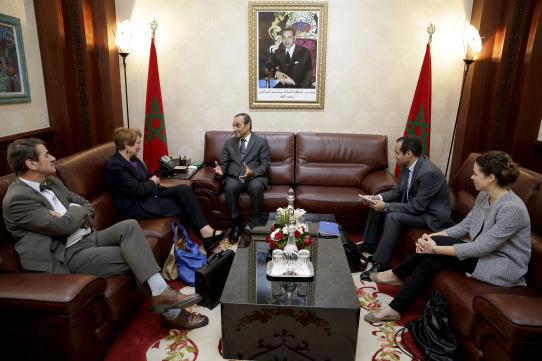
The statement came following a high-level mission to Morocco from 24 to 27 April 2017. The ICJ consulted with members of the Parliament and of the judiciary, as well as with executive officials, on the reforms needed to enhance the guarantees and procedures on police custody and preventive detention, as well as to effectively protect the right to liberty and security of person.
During the mission, the ICJ launched its paper Reform the Criminal Justice System in morocco; Strengthen pre-trial rights, guarantees and procedures which details how the use of pre-trial detention has been routine in Morocco.
The paper also points out that investigative judges and prosecutors routinely disregard provisions of the Code of Criminal Procedure that provide for pre-trial detention to be used only in exceptional cases.
Pre-trial detainees represent more than 40 percent of the prison population and most of the time convicted and pre-trial detainees are not kept separate, in violation of the latter’s right to be presumed innocent.
“Morocco must comply with its international legal obligations and ensure that pre-trial detention is an exceptional measure that can be used only as a measure of last resort, when there is sufficient evidence that deems it necessary to prevent flight, interference with evidence or the recurrence of crime,” said Said Benarbia, director of the ICJ MENA Programme.
The briefing paper also details how the Morocco Code of Criminal Procedure fails to provide for a means by which all individuals deprived of their liberty can, from the outset of the deprivation of their liberty, bring proceedings before an independent and impartial court able to determine, without delay, the lawfulness of their detention.
The provisions on police custody also fail to comply with Morocco’s obligations under international law.
Under the current framework, in ordinary cases of felonies and misdemeanors punishable with prison time, a person can be placed under garde à vue for up to three days without being brought before a judge; for up to eight days in cases of “internal or external threats against national security”; and for up to 12 days in cases of “terrorism.”
“The grounds for placing individuals under police custody must be clearly and precisely defined in the law, and include elements of appropriateness, predictability and due process of law,” said Benarbia.
“The maximum amount of time during which a person can be held in police custody without being brought physically before a judge must be reduced to the absolute minimum, and in ordinary cases no longer than 48 hours,” he added.
The ICJ also called on the Moroccan authorities to enhance defence rights during all pre-trial procedures, and remove all the obstacles that subject the exercise of these rights to the public prosecutor authorization, or that severely undermine the right to an effective counsel in proceedings before the investigative judges and prosecutors.
“The Moroccan authorities should ensure that anyone arrested or detained has immediate access to legal assistance as soon as they are placed in police custody, during the initial stages of police investigation, and before questioning by the investigative judge or prosecutor,” further said Benarbia.
“These guarantees are not only necessary to ensure the fairness of proceedings, including the principle of equality of arms, but they also serve as safeguards against arbitrary detention and torture and other ill-treatment in Morocco,” he added.
Contact:
Said Benarbia, Director of the ICJ Middle East and North Africa Programme, t: +41.22.979.3817, e: said.benarbia(a)icj.org
Additional information
The mission was led by Martine Comte, honorary judge and former President of the Court of Appeal of Orléans, and included François Casassus-Builhe, former French judge, and prosecutor; Said Benarbia, director of the ICJ Middle East and North Africa (MENA) programme, and Giulia Soldan, programme manager of the ICJ MENA programme.
The ICJ delegation met with Mr. Habib El Malki; President of the Chamber of Deputies; Mr. Mohamed Aujjar, Minister of Justice; Mr. Mustapha Farès, First President of the Cassation Court; Mr. Mohamed Abdennabaoui, Prosecutor General of the Cassation Court; Mr. Driss El Yazami, President of the National Council of Human Rights; Mr. Mohamed Akdim, President of the Morocco Bar Associations; Mr. Adil El Bitar, President of the Commission on Justice, Legislation, and Human Rights at the Chamber of Deputies, Mr. Abdessamad Kayouh, Vice-President of the Chamber of Counselors, and representatives of the civil society and the criminal justice system.
Morocco-Reform crim just syst-News-press release-2017-ARA (news in Arabic, PDF)
Morocco-Reform Crim Justice System-Advocacy-Anaylsis Brief-2017-ENG (full brief in English, PDF)
Morocco-Reform Crim Justice System-Advocacy-Anaylsis Brief-2017-ARA (full brief in Arabic, PDF)
Apr 27, 2017 | Communiqués de presse, Nouvelles
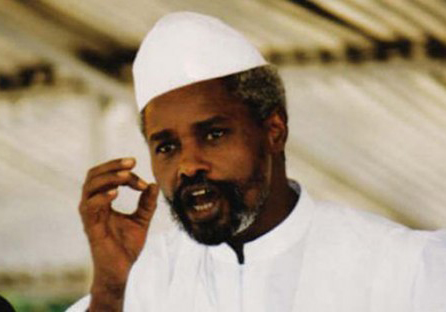
Pour la CIJ et deux autres groupes de défense des droits humains, la confirmation en appel de la condamnation de l’ancien président tchadien pour crimes contre l’humanité, crimes de guerre et torture est la conclusion d’une longue campagne menée par les survivants du régime.
La condamnation de Habré en mai 2016 a été confirmée par la Cour d’appel des Chambres africaines extraordinaires au sein des juridictions sénégalaises le 27 avril 2017.
La Cour a également réaffirmé la sentence de perpétuité prononcée par la Chambre d’assises et a ordonné le paiement de 82 milliards de francs CFA (environ 123 millions d’euros) par Habré aux victimes.
« C’est une consécration pour les victimes de Hissène Habré qui, en 26 ans de lutte, n’ont jamais cessé de se battre pour le faire traduire en justice » a déclaré Reed Brody, avocat américain et membre la Commission internationale des juristes, qui travaille aux côtés des survivants depuis 1999.
« Cette condamnation définitive envoie un signal fort aux tyrans, à travers le monde, leur rappelant que s’ils commettent des atrocités, ils ne seront jamais hors de portée de leurs victimes, » a-t-il ajouté.
La Chambre d’appel a également confirmé la décision ordonnant de payer des réparations aux victimes et a précisé que l’argent devait être distribué via un Fonds créé par l’Union africaine (UA) qui sera chargé de chercher et recouvrer les avoirs de Habré.
Un résumé de la décision a été lu en audience par le Président de la Cour, Ouagadeye Wafi, un juge de la Cour suprême du Mali. La Cour était composée de Wafi et de deux juges sénégalais.
Habré, qui a dirigé le Tchad de 1982 à 1990, n’était pas présent lorsque le jugement a été rendu.
Habré n’a jamais reconnu l’autorité des Chambres et est resté silencieux tout au long du procès. Ses avocats commis d’office ont interjeté appel en son nom.
Habré a fui au Sénégal en 1990, après qu’il ait été renversé par l’actuel président du Tchad Idriss Déby Itno.
Bien qu’il ait été arrêté et inculpé une première fois au Sénégal en 2000, une campagne de longue haleine a dû être menée par ses victimes avant que les Chambres africaines extraordinaires ne soient inaugurées par le Sénégal et l’UA en février 2013, pour juger des crimes internationaux commis au Tchad sous le régime de Hissène Habré.
« Depuis que je suis sorti de prison, il y a plus de 26 ans, je me suis battu pour que justice soit faite, » a déclaré Souleymane Guengueng, qui faillit mourir de mauvais traitements et de maladie dans les geôles de Habré, et qui a fondé l’Association des victimes des crimes du régime de Hissène Habré (AVCRHH). « Aujourd’hui, je me sens enfin libre. »
C’est la première fois que les tribunaux d’un État jugent l’ancien dirigeant d’un autre État pour des violations des droits humains.
La Chambre d’appel a jugé que bien qu’elle considérait crédible Khadidja Hassan Zidane, qui a déclaré que Habré l’avait violée à quatre occasions, elle ne pouvait pas condamner Habré d’avoir commis des viols car cette inculpation ne figurait pas dans l’acte d’accusation.
« Après 26 ans d’obstination, et presqu’autant d’années de procédure judiciaire, notre combat a enfin abouti, » a déclaré Jacqueline Moudeina, avocate principale des victimes et présidente de l’Association tchadienne pour la promotion et la défense des droits de l’Homme (ATPDH).
Des réparations octroyées aux victimes
Dans la décision rendue aujourd’hui, la Cour d’appel a confirmé la décision de la Chambre d’assises accordant à chaque survivante de viol et d’esclavage sexuel 20 million de francs CFA (environ 30 490 euros / 32 702 US dollars), à chaque survivant de tortures et de détention arbitraire ainsi qu’aux anciens prisonniers de guerre 15 millions de francs CFA (22 867 euros / 24 526 US dollars) et 10 millions aux victimes indirectes (15 244 euros / 16 350 US dollars).
La Cour a déclaré que 7 396 victimes étaient éligibles à recevoir des réparations et que les 3 489, qui n’ont pas fourni de documentation suffisante, pourraient s’adresser au Fonds créé par l’UA.
La Cour a déjà gelé certains avoirs de Habré, dont une maison dans les quartiers huppés de Dakar estimée à environ 680 000 euros ainsi que des petites sommes sur plusieurs comptes en banque.
Il est probable que Habré possède davantage d’actifs.
« L’argent ne me rendra jamais mes amis, » a déclaré Clément Abaïfouta, ancien prisonnier qui était forcé d’enterrer les corps de détenus dans des fosses communes et actuellement président de l’association des victimes. « Mais l’argent est important pour guérir les blessures, pour sortir les victimes de la pauvreté, et montrer que nous avons des droits qui doivent être reconnus. »
« Grâce à ce verdict, nous pouvons maintenant essayer de localiser et de saisir les avoirs de Habré et s’assurer que les victimes reçoivent bien réparation de leur préjudice, » a déclaré Me Moudeina.
Contact
Reed Brody, Commissaire de la CIJ, t: +1-917-388-6745 ; e: reedbrody(a)gmail.com
Tchad-Hissene Habre peine confirmee-News-Press Releases-2017-FRE (texte intégral, en PDF)
Apr 27, 2017 | News
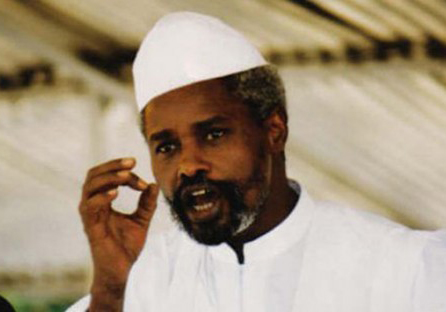
An appeals court’s confirmation of the conviction for crimes against humanity, war crimes and torture of Hissène Habré, the former president of Chad, is a vindication of the decades-long campaign waged by his survivors, the ICJ and two human rights groups supporting the victims said today.
Habré’s May 2016 conviction was upheld by the appeals chamber of the Extraordinary African Chambers in the Senegalese court system on April 27, 2017.
The appeals court also confirmed the life sentence handed down by the trial court and ordered Habré to pay over 82 billion CFA francs (approximately 123 million euros) to his victims.
“This is a crowning victory for Hissène Habré’s victims, who for 26 years never gave up fighting to bring him to justice” said the ICJ Commissioner Reed Brody, who has worked with the survivors since 1999.
“His life sentence is a wake-up call to tyrants everywhere that if they engage in atrocities they will never be out of the reach of their victims,” he added.
The appeals court also upheld the decision to order compensation to Habré’s victims and said that a trust fund created by the African Union (AU) should be tasked with searching for and recovering Habré’s assets.
A summary of the decision was read out in court by chief judge Ougadeye Wafi, a judge of the Supreme court of Mail, who shared the bench with two senior Senegalese judges.
Habré, who ruled Chad from 1982 to 1990, was not in court for the judgment. He did not recognize the chambers’ authority and sat silently throughout the trial.
His court-appointed lawyers filed the appeal on his behalf.
Hissène Habré fled to Senegal in 1990 after being deposed by the current Chadian president, Idriss Déby Itno. Although Habré was first arrested and indicted in Senegal in 2000, it took a long campaign by his victims before the Extraordinary African Chambers were inaugurated by Senegal and the AU in February 2013 to prosecute crimes under international law committed in Chad during Habré’s rule.
“I have been fighting for this day since I walked out of prison more than 26 years ago,” said Souleymane Guengueng, who nearly died of mistreatment and disease in Habré’s prisons, and later founded the Association of Victims of Crimes of the Regime of Hissène Habré (AVCRHH). “Today I finally feel free.”
Habré’s trial was the first in the world in which the courts of one country prosecuted the former ruler of another for alleged human rights atrocities.
“At long last, after so many years of fighting, so many years of setbacks, we have achieved what we set out to do,” said Jacqueline Moudeina of Chad, the victims’ chief lawyer and president of the Chadian Association for the Promotion of Human Rights (ATPDH).
The appeals court said that while it accepted the credibility of the witness Khadidja Hassan Zidane who stated that Habré personally raped her on four occasions, it could not convict Habré of personal having committed rape because the charge was not included in the individual indictment.
In the ruling upheld today, the trial court awarded each survivor of rape and sexual slavery 20 million CFA francs (approximately 30,489 Euros, US$32,702), each survivor of torture and arbitrary detention and each mistreated former prisoner of war 15 million CFA francs (22,867 Euros, US$24,526), and family members of victims 10 million CFA francs (15,244 Euros, US$16,350).
It said that 7,396 victims were eligible for reparations and that 3,489 others who had not produced sufficient proof could apply to the trust fund.
The court has already frozen some assets belonging to Habré including a house in an upscale Dakar neighborhood believed to be worth about 680,000 Euros as well as some small bank accounts. Habré is thought to have much more extensive assets.
“Money will never bring back my friends,” said Clément Abaïfouta, who as a prisoner was forced to bury other detainees in mass graves, and is now president of the AVRCHH. “But money is important to heal the wounds, to take victims out of poverty, and to show that we have rights that must be recognized.”
“With this verdict, we can now try to locate and seize Habré’s assets and make sure the victims are compensated,” said lawyer Moudeina.
Contact
Reed Brody, ICJ Commissioner, t: +221-76-618-79-10 (in Dakar) or +1-917-388-6745 ; e: reedbrody(a)gmail.com
The full text of the press release can be downloaded in English and in French below:
Chad-HisseneHabre Conviction Upheld-News-Press Releases-2017-ENG (English, PDF)
Tchad-Hissene Habre peine confirmee-News-Press Releases-2017-FRE (Français, PDF)
Apr 27, 2017 | News
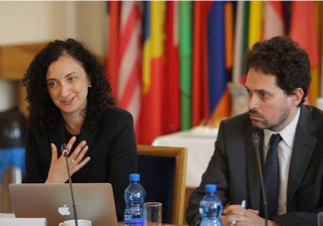
An expert meeting organized by the OSCE Office for Democratic Institutions and Human Rights (ODIHR) in Warsaw focused on the human rights-compliant implementation of legislation and policies to counter the foreign terrorist fighter phenomenon. The ICJ partnered in the event.
The two-day meeting (25-26 April) brought together 21 participants (11 men and 10 women) – including experts from international and national organizations, civil society, academia and OSCE staff – to reflect on experiences and human rights challenges in responses aimed at countering the threat posed by foreign terrorist fighters.
“Human rights compliance is essential both for the short and the long-term effectiveness of any measure to address the phenomenon,” said Omer Fisher, Head of the ODIHR Human Rights Department. “Jeopardizing human rights protection in the course of responding to the threat will not solve, but rather exacerbate the problem, because human rights violations provide fertile ground in which terrorism can thrive.”
Over the past few years, OSCE participating States have taken a wide range of administrative and criminal law measures to prevent the movement of terrorists or terrorist groups, to suppress the provision of support for them, and to counter the incitement and recruitment of foreign terrorist fighters.
“Broadly defined criminal offences and administrative measures based on vague definitions – including of terrorism and related offences – are open to abusive, arbitrary or discriminatory application,” said Róisín Pillay, Director of the Europe Programme of the ICJ.
“Legislation criminalizing acts such as travel for the purpose of terrorism must, therefore, be narrowly defined, clear and accessible, and provide for appropriate legal and procedural safeguards,” she added.
The expert meeting will inform a policy guidance document, which ODIHR will prepare in the coming months to assist OSCE participating States in the human rights-compliant and gender sensitive implementation of legislation and policies to address the phenomenon of foreign terrorist fighters.