Apr 7, 2017
An opinion editorial by Sean Bain, ICJ Legal consultant in Myanmar.
About 20,000 residents of Kyaukphyu Township in Rakhine State are at risk of losing their land and livelihoods because of land acquisition for developing a Special Economic Zone (SEZ).
The land acquisition, initiated by the previous Union Solidarity and Development Party government, involves more than 1,800 acres (about 728 hectares) covering nine village tracts.
Research by the ICJ shows this land acquisition does not comply with Myanmar’s land laws.
Nor does the process comply with international standards on involuntary resettlement, which are recognized in national law.
The land acquisition for the Kyaukphyu SEZ therefore risks repeating the human rights violations associated with the development of the Dawei and Thilawa SEZs.
In its new report Special Economic Zones in Myanmar and the State Duty to Protect Human Rights the ICJ shows how the Kyaukphyu project illustrates broader problems with the design and implementation of laws governing the development of SEZs in Myanmar.
Based on expert legal analysis and interviews with over 100 stakeholders, including those in the government and private sector, the research found that the 2014 SEZ Law does not conform to Myanmar’s international law obligations to protect human rights.
The ICJ has called for a suspension of land acquisition at Kyaukphyu and for a halt to further work in SEZs until the 2014 Law has been amended to protect human rights and enable investment in line with the government’s commitments to sustainable development.
Established by the SEZ Law, the legal framework for Myanmar’s SEZs incorporates national laws including those governing land and the environment.
Legal procedures for land acquisition, environmental impact assessments and involuntary resettlement all fully apply in the zones.
For example, a developer may obtain an SEZ permit only after approval from the Ministry of Natural Resources and Environmental Conservation, in accordance with environmental conservation laws.
Land acquisition must be carried out in compliance with legal procedures, including those prescribed in the 1894 Land Acquisition Act.
The 2015 Environmental Impact Assessment Procedure also requires that development projects conform to international standards on involuntary resettlement.
This means land acquisition should occur only after the completion of resettlement planning for residents facing displacement.
The SEZ Law establishes a special governance structure for the administration of SEZs.
Independent of the Myanmar Investment Commission and the 2016 Myanmar Investment Law, these special government bodies are tasked to supervise and coordinate investment and development in the zones.
Other government actors also play critical roles: the Ministry of Home Affairs carries out land acquisition while Ministry of Natural Resources and Environmental Conservation oversees the EIA procedure.
Although SEZ bodies, particularly the site-specific management committees, exercise significant authority to direct development, the SEZ Law does not establish clear responsibilities for the coordination of land acquisition and EIAs.
Nor does the SEZ Law establish responsibilities for the protection of human rights or provide for accountability for adverse human rights impacts.
In practice, in Myanmar’s SEZs, critical legal procedures tend to be ignored or, if applied, not coordinated or properly followed.
At Kyaukphyu, the ICJ found that authorities have not complied with key provisions of the Land Acquisition Act.
The ICJ is unaware of any resettlement planning conducted in line with international standards. An EIA has not yet started.
Yet plans for land acquisition appear to be well advanced for the initial Phase 1 development area, covering 250 acres (101ha).
Land acquisition in this instance would be unlawful under national laws and constitute forced eviction, a violation of human rights and illegal under international law.
The rights of local residents can be legally protected in SEZs by aligning the SEZ Law with the State’s international human rights law obligations.
Amendments are required to establish specific duties and accountabilities for the SEZ bodies to protect human rights, and to clarify differentiated responsibilities for coordinating and carrying out involuntary resettlement.
Clear lines of accountability will be critical to guide and direct government bodies and departments, as well as companies, to follow the law.
Legal reform is a necessary and practical way for the National League for Democracy-led Government to uphold its commitments to human rights, sustainable development and the rule of law in SEZs.
The recently promulgated Myanmar Investment Law, governing investment outside the zones, provides a highly relevant and realistic example for reform of the SEZ Law.
While imperfect, the drafting process included public consultations with civil society and business groups.
Consultations resulted in a much-improved law that better protects Myanmar’s people and provides greater certainty for investors.
The government can break from the past by ensuring that economic development projects benefit Myanmar’s people, rather than rushing to facilitate projects that result in human rights violations and ultimately undermine sustainable development.
Further development of SEZs, and related investment agreements, should wait until legislative arrangements are in place to facilitate the full protection of human rights in the zones.

Apr 6, 2017
Today, the ICJ and the Guatemalan Association of Judges for Integrity, with the support of the Norwegian Association of Judges, launched two studies (in Spanish) on the state of justice in Guatemala.
The first study Judicial Independence in Guatemala evaluates judicial independence in the country, making reference both to international standards and Guatemalan law.
The study also analyses various domestic rulings related to judicial independence.
The second study Good Practices in Specialised Justice in Guatemala looks as the advances made and challenges faced by the Femicide and Major Risk Tribunals of Guatemala.
The study analyses the “Siekavizza” and “Plan de Sanchez” cases, amongst others.
Three Norwegian judges, who form part of the Norwegian Judges Human Rights Committee, attended the event.
These judges make two annual trips to Guatemala to assess the situation of judicial independence and impunity in Guatemala.
The following speakers made presentations: Guatemalan judge, Yassmín Barrios; Guatemalan Supreme Court of Justice Magistrate, Maria Eugenia Morales Aceña; Honduran Judge and ex-President of the Association of Judges for Democracy, Rubenia Galeano; vice-President of the Guatemalan Association of Judges for Integrity, Miguel Ángel Gálvez; and President of the Guatemalan Association of Judges for Integrity, Haroldo Vásquez.
La CIJ y la Asociación Guatemalteca de Jueces por la Integridad, con el apoyo de la Asociación de Jueces de Noruega, presentaron dos estudios sobre el estado actual del sistema de justicia en Guatemala.
El primer estudio La Independencia Judicial en Guatemala se centra en una evaluación de la independencia judicial en el país haciendo referencia a la normativa nacional e internacional.
El estudio lleva a cabo un análisis de sentencias nacionales relacionadas con la independencia judicial.
El segundo estudio Buenas Prácticas en la Justicia Especializada se centra en los avances y hallazgos de los Tribunales de Mayor Riesgo y los Tribunales de Femicidio.
Incluye un análisis de los casos “Siekavizza” y el “Plan de Sánchez”, entre otros.
En el foro estuvieron presentes una delegación de tres jueces Noruegos del Comité de Derechos Humanos de la Asociación de Jueces de Noruega, quienes realizan la primera de dos visitas anuales al país, para dar seguimiento a la situación de jueces independientes en Guatemala.
Además comentaron los estudios la jueza guatemalteca Yassmín Barrios; la Magistrada de la Corte Suprema de Justicia, María Eugenia Morales Aceña; el juez guatemalteco y Presidente de la Asociación Guatemalteca de Jueces por la Integridad, Haroldo Vásquez; y la jueza hondureña y Ex Presidenta de la Asociación de Jueces por la Democracia, Rubenia Galeano.
Guatemala-Independencia Judicial-Publications-Thematic reports-2016-SPA (Report in Spanish, PDF)
Guatemala-Feminicidio y Riesgo-Publications-Thematic Reports-2016-SPA (Report in Spanish, PDF)

Apr 6, 2017
La CIJ y la Asociación Guatemalteca de Jueces por la Integridad, con el apoyo de la Asociación de Jueces de Noruega, presentarán dos estudios sobre el estado actual del sistema de justicia en Guatemala.
El primer estudio La Independencia Judicial en Guatemala se centra en una evaluación de la independencia judicial en el país haciendo referencia a la normativa nacional e internacional.
El estudio lleva a cabo un análisis de sentencias nacionales relacionadas con la independencia judicial.
El segundo estudio Buenas Prácticas en la Justicia Especializada se centra en los avances y hallazgos de los Tribunales de Mayor Riesgo y los Tribunales de Femicidio.
Incluye un análisis de los casos “Siekavizza” y el “Plan de Sánchez”, entre otros.
En el foro estarán presentes una delegación de tres jueces Noruegos del Comité de Derechos Humanos de la Asociación de Jueces de Noruega, quienes realizan la primera de dos visitas anuales al país, para dar seguimiento a la situación de jueces independientes en Guatemala.
Además comentarán los estudios la jueza guatemalteca Yassmín Barrios; la Magistrada de la Corte Suprema de Justicia, María Eugenia Morales Aceña; el juez guatemalteco y Presidente de la Asociación Guatemalteca de Jueces por la Integridad, Haroldo Vásquez; y la jueza hondureña y Ex Presidenta de la Asociación de Jueces por la Democracia, Rubenia Galeano.
Guatemala-Independencia Judicial-Publications-Thematic reports-2016-SPA (informe en PDF)
Guatemala-Feminicidio y Riesgo-Publications-Thematic Reports-2016-SPA (informe en PDF)
Apr 6, 2017 | Адвокаси, Новости, Статьи, Юридические заявления
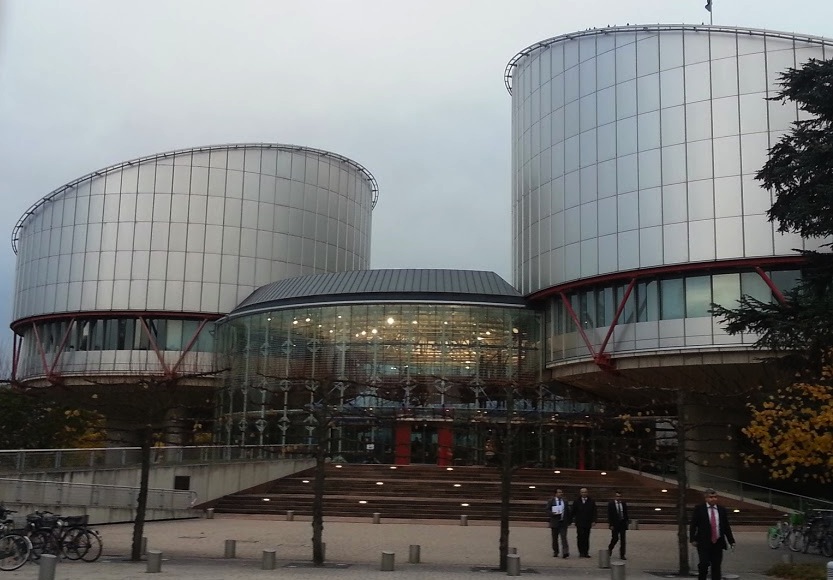
МКЮ вмешалась перед Европейским судом по правам человека по делу предполагаемого похищения таджикского гражданина и передачи его стране происхождения, где он может подвергаться риску пыток или жестокого обращения.
Международная комиссия юристов (МКЮ) вмешалась по делу К.Ф. против России. К.Ф. был подвергнут процедуре экстрадиции в Таджикистан для ответа на преступления, связанные с терроризмом. Процедура была приостановлена временными мерами, принятыми Европейским судом по правам человека по данному делу. В день его освобождения, по истечении максимального срока содержания под стражей, он исчез. Семья сообщила его адвокату, что он содержится в следственном изоляторе в Таджикистане.
В этом документе МКЮ предоставила Суду анализ, основанный на источниках международного права, позитивных обязательств участников Европейской конвенции обеспечить, чтобы передача лиц не осуществлялась, когда те лица находются под временным мерам Суда, запрещающим переводы. Представление включает сравнительный анализ права, юриспруденции и практики других региональных систем прав человека. МКЮ также оценила способность российской правовой системы защищать от передачи в нарушение прав Конвенции и, в частности, временных мер Суда.
МКЮ пришла к выводу, что российские власти еще не предоставили эффективную программу защиты, которая обеспечивала бы соблюдение временных мер Европейского суда в случаях предполагаемых похищений. Кроме того, МКЮ указала, что отсутствие каких-либо эффективных расследований и публичного осуждения практики похищения наносит ущерб эффективному осуществлению временных мер Суда.
МКЮ утверждала, что это продолжающееся отсутствие соблюдения российскими властями постановлений Европейского суда затрагивает всю систему соблюдения временных мер. Поэтому повторение этой ситуации требует разработки конкретных мер для повышения системных изменений в российском законодательстве и практике.
Russianfederation-KF_v_Russia-ECtHR-amicus-ICJ-final-eng-2017 (Скачайте вмешательство на английском)
Apr 6, 2017 | News
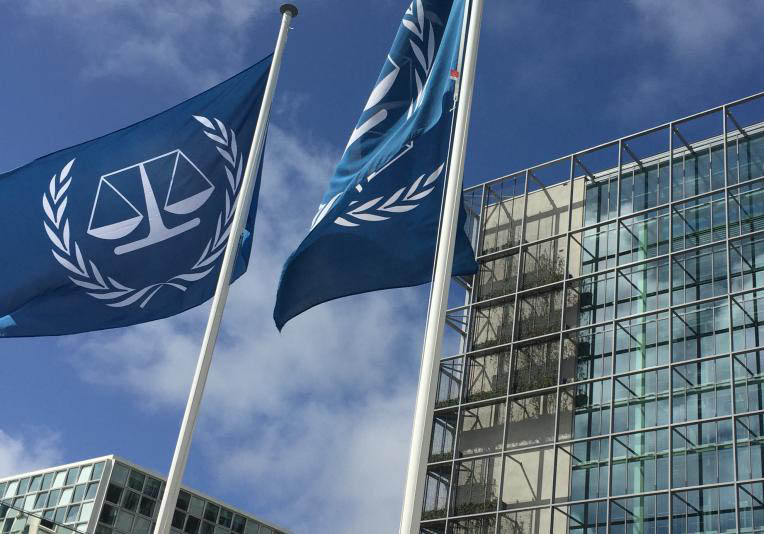
South Africa is to appear before a scheduled hearing at the International Criminal Court on 7 April 2017 (ICC) in The Hague for a hearing on its failure to arrest Sudanese President Omar Hassan Ahmad al Bashir when he visited South Africa in June 2015.
The hearing, before the pre-trial Chamber of the ICC will consider whether South Africa was in breach of its obligations under the ICC Rome statute when it failed to effect the ICC arrest warrant on President Bashir.
The ICJ, represented by South African Justice Johann Kriegler, will be attendance observing the proceedings.
President Bashir has been indicted by the ICC on charges of genocide, war crimes and crimes against humanity in relation to atrocities committed from 2003 to 2008 in Darfur.
“The case is critical for ensuring the effectiveness of the ICC as an institution. The only means the ICC has of enforcing its orders is through the cooperation of States,” said Sam Zarifi the Secretary General of the ICJ.
“The failure to arrest President Bashir and the subsequent efforts to withdraw from the ICC Rome statute raise important questions about South Africa’s commitment to the fight against impunity in Africa and globally,” Zarifi added.
South Africa gave notice last October that it intended to leave the ICC, but this notice has been withdrawn, at least pending debate in Parliament.
The ICJ had filed a brief with the South African Parliament calling on South Africa to remain with the ICC Rome statute.
The brief was signed by retired South African Constitutional Court Justices Laurie Ackermann, Richard Goldstone, Johann Kriegler, Yvonne Mokgoro, Kate O’Regan and Zak Yacoob.
It was co-signed by Navi Pillay, former United Nations High Commissioner for Human Rights, former judge of the ICC and former President of the International Criminal Tribunal for Rwanda (ICTR) and Wilder Tayler, then Secretary General of the ICJ.
Justice Zak Yacoob remarked that “pursuit of justice and pursuit of peace are complementary and mutually reinforcing objectives that South Africa will best achieve by remaining party to the Rome Statute of the ICC. Its not an either or situation. Protecting heads of States from justice whatever they do compromises peace too much.”
Contact
Arnold Tsunga, ICJ Director for Africa, t +27716405926 ; e: arnold.tsunga(a)icj.org
Background
South Africa was among the first States to ratify the Rome Statute of the ICC. It signed the Rome Statute on the day it was adopted, 17 July 1998, and ratified it on 27 November, 2000.
Both during the negotiations preceding the Rome Conference that established the Court in 1998, and at the Conference itself, South Africa played a leading role.
However, the events of June 2015 surrounding the arrival of President Omar al Bashir of Sudan in South Africa appears to have engendered a shift in South Africa’s posture, leading many observers to call into question the country’s commitment to international justice.
The failure by South African authorities to arrest and surrender President al Bashir to the ICC, although he had been indicted by the ICC for war crimes, crimes against humanity and genocide, led to the Southern Africa Litigation Centre (SALC) taking the government to court to compel it to fulfill its obligations both under the Rome Statute and the Implementation of the International Criminal Court Act 27 of 2002 (Implementation Act).
On 19 October 2016, the Minister of International Relations and Co-operation gave notice of South Africa’s intention to withdraw from the Rome Statute.
The Portfolio Committee on Justice and Correctional Services put out a call for submissions to be made to the Parliamentary Portfolio Committee on Justice and Correctional Services on the Implementation of the Rome Statute of the International Criminal Court Act Repeal Bill [B23-2016] to be made by 8th March 2017.