Apr 6, 2017
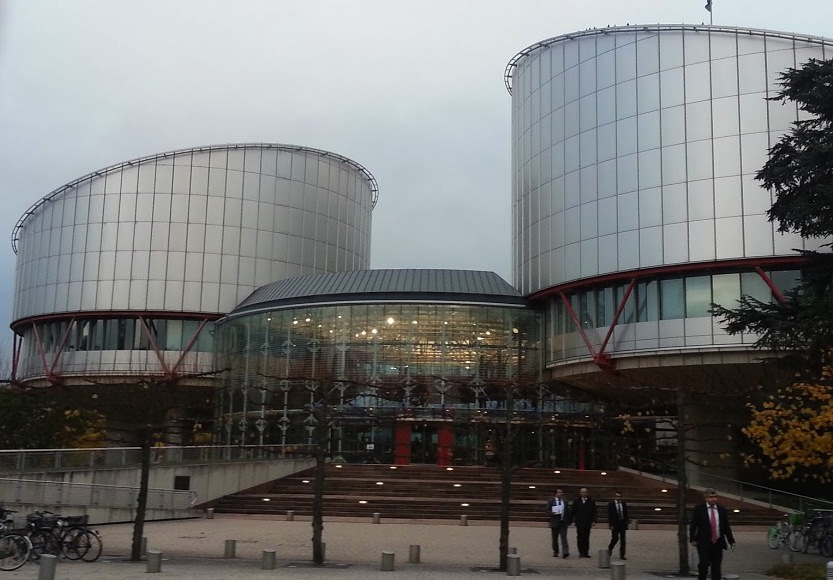
The ICJ has intervened before the European Court of Human Rights in a case of alleged abduction of a Tajik national and transfer to his country of origin where he could be at risk of torture or ill-treatment.
The International Commission of Jurists (ICJ) intervened in the case of K.F. v. Russia. K.F. had been subject to a procedure of extradition to Tajikistan to answer for terrorism-related offences there. The procedure was stalled by the interim measures issued by the European Court of Human Rights in the case. On the day of his release, for the expiry of the maximum term for detention, he disappeared. The family informed his lawyer that he was being held in a remand prison in Tajikistan.
In this submission, the ICJ provided the Court with an analysis, based on international law sources, of the positive obligations of States parties to the European Convention to ensure that no transfer is carried out of persons subject to interim measures enjoining such transfer by the European Court. The submission includes a comparative analysis of the law, jurisprudence and practice of other regional human rights systems. The ICJ also assessed the capacity of the Russian legal system to protect against transfers in violation of the Convention rights and, in particular, of the interim measures of the Court.
The ICJ concluded that the Russian authorities have not yet provided an effective protection programme that would ensure the respect of the interim measures of the European Court in cases of alleged abductions. Furthermore, the ICJ pointed out that the lack of any effective investigations and public condemnation of practices of abduction is detrimental to the effective implementation of the Court’s interim measures.
The ICJ submitted that this continued lack of compliance by Russian authorities with the rulings of the European Court affects the whole system of compliance with interim measures. The recurrence of this situation, therefore, requires the formulation of specific measures to enhance systemic changes in Russian law and practice.
Russianfederation-KF_v_Russia-ECtHR-amicus-ICJ-final-eng-2017 (download the third party intervention)
Mar 31, 2017
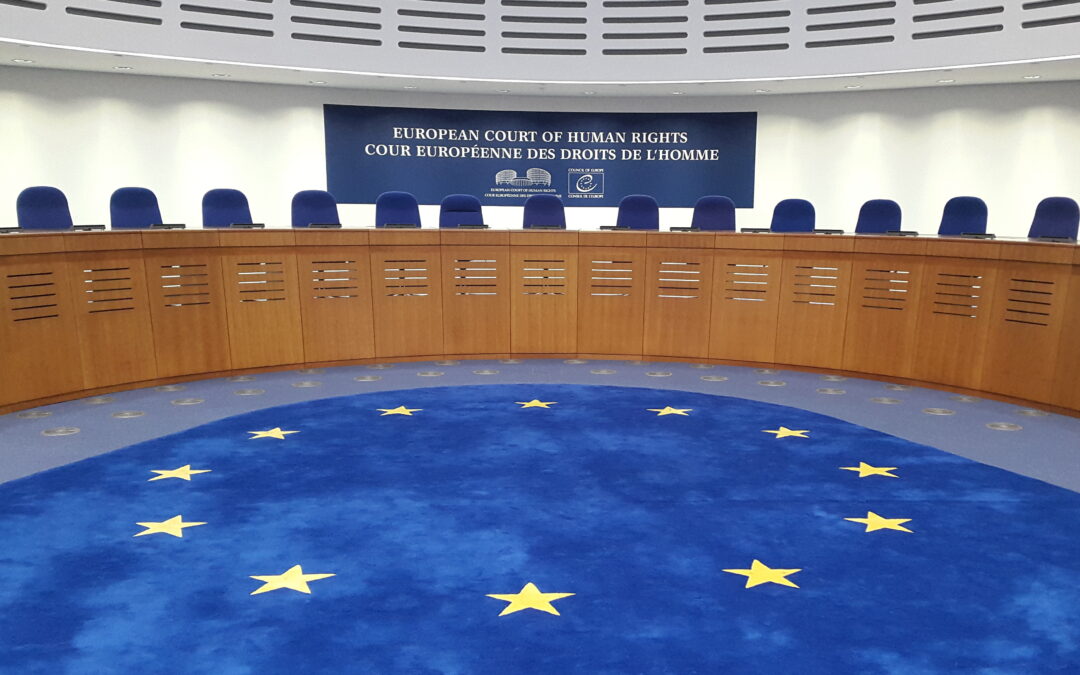
The ICJ and Amnesty International intervened before the European Court of Human Rights to promote access to justice in Switzerland for a victim of torture at the hands of the former Tunisian Government.
Abdennacer Naït-Liman, a Tunisian national, claims to have been tortured at the hands of officers of the former Tunisian regime. Years after having obtained refugee status in Switzerland, he sought criminal prosecution of one of the perpetrators when this last arrived to Geneva for medical treatment. While his arrest and the consequent criminal prosecution had not been possible, Mr Naït-Liman has sought to introduce a civil action for damages for the violation of his human rights. Swiss courts have dismissed this action on jurisdictional ground and he challenged this situation before the European Court of Human Rights.
In their intervention, the International Commission of Jurists and Amnesty International have provided the Court with observations concerning a range of issues, including:
- The international legal framework pertaining to the issue of universal civil jurisdiction relevant to the interpretation of article 6 ECHR, in particular the States’ obligation under Article 14(1) of the Convention against Torture to provide procedures permitting any victim to obtain reparation for torture committed abroad;
- Forum necessitates (forum of necessity) allowing courts to have jurisdiction over civil matters as a means to prevent a denial of justice; and
- The right to reparation for individuals in international human rights law with regard to the content of the obligation to provide reparation.
Switzerland-icj&ai-NaitLiman-Advocacy-legal submission-2017-ENG (download the third party intervention)
Mar 31, 2017
On 31 March, the ICJ and eight NGOs submitted a set of joint observations to the UN Committee Against Torture on its draft revised General Comment No. 1 on the implementation of Article 3 of the UN Convention against Torture and Other Cruel, Inhuman or Degrading Treatment or Punishment.
Universal-NGO submission UN Cmt Torture-Advocacy-Legal submissions-2017-ENG (full text, in PDF)
Mar 30, 2017
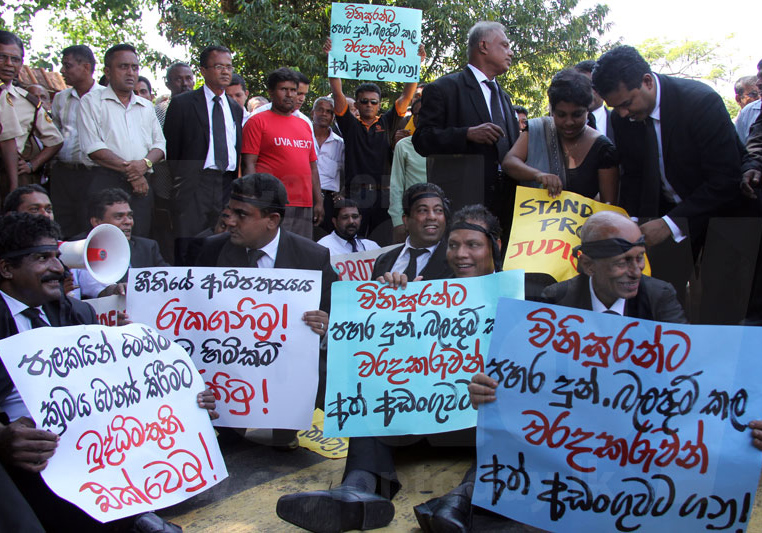
Sri Lanka’s criminal justice system must undergo serious reform in line with international human rights standards in order to provide justice for victims of human rights abuses, the ICJ said in a discussion paper released today.
In a discussion paper titled Challenges to Accountability for Human Rights Violations in Sri Lanka: A Synopsis of Findings from a Meeting with Lawyers and Human Rights Defenders in Colombo, November 2016, the ICJ has identified priorities for action raised by Sri Lankan lawyers and human rights defenders during a workshop on accountability for human rights violations and abuses held in Colombo, Sri Lanka, in November 2016.
“After decades of undue political interference with judicial institutions by authoritarian regimes, the Sri Lankan criminal justice system as a whole has been weakened and is simply not equipped with the capacity or will to adequately pursue accountability for gross human rights cases,” said Nikhil Narayan, South Asia Senior International Legal Adviser for the ICJ.
“It is crucial that Sri Lanka embarks on real systemic reform of the criminal justice system, both legal and administrative, to strengthen its ability to deal with human rights violations and reverse the deteriorating public faith and credibility in the justice sector,” he added.
The issues raised by participants during the workshop in November 2016 echoed many of those identified in the ICJ’s prior studies, reflecting the ongoing and unaddressed systemic challenges that practitioners continue to face today, despite the change of government and perception that the adjudication of human rights cases is seamless.
This discussion paper highlights several key concerns raised by the participants, all of whom are human rights lawyers and defenders. These include:
- the public’s lack of faith in the criminal justice system anchored to the lack of will and ability to investigate, prosecute, and adjudicate human rights violations;
- the gaps in the legal framework to address serious human rights violations;
- questions as to the independence of State actors involved in the judicial system;
- undue delays in pending cases, the lack of functional independence and impartiality of the Attorney General’s Office; and,
- the poor processes and non-transparency in recent legal reform initiatives.
“Our workshop provided a stark reminder that, despite the end of the war nearly a decade ago, the same structural deficiencies in the criminal justice system that existed during the conflict continue to obstruct real justice and accountability for human rights abuses, both conflict-era and ongoing,” Narayan said.
“Particularly now, at a time when the Sri Lankan State at all levels is trying to convince both the domestic and international audience that the existing criminal justice system is sufficiently capable of adjudicating cases of gross human rights abuses stemming from the conflict as part of the transitional justice process, human rights lawyers and defenders in Sri Lanka have issued a counter-point to these claims,” he added.
The discussion paper concludes with the identification and prioritization of key strategies for criminal justice reform that could help address these challenges, including:
- Clarifying the role of the Attorney General’s Office, including strengthening its functional independence and impartiality;
- Strengthening the independence and impartiality of the judiciary;
- Strengthening the functional independence of the police;
- Incorporating gross human rights violations amounting to crimes under international law as specific offences in Sri Lankan law in line with international standards;
- Strengthening the functional independence and impartiality of independent constitutional commissions such as the Human Rights Commission of Sri Lanka and the National Police Commission, among others;
- Encouraging and supporting the Bar Association of Sri Lanka in taking a stronger public advocacy role on human rights and rule of law; and,
- Greater public awareness-raising of law reform initiatives.
Contact
Nikhil Narayan, South Asia Senior International Legal Adviser, e: Nikhil.narayan(a)icj.org
Background
The November 2016 workshop was the first of two colloquia to discuss ongoing challenges faced in promoting greater accountability for human rights violations and abuses through the Sri Lankan criminal justice system.
The second colloquium was held with Sri Lankan high court judges in Colombo in January 2017. The outcome of the judges’ colloquium will be published in a discussion paper next month.
The ICJ has previously published several reports, including in 2010 and 2012, documenting the deep politicization and capacity deficit of the Sri Lankan judiciary and criminal justice system in dealing with gross human rights violations and abuses.
Sri Lanka-FCO Accountability 1-Advocacy-Analysis brief-2017-ENG (full paper in PDF)
Mar 30, 2017 | News
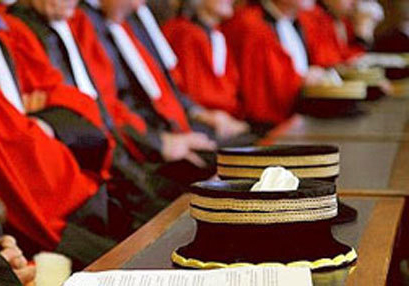
The ICJ today called on the Tunisian President, Beji Caid Essebsi, to refrain from signing into law amendments to the law that regulates the country’s High Judicial Council (HJC). The amendments were adopted on Tuesday 28 March 2017 by the People’s Representatives Assembly.
The ICJ also urged the Head of the Cabinet, Youssef Chahed, to act, as a matter of highest priority, on the nominations by the Instance Provisoire de la Justice Judiciaire (IPJJ) with a view to filling the positions of the First President of the Cassation Court and its General Prosecutor.
The ICJ expressed concern that the amendments revising the country’s 2016 HJC law would weaken the effective functioning of the judiciary and the administration of justice in several respects
- The amendments would strip the IPJJ President of the authority to convene the HJC’s first meeting and instead provide the President of the Parliament with such power. This would constitute an inappropriate interference of the legislative branch into the management of the judiciary in clear violation of the principle of separation of powers and judicial independence.
- The amendments would explicitly exclude any possibility of challenge or judicial review of such action of the President of the Parliament. The ICJ considers that the judiciary must be able to review such decisions to ensure that they are not exercised arbitrarily or outside the law.
- The amendments would also reduce the quorum required for the validity of HJC meetings from one-half to one-third of its members. This could lead to situations where non-judicial members of the HJC have the power to take decisions over the judiciary, in contravention of international standards.
“Instead of using legislative tactics and procedures to weaken the independence and the effective functioning of the HJC, the Tunisian Head of Cabinet should act on the IPJJ’s nominations to fill the positions of the President and the Prosecutor General of the Cassation Court as a matter of urgency, and ensure that until the HJC is properly established, the IPJJ continues to fully exercise its competencies in overseeing and managing the judiciary,” said Said Benarbia, Director of the ICJ Middle-East and North Africa (MENA) Programme.
Indeed, irrespective of the amendments, the ICJ recalls that article 148(8) of the Constitution clearly states that the IPJJ is to carry out its mandate until the seats on the HJC have been filled. This is further affirmed under article 74 of the 2016 HJC Law and article 19 of the 2013 IPJJ Law. Both of these laws make the end of the exercise of the IPJJ’s functions dependent on two conditions, namely that the HJC be fully composed and established.
The ICJ considers that the delay in acting on the IPJJ nominations of senior judges risks undermining the effective functioning of the judiciary, as well as adversely affecting the functioning of other institutions that are essential to upholding the rule of law and protecting human rights in Tunisia. The adopted amendments are no answer to this problem.
“The ongoing crisis is political and not judicial,” Benarbia said.
“Solving it does not require the introduction of legislative amendments that erode the rule of law and judicial independence, but rather the compliance with existing laws and the Constitution,” he added.
Contact
Theo Boutruche, Legal Adviser of the ICJ Middle-East and North Africa Programme, t: +33 6 42837354, e: theo.boutruche(a)icj.org
Background
The amendments were introduced and adopted amid a continuing crisis and functional paralysis of the judiciary that also impact on the effective functioning of other State institutions, including the body in charge of reviewing the conformity of laws with the Constitution.
In particular, two key positions have been left vacant as neither the First President of the Cassation Court, nor its General Prosecutor, have been appointed, and both of these positions also serve as ex officio members of the HJC.
In October 2016, elections were organized to choose the members of the HJC. A swearing-in ceremony before the President of the Republic followed in 14 December 2016, in which not all the HJC Members participated.
In November 2016, the IPJJ proposed candidates including to fill these two positions. Under the Tunisian Law, the Head of the Cabinet must confirm these nominations.
Alternatively, this official may request new nominations from the IPJJ until agreement is reached, as provided for in article 12 and 14 of the IPJJ Law No.13 of 2013. So far, the Head of the Cabinet has failed to act on the IPJJ’s nominations and uncertainty prevails as to whether the HJC has been properly established.
Under the Tunisian Constitution and laws, the President of the Cassation Court is also the President of the Instance Provisoire de Contrôle de la Constitutionnalité des Projets de Loi, the body in charge of assessing the conformity of laws with the Constitution during the transition period.
When established, the HJC will be charged with appointing four members of the Constitutional Court.
Tunisia-Statement new HJC Law-News-Web stories-2017-ARA (full story in Arabic, PDF)