Sep 10, 2019 | News
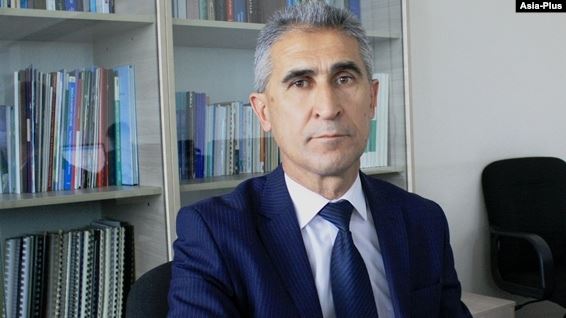
The ICJ today expressed concern that a Government anti-corruption agency has engaged in acts of intimidation against the Chairperson of the Union of the Lawyers of the Republic of Tajikistan, Saidbek Nuritdinov, and 15 other lawyers.
The intimidation apparently relates to the lawyers’ defence of Abdulaziz Abdurahmonzoda, a lawyer facing trial on charges of fraud, who was allegedly ill-treated in detention by officers of the city Department of the Agency for Financial Control and Combating Corruption of the Republic of Tajikistan (Anti-Corruption Agency).
After the lawyers representing Abdurahmonzoda alleged that he had been ill-treated, the judge of the Sino district of Dushanbe city hearing the case, Ahmadzoda Farogat, requested the Prosecutor General’s Office to investigate the allegations.
Following the initiation of the inquiry of the allegations of ill-treatment, the Head of the Anti-Corruption Agency of Dushanbe, allegedly sent requests to a number of district courts of Dushanbe to obtain information about civil and criminal cases in which Saidbek Nuritdinov had participated as a lawyer.
The requests are said to seek information such as the names and, place of residence of clients: subject matter of civil cases, and details of the charges against his previous clients. In addition, it was reported to the ICJ that Judge Akhmadzoda Farogat, transmitted a list of the fifteen lawyers and copies of their official orders, the documents authorizing the representation of the lawyer, to the Anti-Corruption Agency at its request.
The ICJ notes, that while this information is not confidential per se, previous such investigations of the Anti-corruption Agency have led to criminal prosecution and conviction of lawyers.
“In this case, representation of a lawyer subject to criminal proceedings was undertaken by a group of his colleagues, including the head of the association of lawyers, in line with professional ethics, said Temur Shakirov, Senior Legal Adviser of the ICJ. “Such representation is consistent with international standards on the role of lawyers as well as national law of Tajikistan”.
“If the investigation is related to the lawyers’ representation in the case of Abdurahmonzoda, it would constitute a means of intimidation of the lawyers. And as such it should be ceased, and the lawyers should be able to continue to act freely and diligently in accordance with the national law and international law and standards on the role of lawyers”, Shakirov added.
Background
The criminal case against lawyer Abdulaziz Abdurahmonzoda was initiated under article 247.2, of the Criminal Code (fraud) on 17 April 2019. At the court hearings observed by the ICJ, Abdurahmonzoda insisted on his innocence and alleged breaches of the criminal procedure in course of the preliminary investigation: initiation of a criminal case without legal grounds (the case was said to lack the victim’s statement about the fraudulent actions committed on the part of Abdurahmonzoda); violation of the procedure of the preliminary investigation and submission to the court of evidence knowingly obtained by illegal means. The ICJ is observing the trial.
According to the UN Basic Principles on the Role of Lawyers, governments “shall ensure that lawyers are able to perform all of their professional functions without intimidation, hindrance, harassment or improper interference” and they should not “suffer, or be threatened with, prosecution or administrative, economic or other sanctions for any action taken in accordance with recognized professional duties, standards and ethics.”(Principle 16).
Furthermore, interference or obstruction of lawyer’s activity is prohibited by the Law of the Tajikistan on Lawyers and Lawyers’ Activities. According to the law, a lawyer cannot be held liable for any opinion expressed by him/her as part of his/her lawyers’ activity, with the exception of actions that may constitute a crime. The request from lawyers or lawyer’s unions of information related to the provision of legal assistance in specific cases is not allowed.
According to the Draft Universal Declaration on the Independence of Justice (“Singhvi Declaration”), enable the Bar Association to fulfil its function of preserving the independence of lawyers, they should “be informed immediately of the reason and legal basis for the arrest or detention of any of its members or any lawyer practising within its jurisdiction”. In these cases, bar associations are “ entitled to be represented by its president or nominee to follow the proceedings and in particular to ensure that professional secrecy and independence are safeguarded”.
Sep 10, 2019 | News
ICJ expressed concern over the decision given on 27 August 2019 by the Malaysian High Court that a fatwa issued against the women’s organization, Sisters in Islam, should be referred to the Syariah Court.
The High Court used as a basis Article 121 (1A) of the Federal Constitution, which states that secular courts do not have jurisdiction over matters pertaining to Islam.
The ICJ called on the Malaysian authorities to ensure that custom, tradition, and religion should not be used as a justification to undermine human rights, including women’s human rights.
In 2014, the Selangor Fatwa Council issued a fatwa declaring the Sisters in Islam a “deviant organization.” For many years, Sisters in Islam has been promoting more egalitarian interpretations of Islamic laws with the aim of ending discrimination against women and achieving equality in the Muslim family.
“For women to fully exercise their religious freedom, they must be able to retain or adopt the religion of their choice, and they must be able to continue belonging to this religion without being discriminated against within the religion,” said Emerlynne Gil, ICJ’s Senior International Legal Adviser.
The ICJ stressed that under international law, States have an obligation to protect people who are prevented from exercising their religious freedom by private actors, such as their own religious communities.
“The Malaysian government, including the judiciary, has the obligation to protect groups like Sisters in Islam when they face persecution from within their religious communities for propounding alternative views about their religion,” said Emerlynne Gil.
Furthermore, the ICJ had previously underscored in a 2019 briefing paper on the challenges to Freedom of Religion or Belief in Malaysia, the tensions emerging from jurisdictional disputes between civil courts, which apply federal and state laws, and Syariah courts, which apply Islamic laws.
In 2018, the UN Committee on the Elimination of Discrimination against Women, in reviewing the performance of Malaysia, voiced its own concern over “the existence of a parallel legal system of civil law and multiple versions of Syariah law, which have not been harmonized in accordance with the Convention on the Elimination of All Forms of Discrimination Against Women (CEDAW).” The CEDAW Committee concluded that this “leads to a gap in the protection of women against discrimination, including on the basis of their religion.
Contact:
Emerlynne Gil, Senior International Legal Advisor, ICJ, e: emerlynne.gil(a)icj.org
Sep 9, 2019
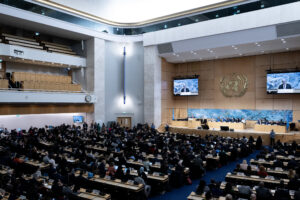
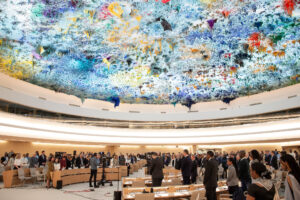
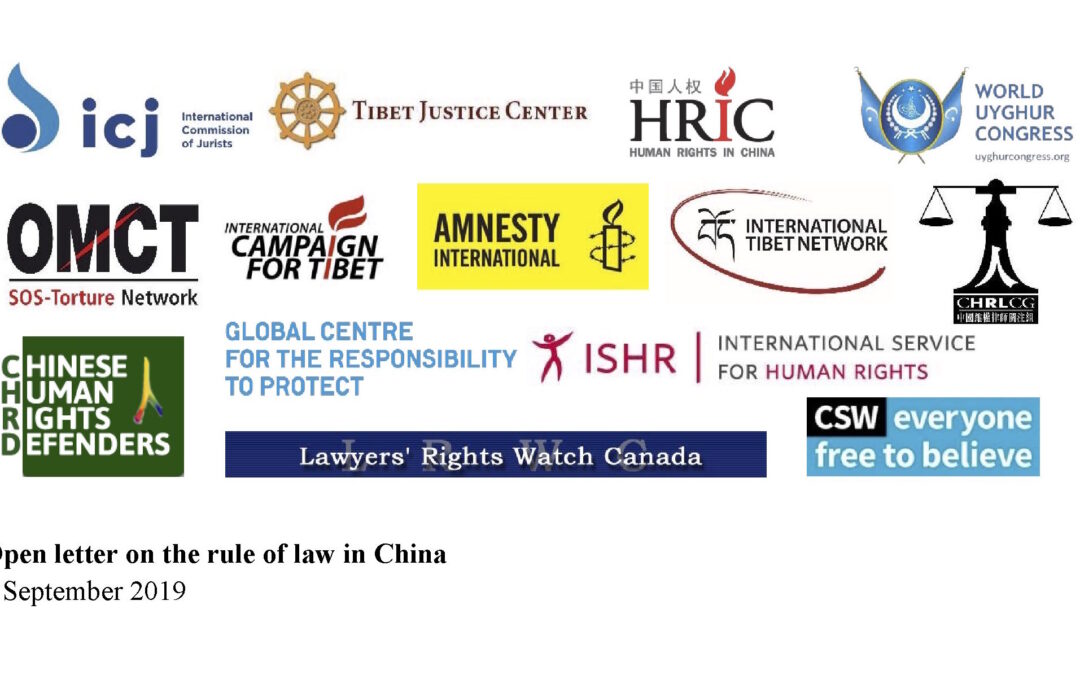
At the opening of the 42nd session of the UN Human Rights Council in Geneva, the ICJ and other NGOs call on States and intergovernmental organisations to address systemic failures of the rule of law in China.
Key concerns include lack of due process, lack of an independent and impartial judiciary, unjustified restrictions on freedom of expression, association and assembly, and on the freedom of lawyers to practice their profession, and other restrictions on civic space.
The letter reads as follows:
Open letter on the rule of law in China
9 September 2019
Across the People’s Republic of China, human rights violations are a systemic reality. Over the past year, the UN has once again documented legal and policy frameworks that fail to protect against discrimination; stigmatise Islam and stifle freedom of religious belief; undermine a wide range of socioeconomic rights and those who defend them; and permit gross violations of due process, including secret trials and arbitrary and incommunicado detention.
Over the past year, UN High Commissioner for Human Rights Michelle Bachelet and other international human rights experts, as well as governments have pressed for access to China, in particular to Uyghur, Tibetan and other ethnic areas. The High Commissioner has urged dialogue and a de-escalation of violence in Hong Kong, following allegations of excessive use of force by police to disperse massive public protests and the criminalisation of demonstrators.
Independent experts of the UN Human Rights Council have requested information and prompt action from the government regarding a broad range of alleged violations and especially the criminalisation of human rights defenders and civil society, such as citizen journalists, lawyers, democracy movement leaders, religious leaders, workers’ rights activists, social workers, public health advocates and students.
In June of this year, more than two dozen governments informed the High Commissioner and the Human Rights Council president of their concerns about the use of re-education camps to target Uyghur and other Muslim minority groups in western China. They reiterated the need for prompt, independent and unfettered access.
Despite these efforts at engagement, the Chinese government has refused to allow independent visits of relevant human rights experts, including the Special Procedures of the UN Human Rights Council; refused constructive dialogue, sowed disinformation and stoked violence in Hong Kong; used a push for sinicisation to eliminate cultural and religious diversity; and continued a fierce campaign against critics within China and many abroad, including other States. Chinese officials have stated, clearly and forcefully in public and in private, that ‘China is a country of rule of law’ and ‘will not accept interference in its internal affairs’.
This is patently misleading.
The Communist Party of China uses China’s laws to maintain state power, not to ensure justice. Overly broad charges that do not comply with the principle of legality are used to wrongfully detain, prosecute, and convict individuals for the peaceful exercise of internationally protected rights and participation in public affairs. In effect, any person who expresses views that differ from the Party narrative, or who seeks to highlight negative impacts of Party and government policies, can be caught in the crosshairs of criminalisation.
The Chinese government has refined and replicated a practice of characterizing all difference or dissent as terrorism, subversion, or a threat to national security. The tactics deployed in Hong Kong are regularly used against Uyghur and Tibetan peoples to justify a hard-line crackdown on the legitimate exercise of human rights. This is a dangerous departure from international human rights standards.
Furthermore, the Chinese government’s human rights record is no longer an issue limited by its borders. The government has actively used laws and practices to disappear and detain foreign nationals, restrict access to information overseas, conduct surveillance of Chinese nationals and other exile communities, embolden its law enforcement outside Chinese borders, and impede public participation, sustainable development and transparency in third countries where China has political and economic interests.
Human rights defenders of all kinds have been specifically targeted. The silence of the international community has not only allowed this to decimate civil society within China, but also to endanger civil society, defenders and other individuals critical of the Chinese government wherever they may be, including in the halls of the UN.
The same laws that allow the arbitrary deprivation of liberty of lawyers, public interest advocates, housing rights activists, and Christians in China’s wealthy eastern areas are further refined and weaponised against ethnic and religious minorities in the west of the country, including Tibet, where international access is a significant concern. The large-scale detention program in Xinjiang, which has detained Uyghurs and other minorities, may amount to crimes against humanity.
Read and download the full letter here, in PDF format: UN-Advocacy-OpenLetter-China-2019
Sep 9, 2019 | News
The ICJ today called on the South African government to take immediate measures to prevent, investigate and bring to justice those responsible for all discriminatory violence that has occurred in the country, particularly against people based on nationality or national origin.
The authorities should make clear that the rights in the South African Constitution’s Bill of Rights and under international law apply to everyone in South Africa and to take demonstrable measures to protect everyone in South Africa from violence, including discriminatory violence, such as targeted xenophobic violence.
“The hard-fought rights in the Bill of Rights of our Constitution apply to everyone who lives in South Africa without exception. Whatever concerns people have must be resolved through listening and through dialogue. The prevailing violent attacks which seem to target people because they are not South African are cruel and inhuman. They can never be justified and must be condemned in the strongest terms possible”, said ICJ Commissioner Justice Yvonne Mokgoro, a former judge of the South African Constitutional Court.
The ICJ further called on the African Union Member States to take immediate measures to stop the retaliatory attacks against South Africans and South African groups and businesses in those countries where they have taken place, including the Democratic Republic of Congo and Nigeria.
“The current xenophobic attacks in South Africa targeting African immigrants as well as retaliatory violence against South Africans living in the affected African countries is highly regrettable. We call upon the leadership of the affected countries to exercise maximum restraint. We further urge them to take urgent measures to guarantee the security and rights of all immigrants and minorities within their borders, as they are duty bound to do so, under their constitutions and instruments against all forms of discrimination and xenophobia”, said ICJ Commissioner Justice Kathurima M’Inoti of the Kenyan High Court and Director of the Kenyan Judicial Education Institute.
The call by the ICJ comes after South Africa experienced a week of widespread looting and attacking of businesses, perceived to be owned by foreign nationals that saw at least 10 killings and many others injured and displaced from homes. The violence began in Jeppestown, a Johannesburg suburb, on Sunday evening and spread to other parts of Johannesburg including the Johannesburg CBD, Malvern, Tembisa, Alexandra and Katlehong.
The ICJ recalls that the African Charter on Human and Peoples Rights, the International Covenant on Civil and Political (ICCPR) and other universal and African regional human rights treaties to which South Africa is party, require that the rights be guaranteed equally to all persons without regard to citizenship or other status.
This is not the first time that South Africa has been gripped with xenophobic attacks. They have occurred periodically and with impunity over the past decade, with spikes in 2008 and in 2015. In 2008 more than 60 people were killed in a wave of violence against foreign nationals. Another significant flare of xenophobic violence also occurred in 2015 receiving widespread civil society condemnation and response though the perpetrators of such violence operated with some degree of impunity. Civil society will once again proceed with a mass protest on the 14th of September in strong opposition to the increasing climate of fear and xenophobia.
“Impunity for acts of violence, particularly xenophobic violence, is a matter of extreme concern. As a Zambian professor teaching at a leading university in South Africa, I am fearful of the lasting impact that continued xenophobia in South Africa has on the human rights of everyone especially non-nationals living in the country. These xenophobic attacks have the potential to destabilize the unity of Africa around human rights values and create a spiral of violence and impunity across the continent. Xenophobic violence is a threat to the observance of human rights on the continent.” said ICJ Commissioner and Professor Michelo Hansungule, of the Centre for Human Rights at the University of Pretoria.
A number of African countries, including Tanzania, Mozambique, Zambia and Nigeria have responded strongly to such xenophobia, including by suspending flights to South Africa and boycotting South African based events, illustrating the seriousness of the xenophobia. Though the South African government has previously presented such incidents to the world as isolated instances of naked criminality without discriminatory intent, in this instance South African Foreign Minister Naledi Pandor has said that “Afrophobia” can no longer be denied.
In responses to violence in South Africa, in Nigeria, protesters in Lagos and Abuja have targeted South African businesses, some hurling rocks and burning tyres outside their premises, with some explicitly indicating that the acts are retribution for violence against Nigerians in South Africa. In the Democratic Republic of the Congo, protesters also attacked and looted South African-owned businesses, some going on to attack the South African consulate in Lubumbashi. Read the full story here: South Africa-surge in xenophobia-news-webstory-2019-ENG
Contact Details:
Arnold Tsunga (Director): c: +26 37 7728 3249 e: arnold.tsunga(a)icj.org
Solomon Ebobrah (Senior Legal Adviser): c: +23 48 0349 27549 e: solomon.ebobrah(a)icj.org
Tim Fish Hodgson (Legal Adviser): c: +27 82 871 9905 e: timothy.hodgson(a)icj.org
Sep 8, 2019 | News
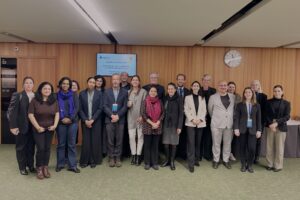
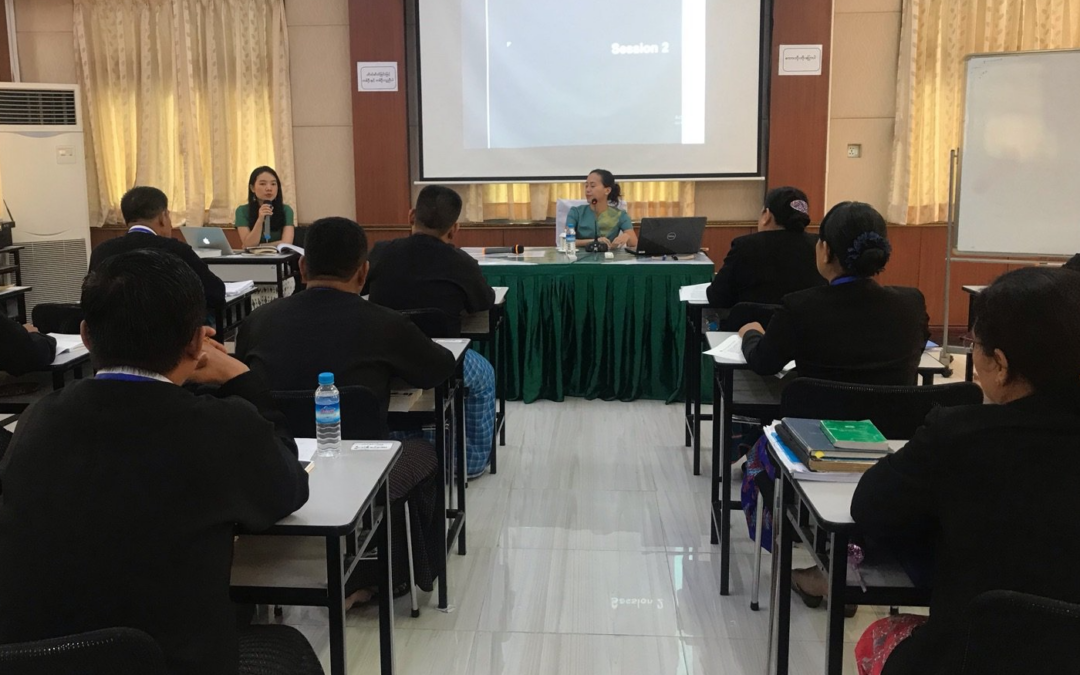
At a training event for senior prosecutors hosted by the Union Attorney General’s Office (UAGO) on 7 September 2019 in Yangon, Nay Pyi Taw, the ICJ made presentations on the international standards and legal obligation on unlawful killings.
Representing each of Myanmar’s 14 states and regions, some 30 law officers attended the activity, which was a capacity-building training hosted by the UAGO. This is part of the ICJ’s ongoing engagement with authorities in Myanmar as well as in neighboring countries on the Minnesota Protocol on the investigation of potentially unlawful death (the Minnesota Protocol).
The Minnesota Protocol provides guidance on the State’s implementation of its duty under international law to investigate potentially unlawful killings, including when State actors may have been involved. It applies to deaths under custody, suspicious deaths, and enforced disappearances. Myanmar has experienced widespread incidents of such deaths, including in recent years those constituting serious crimes under international law.
ICJ Associate Legal Adviser, Jenny Domino, introduced salient points of the Minnesota Protocol and shared relevant examples from experience promoting and protecting human rights in the Philippines. She highlighted the significance of the State’s duty to investigate potentially unlawful killings in upholding the right to life under international human rights law.
ICJ Legal Researcher, Ja Seng Ing, shared the case of Laotian activist Sombath Somphone, who was subjected to enforced disappearance on 15 December 2012 with the apparent consent or acquiescence of State agents. To date, Laotian authorities have failed to conduct effective investigations with a view to revealing the fate or whereabouts of Somphone. ICJ has repeatedly called for accountability on the issue.
Participants discussed these cases in relation to the comparative remedies and practical challenges related to the conduct of investigations in Myanmar, where police and prosecutors both have roles to play in the conduct of investigations.
First published in 1991 and subsequently revised in 2016 under the auspices of the United Nations Office of the High Commissioner for Human Rights, the Minnesota Protocol includes guidelines on conducting investigations to ensure that they are prompt; effective and thorough; impartial and independent; and transparent.
Since December 2017, the ICJ has co-hosted several regional workshops in Asia focused on this topic, with lawyers, academics, and State authorities from Thailand, Cambodia, Nepal, India, and Myanmar attending the events.
See also:
https://www.icj.org/thailand-launch-of-the-revised-minnesota-protocol/
https://www.icj.org/myanmar-reverse-laws-and-practices-that-perpetuate-military-impunity-new-icj-report/