Aug 30, 2019
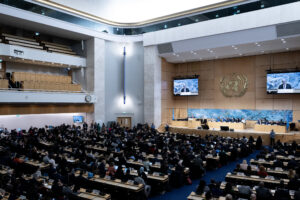
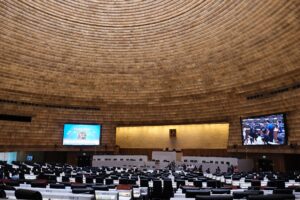
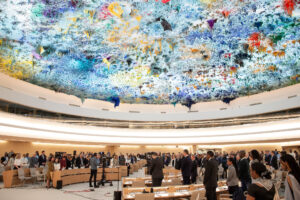
The ICJ has joined other civil society organisations in calling for increased scrutiny of human rights violations in Cambodia, at the upcoming session of the UN Human Rights Council.
The joint letter to all Member and Observer States of the Council emphasises that the Cambodian government’s actions before and since the July 2018 election demonstrate a comprehensive campaign to use violence, intimidation and courts that lack judicial independence to silence or eliminate the political opposition, independent media, and civil society groups critical of the government.
It calls on the Human Rights Council to adopt a resolution requesting the UN High Commissioner for Human Rights to monitor and report on the situation of human rights in Cambodia and outline actions the government should take to comply with its international human rights obligations.
The letter also says that the High Commissioner should report to the Council at its 45th session followed by an Enhanced Interactive Dialogue with participation of the Special Rapporteur on Cambodia, other relevant UN Special Procedures, and members of local and international civil society.
The full letter can be downloaded in PDF format here: Cambodia-UN statement-Advocacy-OpenLetter-2019-ENG
Aug 27, 2019 | News
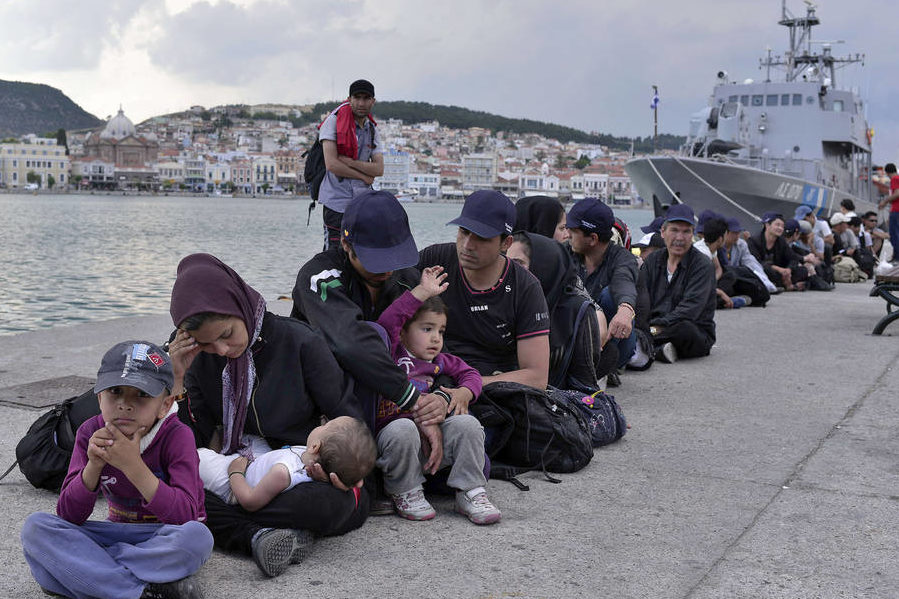
Following the killing of an Afghan boy in the Moria reception center in Greece, the ICJ calls on the Greek authorities to effectively implement measures of protection prescribed to Greece this May by the European Committee on Social Rights.
According to information by the UN High Commissioner for refugees, the 15-year-old Afghan boy was killed and two other boys injured after a fight broke out at the Moria reception centre on the Greek island of Lesvos.
The safe area at the Moria Reception and Identification Centre, RIC, hosts nearly 70 unaccompanied children, but more than 500 other boys and girls are staying in various parts of the overcrowded facility without a guardian and exposed to exploitation and abuse.
“This is not a situation unique to Moria. In other parts of Greek islands and also on mainland Greece human rights of migrant children are being violated,” said Karolína Babická, ICJ Legal Adviser.
Security of children as well as access to basic needs, such as appropriate shelter, food water or medical care, were the focus of a recent case the ICJ brought together with ECRE and Greek Council for Refugees (GCR) to the European Committee on Social Rights (ECSR).
The ECSR acknowledged the urgency of the situation and decided on immediate measures in the case already on 23 May 2019.
“It is unacceptable that the decision on interim measures has not yet been implemented by the Greek government and now we have to witness such tragic events like a death of a child in the camp,” said Karolína Babická.
“It is a sad wake-up call to the Greek administration that the situation cannot remain like this,” she added.
In its decision, the Committee members required the Greek government to immediately provide migrant children with appropriate shelter, food, water, education and medical care; to remove unaccompanied migrant children from detention and from Reception and Identification Centers (RICs) at the borders, place them in suitable accommodation for their age and appoint effective guardians.
“Greece must urgently bring those children to safety and make sure their basic needs are met and human rights are protected, in order to comply with its international legal obligations,” said Róisín Pillay, ICJ Europe and Central Asia Programme Director.
Contact:
Karolína Babická, Legal Adviser, ICJ Europe and Central Asia Programme, m +32 475 46 2067 ; e: Karolina.Babicka(a)icj.org
Aug 27, 2019 | News
The ICJ welcomes yesterday’s ratification by Uzbekistan of the CIS Convention on Legal Assistance and Legal Relations in Civil, Family and Criminal Matters 2002, also called the Chisinau Convention. The law on ratification was signed by President Shavkat Mirziyoyev.
The ICJ calls on the Uzbek authorities to take measures to make the Convention’s protective guarantees effective.
“This is a major step forward by Uzbekistan to get its extradition system up to standard with the rest of the world”, said Massimo Frigo, ICJ Senior Legal Adviser. “. “Its ratification of this treaty considerably steps up human rights guarantees in extradition.”
The Chisinau Convention enshrines several human rights guarantees to protect against extraditions that may breach the human rights of the transferred person, including the prohibition to transfer persons where they risk the death penalty or torture or cruel, inhuman and degrading treatment.
“The ratification of the Convention is a very important first step. An effective implementation of these guarantees in the legal and law enforcement systems is necessary now.” said Dmitry Nurumov, ICJ Central Asia Legal Consultant.
Background
Last May, the ICJ held, together with the General Prosecutor’s Office of Uzbekistan, UNODC Regional Office for Central Asia and the Regional Office for Central Asia of OHCHR, a regional and a national seminar on comparative practices in extradition in the CIS and European legal systems, including with regard to human rights guarantees in these procedures.
In 2017, the ICJ issued a report documenting the shortcomings in the Russian Federation, Central Asia and European countries in their extradition systems and other transfer procedures.
The ratification by Uzbekistan of the Chisinau Convention meets part of the recommendations formulated by the ICJ in these occasions.
Contact:
Massimo Frigo, Senior Legal Adviser, e: massimo.frigo(a)icj.org , t: +41229793805
Aug 22, 2019 | News
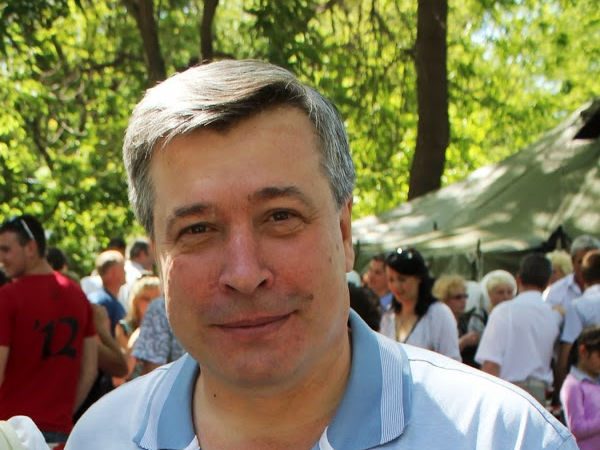
The ICJ calls on the Ukrainian authorities to investigate the murder of lawyer Olexandr Ivanov, killed today with an automatic weapon near SIZO (Pre-trial Dentention Centre) №6 in Kropyvnytskyi.
The shooting was carried out from a car by unknown persons. The lawyer died on the spot. Another person injured in the incident was hospitalized in critical condition.
“The killing of lawyer Oleksandr Ivanov must be independently, promptly, and thoroughly investigated and the perpetrators brought to justice,” said Temur Shakirov, ICJ Senior Legal Adviser.
“Such crimes strip any legal reforms of their positive impact if lawyers’ life is always in danger when exercising their functions,” he added.
The police have confirmed the occurrence of the killing and initiated an investigation preliminarily qualified as intentional murder under article 115-2 of the Criminal Code of Ukraine.
The Ukrainian National Bar Association (UNBA) is planning to convene an emergency meeting of the Committee on Protection of Lawyers Rights and Professional Guarantees. The UNBA has also referred to the leadership of regional prosecution and police authorities to bring the case under personal control.
“During its recent mission to Ukraine the ICJ heard of cases of killings of lawyers and this case demonstrates that little progress has been achieved in addressing the security of lawyers in Ukraine,” said Shakirov.
Additional information:
International human rights law, including the European Convention on Human Rights to which Ukraine is a party, requires that states take steps to protect the life and physical integrity of persons who they know or ought to know are at real risk of violence.
According to the UN Basic Principles on the Role of Lawyers, governments must ensure that lawyers are able to perform all of their professional functions without intimidation, hindrance, harassment or improper interference (principle 16). The UN Basic Principles specify that “[w]here the security of lawyers is threatened as a result of discharging their functions, they shall be adequately safeguarded by the authorities” (principle 17).
Aug 22, 2019 | Comunicados de prensa, Incidencia, Noticias
La CIJ se une a 10 organizaciones internacionales y nacionales de Venezuela, para solicitar que el Consejo de Derechos Humanos de Naciones Unidas establezca una Comisión de Investigación (COI) para Venezuela.
La CIJ considera que es necesario una COI independiente, ya que las autoridades venezolanas no han podido o no han estado dispuestas a garantizar la rendición de cuentas de los responsables de las violaciones a los derechos humanos, y el sistema judicial carece de independencia e imparcialidad.
La CIJ ha publicado varios informes acerca de la falta de independencia judicial en Venezuela, las dificultades para que los responsables de las graves violaciones a los derechos humanos sean investigados y juzgados, el abuso de la justicia penal militar, y otras afectaciones al funcionamiento del estado de derecho.
Además, la Alta Comisionada para los Derechos Humanos en su informe de julio de 2019 mencionó que diversas violaciones a los derechos humanos han ocurrido en Venezuela, evidenciadas por el uso excesivo de la fuerza por parte de las fuerzas de seguridad, los ataques a la libertad de expresión, las detenciones arbitrarias, las ejecuciones extrajudiciales, el desmantelamiento de las instituciones que proveen pesos y contrapesos en el país, y las privaciones que constituyen violaciones a los derechos a la alimentación y a la salud.
Asimismo, el Secretario General de la Organización de Estados Americanos designó un Panel de Expertos Internacionales Independientes para analizar la situación del país; dicho panel manifestó en su comunicado de prensa de 2018 “que existe fundamento suficiente para considerar que se han cometido crímenes de lesa humanidad en Venezuela”.
El Consejo de Derechos Humanos de la ONU ha establecido comisiones de investigación en varios países donde ha sido necesario garantizar la adecuada investigación a las violaciones a los derechos humanos, así como la rendición de cuentas por las violaciones generalizadas o sistemáticas cometidas. Se han establecido COIs para Siria, Corea del Norte, Burundi, Yemen, Libia y Eritrea.
La CIJ, junto con las otras organizaciones que suscriben esta iniciativa, ha dicho que la Comisión de Investigación que podría establecerse para Venezuela debería “investigar denuncias de violaciones del derecho internacional de los derechos humanos en Venezuela, incluidas, entre otras, las violaciones asociadas con torturas y trato inhumano, detención arbitraria, discriminación, violaciones a la libertad de expresión, violaciones del derecho a la vida y desapariciones forzadas, así como violaciones de los derechos a la salud y la alimentación. Debería encargarse de establecer los hechos y las circunstancias en las que se cometieron los abusos desde, al menos, 2014, determinando los patrones de abusos e identificando a los responsables y, cuando sea posible, la cadena de mando. El propósito de esta tarea es contribuir a la plena rendición de cuentas, incluyendo por aquellos abusos que constituyen delitos conforme al derecho internacional. (…)”.
***
Para consultar el documento completo de Preguntas y Respuestas elaborado de manera conjunta entre las 11 organizaciones que apoyan esta iniciativa, consulte aquí: Venezuela-COI final-Advocacy-2019-SPA