Aug 14, 2019 | News
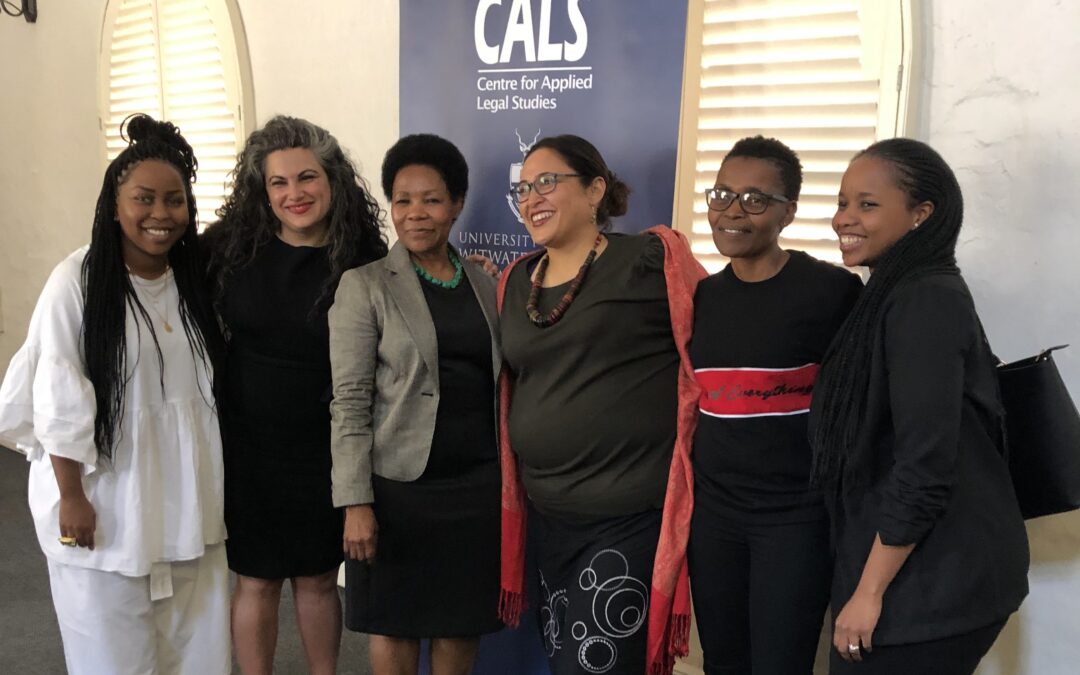
Today, ICJ Commissioner and former Constitutional Court Justice Justice Yvonne Mokgoro delivered the Keynote Address on Women’s Socio-Economic Rights at an event organized by ICJ and the Centre for Applied Legal Studies (CALS) at the University of Witwatersrand in Johannesburg.
The event, which marked Women’s Month in South Africa, was aimed at promoting the contributions of women human rights defenders and public interest lawyers in advancing women’s socio-economic rights in South Africa.
Justice Mokgoro, the first black women Justice of the Constitutional Court of South Africa, called on human rights defenders, lawyers and judges to recommit to fighting the feminization of poverty in South Africa.
“The indignities suffered by women exposed to poverty in our country are graphic, trauma-inducing and all encompassing. The dire need of women in our patriarchal society must be addressed,” she said.
With reference to the South African Constitution, the International Convention on Economic, Social and Cultural Rights and the Convention on the Elimination of All Forms of Discrimination Against Women, Justice Mokgoro implored judges and lawyers in particular to “engender” the full range socio-economic rights by defining their content in a manner which takes into account the impact of human rights violations on women and girls.
The event featured a panel discussion , which included remarks by Tumelo Matlwa and Amelia Rawhani-Mosalakae, lawyers at CALS, who identified who a range of legal provisions and banking practices relating to matrimonial property have a disproportionate impact on women’s rights to property.
The presentation concluded that “poverty is a form of economic violence that has a disproportionate effect on women”.
Fatima Shabodien, Strategy Director at Raith Foundation, focused her presentation on sexual harassment faced predominantly by women in the public interest law sector in South Africa.
Quoting from Indian author Arundathi Roy, Shabodien observed that “there is no such thing as the voiceless only the deliberately silenced”.
Women, she added, “have not been silent in this sector they have been deliberately silenced”. She urged human rights defenders and public interest lawyers to take allegations of sexual harassment seriously.
Nonhle Mbuthuma, a community activist from the Amadiba Crisisis Committee described the difficulties of being a women human rights defender: “I am a human rights activist and it is a difficult task. You are called a lot of names for challenging the government.
All the names don’t scare me – my mother gave me only one name”, she said. Referring to a judgment of the High Court affirming her community’s right to free, prior and informed consent before the commencement of a mining development, she concluded: “I am very proud of the Constitution and judges who said we have the right to give consent to [whether] mining [can take place]. Not the government or big companies. The people.”
She emphasized that women were, and continue to be, at the forefront of the struggle for access to land in South Africa.

Aug 8, 2019 | News
The ICJ called today on Italy and Malta to cooperate to swiftly provide a place of safety for the disembarkment of the 121 migrants, likely including asylum seekers, on board the Open Arms vessel.
Open Arms rescued 123 people that left Libya and were on a situation of distress in international waters, and has been navigating seven days on the Central Mediterranean Sea in search of a place of safety for disembarkment.
Currently Italy and Malta (the nearest States) and Spain (the flag State) have not granted access to their territorial waters.
“When a boat is conducting an operation of rescue it is the duty under international law for neighbouring States to provide a place of safety,” said Massimo Frigo, ICJ Senior Legal Adviser.
“The situation on the boat, with also 30 children and two babies, is rapidly deteriorating and it is of the utmost urgency to allow for their disembarkment,” he added.
“The refusals and lack of cooperation by Italy, Malta and Spain is in contravention of their obligations under the law of the sea,” said Frigo.
“These States should open their harbours and the EU should work hard to ensure that resettlement is ensured so as to relieve pressure from them.”
Relevant provisions of international law include: UN Convention on the Law of the Sea (Article 98); International Convention for the Safety of Life at Sea (SOLAS), Annex, Chapter V; International Convention on Maritime Search and Rescue.
Contact:
Massimo Frigo, ICJ Senior Legal Adviser, t:+41 22 979 3805 ; e: massimo.frigo(a)icj.org
Aug 6, 2019 | News
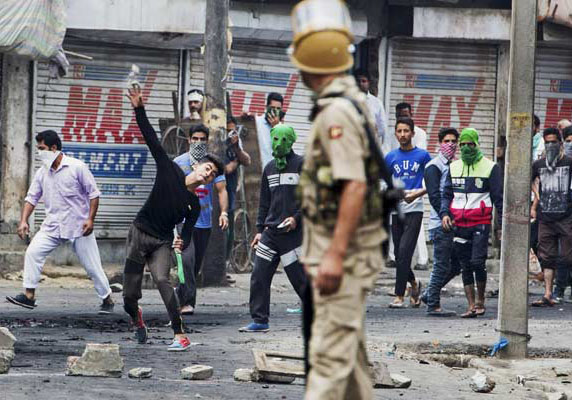
The Indian Government’s revocation of the autonomy and special status of Jammu and Kashmir violates the rights of representation and participation guaranteed to the people of Jammu and Kashmir under the Indian Constitution and in international law and is a blow to the rule of law and human rights in the state and in India, the International Commission of Jurists (ICJ) said.
The Indian Government today pushed through a legislative package effectively eliminating the special status accorded to Jammu and Kashmir under Article 370 of the Indian Constitution, which granted autonomy to Jammu and Kashmir and limited the Indian Government’s legislative powers in the state. The move was preceded by a communication blackout, arbitrary detention of political leaders, banned movement and meetings of people, and increased military presence, purportedly to quell protests.
“The Indian Government has pushed through these changes in contravention of domestic and international standards with respect to the rights of people in Jammu and Kashmir to participate and be adequately represented, accompanied by draconian new restrictions on freedoms of expression, assembly, and travel, and with an influx of thousands of unaccountable security personnel,” said Sam Zarifi, ICJ’s Secretary General.
“The legality of the Indian Government’s measures to eviscerate Article 370 will certainly be tested before the Indian judiciary, which should look closely at the serious violations of proper legislative and Constitutional processes,” Zarifi said. “All eyes are now on the Indian Supreme Court to fulfill its functions in defense of the rights of people of Jammu and Kashmir and the Indian Constitution,” Zarifi said.
The procedure adopted to revoke the special status and autonomy of Jammu and Kashmir appears to be incompatible with judgments and observations of high courts and the Indian Supreme Court, who have clarified that the President of India would need the agreement of the government of Jammu and Kashmir to change its status. The amendments effectively render Article 370 inoperative in its entirety, without meeting the Constitutional requirements in spirit.
The revocation of special status of Jammu and Kashmir without agreement from the state government is contrary to the spirit of Article 370, which envisioned that the will of the people would be taken into account in decisions relating to state’s special status and autonomy.
“The Indian Government rushed through the amendments at a time when Jammu and Kashmir was under the direct rule of the Central Government, and the state legislature was dissolved. As the government of Jammu and Kashmir is not empowered to discharge its functions, it has not been consulted, let alone agreed to the revocation,” Zarifi said.
“The lack of consultation with the people of Kashmir is all the more troubling because the changes pushed by the Indian Government will materially affect Kashmir’s status as India’s only Muslim-majority state, including special rights for citizens of the state to own and hold land and seek education and employment,” Zarifi said.
The Office of the United Nations High Commissioner for Human Rights (OHCHR) in successive reports in 2018 and 2019 has noted that the region of Jammu and Kashmir, under dispute between India and Pakistan since 1947, has been the theatre of grave human rights violations, including unlawful killings, enforced disappearances and torture, committed with impunity by Indian security forces.
The UN High Commissioner for Human Rights in both reports recommended to the Indian Government to “fully respect the right of self-determination of the people of Kashmir as protected under international law”.
The ICJ condemns the legislative steps taken with respect to Jammu and Kashmir, and calls on the Indian Government to implement in full the UN High Commissioner’s recommendations, including respecting the right to self-determination of people of Jammu and Kashmir, and to respect, protect and fulfill the human rights of people in Jammu and Kashmir.
Contact
Sam Zarifi, ICJ Secretary General,e: sam.zarifi(a)icj.org, t: 41 (0)22 979 38 00
India-Jammu Kashmir and Autonomy-News-press release-2019-ENG (full story with additional information, in PDF)

Aug 5, 2019 | News
The ICJ today raised concerns that the proposed Zambian Constitutional Amendment Bill 2019 may negatively impact the independence of the judiciary in Zambia.
The proposed amendments to provisions regarding disciplinary measures and processes against judges and the composition of the Supreme Court and Constitutional Court are particularly concerning, according to a statement by a group of organisations including the ICJ.
“The ICJ implores the President of Zambia and the Zambian legislature to ensure the alignment of all constitutional amendments with international human rights standards on the independence of the judiciary, the rule of law and the separation of powers,” said Arnold Tsunga, the ICJ’s Africa Director.
The joint statement calls upon the President of Zambia and the Zambian legislature to ensure that the proposed constitutional changes are in line with international human rights standards.
According to such standards, individual judges ‘may be dismissed only on serious grounds of misconduct or incompetence, in accordance with fair procedures ensuring objectivity and impartiality set out in the constitution or the law’. Examples include ‘incapacity or behaviour that renders them unfit to discharge their duties’ and ‘physical or mental incapacity that prevents them from undertaking their judicial duties.’
Moreover, disciplinary proceedings regarding judicial officers must be held by an institution independent of the executive and the legislature to secure the independence of the judiciary.
Article 143 (a) of the Zambia Constitution currently provides that ‘a judge shall be removed from office on the following grounds: (a) a mental or physical disability that makes the judge incapable of performing judicial functions; (b) incompetence; (c) gross misconduct; or (d) bankruptcy.’
However, the Amendment Bill worryingly replaces subsection (a) and allows for removal when a judicial officer is ‘legally disqualified from performing judicial functions.’
Furthermore, the proposed amendment does not set out the circumstances or infractions that could lead to the ‘legal disqualification’ leaving the provision open to abuse and in violation of the principle of legal certainty and the rule of law.
“The amendment introduces unnecessary obscurity and vagueness to the Constitution, which, in turn, increases the risk of judges being removed on politically motivated grounds and threatens the rule of law,” Tsunga added.
Another worrying aspect of the proposed amendment is the suggested changes to Article 144 of the Constitution transferring the authority to determine whether judicial officers are removed from the Judicial Complaints Commission to a Tribunal Appointed by the President.
The amendment allows for the possibility of a Tribunal staffed by members of the executive and the legislature, further heightening concerns about threats to judicial independence.
“It is vital that the processes and procedures for the removal of judicial officers in Zambia are constrained in terms of tightly defined constitutional provisions, overseen by independent decision makers without improper influence by the executive and the legislature,” said Tsunga.
The full statement is available here.
The statement is signed by:
Commonwealth Lawyers Association (CLA)
Commonwealth Magistrates’ and Judges’ Association (CMJA)
International Bar Association’s Human Rights Institute (IBAHRI)
International Commission of Jurists (ICJ)
Judges for Judges (J4J)
Lawyers’ Rights Watch Canada (LRWC)
Southern Africa Litigation Centre (SALC)
Aug 2, 2019
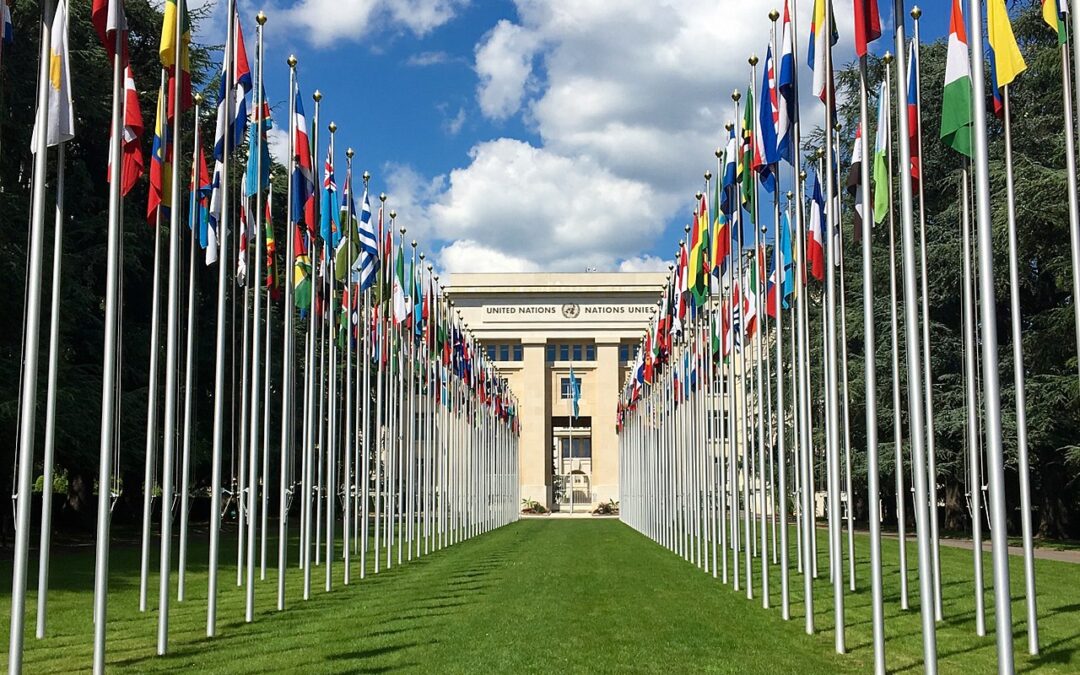
The ICJ has joined with some 40 other international, African and Burundian NGOs to call on States to extend the mandate of the UN Commission of Inquiry on Burundi, at the September session of the Human Rights Council.
The joint open letter to all delegations ahead of the upcoming 42nd ordinary session of the UN Human Rights Council, highlights the important work and impact of the Commission of Inquiry (CoI) to date, in a context of gross, widespread and systematic human rights violations, which may furthermore escale ahead of elections in 2020.
The NGOs call on Council Members and Observers to, at a minimum, support the extension of the mandate of the CoI on Burundi for a further year, until September 2020, in accordance with the Council’s responsibility to address situations of human rights violations, including gross and systematic violations, to advance accountability, to prevent further human rights violations and abuses, and to follow up on its actions and recommendations.
The Council should also request the CoI to prepare a report with a specific focus on elections and risk factors of human rights violations and abuses and to present it during an enhanced interactive dialogue at the Council’s 43rd session in March 2020.
The letter can be downloaded in full, in PDF format, in English or French.