Jun 6, 2019 | News
The ICJ today called on the Zimbabwe government to stop using the highly criticized offence of “subverting a constitutional government” to punish human rights defenders for the exercise of fundamental freedoms protected under international and Zimbabwe Law.
George Makoni, Tatenda Mombeyarara, Gamuchirai Mukura Nyasha Mpahlo, Farirai Gumbonzvanda, Rita Nyamupinga, and Stabile Dewa, referred to by the media as the “Zimbabwe 7”, have been charged under section 22 of the Criminal Law (Codification and Reform) Act [Chapter 9:23] and will face a bail hearing, due to be heard at the High Court in Harare on 6 and 7 June 2019.
“The Zimbabwean authorities need to desist from the growing practice of abusing the offence of subverting a constitutional government as an instrument to persecute human rights defenders through abuse of the legal system,” said Arnold Tsunga, ICJ’s Africa Director.
“The oppressive and retaliatory use of law by government violates the rule of law and human rights as guaranteed in the Zimbabwean Constitution as well as in regional and global human rights treaties to which Zimbabwe is a State party,” he added.
The ICJ has previously shown that the law of subversion in Zimbabwe has been used often against HRDs who peacefully exercise their fundamental freedoms, with no single conviction to date.
The law violates the African Charter on Human and Peoples Rights and the International Covenant on Civil and Political Rights (both of which Zimbabwe is a party to), including the rights of persons to freedom of opinion and expression (Article 9 African Charter on Human and People’s Rights; article 19 ICCPR), freedom of assembly (article 11 ACHPR; 21 ICCPR) article, freedom of association (article 10 ACHPR; article 22 ICCPR), and the right to political participation (article 25 ICCPR).
The UN Declaration on Human Rights defenders, adopted by the UN General Assembly, requires that States afford particular protection to human rights defenders (HRDs) who exercise these rights.
HRDs charged with this offence can face a sentence of up to 20 years in prison and have often been denied bail for some periods, in contravention of international law, which provides that charged persons should generally not be held in pre-trial detention. Such prolonged pretrial detention effectively serves as pre-trial punishment of suspects.
“Criminal law must never be used as a means to silence opposition or persecute human rights defenders, which also necessarily has a chilling on others who perform critical human rights work. It is important that the police do not arrest to investigate but they must investigate before they arrest,” said Tsunga.
Contact
Arnold Tsunga, ICJ’s Africa Director, t: +27716405926 ; e: arnold.tsunga(a)icj.org
Background
Four human rights defenders, George Makoni, Tatenda Mombeyarara, Gamuchirai Mukura and Nyasha Mpahlo were arrested on 20th May 2019 upon arrival at Robert Mugabe International Airport, Harare from the Maldives where they had attended a workshop on human rights work. Law enforcement officials alleged in the charge sheet that,” during the workshop, the four had received training on the use of small weapons, how to mobilize citizens to turn against the government and to engage in acts of civil disobedience and or resistance to law during anticipated national protests. Law enforcement agents confiscated the HRDs’ laptops and cell phones. In similar fashion, Social Justice and Girls’ Rights advocate Farirai Gumbonzvanda was arrested upon arrival at the Harare airport on 21 May. Charged with the offence of subverting constitutional government as defined in section 22(2)(a)(iii) of the Criminal Law (Codification and Reform) Act, all five persons remain in custody as their application for bail in the High Court of Zimbabwe has been postponed to 7th June 2019.
In related circumstances, Director of Female Prisoners Support Trust, Rita Nyamupinga and Stabile Dewa, Director of Women’s Academy for Leadership and Political Excellence were arrested on 28 May 2019 soon after they arrived at the Harare airport. They were taken to Harare Central Police Station without having an opportunity to consult their lawyers. Both women have also been charged with subverting constitutional government and have been remanded in custody since 29th May 2019 pending their bail hearing today.
Jun 4, 2019 | News
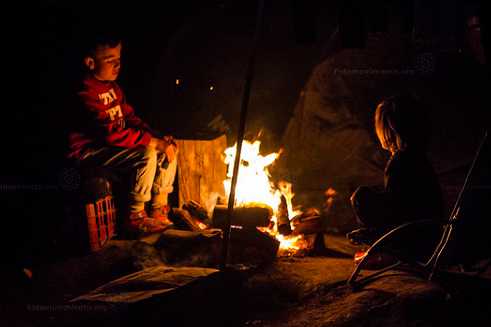
The ICJ, European Council on Refugees and Exiles (ECRE) and the Greek Council for Refugees (GCR) welcome the decision of the European Committee on Social Rights that Greece should take “immediate measures” to protect the rights of migrant children as required under the European Social Charter.
The Greek government should now take urgent steps to comply with the Committee’s decision, to prevent serious and irreparable injury or harm to the children concerned, including damage to their physical and mental health, and to their safety.
The Committee’s decision, issued on 23 May, requires the government to immediately provide migrant children with appropriate shelter, food, water, education and medical care; to remove unaccompanied migrant children from detention and from Reception and Identification Centers (RICs) at the borders, place them in suitable accommodation for their age and appoint effective guardians.
The Committee noted that “immediate measures” were exceptional, but found that they were necessary in this case given the government’s failure to dispel serious concerns about the gravity and urgency of the situation of migrant children in Greece.
This decision is in response to a collective complaint brought before the Committee by ICJ, ECRE and GCR, alleging systemic violations of migrant children’s rights on mainland Greece and the North Eastern Aegean islands. The complaint catalogues the numerous ways in which Greece has failed to fulfill its obligations under the European Social Charter to protect the rights migrant children, leaving them in conditions of squalor, insecurity and violence.
In addition to indicating immediate measures, the Committee found the complaint itself admissible. The complaint now awaits examination and determination on the merits by the European Committee on Social Rights.
Read the statement on the decision here in English and in Greek and full complaint here.
Jun 3, 2019
Today, the ICJ and IBAHRI filed their submission to the UN Human Rights Committee on the compliance by Tajikistan with its obligations under the International Covenant on Civil and Political Rights.
During its 126th session, from 1 to 26 July 2019, the Human Rights Committee will examine the Republic of Tajikistan’s implementation of the provisions of the International Covenant on Civil and Political Rights, including in light of the State Party’s third periodic report.
In the context of this review, the International Bar Association Human Rights Institute (IBAHRI) and the International Commission of Jurists (ICJ) bring to the Committee’s attention some issues of concern pertaining to Tajikistan’s implementation of the ICCPR. Their submission highlights a number of concerns relating to the lack of independence of the legal profession in Tajikistan, and its consequences for the protection of certain Covenant rights. In particular, the submission addresses:
(a) the legal profession’ lack of independence;
(b) the authorities’ interference with lawyers’ legitimate activities;
(c) restrictions placed on lawyers’ access to their clients and the rights of the defence; as well as
(d) specific cases of concern.
These concerns are relevant for the Committee’s evaluation of the Republic of Tajikistan’s implementation of the right to a fair trial under article 14 ICCPR, as well as other Covenant rights, including for example the State’s obligations under articles 2, 7, 9, and 10 of the ICCPR.
See the submission here: ICCPR report_Tajikistan_IBAHRI_ICJ_2019_eng.

Jun 3, 2019 | Artículos, Noticias
La CIJ rechaza nuevo acto gubernamental, que atenta en contra de la búsqueda de justicia en casos de graves violaciones a los derechos humanos cometidas durante el conflicto armado interno.
En esta ocasión, se trata de afectar el Archivo Histórico de la Policía Nacional (AHPN), que desde el año 2005 se encarga del resguardo, conservación y custodia de los archivos de la extinta Policía Nacional, que fuera una de las instituciones nacionales causantes de graves violaciones a los derechos humanos, durante el conflicto armado interno.
Después de más de una década de contar con el apoyo de la Comunidad Internacional, este archivo se considera una fuente importantísima para conocer la verdad de lo sucedido durante el conflicto armado interno y para lograr aclarar investigaciones y entablar acciones de persecución penal por parte del Ministerio Público y para lograr que los documentos del AHPN estén protegidos; para ello, el Ministerio de Gobernación, firmó con el Ministerio de Cultura de Deportes, el convenio interinstitucional 24-2009, con validez hasta el 30 de junio de 2019.
Sin embargo, el Ministro de Gobernación expresó recientemente, que no renovará el convenio interinstitucional 24-2009, en el cual acordaron conjuntamente con el Ministerio de Cultura de Deportes, la permanencia de los documentos del AHPN en el edificio en el que fueron encontrados, propiedad del MINGOB, por el plazo de 10 años, plazo que vence el 30 de junio de 2019; de esta forma, podría afectar no solo el acceso a la información contenida en el AHPN, argumentando que dicho archivo, contiene información de seguridad nacional, sino que también el resguardo y utilización como prueba importante, de dichos documentos en los juicios respectivos.
Nuevamente, esta posición del Ministro de Gobernación se puede considerar un “fraude de ley”, ya que el acto de no renovar el convenio interinstitucional 24-2009 persigue como resultado un acto prohibido por el ordenamiento jurídico nacional e internacional, como lo es debilitar la lucha contra la impunidad.
La CIJ lamenta que esta nueva posición del Ministro de Gobernación, se una a la de no renovar el mandato de la Comisión Internacional contra la Impunidad (CICIG) y al debilitamiento de la actual Policía Nacional Civil y a la llamada implementación de una “agenda regresiva”, que ha venido impulsando el Congreso de la República.
Ramón Cadena, Director de la CIJ para Centroamérica expresó: “Las decisiones del Ministro de Gobernación en torno al AHPN puede llegar a representar un grave retroceso y denegación de justicia a las víctimas de graves violaciones a los derechos humanos, cometidas durante el conflicto armado interno.
De llegar a implementarse pueden considerarse como un incumplimiento de las obligaciones del Estado de Guatemala en materia de verdad, justicia y medidas de no repetición.”
Cabe recordar que los estándares internacionales resaltan la necesidad de preservar los archivos que contengan información sobre las graves violaciones a los derechos humanos, así como la obligación de poner a disposición del público, dicho archivos.
Así, el Conjunto de Principios actualizado para la protección y la promoción de los derechos humanos mediante la lucha contra la impunidad, establece en su principio 14 que “El derecho a saber implica la necesidad de preservar los archivos.
Se deberán adoptar medidas técnicas y sanciones penales para impedir la sustracción, la destrucción, la disimulación y la falsificación de los archivos, entre otras cosas, con el fin de que queden impunes los autores de violaciones de derechos humanos y/o del derecho humanitario”.
Jun 3, 2019 | Адвокаси, Юридические заявления
МКЮ и IBAHRI подали в Комитет ООН по правам человека свое представление о соблюдении Таджикистаном своих обязательств по Международному пакту о гражданских и политических правах.
В рамках своей 126-ой сессии, которая пройдет с 1 по 26 июля 2019 г., Комитет по правам человека («Комитет») рассмотрит вопрос о реализации Республикой Таджикистан положений Международного пакта о гражданских и политических правах (МПГПП или Пакт), в том числе в свете третьего периодического доклада государства-участника.
В контексте рассмотрения указанного вопроса Институт по правам человека Международной ассоциации адвокатов (IBAHRI) и Международная комиссия юристов (МКЮ) считают необходимым обратить внимание Комитета на ряд вопросов, вызывающих беспокойство с точки зрения реализации Таджикистаном положений МПГПП. Настоящее представление выделяет ряд проблем, связанных с недостаточной независимостью юридической профессии в Таджикистане, а также последствия данной ситуации с точки зрения защиты ряда прав, гарантированных Пактом. В частности, в настоящем представлении рассматриваются следующие вопросы:
(а) отсутствие независимости юридической профессии;
(b) вмешательство властей в законную деятельность адвокатов;
(с) ограничения в отношении доступа адвокатов к доверителям и прав защиты; а также
(d) конкретные примеры проблемных ситуаций.
Указанные проблемы имеют отношение к оценке Комитетом реализации Республикой Таджикистан права на справедливое судебное разбирательство по статье 14 МПГПП, а также иных прав, гарантированных Пактом, в том числе, к примеру, обязательств государства по статьям 2, 7, 9 и 10 МПГПП.
Текст представления доступен здесь:
Tajikistan-ICCPR-Advocacy-non legal submission-2019-RUS