Dec 20, 2018 | News
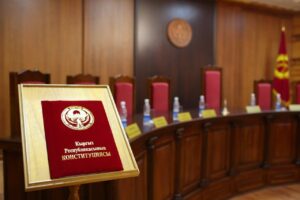
The ICJ today called on Hungarian President Áder János not to sign the Law on the Administrative Courts but to send it back to the Parliament for further review and discussion. In particular, the law should be re-considered in light of international standards as well as the forthcoming reasoned opinion of the Venice Commission, the ICJ said.
On 12 December, the Hungarian Parliament adopted, in a highly contested process, the Law on the Administrative Courts (T/3353). The vote took place despite the fact that an opinion of the Council of Europe Venice Commission on the new law is still awaited.
The administrative courts will have significant competencies in matters of public interest concerning the action of the executive and other public institutions. They will have jurisdiction over “administrative disputes” as well as other issues transferred to their jurisdiction by law (Article 1(3)).
The ICJ is concerned at the significant powers conferred on the executive over the proposed Administrative Courts, in particular the Minister of Justice’s powers in the appointment of administrative judges (Article 72(2)) as well as the powers of the Minister of Justice and of the Parliament in regard to the annual budget of these courts. Under the new law, judges of the administrative courts would be appointed by the Minister of Justice on the advice of a newly-established National Administrative Judicial Council, with the Minister having a discretion to reject the first-ranked nominee of the Council. In a context where the independence of the Hungarian judiciary is already being eroded, this role of the executive raises significant concerns regarding the independence of the new courts.
The new law comes at a time when measures put in place by the Hungarian government since 2011 have led to a severe deterioration of the rule of law and human rights, by weakening Constitutional rights protection, limiting judicial independence, suppressing independent media, civil society and academic institutions, and imposing arbitrary laws that violate the human rights of marginalized sections of society.
The ICJ recalls that judicial independence and the separation of powers are the bedrock of the rule of law. International law, including the International Covenant on Civil and Political Rights and the European Convention on Human Rights, and other international standards such as the United Nations Basic Principles on the Independence of the Judiciary, reflect the fundamental role of an independent judiciary in protecting human rights and the rule of law.
Dec 19, 2018 | News
The Transgender Persons (Protection of Rights) Bill, 2018 fails to protect the human rights of transgender people as guaranteed under the Indian constitution and international law and standards and must not be passed in its present form by the Rajya Sabha.
The Bill was passed by the Lok Sabha (Lower House of Indian Parliament) on 17 December, 2018. The next step in order for the Bill to progress is for the Rajya Sabha (Upper House of Indian Parliament) to pass it.
The ICJ considers this Bill to be a missed opportunity to address the serious problem of discrimination against transgender people in India. The ICJ calls for the rejection of its problematic parts by the Rajya Sabha and for the elaboration of a revised Bill in line with rights upheld by the Indian Supreme Court and India’s obligations under international law.
The 2018 Bill, if adopted, would effectively deny to most transgender people their right to self-identification, by providing an overly complex bureaucratic procedure requiring an individual’s application for a transgender certificate to be approved by two different sets of authorities, despite earlier widespread condemnation of this process by the transgender community.
“As the ICJ reported in 2017, the transgender community is continually harassed, stigmatized, and abused by the police, judges, their family and society. This Bill, if it becomes law would further serve to facilitate and compound human rights violations against people from a marginalized community”, said Ian Seiderman, Legal and Policy Director at the ICJ.
The Bill has also introduced mandatory sex reassignment surgery for those transgender people who seek to identify their gender within the binary (male/female) framework. This requirement would be in contravention of the Supreme Court’s judgment in NALSA v. UOI, which guarantees the right to self-identification without the need for medical intervention.
Further, the Bill would collapse all offences against transgender people into one provision which includes offences ranging from “sexual abuse” and “physical abuse”, to “compel[ing] or entice[ing] a transgender person to indulge in the act of begging” among others. These crimes have not been defined in the Bill.
It also would provide for the same six-month to two-year sentence for all offences against transgender people. In some cases, this could be a significantly lighter sentence than when the same crime is committed against others, including discriminated groups such as cis-gendered women, under the general criminal law. In addition, the identification of “beggary” as an offence under the Bill is problematic since for many transgender people in the country, it remains one of the limited livelihood opportunities.
Further, the Bill does not address the question of reservations in employment and education despite specific directions by the Supreme Court in NALSA v. UOI.
Lastly, while the proposed law guarantees the right to non-discrimination to transgender people against persons, state and private sector bodies, it does not provide a definition of discrimination, nor does it provide an enforcement mechanism for ensuring transgender people’s right to non-discrimination.
The ICJ calls on the Rajya Sabha to substantially revise the problematic provisions of the Bill before resubmitting it for parliamentary consideration.
Background
The provisions identified above do not accord with protection of the rights of transgender people to equality, non-discrimination, equal protection of the law, enshrined in the Constitution and international law, including the International Covenant on Civil and Political Rights, which India ratified in 1979. Further, they are incompatible with international standards such as the Yogyakarta Principles on the application of international human rights law in relation to sexual orientation and gender identity.
The ICJ, as part of SAATHII Vistaara Coalition, earlier this year drafted a Briefing Paper on India: Legal and Jurisprudential Developments on Transgender Rights, SAATHII Vistaara Coalition. The paper analyses in detail the domestic judicial developments on transgender rights as well as the legislative process undertaken until the Transgender Persons (Protection of Rights) Bill, 2018 was passed on 17 December 2018.
Additional Reading Material
- ICJ Briefing Paper on The Transgender Persons (Protection of Rights) Bill, 2016, analyzes the 2016 Bill, its shortcomings, and India’s international obligations, as it is the basis of the 2018 Bill.
- ICJ Briefing Paper on Implementation of NALSA Judgment discusses the 2014 April NALSA decision that affirmed that transgender people have the right to decide their self-identified gender. The paper analyses the responsibilities placed on Indian authorities, gaps in implementation, and India’s relevant international law obligations.
Contact
Maitreyi Gupta (Delhi), ICJ International Legal Advisor for India
e: maitreyi.gupta(a)icj.org, t: +91 7756028369

Dec 19, 2018 | News
According to information published in the Official Gazette, the government of Guatemala has ordered that eleven more officials and two family relatives from the CICIG leave the country within 72 hours from the time of issuing the notification. However, no official communication using the usual diplomatic channels has yet been sent to the CICIG.
In September 2018, the head of the CICIG, Commissioner Ivan Velasquez, was banned from re-entering the country and the government stated it would not renew the CICIG mandate after September 2019.
Ramon Cadena, the ICJ Director for Central America, stated: “The ICJ considers this new measure is designed to hinder criminal investigations against high-level government officials accused of corruption.”
The CICIG acts as a special prosecutor in serious corruption and other criminal cases and carries out investigations to identify responsible parties. The persons who have been asked to leave the country are the lawyers, police and prosecutors who are investigating important corruption cases, such as the ‘The Line’ case, in which the former President and Vice-President have been charged and other cases including those within the National Police.
Ramon Cadena continued: “It cannot escape anyone’s attention that one of the CICIG investigators who has been asked to leave the country was the person who is responsible for the corruption case involving the General Property Registry, that allegedly implicates both the son and brother of President Jimmy Morales”.
This new measure by the government seriously affects the rule of law and constitutes a flagrant violation of article 10 (4) of the agreement establishing the CICIG signed between Guatemala and the UN, which states:
“The Government agrees to provide to CICIG and its personnel the security necessary for the effective completion of CICIG’s activities throughout Guatemala, and to protect the personnel of CICIG, whether national or international, from abuse, threats, reprisals or acts of intimidations, in virtue of their status as personnel of, or their work for CICIG.”
Cadena added: “It is deeply regrettable that it is precisely the CICIG staff acting in high-impact cases who are being targeted by these measures because of their work to combat corruption and impunity. It is clear that the government is seeking to divert the CICIG from its path.”
Furthermore, according to the UN Basic Principles on the Role of Lawyers, No 16: “Governments shall ensure that lawyers: a) are able to perform all of their professional functions without intimidation, hindrance, harassment or improper interference… “ Cadena continued, “The ICJ is deeply concerned that several CICIG personnel affected by these measures are lawyers and members of the Guatemalan Bar Association. Their work is being hindered and the Guatemalan Bar Association should take action to defend its members.”
“Guatemala should comply with international human rights law and ensure that acts of corruption that impact human rights are fairly and impartially investigated and prosecuted. The presence of the CICIG contributes to ensuring that Guatemala complies with its international obligations” he added.
Cadena concluded by stating: “With these arbitrary measures, the Constitutional order of Guatemala and its democratic institutions are undermined. The Guatemalan State should ensure effective measures are taken against corruption, consistent with its international human rights and other obligations. The CICIG is one of the most successful examples of work to end corruption and impunity. The Guatemalan authorities should support the CICIG instead of hindering its work and obstructing justice.”

Dec 19, 2018 | Comunicados de prensa, Noticias
Una nueva acción se inicia en contra de la Comisión Internacional contra la Impunidad en Guatemala (CICIG). En este caso, se ordena el abandono del país de once funcionarios de dicha comisión, en un lapso de setenta y dos horas, a partir de la notificación respectiva. La Comisión Internacional de Juristas (CIJ) considera que este acto va dirigido específicamente a afectar los procesos penales que se siguen por actos de corrupción en contra de funcionarios de alto nivel.
La CICIG actúa como querellante adhesivo de diferentes procesos por casos de corrupción y otros delitos o bien realizan investigaciones para identificar a posibles responsables. A las y los abogados, policías o investigadores que participan en estos procesos (Caso La Línea, Caso relacionados con corrupción en la Policía Nacional Civil, Caso Comisiones Paralelas y otros igualmente importantes) son precisamente a quienes se les está intentando expulsar del país.
Ramón Cadena, Director de la CIJ para Centroamérica expresó al respecto: “Llama poderosamente la atención que uno de los investigadores de la CICIG que está siendo afectado con esta medida es el investigador legal a cargo del caso de corrupción en el Registro General de la Propiedad, en el que están siendo procesados el hijo y hermano del Presidente de la República.”
Este nuevo acto gubernamental afecta seriamente la justicia y el Estado de Derecho. Constituye además, una violación flagrante del artículo 10 numeral 4. del Convenio firmado entre el Estado de Guatemala y la Organización de las Naciones Unidas para el establecimiento de la Comisión Internacional contra la Impunidad en Guatemala, que contempla el compromiso del Gobierno de Guatemala en los términos siguientes:
“Velar por que ningún personal de la CICIG, sea personal nacional o internacional, sea de modo alguno objeto de abusos, amenazas, represalias o intimidaciones, en virtud de su estatus de personal de la CICIG o por el desempeño de su trabajo como personal de la CICIG.”
“Lamentamos mucho que sea precisamente a los funcionarios de la CICIG que actúan como querellantes adhesivos en casos de alto impacto, a quienes se les esté imponiendo un castigo por el desempeño de sus funciones en la lucha contra la corrupción e impunidad. Está claro que las autoridades del Gobierno de Guatemala, siguen haciendo todo lo posible para apartar a la CICIG de su camino”, expresó Cadena.
A esto hay que agregar que la función de la abogacía está siendo afectada. De esta manera, se está obstaculizando el trabajo de abogados debidamente colegiados y por lo tanto, los Principios Básicos de la ONU sobre la función de los abogados, también están siendo violados. Según el principio número 16 literal a): “Los gobiernos garantizarán que los abogados: a) puedan desempeñar todas sus funciones profesionales sin intimidaciones, obstáculos, acosos o interferencias indebidas…”
Cadena afirmó: “La CIJ expresa su profunda preocupación por el hecho de que varios de estos funcionarios son abogados y que actúan como querellantes en los casos de alto impacto que apoya CICIG. El Colegio de Abogados de Guatemala debería actuar en defensa de sus agremiados.”
“Por otro lado, el Estado de Guatemala debe cumplir con los enunciados del derecho internacional de los derechos humanos y debe investigar y castigar casos de corrupción. La presencia de la CICIG en el país contribuye a que el Estado de Guatemala cumpla con sus obligaciones internacionales”, Cadena agregó.
El Director de la CIJ para Centroamérica concluyó afirmando: “Con estas medidas arbitrarias se está causando una alteración del orden constitucional en Guatemala, que afecta gravemente el orden democrático. Como Estado, Guatemala debe asegurar que se tome medidas efectivas para combatir la corrupción, consistentes con sus obligaciones internacionales en relación a los derechos humanos entre otras obligaciones. La CICIG es una de las experiencias más exitosas de combate contra la corrupción en el mundo; por ello, las autoridades del Estado de Guatemala deberían apoyarla, en vez de obstaculizar su trabajo y de esa forma, obstruir la justicia.”

Dec 18, 2018 | Multimedia items, News, Video clips
Lawyers from a diverse range of countries, including Egypt, Lebanon, Nepal, the Philippines, Tunisia and Uzbekistan have identified the many barriers that women typically face in accessing justice in their countries.
Common trends and practices identified included socio-economic marginalization, gender stereotypes and patriarchal attitudes.
The observations came during two training workshops held in Geneva in June and September to coincide with sessions of the UN Human Right Council and UN Committee on the Elimination of Discrimination against Women. The workshops were part of a project on enhancing women’s access to justice through UN human rights mechanisms, supported by the Permanent Mission of the Federal Republic of Germany to the UN in Geneva.
A lawyer from Uzbekistan noted that domestic violence flourishes in states where common attitudes hold that this is an internal matter to be resolved within families.
A particular concern raised in respect of Lebanon was discrimination linked to transference of nationality, where Lebanese women married to a foreigner cannot pass their nationality to their children but Lebanese men married to a foreigner can.
Meera Maharjan, lawyer from Nepal, noted the cultural, educational and economic barriers that impede women from being able to take on decision-making roles and the impact this has on the exercise of their rights.
Malaysian lawyer Yvonne Lim explained that the women who are often in need of access to justice tend to be from the lower rungs of the socio-economic strata and lack the resources, support and basic awareness about their human rights and the remedies that may be available to them.
During the September training session the ICJ organized a side event to the 39th session of the Human Rights Council on ‘applying a women-centred approach to access to justice’ to further explore these issues.
Secretary-General Saman Zia-Zarifi moderated the event and panelists included:
• ICJ Commissioner Justice Sanji Monageng, former Vice-President of the International Criminal Court
• Lisa Gormley, Research Officer for the Centre for Women, Peace and Security at the London School of Economics
• Meera Maharjan, Nepalese lawyer and legal officer for Resilience for Sustainable Women Empowerment (RISE)
You can watch a recording of the event, and interviews with two of the workshop participants below.
https://www.facebook.com/ridhglobal/videos/565112000574216/UzpfSTQ3MTQ2NzA4NjIyMTM3MzoyMjEyNTUzNjc1NDQ2MDMw/