Nov 17, 2023
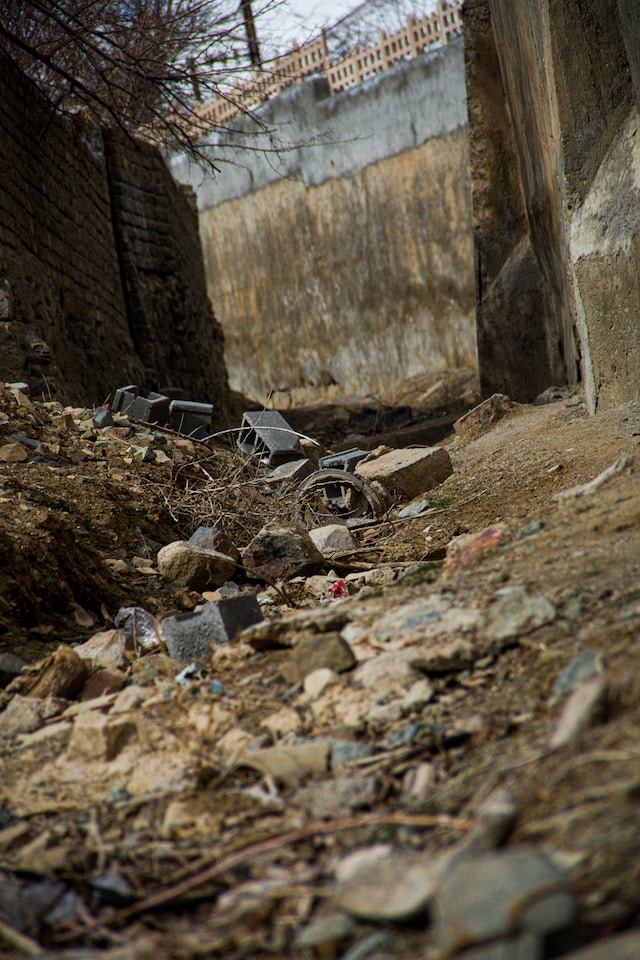
Photo by Amir Shiri on Unsplash
LEGAL BRIEFER: States’ Duty to Prevent Genocide under the 1948 Genocide Convention
This legal briefer focuses on States’ duty to prevent genocide under international law. However, the International Commission of Jurists (ICJ) notes that there are credible allegations of other serious crimes under international law having been committed in the course of the ongoing hostilities in Israel and the Occupied Palestinian Territory, including the Gaza Strip.
Given the scale and severity of Israel’s ongoing attacks on Gaza, reports that Israel has now killed over 11,000 civilians, including over 4,000 children, in the Gaza Strip since 7 October 2023 and recent warnings, including by a group of independent United Nations human rights experts on 16 November that, “grave violations committed by Israel against Palestinians in the aftermath of 7 October, particularly in Gaza, point to a genocide in the making”, the ICJ urges States to fulfil their international legal obligations, including in particular under the Convention on the Prevention and Punishment of the Crime of Genocide of 1948 (hereafter the Genocide Convention), and take immediate action to prevent acts of genocide in Gaza.
Acts of Genocide
Article II of the Genocide Convention defines the crime of genocide outlining its two main elements:
(1) specific underlying acts, namely, the material elements of the crime; and
(2) specific intent, namely, the mental state required of the person committing the material elements of the crime.
The Genocide Convention and the Rome Statute of the International Criminal Court (ICC) outline the following five specific underlying acts, any one of which may be constitutive of the crime of genocide:
- Killing members of a national, ethnical, racial or religious group;
- Causing serious bodily or mental harm to members of the group;
- Deliberately inflicting on the group conditions of life calculated to bring about its physical destruction in whole or in part;
- Imposing measures intended to prevent births within the group; and
- Forcibly transferring children of the group to another group.
The ICC Elements of Crimes define the term “conditions of life” as including but not limited to “deliberate deprivation of resources indispensable for survival, such as food or medical services, or systematic expulsion from homes.”
The ICJ considers that the complete blockade of Gaza – coupled with depriving civilians of water, food, medicine, electricity and fuel – may constitute the specific underlying act of “deliberately inflicting on the group conditions of life calculated to bring about its physical destruction”, as per the genocide definition set out above.
Some of the underlying acts of the crime of genocide may also simultaneously constitute the material elements of certain war crimes or crimes against humanity.
Specific Intent
The distinguishing feature of genocide is that the perpetrator commits the specific underlying acts of the offence with the specific intent to destroy, in whole or in part, a national, ethnical, racial or religious group, as such.
The Palestinian people constitute a national group for the purposes of the Genocide Convention. The Palestinians of the Gaza Strip constitute a substantial proportion of the Palestinian nation.
The ICJ is concerned that certain statements by senior officials and politicians in Israel disclose evidence of what may be characterised as intent to destroy Palestinians of the Gaza Strip.
For example, on 9 October, the Israeli Defence Minister Yoav Gallant said, “I have ordered a complete siege on the Gaza Strip. There will be no electricity, no food, no fuel, everything is closed. We are fighting human animals and we act accordingly.” On 10 October, the head of the Israeli Army’s Coordinator of Government Activities in the Territories (COGAT), Maj. Gen. Ghassan Alian, addressed a message directly to Gaza residents: “Human animals must be treated as such. There will be no electricity and no water, there will only be destruction. You wanted hell, you will get hell”. On 13 October, the Israeli Defence Minister said: “Gaza won’t return to what it was before. We will eliminate everything.”
The ICJ is concerned that such statements by officials responsible for Israel’s ongoing military offensive in Gaza, with their expressed emphasis on siege on the Gaza Strip, on depriving the population of essential needs, on the total destruction and elimination of everything and everyone in the Gaza Strip and on evacuation – taken together with well-documented patterns of reported crimes under international law in Gaza, such as indiscriminate bombardment of densely populated areas, including airstrikes resulting in extensive civilian casualties, attacks on medical units, transports and personnel, refugee camps, evacuation routes, humanitarian corridors and other vital civilian infrastructure, collective punishment and the forced transfer of over one million Palestinians from northern Gaza to the south – disclose evidence sufficient to trigger the duty of each State to take reasonable action to seek to prevent acts of genocide in Gaza.
The Duty to Prevent
Notwithstanding individual criminal liability for acts of genocides outlined above, under international law, States have a duty to prevent acts of genocide.
It is not necessary for a definitive determination that genocide is taking place. As the International Court of Justice (“the Court”) held in Bosnia v Serbia, a “State’s obligation to prevent, and the corresponding duty to act, arise at the instant that the State learns of, or should normally have learned of, the existence of a serious risk that genocide will be committed.” The ICJ considers, based on the above, that such threshold has been reached in Gaza, triggering States’ duty under international law to take measures to prevent acts of genocide.
The totality of destruction by Israeli forces against Palestinians in Gaza, as documented in numerous open sources, should guide an assessment by the international community and individual States as to whether genocide is underway or whether there exists a serious risk of genocide, triggering the corresponding duty to prevent it. States’ legal obligation to prevent genocide is not a passive obligation, but rather, according to the Court in Bosnia v Serbia, “implies that each State party must assess whether a genocide or a serious risk of genocide exists”.
When the Court issued its order for provisional measures in The Gambia v. Myanmar in January 2020, it held that there was no requirement of demonstrating violations of obligations under the Genocide Convention, but rather that “the acts complained of … are capable of falling within the provisions of the Genocide Convention”.
The Genocide Convention imposes a minimum legal obligation on States to each take reasonable action to contribute toward preventing genocide, a duty that extends extraterritorially and applies regardless of whether any one State’s actions alone are sufficient to prevent genocide. The Court in Bosnia v. Serbia held that States with strong political links to the State concerned have a greater duty to use their influence in this regard, as the duty to prevent varies from State to State depending on its:
“capacity to influence effectively the action of persons likely to commit, or already committing, genocide. This capacity itself depends, among other things, on the geographical distance of the State concerned from the scene of the events, and on the strength of the political links, as well as links of all other kinds, between the authorities of that State and the main actors in the events”.
The Court also held that, “if the State has available to it means likely to have a deterrent effect on those suspected of preparing genocide, or reasonably suspected of harbouring specific intent, it is under a duty to make such use of these means as the circumstances permit”. Third State responsibility may be incurred if a State manifestly fails to take all measures that are within its power to prevent acts of genocide, and that might contribute to preventing such acts.
Recommendations
In light of the above, the ICJ calls upon States who have a position of influence with the Government of Israel – particularly the United States – to take all reasonable measures within their power to prevent genocide in Gaza, including by calling for a ceasefire, taking steps to ensure the lifting of the siege and preventing the displacement of Palestinians outside the Gaza Strip, and to discontinue any military assistance, including arms sales, that would enable or facilitate genocide, and other crimes under International law.
The ICJ urges other States to immediately act under article VIII of the Genocide Convention, by calling on the competent organs of the United Nations, including the UN Security Council, and particularly the UN General Assembly, to take urgent action under the UN Charter appropriate for the prevention and suppression of any acts of genocide in Gaza, including calling for an immediate ceasefire.
The ICJ also calls on UN Independent International Commission of Inquiry on the Occupied Palestinian Territory, including East Jerusalem, and Israel, and the Office of the Prosecutor of the ICC, to rapidly expand their investigations in relation to the situation in Palestine to include genocide.
Contact:
Said Benarbia, Director, ICJ Middle East and North Africa Programme, email: said.benarbia@icj.org
Katherine Iliopoulos, Legal Adviser, ICJ Middle East and North Africa Programme, email: katherine.iliopoulos@icj.org
Nov 16, 2023 | Advocacy, News
The International Commission of Jurists (ICJ) strongly condemns the Government of Pakistan’s decision to expel over 1.4 million Afghan nationals, including unregistered refugees, forcibly removing them to a country where many, especially women and girls, have a well-founded fear of persecution. The organization is deeply concerned for the safety and well-being of people who have been left with no choice but to flee under threats of arrest or deportation, as cases of arbitrary arrests and detention, and instances of ill-treatment, are reported.
“The forcible removal of Afghans is particularly egregious considering the ongoing humanitarian crises in Afghanistan and the current political climate following the Taliban takeover. Returning anyone there, especially women and girls, is fraught with risks. The expulsion of refugees and asylum seekers violates the principle of non-refoulement under international law, which prohibits the forcible removal of anyone to a country or place where they would have a well-founded fear of persecution, such as a real risk of being tortured or otherwise ill-treated or other serious human rights violations”, said Melissa Upreti, ICJ Asia Director.
Estimates indicate that there are over 1.4 million undocumented Afghans in Pakistan, in addition to some 1.3 million registered Afghan refugees. On 3 October 2023, the Government of Pakistan announced its plans to repatriate “illegal foreigners.” This was followed by a circular stating that Afghan Citizen Cardholders and those with Proof of Registration would be exempted. The deadline for Afghan nationals to leave Pakistan was 1 November, and has recently been extended to 31 December 2023, following significant international pressure. However, there have been reports of these exemptions not being applied and Afghans facing increasing harassment and pressure from local authorities.
UN agencies have called attention to the possibility of a serious escalation in human rights violations resulting from the separation of families and deportation of minors as the Pakistani authorities implement their plans. Since August 2021, the UN High Commissioner for Refugees has urged States not to return Afghan nationals to Afghanistan given that the country continues to be affected by recurrent conflict, instability and climate-induced disasters.
The ICJ and its partners have documented detailed evidence of gender-based persecution of women and girls in Afghanistan, as a direct result of the mounting draconian restrictions on their human rights and freedoms since the Taliban takeover in August 2021, in a joint report released earlier this year with Amnesty International. In light of the gravity and systematic nature of the restrictions and prohibitions that women and girls face in Afghanistan, the two human rights organizations recommended that all Afghan women and girls outside Afghanistan should be considered prima facie refugees and granted international protection.
“There is no evidence of a change in the de facto authority’s mode of governance, which centres on the oppression of women and girls and severe deprivation of their fundamental rights. If anything, there is evidence that the situation for women and girls in Afghanistan has become worse. Expelling Afghan nationals from Pakistan, especially women and girls, along with their families and forcing them back to Afghanistan puts them at a real risk of persecution or other forms of serious harm for which no legal recourse is available in Afghanistan,” added Upreti.
Citing concerns about a breach of international law obligations by Pakistan, a number of UN Special Rapporteurs have said in a joint letter that, “the lack of domestic asylum laws and procedures does not absolve States of their obligations to uphold the principles of non-refoulement under international human rights and customary law.”
Pakistan’s National Commission for Human Rights (NCHR) has urged the Government to refrain from conducting the deportations and called for adherence to relevant provisions in national and international law pertaining to refugees.
Thousands of Afghans have already crossed the border and with the recent postponement of the deadline to leave the county, the fate of over a million Afghans hangs in the balance. The ICJ calls on the Government of Pakistan to immediately:
- Rescind the expulsion order, cease further deportations and harassment of Afghans and comply instead with its international law obligations,
- Create pathways for women, girls and their families who have been forced to leave under the order to safely return.
- Consult with civil society, members of the Afghan community living in Pakistan, the NCHR, and relevant international organizations in the development of appropriate policies.
Contact:
Raquel Saavedra, ICJ Legal Adviser, e: raquel.saavedra@icj.org
Nov 14, 2023
Today, the International Commission of Jurists (ICJ) and partners have called on the EU General Affairs Council to make full use of procedure under Article 7.1 in addressing concerns about Hungary and Poland. They advocate for strong stance in defending EU values.
The International Commission of Jurists, Amnesty International , Human Rights Watch, International Federation of Human Rights, Open Society Foundations, Reclaim, Reporters Without Borders and Transparency International EU are sharing specific points in their letter this time especially on Hungary, expressing a regret that a state of play is being organized instead of a hearing and highlighting some serious recent shortcomings.
Read the full letter here.
Nov 7, 2023 | News
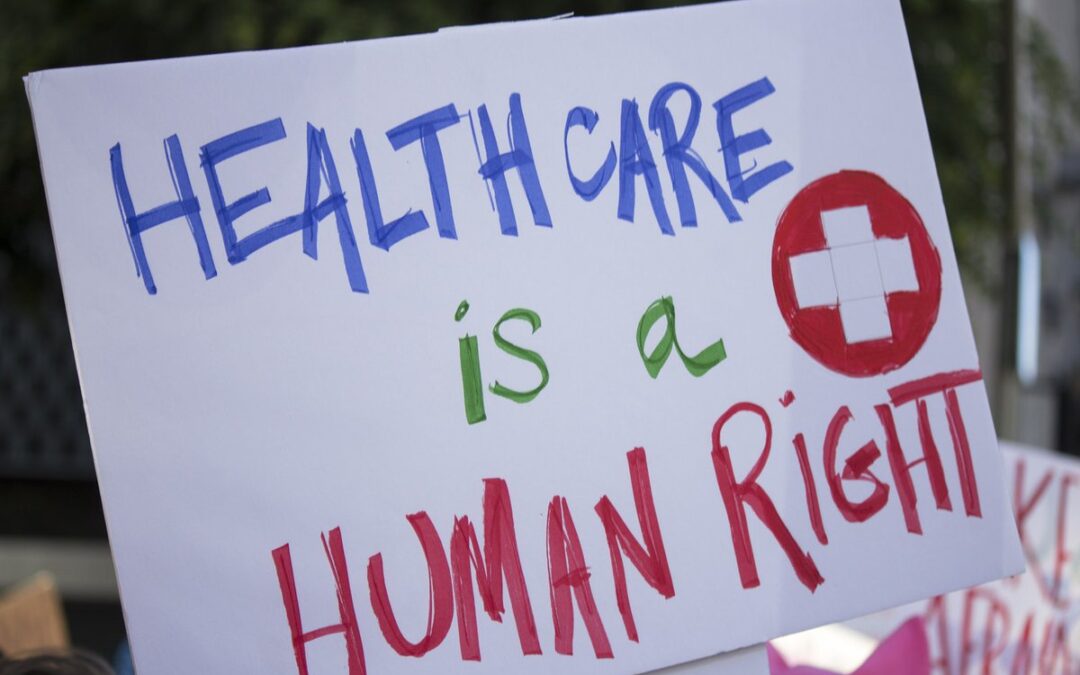
World Health Organization (WHO) member states should push for clear commitments to human rights protections in the text of a draft “pandemic treaty” being negotiated on November 6-10, four rights organizations said today. The current draft fails to enshrine core human rights standards protected under international law, most notably the right to health and the right to benefit from scientific progress, therefore risking a repeat of the tragic failures during the Covid-19 pandemic.
The WHO’s Intergovernmental Negotiating Body is meeting to debate the draft of a new international instrument on pandemic prevention, preparedness, and response with the goal of addressing the failures of the Covid-19 response and preventing another global crisis. However, rather than acting on the lessons learned from the Covid-19 pandemic, the current proposed text offers a weak framework for ensuring that countries will be accountable for maintaining a rights-compliant response to future pandemics.
This is the position taken by four international human rights groups: Amnesty International, the Global Initiative for Economic, Social and Cultural Rights, the International Commission of Jurists, and Human Rights Watch.
“Creating a new pandemic treaty could offer an opportunity to ensure that countries are equipped with proper mechanisms for cooperation and principles to prevent the level of devastation wrought by the Covid-19 pandemic, and the rights violations resulting from government responses,” said Tamaryn Nelson, legal advisor at Amnesty International. “By failing to ground the treaty in existing human rights obligations and inadequately addressing human rights concerns arising during public health emergencies, governments risk repeating history when the next global health crisis hits.”
Existing international human rights law and standards should be explicitly referenced throughout the document, recognizing that they are core to an effective and equitable pandemic response, the organizations said. It should also incorporate developments in international human rights standards reflected, for example, in principles developed by the Global Health Law Consortium and the International Commission of Jurists in the “Principles and Guidelines on Human Rights and Public Health Emergencies,” and the Civil Society Alliance’s “Human Rights Principles For a Pandemic Treaty.”
“A global health architecture that puts profit-driven considerations at the center of global health decisions exacerbated the unprecedented magnitude of illness and death from Covid-19,” said Julia Bleckner, senior health and human rights researcher at Human Rights Watch. “Certain higher-income countries effectively hoarded vaccines and blocked a proposal to share the vaccine recipe, while those in lower-income countries died waiting for a first dose. An equitable and effective response to any future pandemic should ensure states carry out their obligation to, individually and collectively, regulate private entities to prevent them from undermining human rights.”
Human rights standards clearly establish that scientific progress must be available, accessible, acceptable, and of good quality to all individuals and communities. Governments must take steps to ensure that everyone can access the applications of scientific progress without discrimination.
The new treaty should reiterate that governments are required under international human rights law to strictly monitor and regulate private actors when they are involved in financing and the delivery of healthcare, ensuring that all their operations contribute to the full realization of the right to health. But the draft fails to incorporate the human rights framework on strictly monitoring and regulating private actors in healthcare, as well as preventing any harmful impact of private actors’ involvement in healthcare on governments’ capacity to effectively respond to pandemics. For example, the new text includes that state parties should “promote collaboration with relevant stakeholders, including the private sector” without clear human rights guardrails.
The Covid-19 pandemic was both a health and human rights catastrophe. Without clear and binding commitments to human rights law and standards leading up to and during public health emergencies, the crisis gave way to a ripple effect of human rights violations and abuses. Governments enforced lockdowns, quarantines, and other restrictions in ways that often were disproportionate to the public health threat and undermined human rights. In some cases, governments weaponized public health measures to discriminate against marginalized groups and target activists and opponents.
Yet the draft treaty fails to give governments virtually any guidance on how to comply with international law and standards, requiring any restrictions of human rights in the context of such emergencies to be evidence based, legally grounded, non-discriminatory, and necessary and proportionate to meet a compelling human rights threat. To the extent that restrictions undermine full enjoyment of economic and social rights, social relief measures to ensure the protection of those rights should also be put in place.
“The fact that the current draft of the text does not even repeat well established and existing standards in regard to legality, necessity, and proportionality of response measures is as disappointing as it is confounding. The result is a treaty that does not reflect the experience of individuals throughout the world who were subjected to human rights abuses in the name of public health response,” said Timothy Fish Hodgson, senior legal advisor at the International Commission of Jurists. “It is imperative that the negotiated text explicitly includes the necessary safeguards required under international human rights law when responding to a public health threat.”
The Covid-19 pandemic underscored the need for a social safety net and the consequences of failing to substantively account for the social and commercial determinants of health. While the current draft recognizes the ways in which the Covid-19 pandemic exacerbated inequalities, it does not explicitly commit governments to effectively protect the rights that guarantee key underlying determinants of health, including social security, food, education, housing, water, and sanitation, without discrimination.
In order to genuinely achieve its commitments to the principle of equity “at the centre of pandemic prevention, preparedness and response,” the Intergovernmental Negotiating Body should include in the draft explicit language on the obligations to proactively protect the rights of persons from marginalized groups, and to emphasize the human rights protections against discrimination.
“The global health response to the Covid-19 pandemic prioritized profit over the lives of the world’s most marginalized,” Rossella De Falco, programme officer on the right to health at the Global Initiative for Economic, Social and Cultural Rights said. “If countries are serious about preventing the inequities and loss of the Covid-19 pandemic, they will commit to a rights-aligned agreement for future pandemics.”
Please note, the text above is a shortened version of this full statement, adapted by the ICJ for its website.
For more information:
For the International Commission of Jurists, Timothy Fish Hodgson: +27-82-8719-905; or timothy.hodgson@icj.org.
For Human Rights Watch, in Nairobi, Julia Bleckner: +1-917-890-4195; or blecknj@hrw.org.
For the Global Initiative for Economic, Social and Cultural Rights: +39-393-819-5332 or rossella@gi-escr.org
For Amnesty International, Tamaryn Nelson: tamaryn.nelson@amnesty.org
Background:
Previous joint statement of ICJ, AI, GI-ESCR and HRW (24 February 2023) available here.
ICJ and Global Health Law Consortium “Principles and Guidelines on Human Rights in Public Health Emergencies” available here.
Civil Society Alliance for Human Rights in the Pandemic Treaty “Human Rights Principles for a Pandemic Treaty” (11 April 2022) available here.
Civil Society Alliance for Human Rights in the Pandemic Treaty “Why States Must Ensure Full, Meaningful and Effective Civil Society Participation in developing a Pandemic Treaty” (11 April 2022), available here.
Download the full statement
Nov 7, 2023 | News
Arbitrary restrictions and excessive government control.
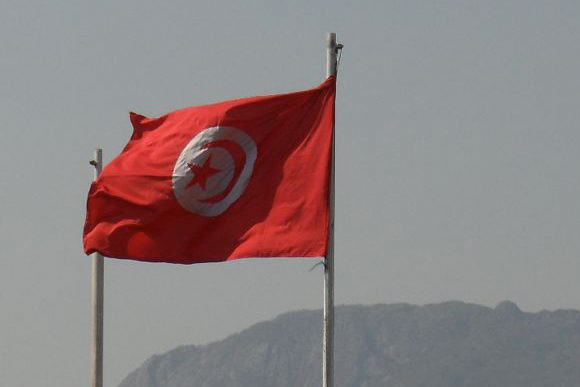
(Tunis, 7 November 2023) – The draft law on associations submitted by 10 parliamentarians to the Tunisian Parliament on 10 October 2023 would violate the right to freedom of association and endanger civic space in Tunisia if adopted as currently formulated, 8 rights groups said today.
البيان باللغة العربية على هذا الرابط
The draft law, if passed, would replace Decree-Law 2011-88 on associations, which enabled the emergence of a diverse civil society in the aftermath of Tunisia’s 2011 revolution. As presently drafted, it threatens to end more than a decade of work by independent groups. According to official data, over 24,000 civil society organizations are currently registered with the Tunisian authorities, although it remains unclear how many are active today. If adopted in its current form, the draft law would grant the government pervasive control and oversight over the establishment, activities, operations and funding of independent groups, which are one of the last remaining counterweights to President Kais Saied’s autocratic rule.
While the text claims to maintain a notification system for establishing new associations, it would actually introduce a thinly disguised registration system, granting a department under the Prime Minister’s Office the authority to deny a group the right to operate within a month after of registering (article 9.2). Without being required to provide any reasons, the government would also be able to petition the judiciary at any time requesting the cancellation of an association’s registration (article 9.3).
In addition, new organizations would not be allowed to operate until a government-headed “administration of associations” publishes a notice in the Official Gazette, leaving open the possibility of denying a group’s registration. At present, under Decree-Law 2011-88 on associations, an association may begin operating once the representative of the association has notified its registration to the Official Gazette.
Under the draft law, international organizations would be required to obtain prior authorization to register from the Foreign Affairs Ministry (articles 8 and 19). Without setting conditions or deadlines for any such a process, the draft law empowers the Ministry to issue temporary authorizations and to revoke and suspend them at its own discretion (article 20). As a result, international organizations may be arbitrarily denied registration for any reason and without due process, the groups said.
In 2012, the United Nations Special Rapporteur on the rights to freedom of peaceful assembly and association’s report on best practices related to the right to freedom of association recommended a “notification procedure”, rather than a “prior authorization procedure” requesting the authorities’ approval to establish an association as a legal entity. The 2017 Guidelines on Freedom of Association and Assembly in Africa of the African Commission on Human and Peoples’ Rights stipulate that “registration shall be governed by a notification rather than an authorization regime, such that legal status is presumed upon receipt of notification” and that the administrative body overseeing registration should carry out its functions “impartially and fairly.”
The draft law’s preamble states that associations must operate in accordance with the “principles of national orientation,” and must not “violate laws related to good morals,” “disturb public security,” “undermine the unity of the national territory and the republican system,” or “violate national sovereignty.” Such terms are vague, imprecise, arbitrary and overly broad and, as such, do not comply with the principle of legality. As a result, these concepts are open to broad interpretations and the authorities could use them to justify arbitrarily restricting or closing associations that displease them, the groups said.
The draft law places national organizations under “the supervision and control” of the Ministry relevant to their main area of work and international organizations under Prime Minister Office’s supervision (article 6). The current draft law does not specify what such “supervision and control” entail. It also requires associations to inform the pertinent Ministry of any planned activities (article 13).
The draft law also gives rise to concern about surveillance as it empowers the authorities to establish a digital database of associations and volunteers (article 14).
If the draft law is adopted in its current form, then the authorities may interpret its many vague provisions to ban or dissolve associations. The establishment of associations on religious or ethnic grounds is forbidden in the draft law. In addition, the qualification that a group’s work must be “voluntary” may be interpreted as a ban on paid labour by non-profit groups (article 2). The draft text further provides that the Prime Minister’s Office can “automatically” dissolve any group “suspected of terrorism” or that has a “terrorist background” (article 24), without judicial review.
This text also dangerously conflates associations with unions (article 15), which are currently separately governed by the Tunisian labour law, without providing any specific guarantees or sufficient protections for union rights.
National associations would have to obtain prior approval from the Prime Minister’s Office before receiving foreign funding (article 18). Associations that fail to comply with this requirement would risk immediate suspension or dissolution (article 24).
The draft law requires all existing associations to “rectify” their situation in accordance with the new law within a year of the law’s publication.
In 2013, the Special Rapporteur on the right to freedom of peaceful assembly and of association’s report affirmed that a civil society organization’s access to funding from domestic, foreign and international sources was “an integral part of the right to freedom of association.” Requiring groups to get prior government approval to receive foreign funding without specifying the grounds for refusal is inconsistent with the principle of legality and constitutes an arbitrary interference with the right to freedom of association.
Under Article 38 of the Guidelines on Freedom of Association and Assembly in Africa, governments may neither impose blanket bans on foreign funding for civil society groups nor require prior government authorization to receive it.
Decree-Law 2011-88 on associations provides sufficient guarantees and procedures to ensure that civil society groups’ funding be transparent and law compliant, the groups said. The draft law’s foreign funding provisions are open to abuse and may be used to punish and reject funding for organizations critical of the government.
In February 2022, a draft law on associations prepared by the executive that threatened human rights safeguards was leaked and denounced as restrictive by the Tunisian civil society. Shortly after, on 24 February 2022, President Saied announced his intention to “prevent foreign funding to associations.” In light of this, UN experts expressed concern over the then draft law in a communication to the Tunisian authorities in April 2022, to which the Tunisian government responded in June 2022, confirming their intention to amend Decree-law 88.
Since 25 July 2021, President Saied has dismantled Tunisia’s democratic institutions, undermined judicial independence, stifled the exercise of freedom of expression and repressed dissent.
Tunisia is obliged to respect, protect, promote and fulfill the right to freedom of association, guaranteed by Article 22 of the International Covenant on Civil and Political Rights and Article 10 of the African Charter on Human and Peoples’ Rights. Restrictions on the exercise of this right may be permissible only when they are prescribed by law and necessary in a democratic society; that is, using the least restrictive means possible and reflecting basic values of pluralism and tolerance.
“Necessary” restrictions must also be proportionate; that is, carefully balanced against the specific reason for imposing them in the first place. In addition, they may not be discriminatory, including on the grounds of national origin or political opinion or belief.
The Tunisian authorities should refrain from adopting the proposed draft law and, instead, should commit to safeguarding the right to freedom of association as enshrined in Decree-law 88 and under international human right law binding on Tunisia, the groups said. The authorities should ensure that associations are able to operate without political interference, intimidation, harassment or undue restrictions.
Signatories:
1-International Commission of Jurists (ICJ)
2-Euromed Rights
3-Human Rights Watch (HRW)
4-Avocats Sans Frontières (ASF)
5-Access Now
6-World Organisation Against Torture (OMCT)
7-Tahrir Institute for Middle East Policy (TIMEP)
8- International Service for Human Rights (ISHR)