Nov 1, 2023 | Committee on the Elimination of Racial Discrimination, Legal submissions, News, Treaty Bodies, Work with the UN
The International Commission of Jurists (ICJ) made a submission to the UN Committee on the Elimination of Racial Discrimination in view of the Committee’s examination of the Combined Ninth to Eleventh Periodic Reports of South Africa under Article 9 of the International Convention on the Elimination of All Forms of Racial Discrimination (ICERD). The submission focussed primarily on the treatment of non-citizens with reference to the 2019 National Action Plan and on South Africa’s violations of the right to access health care and treatment, the right to work, as well as on concerns around residence and humanitarian protection for Zimbabweans.
The following are among some of the recommendations featured in the submission, which ICJ addressed to the South African government, to tackle a number of violations of the ICERD:
- Enact legislation that permits trained attorneys who are non-citizen/non-permanent residents to be admitted into the South African legal profession. Remove unequal practices and policies that discriminate against non-citizens and deny or undermine their ability to work in their chosen profession. Promote and advance the rights to work, to free choice of employment, to just and favorable conditions of work, to protection against unemployment, to equal pay for equal work, to just and favorable remuneration;
- Acknowledge that, based on the demographics of South Africa’s migration trends, discrimination based on national origin and citizenship status carries a quality of xenophobia and racial discrimination and should be recognized as unconstitutional and a violation of South Africa’s obligations under the Convention;
- Halt the termination of the ZEP programme and institute a pathway toward permanent residency for the 178,000 Zimbabweans who have lived and worked in South Africa for over a decade under the ZEP programme; and
- Extend the ruling that found denying access to public healthcare for non-citizen mothers, lactating mothers and children under the age of six is unconstitutional so as to ensure that denial of access to public healthcare to any individual in South Africa is unconstitutional;
- Formalize the informal economy by ensuring that informal economy workers are catered for under labour, occupational health and safety, social protection and non-discrimination laws;
- Ensure that by-laws and regulations comply with the right to work and the right to non-discrimination in the South African Constitution and under the Convention.
The following organizations have endorsed this submission:
- Lawyers for Human Rights
- Section 27
- Centre for Applied Legal Studies
- Health Justice Initiative
- Kopanang Africa Against Xenophobia
- Solidarity Centre
- The Consortium for Refugees and Migrants in Southern Africa.
Download the submission
Oct 28, 2023 | Analysis briefs, News
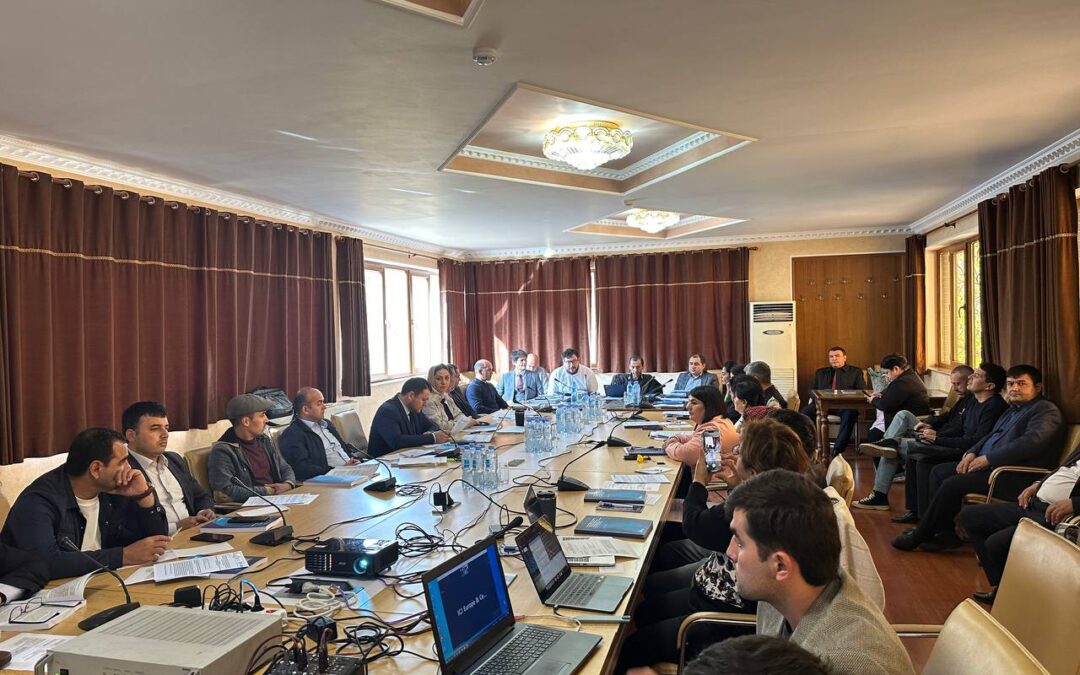
The ICJ, in cooperation with the Union of Lawyers of Tajikistan, the Office of the High Commission of Human Rights (OHCHR) Regional Office for Central Asia (ROCA), and the Organization for Security and Cooperation in Europe (OSCE) in Dushanbe convened a round table in Dushanbe, Tajikistan, titled “The Use of International Law and International Mechanisms by Lawyers in Tajikistan”.
Oct 27, 2023 | News
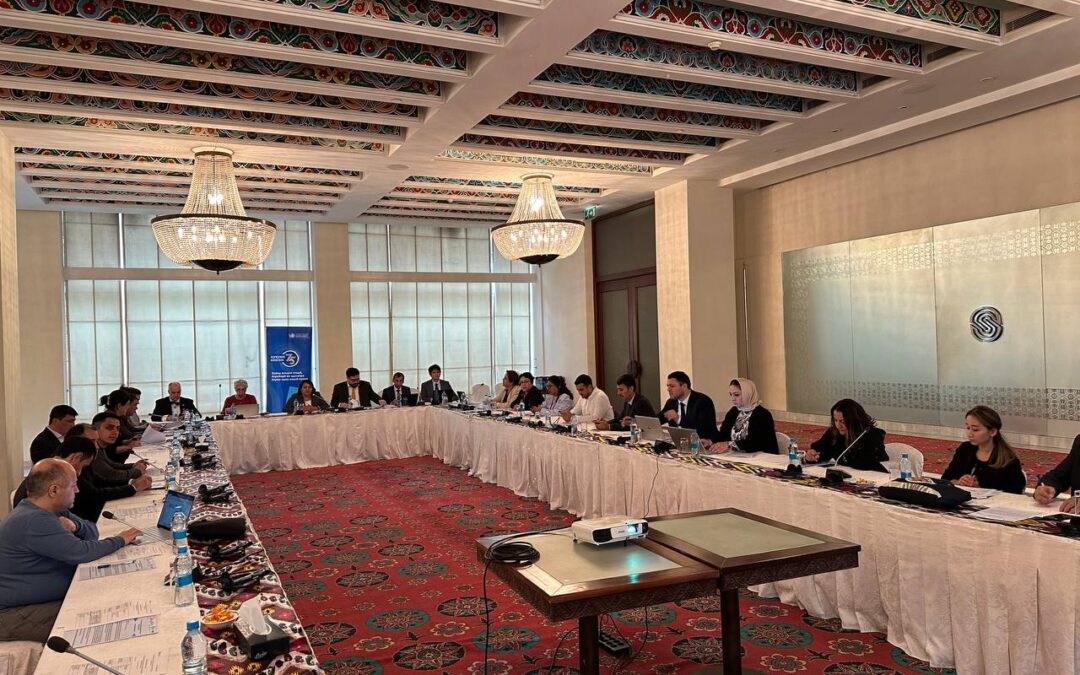
Today, the International Commission of Jurists (ICJ), in collaboration with the Supreme Court of the Republic of Tajikistan the Office of the High Commission of Human Rights (OHCHR) Regional Office for Central Asia (ROCA), and the Organization for Security and Cooperation in Europe (OSCE)in Dushanbe, has convened a round to discuss the application of international law by national courts. The event aimed to enhance the capacity of the judiciary to apply international standards in Tajikistan.
The discussions at the round table were focused on international human rights mechanisms and instruments, the binding nature of international treaties, and the current use of international law in Tajik courts. The participants examined these standards in relation to Tajikistan’s international treaty obligations, with the objective of improving the judiciary’s ability to effectively apply international jurisprudence and principles.
The event provided a platform for participants to discuss the practical implementation of international legal norms in the adjudication process in other national contexts and to share strategies to address the challenges of such integration. The round table also facilitated a critical analysis of the reforms necessary for effective use of international standards in national legal procedures.
The event addressed the broader implications of applying international law, considering its impact on the rule of law and public trust in the justice system. There was a clear consensus on the need to draft recommendations that could guide the judiciary in applying international law.
The round table discussions were notably informed by a recent ICJ report calling for comprehensive judicial reform in Tajikistan. Published in December 2020, the report titled “Neither Check nor Balance: the Judiciary in Tajikistan,” provided an in-depth analysis of the organisation and functioning of the judiciary in Tajikistan and its capacity to administer justice and uphold human rights.
The ICJ report’s conclusion that acquittals in criminal trials are exceedingly rare underscored a systemic failure to ensure judicial independence, thereby highlighting the urgency of the reform. It was recognized that for Tajikistan to fulfil its international legal obligations and to provide effective remedies for human rights violations, reforms must be initiated and practically implemented to safeguard against practices that undermine the independence of the judiciary.
Attachment: Briefing paper on RT for judges on Oct 27 2023 in Dushanbe
Oct 25, 2023
On 5 October, in response to a call for input from the UN Special Rapporteur on the right to adequate housing and the UN Special Rapporteur on extreme poverty, the International Commission of Jurists (ICJ) filed a submission on the decriminalization of homelessness and extreme poverty.
The ICJ’s submission is based, in part, on “The 8 March Principles”, a new set of legal principles elaborated by jurists for a human rights-based approach to criminal laws, including criminal offences proscribing conduct associated with sex, reproduction, drug use, HIV, homelessness and poverty, which the organization published earlier this year.
In this regard, the ICJ submission focuses, in particular, on Principle 21 on the criminalization of “life-sustaining activities in public places and conduct associated with homelessness and poverty”. In addition, the submission draws on the ICJ’s analysis of legal frameworks, including criminal laws, and practices that are at odds with general principles of criminal law, and that continue to violate the human rights of marginalized and disadvantaged persons, including in India, Malawi, Nepal, Pakistan, Sri Lanka, South Africa, Uganda and Zimbabwe.
The submission outlines various examples of laws criminalizing poverty or homelessness either explicitly or as result of their enforcement. Among those, the ICJ has recommended the repeal of:
- Laws criminalizing begging, public nuisance, soliciting and “living on the earnings of prostitution” in India.
- Laws criminalizing begging, vagrancy and public nuisance generally and laws criminalizing similar conduct by transgender persons, in particular, in Pakistan.
- Laws criminalizing vagrancy, “living on the earnings of prostitution” and soliciting in public in Sri Lanka.
- Laws criminalizing poverty by extensively prohibiting broad swathes of conduct described as public nuisance and laws criminalizing homelessness by prohibiting a wide range of conduct associated with unlawful occupations of land in South Africa.
- Laws criminalizing vagrancy and informal traders’ efforts to making a living in Uganda.
In its submission, the ICJ has also expressed concern about laws implemented in a manner that criminalizes informal traders’ efforts to make a living in Malawi and Nepal.
The ICJ’s submission recalls how international human rights law and standards require States to address the root causes of homelessness and poverty and to provide support to those experiencing them. States’ failure to do so often amounts to violations of their international human rights law obligations to realize a range of human rights, including the rights to adequate housing, work and social security, for example, under the International Covenant on Economic Social and Cultural Rights.
Under international human rights law, States are legally obliged to address the plight of those experiencing homelessness and those living in poverty. Very often, however, States not only fail to comply with these obligations but, making matters worse, subject people experiencing homelessness and poverty to harsh criminal law sanctions solely for conduct that is critical to their survival. In this context, the ICJ is particularly concerned that in many national jurisdictions people commonly continue to be imprisoned if they are unable to pay fines for minor “criminal infractions”.
Overall, decriminalizing homelessness and extreme poverty is not only consistent with general principles of criminal law and States’ legal obligations under international human right law, but it also a necessary step to begin addressing the root causes of the violations of economic and social rights of particularly marginalized persons. The ICJ submission underscores that, instead of enacting and enforcing criminal laws with a disproportionate impact on such persons, under international human rights law, States are required to provide all people with the opportunity to rebuild their lives and fully integrate into society while respecting their dignity and human rights.
Download:
[Submission] ICJ’s submission to the UN Special Rapporteurs
Background
The ICJ is a member of the Campaign to Decriminalize Poverty and Status, which is a coalition of organizations from across the world advocating for the repeal of laws that target people based on poverty, status or for their activism and campaigning against the overuse and abuse of criminal law across the world in keeping with international law and standards.
The 8 March Principles for a Human Rights-Based Approach to Criminal Law Proscribing Conduct Associated with Sex, Reproduction, Drug Use, HIV, Homelessness and Poverty, recently published by the ICJ, offer a clear, accessible, and operational legal framework and practical legal guidance for a variety of stakeholders, including judges and legislators, on the application of criminal law to conduct associated with consensual sexual activities, such as consensual same-sex sexual relations and sex work (Principles 16 and 17); the criminalization of sexual orientation, gender identity and gender expression (Principle 18); drug use (Principle 20); as well as homelessness and poverty (Principle 21). Principle 21, in particular, states that “no one may be held criminally liable for engaging in life-sustaining economic activities in public places[…] or on the basis of their employment or means of subsistence or their economic or social status…”
Additional resources:
- International Commission of Jurists, “Unnatural Offences”: Obstacles to Justice in India Based on Sexual Orientation and Gender Identity, February 2017, accessed at: https://www.icj.org/wp-content/uploads/2017/02/India-SOGI-report-Publications-Reports-Thematic-report-2017-ENG.pdf
- International Commission of Jurists, Sri Lanka’s Vagrants Ordinance No. 4 Of 1841: A Colonial Relic Long Overdue for Repeal, 2021, available at https://www.icj.org/wp-content/uploads/2022/01/Sri-Lanka-Briefing-Paper-A-Colonial-Relic-Long-Overdue-for-Repeal-2021-ENG.pdf
- International Commission of Jurists “The 8 March Principles for a Human Rights-Based Approach to Criminal Law Proscribing Conduct Associated with Sex, Reproduction, Drug Use, HIV, Homelessness and Poverty” (8 March 2023), available: https://icj2.wpenginepowered.com/wp-content/uploads/2023/03/8-March-Principles-Report_final_print-version.pdf
- International Commission of Jurists, Pakistan: Transgender Persons (Protection of Rights) Act, 2018 : A briefing paper (March 2020), available : https://icj2.wpenginepowered.com/wp-content/uploads/2020/03/Pakistan-Transgender-Advocacy-Analysis-brief-2020-ENG.pdf
- International Commission of Jurists, Sri Lanka’s Vagrants Ordinance No. 4 of 1841: A Colonial Relic Long Overdue for Repeal : A briefing paper (December 2021), available: https://www.icj.org/wp-content/uploads/2022/01/Sri-Lanka-Briefing-Paper-A-Colonial-Relic-Long-Overdue-for-Repeal-2021-ENG.pdf
Oct 24, 2023 | Advocacy, News, Statements, Work with the UN
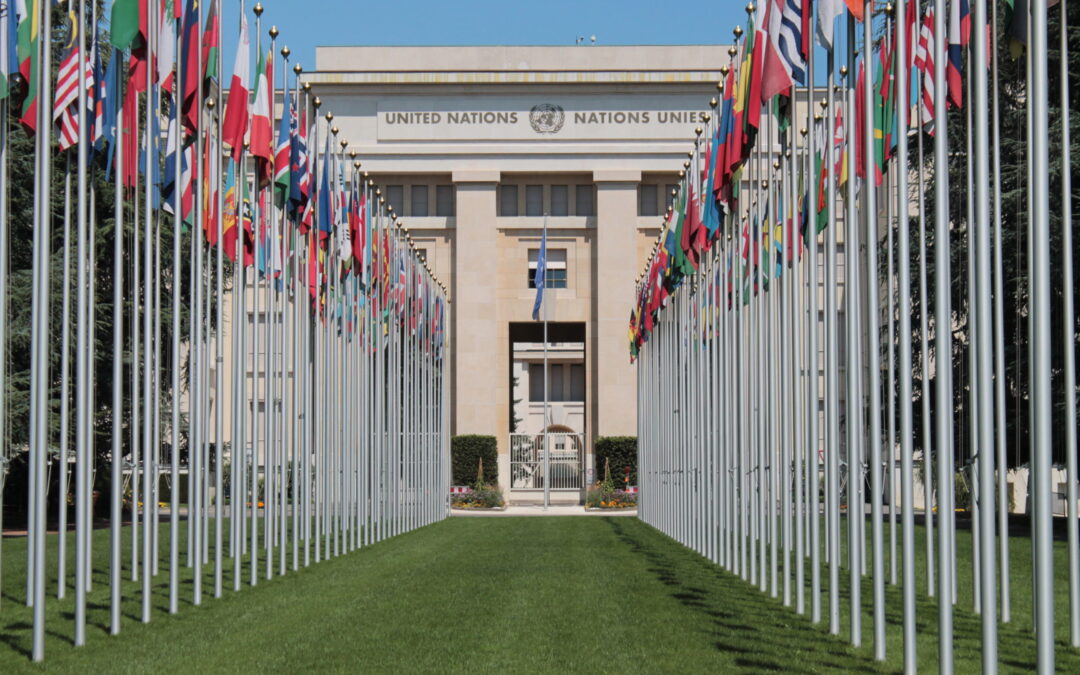
A week of negotiations started at the United Nations in Geneva yesterday to enhance the international legal framework to regulate business enterprises, especially transnational corporations, and increase accountability for human rights abuses and violations linked to their activities. The ICJ has been actively participating in the previous sessions of these negotiations in the last nine years and is committed to pursue its constructive contribution to the debate. Read our statement below.
“Thank you, Mr. Chair.
The International Commission of Jurists (ICJ) congratulates you on your election as the Chairperson-Rapporteur.
The ICJ acknowledges the efforts made by the Chairmanship to propose a revised and streamlined text on the basis of the various inputs received and consultations organized since the 8th session of this working group. We appreciate that this work has resulted in a more concise and clearer text in several places, which, in some respects, may better facilitate the negotiations ahead of us this week. It brings more internal coherence to the text and avoid repetitions that were affecting previous iterations. We also acknowledge that there are varying and divergent positions among States on the more difficult issues under discussion in this process and that you have proposed some compromise formulations to bridge the gaps.
We, however, regret that some critical provisions have disappeared from the revised draft in front of us at this session. The ICJ is particularly concerned that articles concerning prevention, liability and jurisdiction have been stripped of key elements that served to clarify international human rights law with regard to accountability for human rights abuses and violations in the context of business activities; and to ensure access to justice for the victims of such abuses and violations including through access to effective judicial remedies.
The ICJ will thus intervene in the negotiations during this 9th session in a constructive spirit with the aim to make proposals and comments addressing these gaps in the protection of human rights in the context of the activities of transnational companies and other business enterprises.
We are convinced that this process, after 9 years, needs to deliver an ambitious enough text so as to meet the needs of present and future victims and make a real contribution to the necessary development of international law in that area. For these reasons, we urge all States from all regional groupings to participate actively and constructively in the negotiations.
Thank you very much, Mr. Chairperson-Rapporteur.”
Statement delivered by:
Sandra Epal Ratjen, ICJ UN Representative and Senior Legal Adviser, e: sandra.epal@icj.org