Mar 3, 2015 | Advocacy
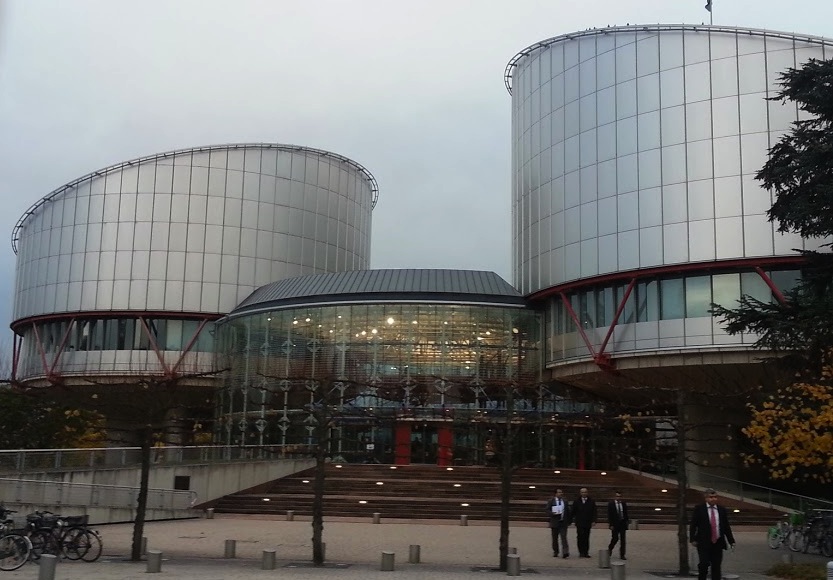
In advance of the Brussels Conference on implementation of the European Convention on Human Rights, our shared responsibility, the ICJ and nine other NGOs issued a statement on the Conference’s draft Declaration.
The statement welcomes a number of aspects of the draft Declaration, which addresses the need for more effective implementation of the Convention and the full, rapid execution of European Court of Human Rights judgments.
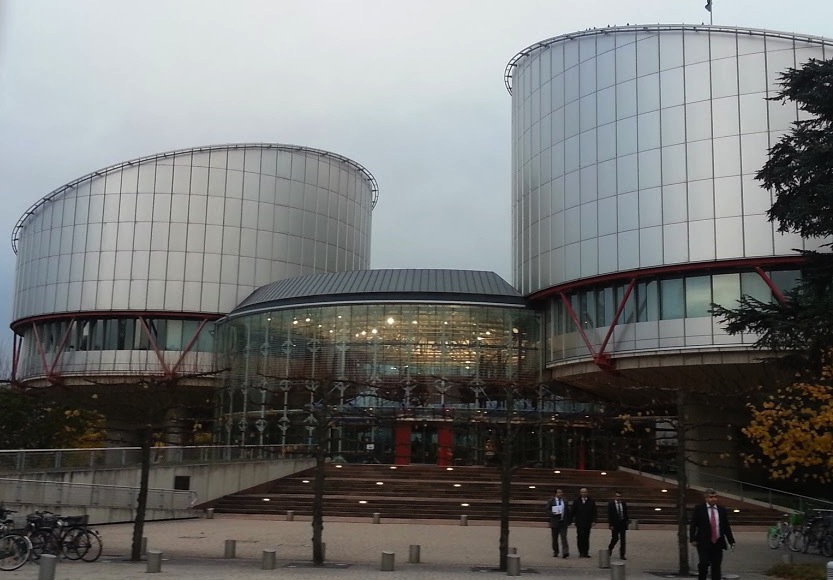
It raises concerns at several elements of the draft Declaration, including recommendations to the Court which could undermine its independence, and the lack of recognition of the role of civil society in the effective execution of judgments of the European Court of Human Rights (photo).
Europe-NGO Statement on Brussels Draft Declaration-Advocay-2015-ENG (full text in PDF)
Mar 3, 2015 | Advocacy
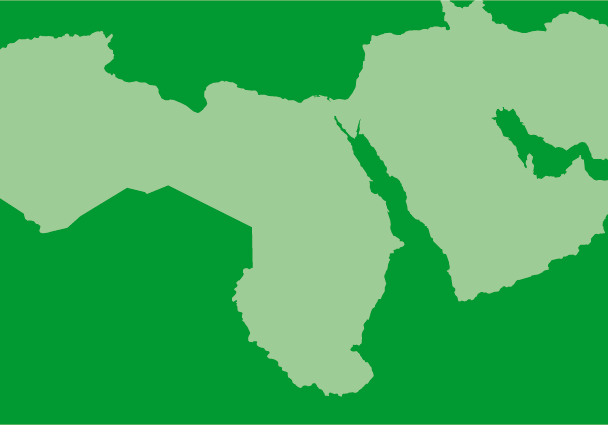
Thirteen human rights organizations, including the ICJ, call on the United Arabe Emirates government to release the activists jailed following the UAE 94 trial.
On the second anniversary of the start of the mass “UAE 94” trial that imprisoned dozens of government critics and reform activists in the United Arab Emirates (UAE), including prominent human rights defenders, judges, academics, and student leaders, a coalition of 13 organizations calls on the UAE government to release immediately and unconditionally all those imprisoned solely for peacefully exercising their rights to freedom of expression and association following this grossly unfair trial, as well as those who remain detained or imprisoned for publicizing concerns about it.
The organizations also call on the authorities to ensure that the allegations of torture and other ill-treatment that the individuals were subjected to prior to and following their trial are promptly, independently, impartially and thoroughly investigated, that those responsible are held to account, and that the victims have access to effective remedies and to reparation.
The organizations share the serious concerns raised since 2011 by several UN human rights bodies and human rights organizations regarding the UAE government’s continuing pattern of harassment, secret, arbitrary and prolonged incommunicado detention, torture and other ill-treatment, enforced disappearances, and unfair trials targeting activists and those critical of the authorities, as well as its increasing use of national security as a pretext to clamp down on peaceful activism and to stifle calls for reform.
The space for dissent in the UAE is increasingly shrinking. The repression has been entrenched with the enactment in 2012 of the cybercrimes law, which the government has used to silence social media activists and others who support and defend freedom of expression online, and the enactment of the 2014 counter-terror law.
The vague and overly broad definition of terrorism in the 2014 law, which treats a wide range of activities, including those protected by human rights standards, as amounting to terrorism, may be used to sentence human rights defenders or critics of the government to lengthy prison terms or even death.
The organizations call on the UAE government, which currently is a member of the UN Human Rights Council, to adhere to its obligations to uphold human rights at home, including respecting the rights to freedom of opinion and expression, and to freedom of association and peaceful assembly.
The full statement can be found here in English and Arabic:
United Arab Emirates-Release activists convicted at the UAE94 trial-Advocacy-2015-ENG (full text in PDF)
United Arab Emirates -Release activists convicted at the UAE94 trial-Advocacy-2015-ARA (full text in PDF)
Read also:
UAE: Fear that Anti-Terrorism Law will be used to curtail human rights and target human rights defenders, Gulf Centre for Human Rights, Front Line Defenders, Cairo Institute for Human Rights Studies, Arabic Network for Human Rights Information, 13 December 2014,
Mass convictions following an unfair trial: The UAE 94 case, an ICJ report, October 2013,
United Arab Emirates: ICJ condemns blatant disregard of the right to a fair and public trial, ICJ, 12 March 2013
Mar 2, 2015 | Advocacy, Open letters
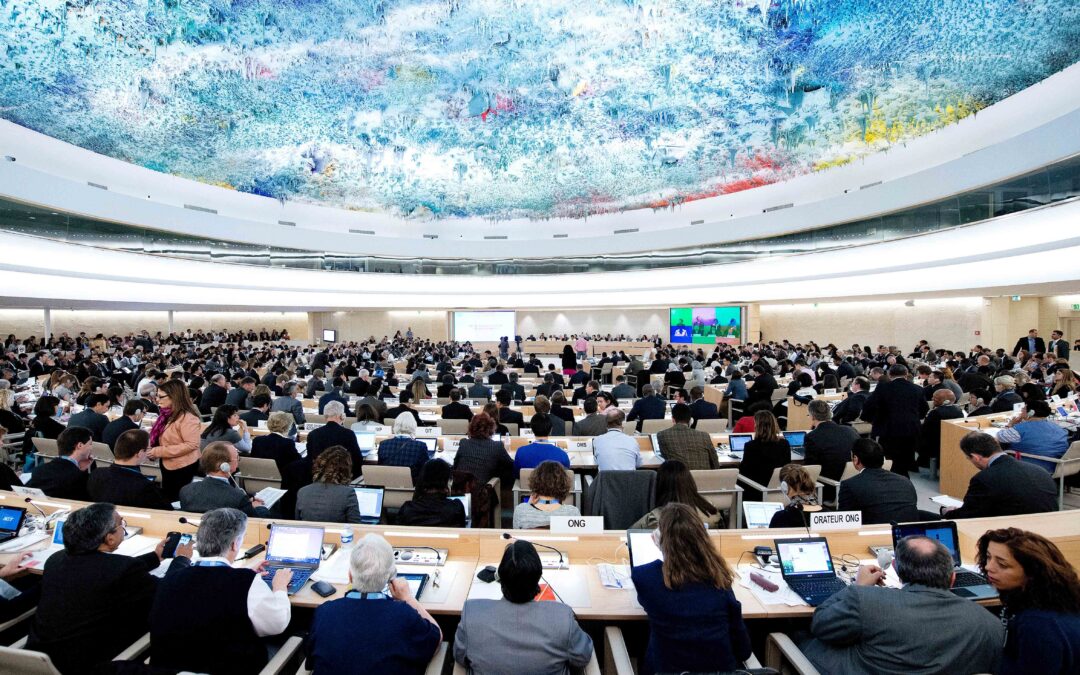
The ICJ today joins with dozens of other NGOs from around the world in an open letter calling for the UN Human Rights Council to establish a Special Rapporteur on Privacy at its current session.
The UN General Assembly, the UN High Commissioner for Human Rights, existing special procedure mandate holders, and many states and civil society organisations have recognized the pressing need to provide continuous, systematic and authoritative guidance on the scope and content of the right to privacy as enshrined in article 12 of UDHR and article 17 of ICCPR. Significantly, all of them have identified the need to assess and monitor the ongoing implementation of this right. The creation of a Special Rapporteur would fill this long-standing gap.
Although the initiative, led by Germany and Brazil, has its origins in concerns about online and telecommunications surveillance, the call is for the creation of a Special Rapporteur with a mandate to look at all aspects of the right to privacy, in all contexts, including issues relating to private sector practices.
HRC28-SRPrivacy-Advocacy-JointLetter-2015
Nov 18, 2014 | Advocacy, Cases, Legal submissions
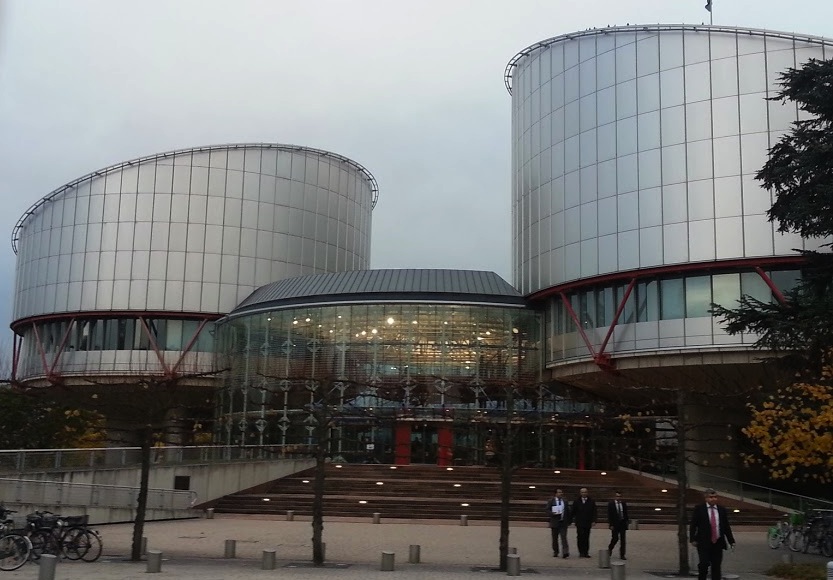
On 17 November 2014, the ICJ and ILGA-Europe filed their joint written submissions with the European Court of Human Rights in the case of Milica Đorđević and others v. Serbia (Application Nos. 5591/10, 17802/12, 23138/13 and 25474/14).
The case concerns the authorities’ decision in 2009 to relocate the applicants’ “Pride Parade” to promote the equality and visibility of lesbian, gay, bisexual and transgender people away from central Belgrade, Serbia, and the authorities’ repeated banning of Pride Parades in central Belgrade in 2011, 2012 and 2013.
The ICJ and the European Region of the International Lesbian, Gay, Bisexual, Trans and Intersex Association (ILGA-Europe)’s submissions to the Court focus on:
- the essential role of the right to freedom of peaceful assembly in a democratic society, and the scope of discretion afforded to States in determining measures required to prevent disorder at an assembly where counter-demonstrators threaten violence against groups most at risk; and
- the nature and scope of the State’s obligation in relation to the right to freedom of peaceful assembly under the European Convention on Human Rights and the International Covenant on Civil and Political Rights, focusing in particular on States’ duty to adopt legislative and administrative measures in order to fulfil their legal obligations.
SERBIA-ECHR amicus Dordevic-Advocacy-Legal Submission-2014-ENG (full text in PDF)
Oct 10, 2014 | Advocacy, Cases, Legal submissions
Today, the AIRE Centre (Advice on Individual Rights in Europe), the European Council on Refugees and Exiles (ECRE) and the ICJ presented joint written observations to the Grand Chamber of the European Court of Human Rights in the case of F.G. v. Sweden (Application No. 43611/11).
The case arises from the Swedish authorities’ dismissal of an asylum application. The submissions focus on:
- the obligation for Parties to the ECHR to ensure that the risk upon removal is addressed in such a way as to guarantee that the Convention’s protection is practical and effective;
- whether requiring coerced, self-enforced suppression of a fundamental aspect of one’s identity, which enforced concealment of one’s religion entails, is compatible with Convention obligations;
- the relevance and significance of the EU asylum acquis and Court of Justice of the EU’s jurisprudence on these matters; and
- the relevance and significance of the 1951 Geneva Refugee Convention.
SWEDEN-ECHR amicus FG vs Sweden-Advocacy-Legal Submission-2014-ENG (full text in PDF)