Sep 17, 2013
The ICJ today addressed the Human Rights Council on the grave situation for human rights and the rule of law in Egypt.
In a General Debate under Item 4 of the agenda of the Human Rights Council (human rights situations requiring the Council’s attention), the ICJ called on the Council to urge Egyptian authorities to:
- Immediately and unconditionally agree to receive a mission by the High Commissioner for Human Rights, and an ongoing presence in the country of an office of the OHCHR;
- Ensure a quick transition of power to a lawfully constituted civilian authority;
- Ensure prompt, independent and effective investigations into all alleged human rights violations, including the unlawful killing of protesters;
- Respect the right of detainees to a lawyer and to challenge the lawfulness of their detention; and
- Ensure that family members and legal counsel are notified of the detention of an individual, the place of detention, and the fate and whereabouts of hundreds of individuals reportedly missing.
The General Debate took place during the 24th regular session of the Council (9 to 27 September 2013).
Egypt-HRC24-Item4-OralStatement-LegalSubmission-2013 (download full statement in PDF)

Sep 17, 2013
The ICJ today called on all States to bolster humanitarian relief efforts and extend the reach of such efforts inside Syria.
In an Interactive Dialogue with the Commission of Inquiry on the Syrian Arab Republic, the ICJ called on the Human Rights Council to continue to give attention to the situation in Syria, including by requesting the Security Council to urgently take effective measures aimed at the cessation of the large-scale loss of life in the country and to end the indiscriminate and disproportionate attacks on civilians and civilian objects, as well as any use of chemical weapons.
The Interactive Dialogue took place under Item 4 of the Human Rights Council’s agenda (human rights situations that require the Council’s attention) during the 24th regular session of the Council (9 to 27 September 2013).
Syria-HRC24-Item4-OralStatement-LegalSubmission-2013 (download full statement in PDF)

Sep 16, 2013
The ICJ today called on adherence by all States with the obligation to ensure effective and independent judicial supervision as a fundamental safeguard against arbitrary detention, and torture and other forms of ill-treatment.
Reflecting on the Secretary-General’s report on the protection of all persons deprived of their liberty, the ICJ’s statement was made during the General Debate under Item 3 of the Human Rights Council’s agenda (promotion and protection of all human rights) during the 24th regular session of the Council (9 to 27 September 2013).
HRC24-Item3-OralStatement-AdministrationJustice-LegalSubmission-2013 (download full statement in PDF)
A-HRC-24-28 (download Secretary-General’s report)

Sep 10, 2013
The ICJ today called for better regulation of private military and security companies (PMSCs) in national and international law.
Noting gaps identified in the regulation of PMSCs in the annual report to the UN by the Working Group on the use of mercenaries as a means of violating human rights and impeding the exercise of the right of peoples to self-determination, the ICJ encouraged the Working Group to:
- Publish national laws of the concerned countries and submit this and additional detailed information and analysis to the Open Ended Intergovernmental Working Group on a possible international regulatory framework for PMSCs, which will meet for its third session in December 2013; and
- Focus in future phases of its study on the availability, accessibility and effectiveness of accountability and redress mechanisms, including judicial mechanisms, in national laws.
The statement was made during an Interactive Dialogue with the Working Group (under Item 3 of the Human Rights Council’s agenda) during the 24th regular session of the Council (9 to 27 September 2013).
HRC24-OralStatement-WGMercenaries-LegalSubmission-2013 (download full statement by the ICJ)
A-HRC-24-45 (download the annual report of the Working Group)
Sep 2, 2013
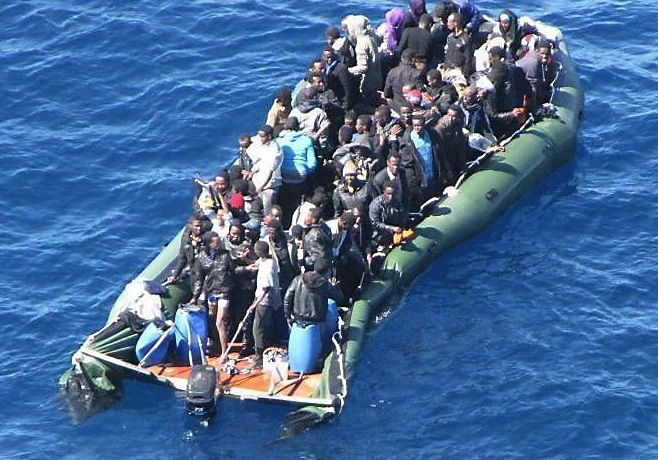
Today, the ICJ and other rights groups submitted to the EU institutions their comments on a European Commission proposal for a Regulation establishing rules for the surveillance of the external sea borders in the context of operational cooperation coordinated by the FRONTEX.
In their submission, the ICJ, Amnesty International and the European Council on Refugees and Exiles acknowledge that the Commission proposal contains a number of positive elements, including the introduction of more extensive provisions on the protection of human rights and the principle of non-refoulement (Article 4), and a clearer definition of “a situation of uncertainty”, “situation of alert” and “situation of distress” (Article 9).
The proposal explicitly requires that “the existence of a distress situation shall not be exclusively dependent on or determined by an actual request for assistance”, implying an obligation for participating units to take active measures to ensure the safety of the persons concerned, and reflecting existing international law obligations in this regard.
The proposal also usefully affirms the fact that the concept of border surveillance under EU law clearly includes measures to ensure that search and rescue operations can be carried out effectively during sea operations, as it is mandated by the international law of the sea. Finally, the provisions contained in the Regulation would be fully binding on Member States for operations conducted under the auspices of Frontex.
Despite these positive elements, the ICJ, AI and ECRE have considered in their submission that other aspects of the Commission’s proposal fail to meet the requirements of international law, including refugee law, human rights law, the law of the sea and EU law.
This briefing presents the organizations’ key concerns, including in respect of how the proposed Regulation potentially contravenes the principle of non-refoulement as established in international human rights law and jurisprudence; the lack of clear guarantees to ensure access to a fair and effective asylum procedure in practice; the risk of the proposal legitimizing the practice of “push-backs” at sea; and the lack of arrangements to address legitimate concerns arising from the disembarkation in EU Member States and third countries whose asylum systems are affected by systemic deficiencies.
At the outset, the briefing briefly discusses the relevance of the ECtHR’s main findings in the case of Hirsi Jamaa and Others v. Italy (hereinafter Hirsi) with respect to the non-refoulement obligations of EU Member States and Frontex in the context of operations at sea.
The three organizations stressed in their submission that, under this judgment, and in accordance with international law, including international human rights law, operations constituting what are sometimes referred to as “push-backs” are prohibited as they constitute violations of the prohibition of collective expulsion, and seriously risk breaching the principle of non-refoulement.

![Smoke rises after an Israeli air strike on the village of Taybeh in southern Lebanon [Source: Al Jazeera]](https://www.icj.org/wp-content/uploads/2026/03/Screenshot-2026-03-20-at-15.56.24-300x200.png)