May 15, 2020 | Новости, Событие
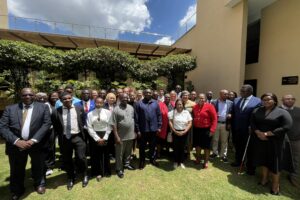
Институт по правам человека при Казахстанском национальном университете (КазНУ) совместно с Международной комиссией юристов, Европейской ассоциацией адвокатов и другими партнерами проведут онлайн-конференцию «Закон и права человека в условиях пандемии».
В мероприятии примут участие ведущие правовые эксперты и практикующие юристы из Центральной Азии и других стран, которые обсудят наиболее актуальные вопросы, связанные с обеспечением прав человека и доступа к правосудию в условиях пандемии.
Будут рассматриваться такие темы, как права человека во время карантина и чрезвычайного положения, а также отправление правосудия в условиях пандемии.
Чтобы принять участие в мероприятии, нужно пройти онлайн-регистрацию. [HYPERLINK] https://lawyerswebinar.bitrix24.site/?fbclid=IwAR11jXC1yWY54y-JEpAf6F2pQVVbu0ykJG68ygkYRoJIJ20XWP9jcTj-fP4#block371
Рабочим языком конференции является русский. Конференция начнется в 11:00 по Нур-Султану (GMT +5).
Вебсайт конференции: https://lawyerswebinar.bitrix24.site/?fbclid=IwAR11jXC1yWY54y-JEpAf6F2pQVVbu0ykJG68ygkYRoJIJ20XWP9jcTj-fP4#
Программа на русском языке

May 8, 2020 | News
The ICJ today denounced the decision on 5 May 2020 by the Philippines’ National Telecommunications Commission (NTC) to issue an order to ABS CBN Corporation, one of the leading media outlets in the country, to cease its on-air operations.
The ICJ asserted that the action against ABS CBN violates the right to freedom of opinion and expression, which includes the rights of the media to operate without censorship or restraint and the public’s right to access information. This right is guaranteed under Article 19 of the International Covenant on Civil and Poliitical Rights (ICCPR). The Philippines is a State Party to the ICCPR.
“A free and unhindered media is essential in any society to ensure freedom of opinion and expression and other human rights. It is one of the cornerstones of a democratic society,” said Emerlynne Gil, ICJ’s Senior International Legal Adviser.
The NTC’s basis for issuing the order is that ABS CBN’s legislative franchise has expired on 4 May 2020 and action has yet to be taken on its renewal by the House of Representatives. The ICJ fears that the reasons for this delay may be politically motivated.
Given the stakes for freedom of expression, the ICJ urges NTC to follow its own precedents whereby it has allowed broadcast and telecommunications companies to operate beyond their franchise expiry dates, pending the renewal.
“Limitations imposed on the right to freedom of opinion and expression have to pass the general tests, including that of necessity and proportionality, which do not appear to have been met here,” Gil added.
The action taken against ABS CBN is part of a pattern of harassment of independent media by governmental authorities in the Philippines. President Rodrigo Duterte has, in the past, expressed resentment towards ABS CBN for allegedly refusing to air his political ads when he ran for office in 2016. The network is also known to have aired views critical of his administration’s murderous ‘war on drugs’.
In December 2019, President Duterte said that he would make sure that ABS CBN’s franchise would not be renewed. This is not the first time that he has sought to silence a media outlet critical of his administration.
There are at least 11 bills seeking the renewal of the franchise currently pending at the House of Representatives, with the earliest filed in July 2019.
“It is taking the House of Representatives an inordinately long period of time to approve the renewal of ABS CBN’s franchise,” said Gil. “It appears that the allies of this administration in the House are holding the franchise renewal like a sword over ABS CBN’s head to chill it from airing critical views about the government.”
The UN Human Rights Committee, the ICCPR’s supervisory body, has said that States must avoid imposing onerous licensing conditions on broadcast media, and that the criteria for the application of these conditions should be reasonable, objective, clear, transparent, and non-discriminatory.
This action against ABS CBN comes in the middle of the state of public health emergency in the Philippines when access to information is vital in the country’s response to the COVID-19 crisis. The ICJ had earlier raised its concerns on abuses occurring during the lockdown in the Philippines.
The ICJ calls on the Philippine government to uphold and respect freedom of opinion and expression, and ensure that a free press can operate without censorship or restraint.
The ICJ also reminds the government that the public’s access to information is vital to ensure public health and safety during the COVID-19 crisis.
Contact
Emerlynne Gil, Senior International Legal Adviser, t: +662 619 8477 (ext. 206) or e: emerlynne.gil(a)icj.org
May 6, 2020 | Comunicados de prensa, Noticias
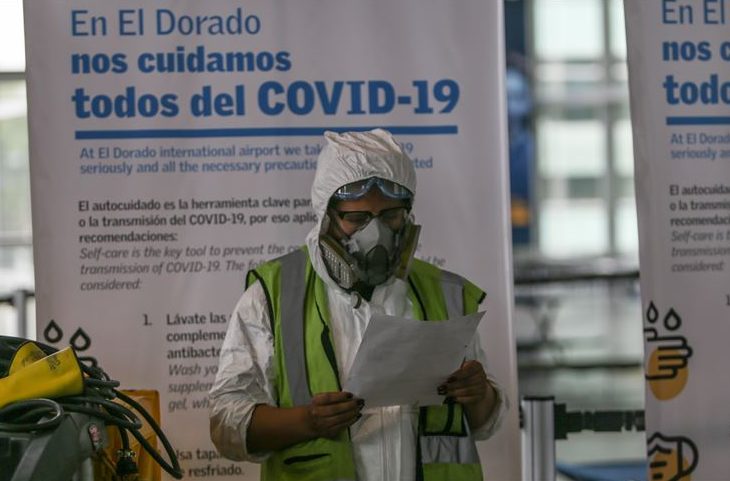
La Comisión Internacional de Juristas apoyó la realización de una serie de conversatorios online acerca de los desafíos que enfrentan los sistemas de justicia latinoamericanos en el marco de la emergencia generada por la pandemia.
Estos conversatorios abordaron temas diversos, como los servicios esenciales de justicia, el impacto del teletrabajo en la judicatura, la innovación en la justicia en tiempos de emergencia, la búsqueda de las personas desaparecidas, la situación de personas migrantes y el uso del litigio estratégico como herramienta de defensa de derechos fundamentales.
Esta iniciativa fue organizada por un grupo de mujeres de América Latina que trabajan en temas de justicia en la región, y fue apoyada por la Fundación para el Debido Proceso Legal (DPLF), la Fundación Construir, la Fundación Tribuna Constitucional, el Observatorio de Derechos y Justicia, y la Fundación para la Justicia y el Estado Democrático del Derecho.
Los videos de las sesiones que se realizaron están disponibles en español en los siguientes enlaces:
Conversatorio 1: Servicios esenciales de justicia en tiempos de emergencia
https://www.youtube.com/watch?v=dEW-GJ9J0Po
Conversatorio 2: Teletrabajo y la Judicatura: Juezas en la primera línea de la justicia
https://www.youtube.com/watch?v=pn7h41pGfp8&feature=youtu.be
Conversatorio 3: Innovando en la justicia en tiempos de emergencia
https://www.youtube.com/watch?v=yZ-2y9Ir_RE&feature=youtu.be
Conversatorio 4: La búsqueda de personas desaparecidas
https://www.youtube.com/watch?v=rfWj_gjxJbs&feature=youtu.be
Conversatorio 5: La protección de las personas migrantes
https://www.youtube.com/watch?v=6kDOjklinnw&feature=youtu.be
Conversatorio 6: ¿Como puede el litigio estratégico protegernos frente a los efectos de la pandemia?
https://www.youtube.com/watch?v=IlwcZqq2CJ4&feature=youtu.be
Conversatorio 7: Experiencias nacionales de litigio estratégico frente al COVID-19
https://www.youtube.com/watch?v=Qd-J5pcEX7I&feature=youtu.be
Texto completo, en PDF: Videos-Sistemas-de-Justice-Press-Release-2020-SPA
May 1, 2020 | Адвокаси
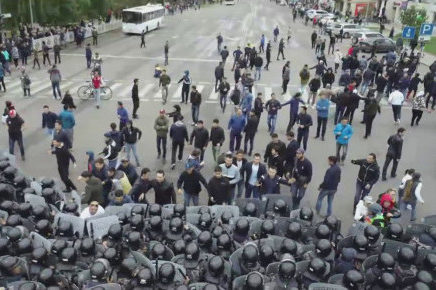
Сегодня Международная комиссия юристов (МКЮ) совместно с Институтом по правам человека Международной ассоциации юристов (IBAHRI) и Центром по гражданским и политическим правам (Центр CCPR) опубликовали юридическое заключение комиссара МКЮ, профессора Сары Кливленд по вопросу о соответствии проекта закона Казахстана о порядке организации и проведения мирных собраний международным обязательствам Казахстана в области прав человека.
«Чрезмерные ограничения в отношении свободы мирных собраний в Казахстане на протяжении вот уже многих лет становятся предметом серьезной озабоченности Комитета по правам человека ООН, Венецианской комиссии Совета Европы и других органов по правам человека, – отметила Сара Кливленд. – Сейчас у Казахстана есть хорошая возможность привести свое законодательство в соответствие с его международно-правовыми обязательствами в области прав человека, однако рассматриваемый законопроект не способствует достижению этой цели».
Автор Мнения приходит к выводу о том, что предложенный законопроект предусматривает целый ряд ограничений в отношении свободы собраний, которые фундаментально не соответствуют обязательствам Казахстана в области прав человека, в том числе: (1) чрезмерные требования к уведомлению и согласованию; (2) чрезмерные полномочия для запрета собрания; (3) запрет спонтанных собраний; (4) ограничение проведения собраний «специализированными местами»; (5) преференциальный режим для собраний, организуемых правительством; (6) запрет иностранцам, беженцам и лицам без гражданства организовывать или участвовать в собраниях, (7) чрезмерные обязанности организаторов и участников; и (8) чрезмерные санкции в отношении организаторов и участников. Время и процедура принятия закона, который самым фундаментальным образом затрагивает соответствие внутреннего законодательства основным обязательствам в области прав человека, сами по себе вызывают серьезную озабоченность относительно соблюдения прав человека, принимая во внимание ограниченные возможности организаций гражданского общества и общественности в целом участвовать в активных публичных обсуждениях этого законопроекта в условиях карантина.
В свете этой серьезной озабоченности относительно соблюдения прав человека IBAHRI, МКЮ и Центр CCPR призывают Сенат и(или) Президента Республики Казахстан приостановить рассмотрение законопроекта и запросить рекомендации Панели экспертов БДИПЧ ОБСЕ по свободе собраний и ассоциаций, Управления Верховного комиссара ООН по правам человека и(или) Венецианской комиссии по вопросу о том, как настоящий закон о свободе мирных собраний может быть пересмотрен в соответствии с международными обязательствами Казахстана в области прав человека.
Kazakhstan-Assembly Law Opinion-Advocacy-2020-RUS
May 1, 2020 | News
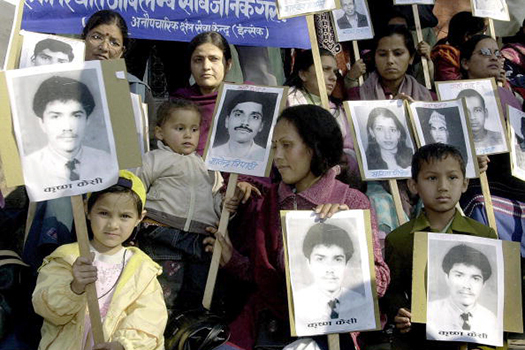
The decision by Nepal’s Supreme Court to reject a petition by the government asking that it review its 2015 ruling against amnesties for grave conflict-era crimes is an important step in securing truth, justice and reparations for the thousands of victims of the country’s decade-long conflict, the ICJ and other groups said today.
The armed conflict between Maoist and government forces ended in 2006, but victims of serious abuses by both sides are still awaiting justice, accountability and reparations.
The ICJ, Amnesty International, TRIAL International, and Human Rights Watch called upon the Government to revise the 2014 Transitional Justice Act and ensure its implementation in accordance with the Supreme Court’s judgments, so as to assure access to justice for the victims of conflict-era abuses.
Nepal’s transitional justice law, which was passed by Parliament in April 2014, established a Truth and Reconciliation Commission and a Commission of Investigation on Enforced Disappeared Persons.
However, it contained provisions that could allow for amnesties even for crimes such as torture, including rape and other sexual violence and ill-treatment and enforced disappearance.
On 26 February 2015, the Supreme Court struck down the amnesty provisions and ordered the act to be amended accordingly. However, the government immediately petitioned to overturn the ruling. That petition was rejected by the court on April 27, 2020.
“With the Supreme Court’s decision, there can be no further excuse for government backsliding on ensuring truth, justice, reparations and guarantees of non-recurrence. The government should immediately amend the Enforced Disappearances Enquiry, Truth and Reconciliation Commission Act, 2014 in line with the Supreme Court’s orders and its own international obligations,” said Biraj Patnaik, South Asia Director at Amnesty International.
With its latest ruling the Supreme Court has upheld the principle that there can be no amnesties for those suspected of criminal responsibility for crimes under international law and human rights violations. More than 13 years since the Comprehensive Peace Agreement of November 2006 promised justice to the victims, no one has been made accountable for any conflict era crimes.
“The request filed by the Nepal Government to review the decision of the Supreme Court was another attempt to evade the real issue: accountability for mass human rights violations. We are delighted that the Supreme Court held its ground and reaffirmed the importance of fair and efficient transitional justice mechanisms,” said Cristina Cariello, the Head of Nepal Program at TRIAL International.
Amnesty International, the ICJ, Human Rights Watch and TRIAL International have repeatedly expressed concerns about the faltering transitional justice process. Besides the failure to amend the law to uphold basic principles of justice, there have been long delays and repeated political interference in appointments to the two transitional justice commissions.
“Over the past decade, the Supreme Court of Nepal has produced some of the most human rights compliant jurisprudence in South Asia. This petition cynically sought to have the Court undermine its own judgement, so that the government could sidestep its responsibility to provide accountability for conflict-related human rights violations,” said Frederick Rawski, ICJ Asia Pacific Director. “The government has no excuse for not immediately amending the transitional justice legal framework so that it is consistent with the Court’s jurisprudence and Nepal’s international legal obligations.”
An effective transitional justice system requires strong legal foundations consistent with international law and standards, and the political will to address the demands of victims of the conflict, the organizations said.
“When Nepal stood for election to the United Nations Human Rights Council the government promised to uphold its human rights obligations, but 3 years later, as it seeks re-election, there has been nothing but impunity and evasion on transitional justice,” said Meenakshi Ganguly, South Asia director at Human Rights Watch. “These are crimes under international law, subject to universal jurisdiction, and if justice is denied at home victims may take their cases abroad.”
Contact
Frederick Rawski, ICJ Asia-Pacific Director, frederick.rawski(a)icj.org, +66644781121
Download
English
Nepali