Mar 31, 2019 | News
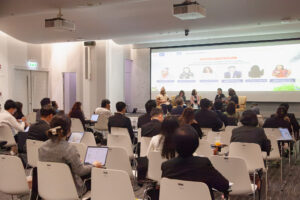
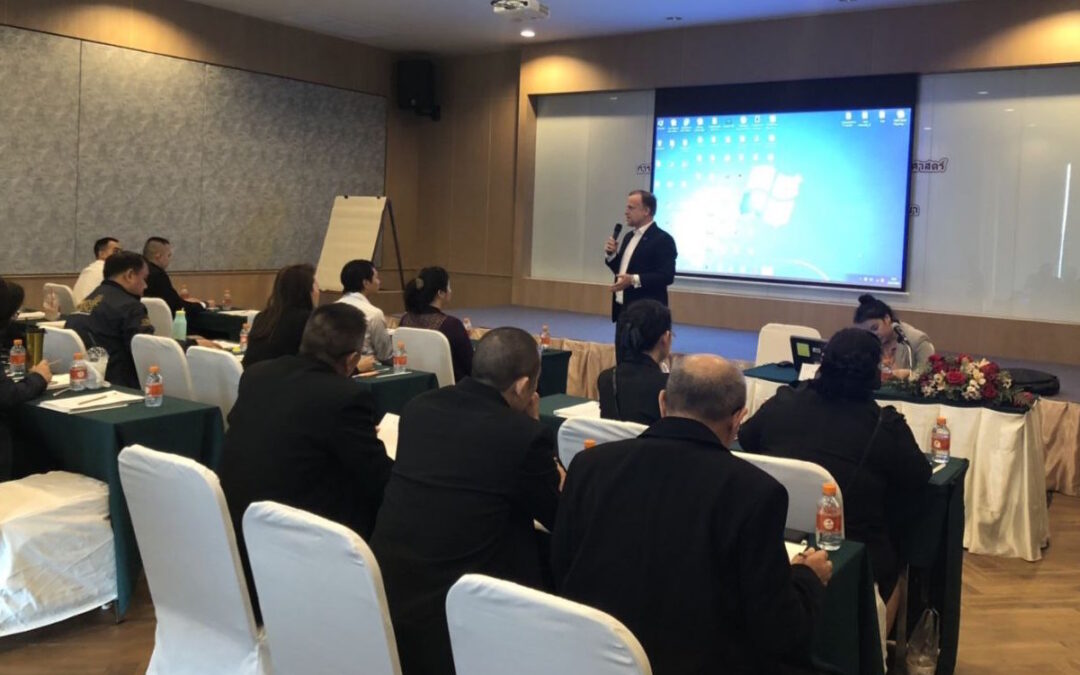
From 29 to 31 March 2019, the ICJ co-hosted a workshop in Ayutthaya province for authorities from Thailand on Human Rights, Investigation Techniques and Forensic Examination of Evidence. The event focused on how such investigations should be conducted in accordance with international human rights law and standards.
The workshop was co-hosted with Thailand’s Ministry of Justice and the United Nations Office of the High Commissioner for Human Rights (OHCHR).
The participants included 35 criminal investigators, public prosecutors, representatives of the Ministry of Justice’s Department of Special Investigation (DSI), the Central Institute of Forensic Science (CIFS), the Ministry of Defense, the National Anti-Corruption Commission and the Office of the Narcotics Control Board.
Kingsley Abbott, Senior Legal Adviser for Global Redress and Accountability at the ICJ and a member of the Working Group in revising the Minnesota Protocol, presented a summary of the international human rights legal framework applicable to the investigation of unlawful deaths and enforced disappearance.
He also introduced an outline of the revised Minnesota Protocol on the Investigation of Potentially Unlawful Death (2016), which was launched in Thailand on 25 May 2017.
The Protocol formed the core of the materials used at the workshop. He also addressed the use of telecommunication evidence as evidence at trial.
Other speakers included:
- Amornrat Lekwichai, Senior Professional Level Forensic Scientist from the CIFS, who addressed the use of telecommunication and digital evidence in criminal cases towards establishing the identity of suspects;
- Pornthip Rojanasunan, Adviser with the CIFS and a member of the Advisory Panel in revising the Minnesota Protocol, who spoke on forensic pathology and the need for independent autopsies in an independent and impartial investigative process;
- Badar Farrukh, Human Rights Officer from OHCHR, who addressed witness interviews and witness protection;
- Angkhana Neelapaijit, National Human Rights Commissioner and spouse of lawyer Somchai Neelapaijit, a victim of enforced disappearance; and
- Somchai Homlaor, a leading Thai human rights lawyer and member of several independent fact-finding commissions, who raised concerns about challenges for accountability for human rights abuses in Thailand’s criminal justice.
This workshop is part of the ICJ’s ongoing efforts to ensure the domestic implementation of international law and standards on the investigation of potentially unlawful deaths and enforced disappearances.
The ICJ has held several Workshops on the same topic including:
Regional Workshops
National Workshops
Contact
Kingsley Abbott, Senior Legal Adviser for Global Redress and Accountability, ICJ Asia Pacific Regional Office, t: +66 94 470 1345, e: kingsley.abbott@icj.org
Mar 29, 2019 | News
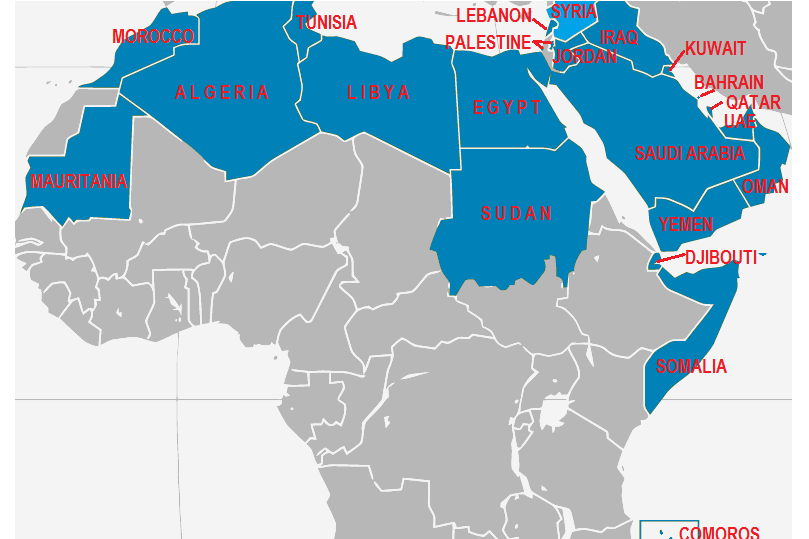
As leaders gather for the League of Arab States (LAS) Summit beginning on 31 March 2019 in Tunis, the ICJ called on them to place human rights and accountability for violations at the forefront of their agenda.
In particular, the ICJ urged the Summit to take immediate steps to revise the Statute of the Arab Court of Human Rights in line with international standards to allow access by victims of human rights violations in the region to such a Court.
“We’ve been witnessing a spike in gross human rights violations across the Arab region, including in extrajudicial executions, enforced disappearances, arbitrary detentions, and torture and other ill-treatment,” said Said Benarbia, the ICJ’s MENA Programme Director.
“The region is in dire need of a credible and independent judicial mechanism to provide justice for human rights violations, the overwhelming majority of which presently go unaddressed,” he added.
The ICJ called on external participants to prioritize human rights in their discussions with League member States at the Summit.
Expected attendees include United Nations Secretary-General Antonio Guterres, the European Union High Representative for Foreign Affairs and Security Federica Mogherini, the Head of the African Union Commission Moussa Faki Mahamat, and the Secretary General of the Organization of Islamic Cooperation Yousef bin Abdul Al-Othaimeen.
Many States in the region are plagued by widespread and systematic violations.
These range from torture, enforced disappearance and arbitrary detentions in Egypt, attacks against human rights defenders and journalists in Saudi Arabia, including the high profile enforced disappearance and killing of Saudi journalist Jamal Khasshogi, as well as the judicial harassment of human rights defenders and political activists throughout the region.
Civilian populations have borne the brunt of violations and crimes through military operations by governments and armed groups in Yemen, Syria and Libya, and in the context of the Israeli-Palestinian conflict.
“International leaders mustn’t sit back and follow the agendas of rights-violating States at this Summit, which will no doubt be directed towards further entrenchment of their authoritarian regimes at the expense of victims,” said Benarbia.
“Instead, they should urge LAS members States to ensure accountability for human rights violations in the region, including by revising and then making operational the Statute of the Arab Court,” he added.
The ICJ said that the process of revision should only be done with the participation of a wide range of stakeholders, civil society, judges, academics, bar associations, and victims of violations.
Contact:
Said Benarbia, Director of the ICJ Middle East and North Africa Programme, t: +41-22-979-3817; e: said.benarbia(a)icj.org
Background
The Statute of the Arab Court of Human Rights, which aims to establish a regional human rights court for Arab States, was approved by the LAS Ministerial Council on 7 September 2014, but is yet to come into force.
The ICJ and others have identified significant flaws in the Statute, highlighted in the 2014 ICJ report. The report notes that the Statute does not allow victims themselves to submit complaints directly to the Court, making access to justice an illusion. In addition, the Statute does not provide for sufficient guarantees to ensure judicial independence and impartiality; does not provide adequate protective measures for petitioners, their representatives or witnesses; and fails to require the Court to interpret the Arab Charter in line with international human rights obligations.
MENA-Arab Court HR-News-2019-ARA (full story in Arabic, PDF)
Mar 28, 2019 | Events, News
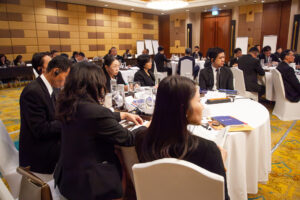
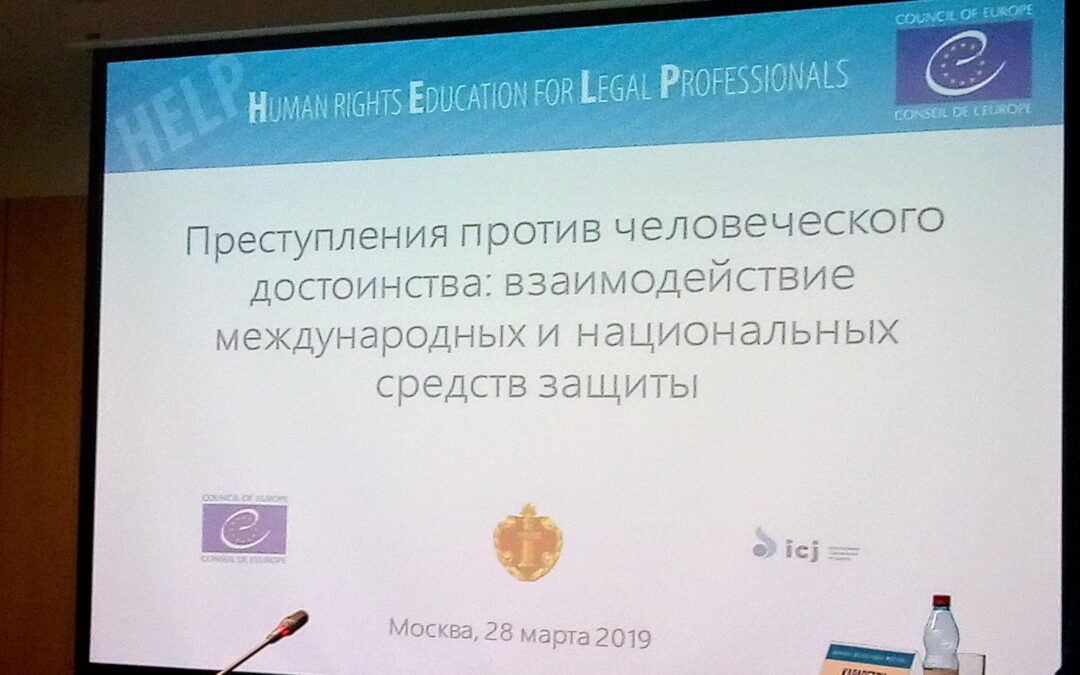
The ICJ is co-operating in a conference organized by the Council of Europe and the Federal Bar Association of Russia on “Crimes against Human Dignity: Interaction of International and National Remedies”, which will take place today, 28 March 2019 in Moscow.
The Conference will address crimes that affect physical and moral integrity of a person, notably through ill- treatment, domestic violence, trafficking in human beings and other forms of modern slavery. The core provisions of the European Convention on Human Rights and the related case-law of the European Court of Human Rights are of particular relevance in combatting these phenomena. The Conference will address national and international remedies against such crimes and serve for exchange of good legal practices in that regard.
Mikhail Lobov, Head of Human Rights Policy and Co-operation Department of the Council of Europe, Yuriy Pilipenko, President of the Federal Bar Association, Denis Novak, Vice-Minister of Justice of the Russian Federation, Radmila Dragichevich Dichich, Vice-President of the International Commission of Jurists, Judge of the Supreme Court of Serbia, Ilya Subbotin, Deputy Director of the Depratment of Paneuropean Co-operation of the Russian Foreign Ministry and Petr Sich, Head of Council of Europe Programme Office in the Russian Federation will open the Conference.
The Conference will give an overview of identification and qualification of crimes against human dignity, as well as of assessment of evidence and investigation of such violations. Special attention will be paid to such questions as professional training of practicing lawyers as a factor of strengthening of remedies’ efficiency and, in more general terms, the role of advocates in the framework of the Council of Europe conventions.
The event will take place on 28 March 2019 at 09.30 a.m., in Moscow, Hotel “Azimut Smolenskaya”, Smolenskaya street, 8.
The agenda for the conference is available here
Mar 28, 2019 | News
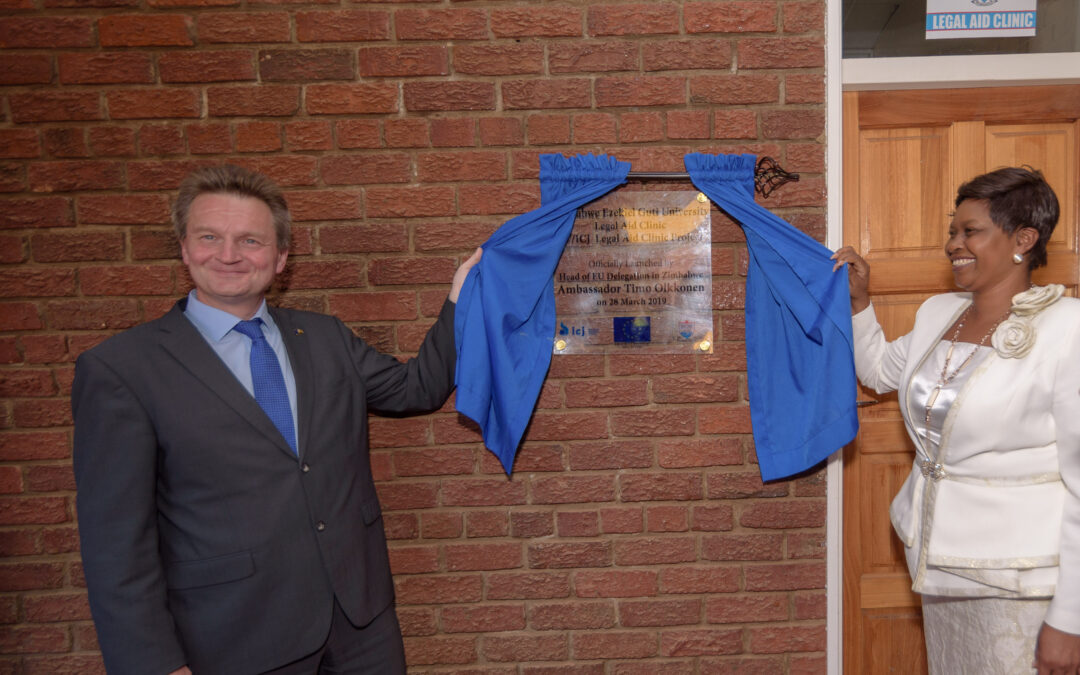
Today, the ICJ launched a project at Zimbabwe Ezekiel Guti University intended to assist with legal services to those in need in Bindura.
The legal aid clinics project, which is supported by the European Union, is aimed at improving access to justice in Zimbabwe while also providing an opportunity for students to develop critical skills that will enhance their work as legal practitioners.
Speaking at the launch, the Ambassador of the European Union Delegation to the Republic of Zimbabwe, Timo Olkkonen commended the University for being socially responsive to the community surrounding it.
He remarked, “in these difficult economic conditions, more people than before are finding it difficult to afford legal representation. This in turn negatively impacts on the protection of their constitutional rights. The establishment of the legal aid clinic will address this.”
Professor Chingarande-Mutanga, the Vice Chancellor of Zimbabwe Ezekiel Guti stated that, “The establishment of the legal aid clinic is a special innovative hub with the idea to develop a practical and professional who is well rounded and able to provide solutions to the legal challenges faced by the community.”
Arnold Tsunga, ICJ’s Africa Regional Director, remarked that “this initiative supports the full implementation of the Constitution and promotes equal access to justice for all through addressing the needs of those in disadvantaged in their capacity to obtain needed legal services.”
The launch was attended by the Mayor for Bindura, Carlos Tokyo, the Executive Secretary of the Law of Society, Edward Mapara, representatives from the Judicial Service Commission, students, and other residents of Bindura.
Contact
Brian Penduka, t: +263772274307 ; e: brian.penduka(a)icj.org
Elizabeth Mangenje, t: +263774742420 ; elizabeth.mangenje(a)icj.org

Mar 26, 2019 | News
The ICJ condemns the sentencing of Venezuelan Judge Maria Lourdes Afiuni to a further five years of imprisonment.
On 21 March, a court in Caracas sentenced Judge Afiuni on unfounded charges of “corruption”.
“This further five-year sentence against Judge Afiuni is both the latest in a long series of severe violations of her human rights, and also illustrates the grave extent to which independence of the judiciary in Venezuela has been more broadly undermined,” said Matt Pollard, ICJ Senior Legal Adviser and UN Representative.
Judge Afiuni was arbitrarily arrested and detained in 2009 after then-President Hugo Chavez publicly demanded she be imprisoned for 30 years, as she had released an accused person citing a decision by the UN Working Group on Arbitrary Detention that his detention was unlawful.
While in detention, she was subjected to torture and other ill-treatment.
In 2010, the UN Working Group on Arbitrary Detention issued an opinion declaring Judge Afiuni Mora’s detention arbitrary.
She was held in prison for 14 months before being transferred to house arrest for health reasons in 2011.
In 2013 she was granted parole but ordered not to leave the country or to use social media.
The UN Special Rapporteur on the Independence of Judges and Lawyers reacted earlier today to the latest sentencing by reaffirming the arbitrariness of her deprivation of liberty and the fact that her treatment amounts to reprisals for having implemented the UN Working Group’s decision.
The Rapporteur also said that the ruling “underscored his serious concerns about the independence of the judiciary in Venezuela, the impartiality of judges and prosecutors and the pressures they faced in handling politically sensitive cases.”
Further background on the situation for the judiciary in Venezuela, and Judge Afiuni’s case, is available here.