Mar 22, 2018 | News
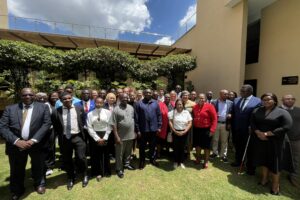
The ICJ has been awarded a grant from the Royal Norwegian Embassy in Mexico to continue its work in the area of independence of the judiciary in Guatemala.
This initiative titled “Strengthening the rule of law in Guatemala, Phase II” aims to strengthen domestic compliance with, and implementation of, international standards providing for judicial independence through the training of judges, raising awareness on this topic, as well as providing support to judges at risk.
The ICJ will be working together with the Mayan Association of Lawyers and Notaires of Guatemala as a partner in this action, through a sub grant of 1,622,801 NOK.
Guatemala-Grant Agreement with Norway-2018-ENG (full grant agreement, in PDF)
Mar 20, 2018 | News
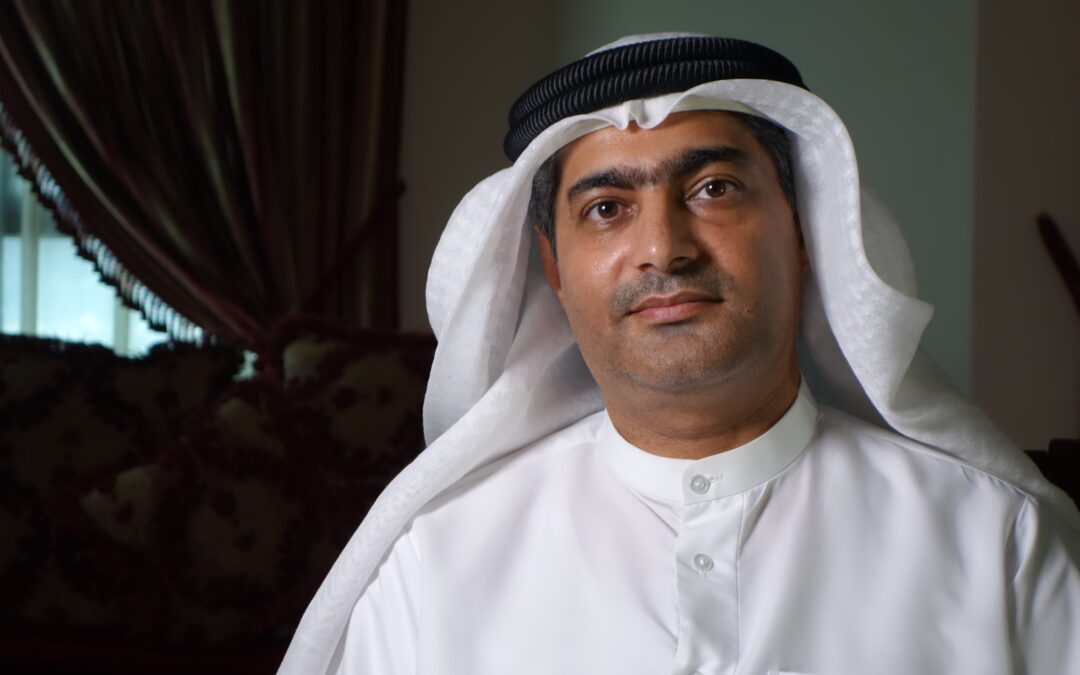
The authorities in the United Arab Emirates (UAE) should reveal the whereabouts of prominent human rights defender and citizen-journalist Ahmed Mansoor and release him immediately and unconditionally, two dozen human rights organizations, including the ICJ, said today.
Ahmed Mansoor is being held for his peaceful human rights work.
20 March 2018 marks one year since security forces arbitrarily arrested Mansoor, winner of the Martin Ennals Award for Human Rights Defenders in 2015, at his home in Ajman.
The UAE authorities have continued to detain him in an unknown location, despite condemnation from UN human rights experts and independent human rights organizations.
“The authorities have subjected Ahmed Mansoor to enforced disappearance since his wife last saw him in September 2017. They must reveal his whereabouts to his family and grant him immediate access to them and to a lawyer of his choosing,” said Khalid Ibrahim, Executive Director of the Gulf Centre for Human Rights (GCHR).
Following his arrest, the authorities announced that he is facing speech-related charges that include using social media websites to “publish false information that harms national unity.”
On 28 March 2017, a group of UN human rights experts called on the UAE government to release Mansoor immediately, describing his arrest as “a direct attack on the legitimate work of human rights defenders in the UAE.”
They said that they feared his arrest “may constitute an act of reprisal for his engagement with UN human rights mechanisms, for the views he expressed on social media, including Twitter, as well as for being an active member of human rights organizations.”
“Mansoor’s arbitrary detention is a violation of his right to freedom of expression and opinion. The UAE authorities must drop all charges against him and release him immediately,” said Carles Torner, Executive Director of PEN International.
Since his arrest, Mansoor has not been allowed to make telephone calls to his family and has been allowed only two short visits with his wife, on 3 April and 17 September 2017, both under strict supervision.
He was brought from an unknown place of detention to the State Security Prosecutor’s office in Abu Dhabi for both visits.
The authorities have refused to inform his family about his place of detention and have ignored their requests for further visits.
In February 2018, a group of international human rights organizations commissioned two lawyers from Ireland to travel to Abu Dhabi to seek access to Mansoor.
The UAE authorities gave the lawyers conflicting information about Mansoor’s whereabouts.
The Interior Ministry, the official body responsible for prisons and prisoners, denied any knowledge of his whereabouts and referred the lawyers to the police.
The police also said they had no information about his whereabouts. The lawyers also visited Al-Wathba Prison in Abu Dhabi following statements made by the authorities after Mansoor’s arrest, which suggested that he was being held there.
However, the prison authorities told the lawyers that there was nobody matching Mansoor’s description in prison.
“Pending his release, Mansoor must be granted immediate and regular access to his family, as well as to a lawyer of his choosing,” said Sima Watling, UAE Researcher at Amnesty International’s Middle East Regional Office.
UAE-one-year-Ahmed-Mansoor-remain-unknown-2018-ENG (Full text in PDF)
Mar 16, 2018 | News
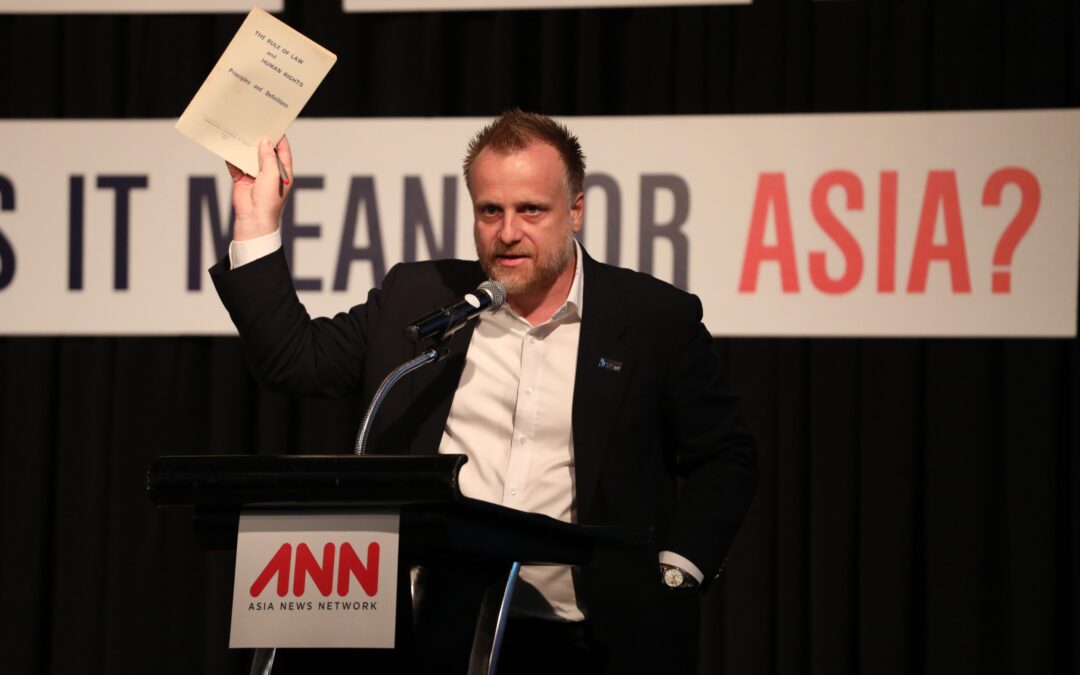
Today, Kingsley Abbott, ICJ’s Senior International Legal Adviser, gave the keynote address on the human rights and rule of law situation in Asia at the Asia News Network’s (ANN) international symposium on upcoming elections in Asia.
The event, held at a hotel in Bangkok, Thailand, was attended by nearly 300 diplomats, business leaders, academics and members of civil society.
ANN is an alliance of 24 leading media in 20 Asian countries.
The full speech can be downloaded here:
Asia-ANN Speech-News-web story-2018-ENG
Mar 15, 2018 | Noticias
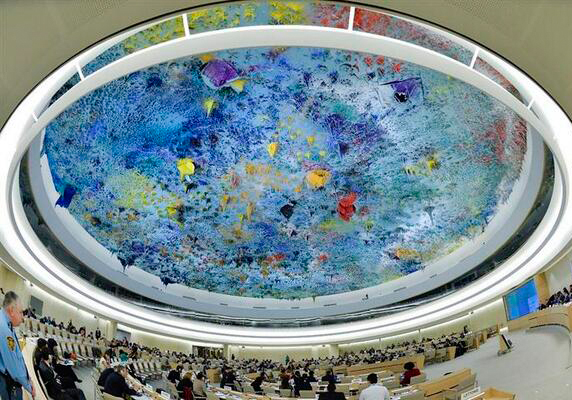
La CIJ preparó una declaración en las Naciones Unidas sobre la situación de los derechos humanos en Guatemala.
Debía hacerse durante la discusión en el Consejo de Derechos Humanos del resultado del Examen Periódico Universal para Guatemala, sin embargo, la Comisión Internacional de Juristas no pudo leer la declaración debido al tiempo limitado para las declaraciones de las ONG. La declaración contiene lo siguiente:
“Honorables miembros del Concejo de Derechos Humanos:
El Estado de Derecho en Guatemala está siendo socavado por las propias autoridades. Tal y como lo ha señalado la Comisión Internacional Contra la Impunidad de Guatemala (CICIG), el Estado se encuentra capturado por el crimen organizado. Desde que el Presidente de la Repuública Jimmy Morales declaró como “persona non grata” al Comisionado de la CICIG Abogado Iván Velásquez en agosto de 2017, los tres poderes del Estado de Guatemala tienen un objetivo comuún: recuperar el terreno perdido, por las acciones contundentes que la CICIG ha implementado contra la impunidad y la corrupción.
Preocupa sobre manera que el Organismo Legislativo esté tratando de aprobar una legislacion regresiva en materia de derechos humanos. En lo que respecta al Poder Judicial, la CICIG ha impulsado un proceso de depuración por la vía judicial y aquellos jueces que promueven más impunidad, se resisten a ser investigados protegiéndose en la figura del antejuicio.
En este contexto, se está llevando a cabo el proceso de elección del próximo Fiscal General. El Presidente de la República tendrá que elegir de una lista de seis candidatos. Urge que el Consejo de Derechos Humanos inste al Presidente de la República a elegir a una persona honesta y que esté comprometida con el respeto de los derechos humanos. La CIJ lamenta que algunos candidatos o candidatas participen para consolidar “el pacto de corruptos” en marcha.
Finalmente, es necesario que el Consejo de Derechos Humanos demande a los tres Poderes del Estado, apoyar decididamente los actos que el Comisionado Iván Velásquez lleva a cabo en Guatemala y el trabajo de las Instituciones Nacionales de Derechos Humanos, así como respetar y atender la gestión positiva que viene realizando el Procurador de los Derechos Humanos Abogado Jordán Rodas.”
Mar 15, 2018 | Noticias
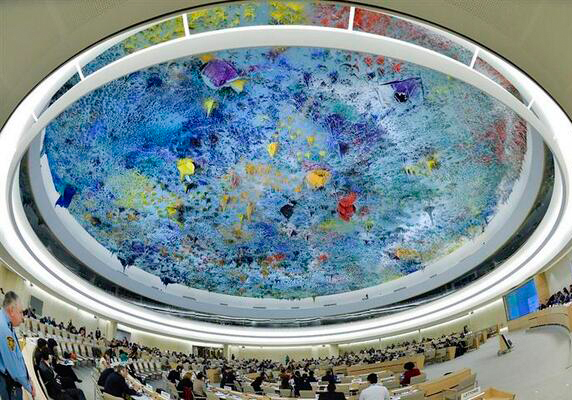
La CIJ habló hoy en las Naciones Unidas sobre la situación de los derechos humanos en Perú.
La declaración oral fue hecha durante la discusión en el Consejo de Derechos Humanos del resultado del Examen Periódico Universal para el Perú. Dice lo siguiente:
“Sr Presidente,
La Comisión Internacional de Juristas (CIJ) reconoce los avances logrados por el Estado Peruano en materia de derechos humanos y su apertura en relación a las recomendaciones formuladas en el presente ciclo del Examen Periódico Universal.
La CIJ lamenta sin embargo que la investigación y sanción a los responsables de las graves violaciones a los derechos humanos producidas durante el conflicto armado interno no hayan recibido la atención que merecen. Por el contrario, la lucha contra la impunidad ha retrocedido con el otorgamiento de indulto y gracia presidencial al ex – presidente Alberto Fujimori quien cumplía pena de cárcel por una serie de delitos de lesa humanidad cometidos durante su mandato. La gracia presidencial le otorga inmunidad en materia de investigaciones y procesos penales en curso o por abrirse en el futuro.
Una de las recomendaciones (111.97) que el Perú acepta con calificaciones se refiere a las investigaciones y reparaciones a las miles de mujeres que sufrieron esterilización forzada durante el gobierno de Fujimori. Las medidas de indulto y gracia otorgadas exonerarían a Fujimori de investigación y sanción por este y otros delitos graves. La CIJ exhorta al Estado Peruano a que ejecute las recomendaciones de la comunidad internacional con total respeto a los estándares internacionales que prohíben la impunidad por violaciones graves a los derechos humanos.
Gracias Sr Presidente.”