Jan 11, 2017 | News
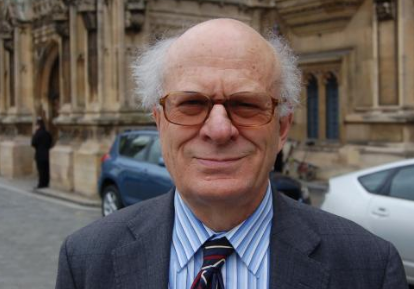
It is with great sadness that the ICJ mourns the loss of Honorary Member Lord William Goodhart QC who passed away on 10 January at the age of 83.
Lord Goodhart, from the United Kingdom, was a long-serving friend of the ICJ, having served as a Commissioner from 1993-2007, on the Executive Committee and also as ICJ Vice-President. from 2007-2009 Lord Goodhart also served as the Chairman of JUSTICE, the ICJ’s independent UK Section.
Lord Goodhart was a Liberal Democrat peer of the UK House of Lords, a Member of the All Party Parliamentary Humanist Group and an eminent human rights barrister. He was knighted in 1989 and made a Life Peer in 1997 as Baron Goodhart of Youlbury.
Our thoughts and condolences are with his family and many friends.
Jan 10, 2017 | Новости, Статьи
Целью программы является повышение знаний по международному праву в области прав человека юристов, практикующих в сфере уголовного правосудия, и их обучение применению этих знаний в своей практике в национальных судах, а также обеспечение эффективного использования международных механизмов защиты прав человека.
ходе обучающей программы будут рассмотрены основные принципы международного права в области прав человека, а также международные стандарты в области прав человека и судебной практики, касающейся права на справедливое судебное разбирательство; права на свободу; защиту от пыток и жестокого обращения и других прав, имеющих значение для уголовного правосудия.
Программа предоставит информацию о том, как представлять дела в международные органы по правам человека, с особым акцентом на Комитет по правам человека ООН и Комитет против пыток ООН.
Central Asia-Geneva Application Form-Training modules-2017-RUS (русская заявка на участие, docx)
Central Asia-Geneva Application Form-Training modules-2017-RUS (русская заявка на участие, PDF)

Jan 6, 2017 | News
As Pakistani military courts once again cease to have jurisdiction over civilians for terrorism-related offences, the Government must urgently reform the country’s criminal justice system, the ICJ said today.
Perpetrators of terrorist attacks must be brought to justice pursuant to fair credible trials and in accordance with due process, the human rights organization added.
The 21st Amendment and corresponding amendments to the Army Act 1952 are scheduled to lapse today, as their respective two-year sunset clauses expire. So far, the Pakistani Government has not proposed any legislation to extend the jurisdiction of military courts to conduct trials of civilians, the ICJ says.
The Geneva-based organization has published an updated list of people convicted by military courts, the charges against them, and their alleged organizational affiliations.
“The lapse of the jurisdiction of military courts over civilians is a step in the right direction, but unsurprisingly, there is no sign of the promised reforms to strengthen the ordinary criminal justice system to effectively handle terrorism-related cases,” said Sam Zarifi, ICJ’s Asia Director.
The National Action Plan envisioned military courts as a short-term “exceptional” measure to try “terrorists”, to be operational only for a two-year period during which the Government would bring about necessary “reforms in criminal courts system to strengthen the anti-terrorism institutions.”
“The Pakistani Government must not re-enact legislation to continue secret military trials of civilians, nor resort to more short-term, short-sighted security measures that are contrary to human rights protections,” Zarifi added.
Instead, the Government should urgently invest in enhancing the capacity and security of judges, investigators and prosecutors to make the regular criminal justice system more effective in conducting fair, credible terrorism trials and bringing perpetrators to account, the ICJ says.
According to military sources and ICJ’s monitoring of military trials in Pakistan since January 2015, military courts have convicted 274 people for their “involvement” in terrorism-related offences, 161 of whom have been sentenced to death.
Twelve out of the 161 people sentenced to death have been hanged, 113 people have been given prison sentences. Details of only seven people given life imprisonment have been made public. The names, charges, and duration of prison terms for the remaining 106 people have not been disclosed.
Contact
Sam Zarifi, ICJ Asia Pacific Regional Director (Bangkok), t: +66 807819002; e: sam.zarifi(a)icj.org
Reema Omer, ICJ International Legal Adviser for Pakistan (Lahore), t: +923214968434; e: reema.omer(a)icj.org
Read also
Pakistan: stop military trials for civilians
Pakistan: ICJ urges Government not to extend oppressive counter-terrorism law
Additional information
At least 159 out of 168 people (95 per cent) whose convictions have been publicly acknowledged by the military had allegedly “admitted” to the charges, raising serious questions about the possibility of torture or other coercive measures being used to secure these confessions.
The ICJ’ 2009 global study on state responses to security threats examined in detail the dangers of the “exceptionalism doctrine”, which justifies a departure from the normal legal processes and human rights protections on the basis of the “exceptional” character of the threat.
In time, many of these measures became permanently incorporated into ordinary law, blinding governments to the actual reasons behind the lack of accountability for terrorism and serious crime.
Jan 5, 2017 | News
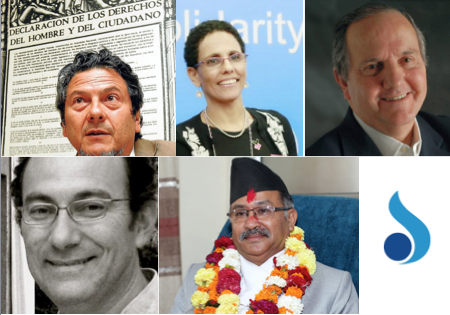
Mr Reed Brody (United States), Ms Roberta Clarke (Barbados/Canada), Professor Juan Mendez (Argentina), Mr Alejandro Salinas Rivera (Chile) and Justice Kalyan Shrestha (Nepal) have recently been elected to join the ICJ.
The new Commissioners were elected by a ballot of existing Commissioners, which took place between November and December 2016.
Mr Reed Brody (United States) has 25 years on the cutting edge of the human rights movement. Mr Brody has worked, amongst other things, as a freelance activist, New York Assistant Attorney General, Director of the ICJ’s Centre for the Independence of Judges and Lawyers, Executive Director of the International Human Rights Group (now Global Rights), Director of the Human Rights Division of the UN Observer Mission in El Salvador, Deputy Director of the UN Secretary General’s Investigative Team in the Democratic Republic of Congo and at Human Rights Watch, including on such cases as those against the former Chilean dictator, Augusto Pinochet, and the former dictator of Chad, Hissène Habre.
Ms Roberta Clarke (Barbados/Canada) has an extensive background in working on human rights issues, particularly in relation to women’s rights and social and economic rights. Ms Clarke has held a number of Academic roles including Research Assistant, Junior Research Fellow, Assistant Lecturer and now Visiting Fellow at the University of West Indies. Ms Clarke has also worked as an Attorney in private practice and in a number of civil society and intergovernmental organization roles including as the Project Coordinator of the Women and the Law Project with the Caribbean Association for Feminist Research and Action in Trinidad and Tobago, Social Affairs Officer on the Gender and Development Programme for the UN Economic Commission for Latin America and the Caribbean, Regional Programme Director for UNIFEM/UN Women’s Caribbean Office and then for UN Women’s Regional Office for Asia and the Pacific.
Professor Juan Méndez (Argentina) is currently the UN Special Rapporteur on Torture and Other Cruel, Inhuman and Degrading Treatment or Punishment, having been appointed in November 2010 and then having had his mandate renewed in 2014. Professor Méndez is also a Professor of Human Rights Law in residence at the Washington College of Law. Previously Professor Méndez has worked in a number of human rights roles including as general counsel of Human Rights Watch, Executive Director of the Inter-American Institute of Human Rights in Costa Rica, Professor of Law and Director of the Center for Civil and Human Rights at the University of Notre Dame in Indiana, President of the Inter-American Commission on Human Rights of the Organization of American States, Special Advisor to the Prosecutor of the International Criminal Court, as Co-Chair of the International Bar Association Human Rights Institute, as President of the International Center for Transnational Justice (ICTJ) and as Kofi Annan’s Special Advisor on the Prevention of Genocide.
Mr Alejandro Salinas Rivera (Chile) is a lawyer from Chile with expertise in international issues and cooperation, mining and labour law. Alejandro has collaborated with and ran leading national and international human rights organizations. He has worked as a consultant and adviser for the ICJ as well as for the Ministry of Foreign Affairs, the International Parliamentary Union and the Presidential Advisory Commission for human Rights Policy. He has been the head of a number of Departments and Units in various government agencies including the Ministry of Foreign Affairs, as Director of the Human Rights Department; the Attorney General’s Office as Chief of the Unit of International Affairs; and at the Public Defender’s Officer as Chief of Staff of the National Defender, Head of the Evaluation, Control and Claims Department and Head of the International Cooperation Unit.
Justice Kalyan Shrestha (Nepal) was Chief Justice of the Nepalese Supreme Court from 2005 until his retirement in 2016. Prior to this he served in a number of judicial roles including as Chief Judge of the Appellate Court Jumla, a Judge of various Zonal, District and Appellate courts, Under Secretary in the Ministry of Justice and Law and as a Section Officer for the Supreme Court and Government of Nepal. Justice Shrestha has also held a number of senior roles in judicial bodies including as Chairperson of the Constituent Assembly Court, President of the South Asian Association for Regional Co-operation in Law, President of the Judges Society Nepal and as a Member of the Judicial Services Commission.
In addition to the election of five new members the following Commissioners have also been elected in the following capacity:
- Professor Carlos Ayala (Venezuela) – elected for a second term as Commissioner and a third term on the Executive Committee
- Justice Azhar Cahcalia (South Africa) – elected for a third term on the Executive Committee
- Professor Andrew Clapham (United Kingdom) – elected to the Executive Committee
- Professor Robert Goldman (United States) – elected for a second term as Vice-President
- Ms Hina Jilani (Pakistan) – elected for a second term on the Executive Committee
- Professor Sir Nigel Rodley (United Kingdom) – elected for a third term as President
- Professor Marco Sassòli (Switzerland) – elected for a second term as alternate to the Executive Committee
- Justice Stefan Trechsel (Switzerland) – elected for a second term as alternate to the Executive Committee

Dec 23, 2016 | Nouvelles, Plaidoyer
La CIJ a appelé aujourd’hui les autorités marocaines à élaborer et à adopter, en étroite consultation avec les associations de juges, un code de déontologie et de conduite judiciaire pleinement conforme aux normes internationales en matière d’indépendance et de responsabilité judiciaire.
Le droit à un système judiciaire indépendant et impartial est une pierre angulaire de l’État de droit et de la protection des droits de l’homme. Ce droit comme le droit à un procès équitable sont tous deux garantis par la Constitution du Maroc et par l’article 14 du Pacte international relatif aux droits civils et politiques (PIDCP), ratifié par le Maroc.
Les autorités marocaines sont donc tenues tant par la Constitution et par son droit national, que par le PIDCP, de respecter et protéger l’indépendance et l’impartialité du pouvoir judiciaire.
L’indépendance du pouvoir judiciaire exige non seulement une séparation claire des fonctions exécutive, législative et judiciaire, et des lois établissant des critères objectifs pour la nomination et assurant une rémunération adéquate et l’inamovibilité des magistrats ; mais également que la magistrature dans son ensemble, ainsi que les magistrats à titre individuel, maintiennent l’intégrité de la profession et qu’ils soient tenus responsables pour les fautes professionnelles commises dans l’exercice de leurs fonctions.
En effet, la confiance du public dans l’intégrité du système judiciaire est un élément essentiel de l’État de droit et cette confiance tient notamment au fait que les magistrats agissent de manière indépendante, sans influence ou pression indue, menaces ou autres ingérences, pour quelque raison que ce soit, et qu’ils seront tenus responsables s’ils agissent en violation de certaines normes de conduite judiciaire dans l’exercice de leurs fonctions judiciaires.
Morocco-Code of Ethics-Advocacy-Analysis Brief-2016-FRE (Texte complet en PDF)