Dec 6, 2023 | News
Peru violated its obligations under international law by releasing former President, Alberto Fujimori, in blatant defiance of orders issued by the Inter-American Court on Human Rights (IACtHR) said the International Commission of Jurists (ICJ) today.
The ICJ has called for Peru to abide by its legal obligations and for effective measures by the bodies of the OAS to ensure such compliance.
The early release of Fujimori on purported humanitarian grounds, despite his failure to acknowledge any responsibility or contrition for the atrocities for which he was convicted, is an affront to the many victims and families who suffered severe abuse under his Presidential rule.
Even though the action does not formally amount to a reversal of finding of culpability or a forgiveness of crimes, Peru failed to follow procedures which would take into account the concerns of victims or to substantiate the humanitarian necessity of his release.
In 2009, Fujimori was sentenced to 25 years in prison for his role in the commission of extrajudicial executions, enforced disappearances and other acts, which cumulatively amounted crimes against humanity. On 6 December 2023, he was released by order of the Peruvian Constitutional Tribunal following an executive humanitarian pardon on 24 December 2017 issue by then-president Pedro Pablo Kuczynski Godard.
The Tribunal and President failed to take into account the victims’ rights to truth, justice, and reparations”, said Carolina Villadiego, ICJ Latin America Team Leader.
The Constitutional Tribunal’s flagrant disregard for the Inter-American Court’s explicit requirement to make this assessment is an affront to the victims of Fujimori’s crimes”, added Villadiego.
Although the human rights of convicted persons require judicial authorities to consider the impact of detention on their health, any imperative health considerations must be substantiated, and the victims must be heard, and their rights taken into account when determining whether humanitarian release should be granted.
Following issuance of the executive pardon in 2017, on 30 May 2018, the IACtHR adopted a resolution requesting the Peruvian authorities to evaluate the possibility of a judicial review of the humanitarian pardon. According to the IACtHR, that assessment should have into account, among other considerations, the right of Fujimori’s victims to have access to justice; the proportionality of the sentence imposed and its execution; the rights of Fujimori, in particular his right to life, personal integrity, and health.
The Inter-American Court already identified inconsistencies in Fujimori’s health assessment, which should have prompted domestic courts to fully inquire into the circumstances leading to the pardon and ensure the rights of all parties involved were considered”, affirmed Villadiego. The rights of victims seem to have been sidelined by both President Kuczynski and the Constitutional Tribunal, unravelling years of progress towards combating impunity in the country”, added Villadiego
The IACtHR exercises a supervisory duty over decisions related to Fujimori’s case, Barrios Altos and La Cantuta cases, in which it found Peru had violated is obligations under the American Convention on Human Rights (ACHR) by failing to hold perpetrators of gross human rights violations committed in Peru to account. Peruvian authorities are obligated to comply with the IACtHR’s decisions in this case, consistent with fundamental rule of law principles.
The ICJ underscores unequivocally that the Peruvian authorities must comply with the orders of the IACtHR. The Peruvian Constitutional Tribunal does not have the authority to disregard the IACtHR’s power to issue orders as part of its judicial function of supervising the execution of its decisions and to override those orders.
The ICJ calls on the Peruvian authorities to comply with the orders of the IACtHR and to review Fujimori’s executive humanitarian pardon. This requires an updated, thorough and impartial assessment of Fujimori’s health and consideration of the rights of Fujimori’s victims.
The ICJ also calls upon the international community, in particular members of the Organization of American States, to demand that Peru comply with the orders of the IACtHR and fulfil its international human rights obligations towards victims of serious human rights violations and crimes under international law.
Background
In 2009, the Peruvian Supreme Court convicted Alberto Fujimori for the murder of 25 people, the serious injury of four people and the kidnapping of two people, which it held amounted to crimes against humanity. As a general principle, international law and standards prohibits the issuance of amnesties and pardons for those convicted of gross human rights violations amounting to crimes under international law. International law also requires protection of the right to health of all persons, including prisoners, which in some instances could preclude institutional incarceration.
Peruvian Constitutional Tribunal’s rulings
On 4 December 2023, the Peruvian Constitutional Tribunal handed down a ruling ordering the National Penitentiary Institute to immediately release former President Fujimori, who is serving a 25-year prison sentence that is due to be completed in February 2032. The ruling was the last judicial decision triggered by a humanitarian pardon for health issues granted to Fujimori on 24 December 2017 by then-president Pedro Pablo Kuczynski Godard. Previously, on 17 March 2022, the Constitutional Tribunal had ruled that Fujimori’s humanitarian pardon should be implemented.
In the 2023 ruling, the Tribunal also stated that the IACtHR did not have the competency to rule on the non-enforcement of a national ruling as part of the IACtHR’s judicial function of supervising the execution of its decisions. This pronouncement was in reaction to the action taken on 7 April 2022, in which the IACtHR had ordered the Peruvian State not to implement the 2022 Constitutional Tribunal’s ruling.
The Tribunal’s position is contrary to the IACtHR’s faculties established in Articles 33, 62.1, 62.3 and 65 of the ACHR and Article 69 of the Rules of Procedure of the IACtHR’s. Moreover, the Tribunal’s position might imply that some actions of judicial authorities may be outside the scope of the control of conventionality, and therefore, outside the obligation established under the ACHR.
Inter-American Court of Human rights’ decisions
Before the 2009 conviction sentence against Fujimori, for the same facts, in 2001 and 2006, in the cases of Barrios Altos and La Cantuta, the IACtHR’s had found that the Peruvian state had breached its obligations under the ACHR. The IACtHR determined that Peru had violated the right to juridical personality (Article 3), the right to life (Article 4), the right the right to humane treatment (Article 5), the right to personal liberty (Article 7), and the right to a fair trial and judicial protection (Articles 8 and 25). In both cases, among other reparation measures, the IACtHR ordered Peru to identify, investigate, prosecute, and punish those responsible for human rights violations.
As part of the judicial function of supervising the implementation of its decisions, the IACtHR’s has issued several resolutions ordering measures for the full implementation of the orders in the cases of Barrios Altos and La Cantuta. Following the issuance of the humanitarian pardon in December 2017, the IACtHR’s issued a resolution on 30 May 2018 requesting the Peruvian authorities to evaluate the possibility of a judicial review of the humanitarian pardon.
For the IACtHR, this judicial review would consider: (i) the right of Fujimori’s victims to have access to justice; (ii) the proportionality of the sentence imposed and its execution; (iii) the rights of Fujimori, in particular his right to life, personal integrity and health; and (iv) the fact that prison sentences cannot be converted into death sentences. In addition, the IACtHR considered that there were serious doubts as to whether the legal requirements laid down in Peruvian law for the granting of the humanitarian pardon had been met. The IACtHR highlighted inconsistencies in Fujimori’s health assessment and allegations that the pardon was granted to give then-President Kuczynski the votes in Congress to avoid impeachment.
In addition, the IACtHR also mentioned that in cases of serious human rights violations and crimes under international law, pardons for health reasons, such as in the Fujimori case, it is necessary to take into account the health of the convicted person, but it should also be considered:
(…) [whether] a substantial part of the sentence has been served and the civil compensation imposed in the sentence has been paid; the behaviour of the convicted person with regard to the clarification of the truth; the recognition of the seriousness of the crimes committed and their rehabilitation; and the effects that early release would have on society and on the victims and their families.”
The judicial review carried out by the Peruvian Constitutional Tribunal failed to take into account any of the requirements established by the IACtHR in its resolution of 30 May 2018. As a result, on 7 April 2022 and on 5 December 2023, the IACtHR ordered the Peruvian State not to implement the decision of the Constitutional Tribunal in relation to Fujimori’s humanitarian pardon. This was done in order to guarantee the right to access to justice of the victims of the cases of Barrios Altos and La Cantuta.
Contact:
Carolina Villadiego Burbano, ICJ Latin America Team Leader, email: carolina.villadiego@icj.org
Rocío Quintero Martínez, ICJ Legal Adviser for the Latin America Programme, email: rocio.quintero@icj.org
Dec 4, 2023 | Events, News
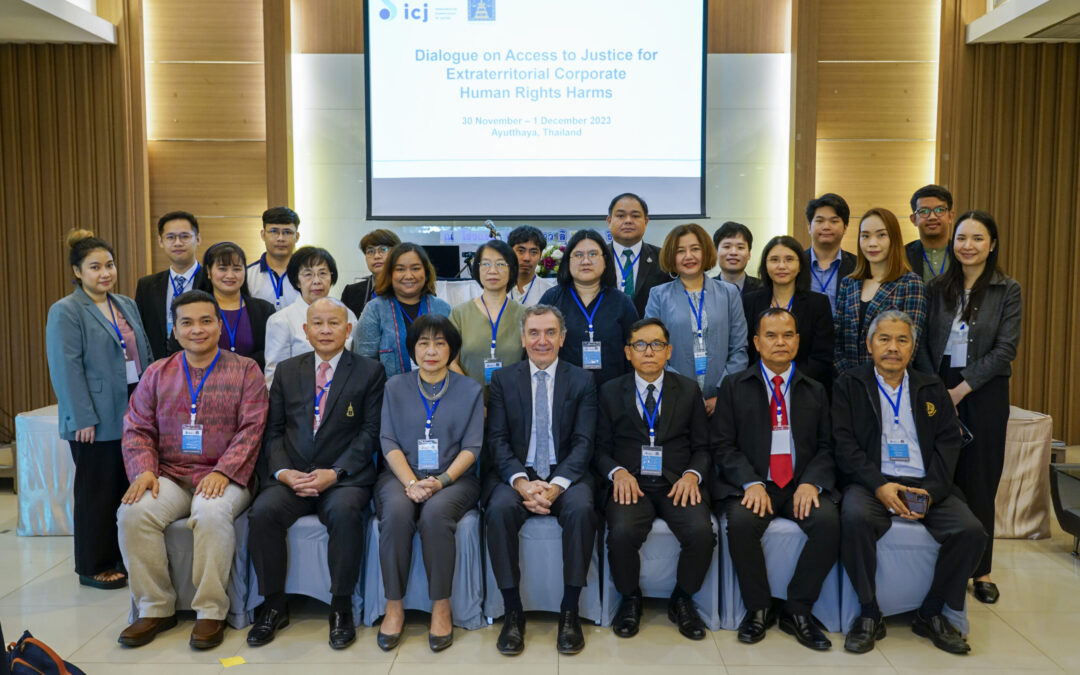
The conclusion drawn at a workshop hosted by the International Commission of Jurists (ICJ) and Thailand’s Ministry of Justice on 30 November and 1 December 2023, in Ayutthaya province, was that Thailand should step up efforts to provide real access to justice for victims of corporate human rights abuses involving Thai companies abroad. This is imperative to make sure that Thailand meets its international legal obligations and fulfills the commitment it made in adopting a National Action Plan on Business and Human Rights Phase 2 (NAP), aimed at regulating the conduct of Thai companies abroad.
The workshop advanced a crucial component of the set of action points outlined in the NAP, engaging nearly 30 members from the justice sector, relevant authorities across various departments, academics, lawyers, and civil society actors.
“This workshop holds particular importance as it contributes to the global initiative aimed at addressing the lack of human rights regulation and the accountability of transnational corporations, a significant gap in human rights protection,” remarked Santiago A. Canton, ICJ’s Secretary-General in an opening statement.
“The state’s obligation to prevent human rights abuses committed by the companies it may influence does not stop at the border. The adoption of the Maastricht Principles in 2011 revealed evidence of State obligations to protect economic, social, and cultural rights beyond its borders, including in the context of corporate conduct, and this obligation binds the judiciary of the State. These principles have subsequently been confirmed by several jurisprudences of the UN treaty bodies,” said Sandra Epal Ratjen, ICJ’s UN Senior International Legal Adviser.
During the workshop, participants discussed existing challenges, covering areas such as corporate veils, conflicts of law, jurisdictional issues, statutes of limitations, and remedies.
“When an abuse occurs, the legal separation of corporate entities often allows parent companies and their representatives to evade responsibility for human rights abuses committed by them, leaving victims with no means to enforce compensation awards,” said Sanhawan Srisod, ICJ’s Legal Adviser.
“Courts in the parent company’s home country may serve as an alternative forum for claims seeking remedy or reparation. However, affected foreign citizens generally encounter greater barriers than Thai citizens in accessing justice due to several reasons, including language barriers, lack of understanding of the Thai legal system, financial constraints, short statutes of limitation, and the unavailability of access to legal aid, local lawyers, and internal corporate documents,” added Srisod.
Proposals from the participants included amending laws to shift the burden of proof, especially when critical facts or documents necessary to resolve a claim reside exclusively within the knowledge of the corporate defendant. This involves considering the potential influence parent companies exert over their subsidiaries in relevant actions. Other recommendations involved extending the statute of limitations for cases involving victims of transnational corporate human rights abuses, acknowledging the existence of corporate veils under Thai law, strengthening the enforcement of foreign judgments against parent companies in Thailand.
Effective measures aimed at ensuring remedies could include requiring businesses to obtain insurance coverage or establishing preventive remedial funds for Thai businesses before embarking on overseas investment. The eligibility criteria of existing funds and grievance mechanisms could be widened within Thailand to explicitly allow affected persons outside the country access to such remedies and mechanisms. There were also suggestions to explicitly broaden the scope of duties of the National Human Rights Commission of Thailand (NHRCT) to investigate and reconcile abuses occurring abroad.
Further recommendations included establishing standards for remedies with a human-centered approach and exploring the implementation of social sanction measures.
Participants considered how best to implement measures through bodies such as the Securities and Exchange Commission (SEC) and the Board of Investment (BOI), whose representatives attended the Workshop. This encompassed proposals for sustainable disclosure of corporate information to both the SEC and BOI. Additionally, there were suggestions to strengthen the BOI’s role or assign a permanent mandate to the NAP Committee for overseeing Thai investments abroad. Participants also explored the idea of incorporating human rights challenges faced in foreign investment as mandatory disclosure points in the SEC’s One-Report, which listed companies are required to submit annually. Furthermore, there were discussions regarding the Stock Exchange of Thailand (SET) assuming a more influential role in regulating transnational corporations.
Background
Thailand’s National Action Plan on Business and Human Rights Phase 2 (2023-2027) outlines various activities within the Action Plan on Cross Border Investment and Multinational Enterprises.
Its Action Point 1.3 designates the Ministry of Justice, supported by the Ministry of Foreign Affairs and the Office of the Attorney General, with the responsibility of conducting a study. This study aims to offer recommendations for amending laws or establishing measures aimed at ensuring access to the justice system and effective civil, criminal, and administrative remedies for communities, both locally and overseas, affected by the operations of Thai companies or state enterprises abroad.
This workshop was the second of its kind. The first meeting was conducted on 10 and 11 September 2022 by the ICJ and Thailand’s Ministry of Justice.
Speakers at the Workshop included:
- Darunee Paisanpanichkul, Deputy Dean, Faculty of Law, Chiang Mai University
- Ruangsak Suwaree, Director-General, Rights and Liberties Protection Department, Ministry of Justice
- Sandra Epal Ratjen, Senior International Legal Adviser and UN Representative, ICJ
- Sanhawan Srisod, Legal Adviser, ICJ
- Santiago A. Canton, Secretary-General, ICJ
- Sayamol Kaiyoorawong, National Human Rights Commissioner of Thailand
- Teerachai Sanjaroenkijthaworn, Co-ordinator, Extra-Territorial Obligation Watch Coalition
Contact
Sanhawan Srisod, ICJ Associate International Legal Adviser, e: sanhawan.srisod@icj.org
Further reading
Thailand: Barriers persist in access to justice for victims of human rights abuses involving Thai transnational corporations abroad – ICJ report
Nov 30, 2023 | Events, News
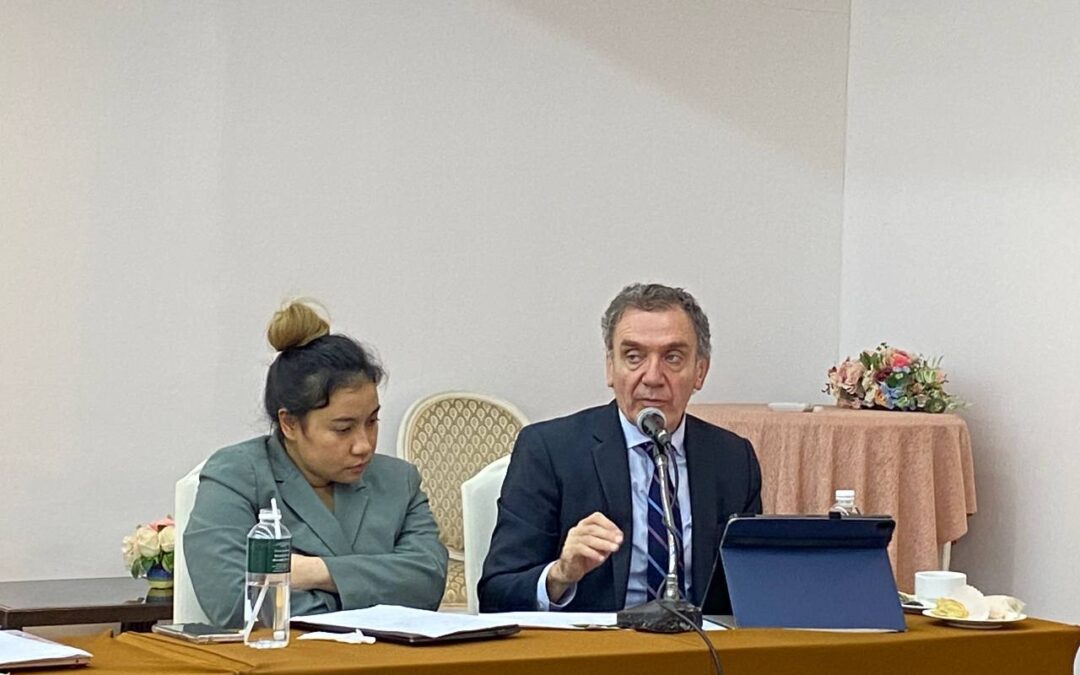
On 29 November 2023, the ICJ co-hosted a dialogue among Thai lawyers, academics, and Santiago A. Canton, Secretary General of the ICJ to exchange best practices from Latin America, specifically focusing on insights from the Inter-American Court of Human Rights and domestic courts in the region – to address ongoing challenges in litigating cases involving suspected enforced disappearances within Thai courts.
The Dialogue involved challenges encountered in litigating cases of enforced disappearances, particularly in terms of accessing, collecting, and admitting evidence within Thai courts. These challenges are notably complex, especially when the crimes have occurred beyond Thailand’s borders.
Additionally, participants discussed the difficulties related to establishing the responsibility of individuals for these serious crimes and how courts have handled evidence submitted in previous enforced disappearance cases. This included instances where evidence, such as telecommunications, as well as various forensic evidence like biological evidence and DNA evidence, was dismissed, and the failure to identify the perpetrator in cases where the victims’ bodies or remains could not be located.
“The crime of enforced disappearance completely eradicates any trace of the victim, with no acknowledgment by the authorities and no effective investigation. The requirement to locate the disappeared individuals’ bodies and remains contradicts the very nature of the crime of enforced disappearance,” said Santiago A. Canton, Secretary General of the ICJ.
While highlighting that the criteria for evaluating evidence within the Inter-American Court of Human Rights (IACtHR) are less formal compared to domestic criminal legal systems, Canton noted IACtHR’s jurisprudence relevant to the admissibility of circumstantial and indicative evidence, which was particularly instructive as enforced disappearances typically involve deliberate attempts by state officials to destroy direct evidence, aimed at securing impunity.
“The standard of proof in the Inter-American Court of Human Rights allows lawyers, under certain circumstances, to only establish a demonstrable ‘practice’ of enforced disappearances at the time of a specific case. When combined with circumstantial evidence, this can result in a judicial presumption of enforced disappearance,” said Canton.
Participants also discussed the ‘continuous nature’ of enforced disappearance crimes, which are recognized under Thai law and enable cases from the past, where the fate and whereabouts of victims remained unknown, to be prosecutable before the court, notwithstanding the fundamental principle of non-retroactivity.
Closing remarks by Angkhana Neelapaijit, a Member of the UN Working Group on Enforced or Involuntary Disappearances, whose husband Somchai Neelapaijit was a victim of enforced disappearance, detailed the role of the Working Group and the steps taken globally to address the crime.
Background
More than 20 Thai experts, lawyers, and academics, who represent or have experience researching cases of enforced disappearances in Thailand, participated in the discussion.
Thailand’s Act on Prevention and Suppression of Torture and Enforced Disappearance became effective in February 2023. However, its implementation has been slow. The majority of cases involving suspected torture, ill-treatment, and enforced disappearances are still in the investigation phase, and not yet moved into the adjudication phase. Limited information about its progress has been made available to the public.
Prior to the enactment of this new law, only two cases of apparent enforced disappearances reached Thai courts: the case of prominent Muslim lawyer Somchai Neelapaijit and Karen activist Pholachi ‘Billy’ Rakchongcharoen. Unfortunately, these cases concluded with limited success, mainly due to challenges surrounding the evidence submitted to the court.
Contact
Sanhawan Srisod, ICJ Associate International Legal Adviser, e: sanhawan.srisod@icj.org
Further reading
Thailand: a report on the criminal trial and investigation of the enforced disappearance of the Thai human rights lawyer, Somchai Neelapaichit
Ten Years Without Truth: Somchai Neelapaijit and Enforced Disappearances in Thailand

Nov 28, 2023 | Cases, News
FOR IMMEDIATE RELEASE
Berlin, November 28, 2023 – A German court in the city of Celle is expected to deliver a verdict on November 30, 2023, in the first trial in Germany for crimes committed in The Gambia, Gambian and international civil society groups said today in releasing a question and answer document about the trial.
The groups are: the African Network against Extrajudicial Killings and Enforced Disappearances (ANEKED), the European Center for Constitutional and Human Rights (ECCHR), the Gambian Center for Victims of Human Rights Violations, Human Rights Watch, the International Commission of Jurists, Reporters Without Borders (RSF), the Rose Lokissim Association, the Solo Sandeng Foundation, and TRIAL International.
This trial is possible because Germany recognizes universal jurisdiction over certain serious crimes under international law, allowing for the investigation and prosecution of these crimes no matter where they were committed and regardless of the nationality of the suspects or victims.
The trial concerns Bai L., an alleged member of the “Junglers,” a paramilitary unit also known as the “Patrol Team,” which was set up by then-president Yahya Jammeh in the mid-1990s. Jammeh’s 22-year rule was marked by systematic oppression and widespread human rights violations, including torture, extrajudicial killings, enforced disappearances, and sexual violence against actual and perceived opponents.
German prosecutors accuse Bai L. of being a Junglers driver involved in the attempted murder of Ousman Sillah, a lawyer; the murder of Deyda Hydara, a journalist; the attempted murder of Ida Jagne and Nian Sarang Jobe, who worked with the independent newspaper Hydara; and the murder of a former Gambian soldier, Dawda Nyassi
The verdict in the Bai L. case represents a major step in the search for justice for years of abuses committed under Jammeh’s rule in The Gambia, the groups said. The Bai L. trial reinforces the role that governments like Germany can play in advancing justice for atrocities committed abroad under the principle of universal jurisdiction.
Civil society groups will hold a news conference online on Thursday, November 30 after the verdict is issued – scheduled for 3:30 pm CET – at the following link: https://us06web.zoom.us/j/81236784593?pwd=tvLgbtT3I8N9rF2Db2XTIRyH3Kn1gv.1
To read the question-and-answer document, please see the attached PDF:
Questions and Answers on first German trial for serious crimes
For more information, please contact:
For Reporters Without Borders, in Dakar, Sadibou Marong (English, French): +221-70-960-40-92 (mobile); or smarong@rsf.org. Twitter: @cheikhsadbu
For TRIAL International, in Geneva, Babaka Mputu (English, French, German): +41-775-07-04-56 (mobile); or media@trialinternational.org. Twitter: @Trial
For Human Rights Watch, in New York, Elise Keppler (English, French): +1-917-687-8576 (mobile); or kepplee@hrw.org. Twitter: @EliseKeppler
For Solo Sandeng Foundation, in Germany, Fatoumatta Sandeng (English, German, Mandinka, Wollof): +49-163-174-7519 (mobile); or solosandengfoundation@gmail.com. Twitter: @solosandengfound
For ANEKED, in New York, Nana-Jo Ndow (English, French, Spanish, Portuguese): +1-929-684-5734 (mobile); or nanajo.ndow@aneked.org. @theANEKED
For Reporters Without Borders, in Berlin, Nicola Bier (German, English, French, Spanish, Italian): +49-160-9957-6073 (mobile); or nicola.bier@reporter-ohne-grenzen.de. Twitter: @ReporterOG
Lawyer for Baba Hydara and Omar and Modou Nyassi, in Celle, Patrick Kroker (German, English, French): +49-170-813-6258 (mobile); or info@patrickkroker.net. Twitter: @pkroker2
For International Commission of Jurists, in New York, Reed Brody (English, Spanish, French, Portuguese): +1-917-388-6745 (mobile); or reedbrody@gmail.com. Twitter: @reedbrody
Nov 24, 2023 | Events, News
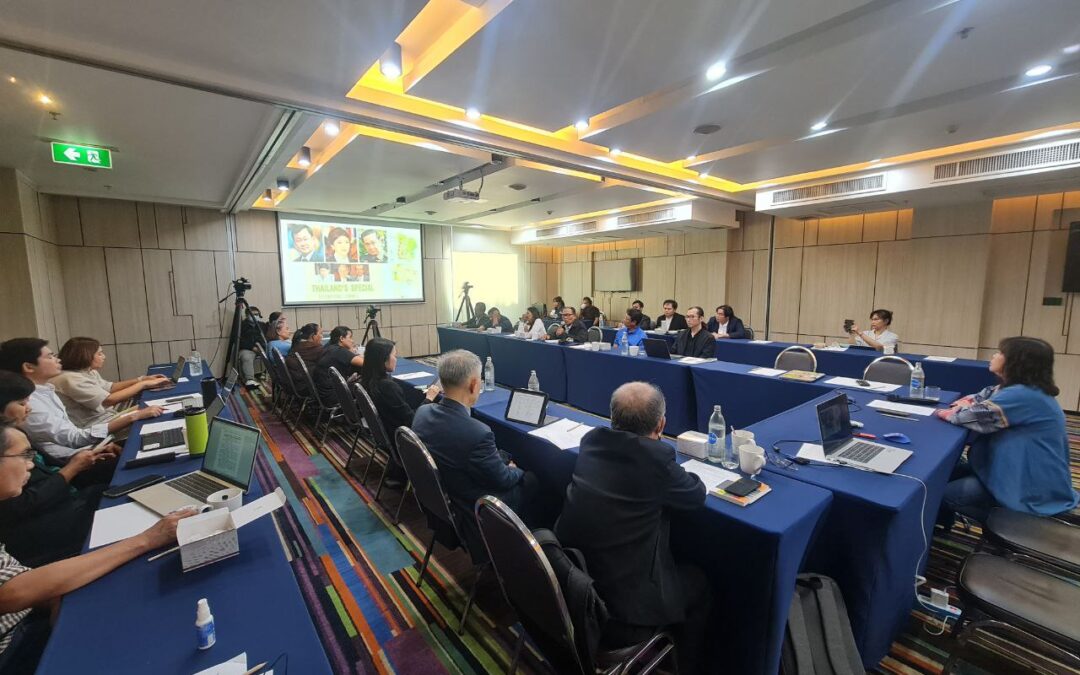
“The law governing the development of Thailand’s Eastern Economic Corridor (EEC) must be evaluated and revised to address concerns raised by local communities, and align with Thailand’s international human rights obligations,” concluded participants at a dialogue hosted by the International Commission of Jurists (ICJ), Land Watch Thai, EEC Watch, ENLAW Thai Foundation, and Thai Public Broadcasting Service (Thai PBS) in Bangkok, on 22 November 2023.
Participants shared recommendations aimed at improving the Eastern Special Development Zone Act B.E. 2561 (2018) (‘EEC Act’), which governs the operation of the EEC, to better serve the rights and interests of persons in affected communities. These suggestions will be compiled by the organizers and submitted as part of the official consultation process during the 2024 evaluation by the Office of the Eastern Special Development Zone Policy Committee (‘EEC Office’).
The EEC is a special economic zone in Thailand being developed in the eastern coastal provinces of Rayong, Chonburi, and Chachoengsao, along the Gulf of Thailand. Its objective is to promote investment in next-generation industries utilizing innovation and high technology.
“The EEC Act, however lofty are its stated aim, fails to incorporate adequate protection of human rights. While the EEC Act nominally acknowledges international human rights standards such as the United Nations Guiding Principles on Business and Human Rights’ protect, respect, and remedy framework, as well as the principle of promoting and protecting human rights in policy preparation, it fails to provide for adequate means to ensure implementation of these and other human rights standards,” said Sanhawan Srisod, ICJ’s Legal Adviser.
“According to Thai law, the evaluation must achieve goals that include aligning the law with Thailand’s international obligations under international law. Therefore, the EEC Office cannot complete the evaluation process without thoroughly addressing current gaps in compliance,” added Srisod.
The ICJ recommendations presented include the need to incorporate safeguards against forced eviction, in accordance with international human rights law, and to recognize the social, cultural, spiritual, economic, environmental, and political value of land for communities, with special emphasis on the significance for tenant farmers and small-scale food producers. Responsible land-based investments and implementing human rights due diligence are also critical elements.
A survey conducted before the dialogue with 44 affected individuals in Chonburi and Rayong provinces revealed a pattern of practices that fail to comply with Thailand’s international human rights obligations. They include:
- Lack of adequate participation of residents in the consultation process of the EEC Act.
- Absence of representation of locally affected individuals/communities in the Committee overseeing the EEC, primarily composed of governmental authorities and representatives from business sectors.
- The EEC Committee and Office hold overly broad powers without adequate checks and balances.
- The absence of effective grievance and compliance mechanisms within the EEC Office.
- Disregard for the impact of activities on local livelihoods during policy implementation.
- Ineffectiveness and inadequacy of remedies provided for individuals affected by EEC operations.
Participants suggested amending the EEC Act to address these concerns and ensure real participation, inclusiveness, adequate livelihood, a healthy environment, effective remedies, and other human rights of communities in the area.
Additionally, it addressed ongoing litigation initiated by communities challenging town planning within the EEC, specifically challenging the re-designation of agricultural, natural, and environmental reserved zones to industrial zones, which is currently pending before the Central Administrative Court.
Background
The participants comprised 30 affected individuals living in the areas of the EEC and civil society actors. This is the second dialogue following the initial one in June 2023, addressing the same topic.
According to the Act on Legislative Drafting and Evaluation of Law B.E. 2562 (2019), all Thai laws must undergo outcome evaluation at least every five years.
Speakers at the dialogue included:
- Chanchao Chaiyanukit, Former Permanent Secretary of the Ministry of Justice
- Pornpana Kuaycharoen, Land Watch Thai
- Sanhawan Srisod, ICJ
- Saowaruj Rattanakhamfu, Thailand Development Research Institute (TDRI)
- Somnuck Jongmeewasin, EEC Watch
- Sondhi Kodchawat, Environmental Researcher
- Sumitchai Hattasan, Center for Protection and Revival of Local Community Rights
- Supaporn Malailoy, ENLAWThai Foundation
- Sutthikiat Kodchaso, ENLAWThai Foundation
Contact
Sanhawan Srisod, ICJ Associate International Legal Adviser, e: sanhawan.srisod@icj.org
Further reading
Thailand: laws governing development of Eastern Economic Corridor and Special Economic Zones fail to adequately protect human rights – ICJ report