Nov 1, 2023 | Committee on the Elimination of Racial Discrimination, Legal submissions, News, Treaty Bodies, Work with the UN
The International Commission of Jurists (ICJ) made a submission to the UN Committee on the Elimination of Racial Discrimination in view of the Committee’s examination of the Combined Ninth to Eleventh Periodic Reports of South Africa under Article 9 of the International Convention on the Elimination of All Forms of Racial Discrimination (ICERD). The submission focussed primarily on the treatment of non-citizens with reference to the 2019 National Action Plan and on South Africa’s violations of the right to access health care and treatment, the right to work, as well as on concerns around residence and humanitarian protection for Zimbabweans.
The following are among some of the recommendations featured in the submission, which ICJ addressed to the South African government, to tackle a number of violations of the ICERD:
- Enact legislation that permits trained attorneys who are non-citizen/non-permanent residents to be admitted into the South African legal profession. Remove unequal practices and policies that discriminate against non-citizens and deny or undermine their ability to work in their chosen profession. Promote and advance the rights to work, to free choice of employment, to just and favorable conditions of work, to protection against unemployment, to equal pay for equal work, to just and favorable remuneration;
- Acknowledge that, based on the demographics of South Africa’s migration trends, discrimination based on national origin and citizenship status carries a quality of xenophobia and racial discrimination and should be recognized as unconstitutional and a violation of South Africa’s obligations under the Convention;
- Halt the termination of the ZEP programme and institute a pathway toward permanent residency for the 178,000 Zimbabweans who have lived and worked in South Africa for over a decade under the ZEP programme; and
- Extend the ruling that found denying access to public healthcare for non-citizen mothers, lactating mothers and children under the age of six is unconstitutional so as to ensure that denial of access to public healthcare to any individual in South Africa is unconstitutional;
- Formalize the informal economy by ensuring that informal economy workers are catered for under labour, occupational health and safety, social protection and non-discrimination laws;
- Ensure that by-laws and regulations comply with the right to work and the right to non-discrimination in the South African Constitution and under the Convention.
The following organizations have endorsed this submission:
- Lawyers for Human Rights
- Section 27
- Centre for Applied Legal Studies
- Health Justice Initiative
- Kopanang Africa Against Xenophobia
- Solidarity Centre
- The Consortium for Refugees and Migrants in Southern Africa.
Download the submission
Oct 27, 2023 | News
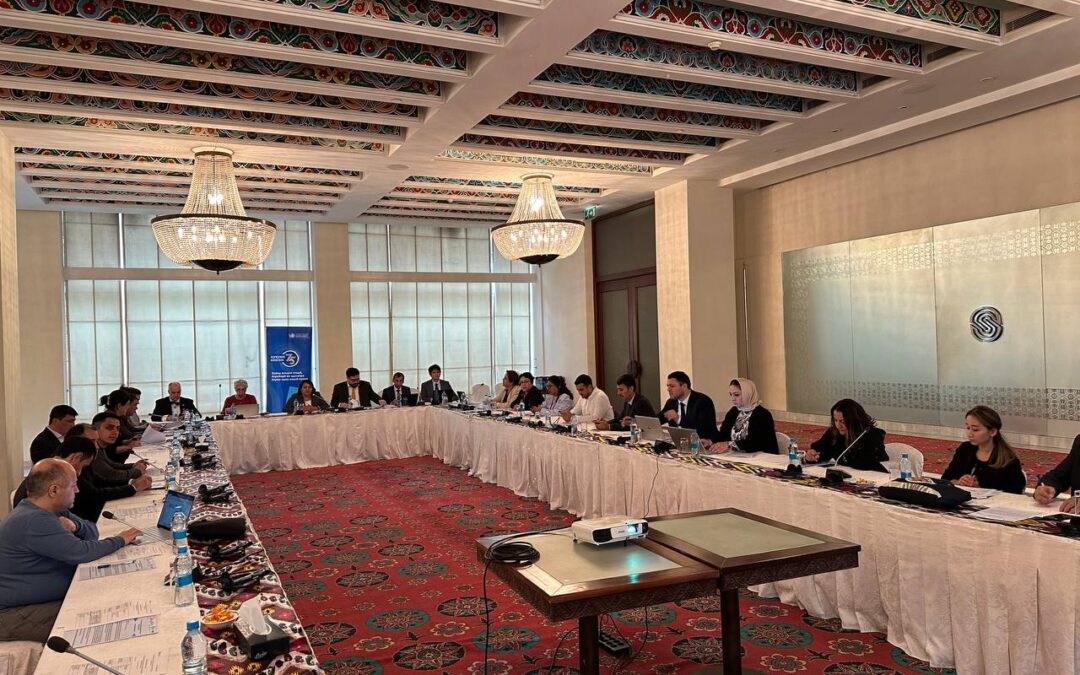
Today, the International Commission of Jurists (ICJ), in collaboration with the Supreme Court of the Republic of Tajikistan the Office of the High Commission of Human Rights (OHCHR) Regional Office for Central Asia (ROCA), and the Organization for Security and Cooperation in Europe (OSCE)in Dushanbe, has convened a round to discuss the application of international law by national courts. The event aimed to enhance the capacity of the judiciary to apply international standards in Tajikistan.
The discussions at the round table were focused on international human rights mechanisms and instruments, the binding nature of international treaties, and the current use of international law in Tajik courts. The participants examined these standards in relation to Tajikistan’s international treaty obligations, with the objective of improving the judiciary’s ability to effectively apply international jurisprudence and principles.
The event provided a platform for participants to discuss the practical implementation of international legal norms in the adjudication process in other national contexts and to share strategies to address the challenges of such integration. The round table also facilitated a critical analysis of the reforms necessary for effective use of international standards in national legal procedures.
The event addressed the broader implications of applying international law, considering its impact on the rule of law and public trust in the justice system. There was a clear consensus on the need to draft recommendations that could guide the judiciary in applying international law.
The round table discussions were notably informed by a recent ICJ report calling for comprehensive judicial reform in Tajikistan. Published in December 2020, the report titled “Neither Check nor Balance: the Judiciary in Tajikistan,” provided an in-depth analysis of the organisation and functioning of the judiciary in Tajikistan and its capacity to administer justice and uphold human rights.
The ICJ report’s conclusion that acquittals in criminal trials are exceedingly rare underscored a systemic failure to ensure judicial independence, thereby highlighting the urgency of the reform. It was recognized that for Tajikistan to fulfil its international legal obligations and to provide effective remedies for human rights violations, reforms must be initiated and practically implemented to safeguard against practices that undermine the independence of the judiciary.
Attachment: Briefing paper on RT for judges on Oct 27 2023 in Dushanbe
Oct 23, 2023 | News
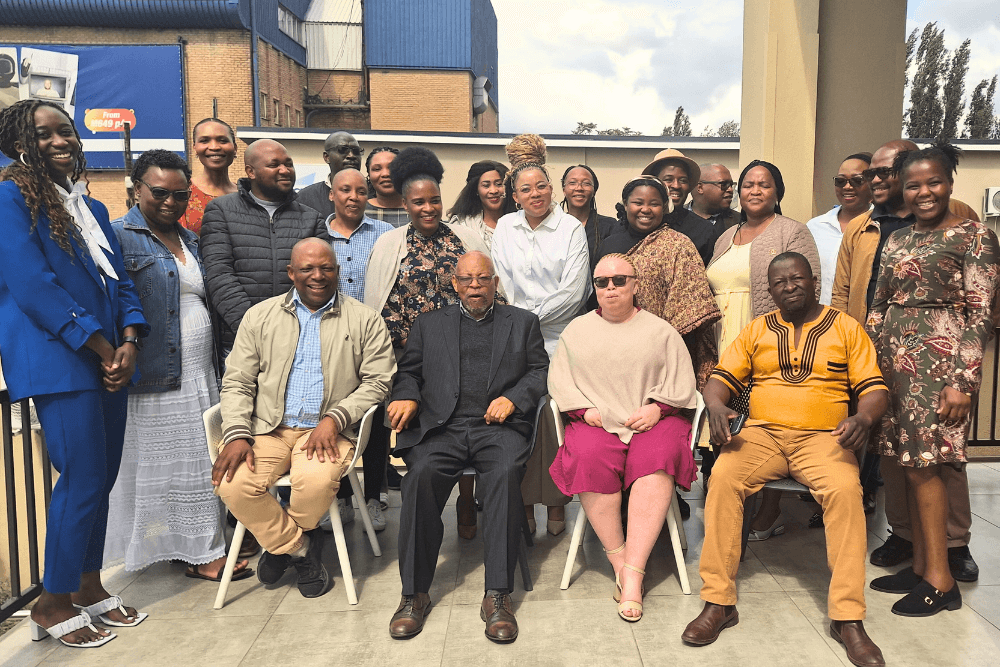
On 11 and 12 October 2023, the International Commission of Jurists (ICJ), People’s Matrix Association and Seinoli Legal Centre (SLC) jointly held a workshop for magistrates and judges in Maseru, Lesotho’s capital. Drawing on ICJ’s 8 March Principles for a Human Rights-Based Approach to Criminal Law Proscribing Conduct Associated with Sex, Reproduction, Drug Use, HIV, Homelessness and Poverty, the workshop was aimed at enhancing the Lesotho judiciary’s ability to apply a human rights-based approach in the application and enforcement of domestic criminal law.
The central theme explored by participants throughout the workshop was the profoundly negative human rights impact of unjustified criminalization, especially for marginalized individuals and communities. At the workshop, the Acting Chief Justice of Lesotho, Tšeliso Monapathi, emphasized the importance of the judiciary as the last line of defence for ensuring the protection of human rights.
Participants at the workshop noted some positive legal developments in Lesotho that are consistent with international human rights law, including the repeal of vagrancy laws through the introduction of the 2010 Penal Code. Most recently, in October 2022, the High Court of Lesotho, sitting as a Constitutional Court, declared section 32(a)(vii) of the 2003 Sexual Offences Act unconstitutional. The Court ruled that the provision, which imposes the death penalty on HIV-infected persons who commit sexual offences, was unconstitutional to the extent that it violated the rights to equality before the law and equal protection of the law, freedom from discrimination, and freedom from inhuman treatment as guaranteed by the Lesotho Constitution. However, in June this year, in their joint submission to the UN Human Rights Committee, the ICJ, People’s Matrix and Seinoli Legal Centre noted with concern that the Sexual Offences Act left the common law offence of “sodomy” intact.
“Despite some progressive milestones in the protection and promotion of fundamental human rights and freedoms of all persons, it is deeply concerning that there remain a number of criminal laws that disproportionately impact sex workers, LGBTQI+ persons, those seeking sexual and reproductive health care services, such as abortion care, and other marginalized groups,” said Mosa Lestie, Programme Lawyer at Seinoli Legal Centre.
The participants, the majority of whom were magistrates, discussed measures the courts have employed to promote and protect the human rights of marginalized groups. This includes sensitization on the human rights of persons with disabilities, LGBTQI+ persons and other marginalized groups, particularly their right to access to justice and the implementation and continual development of court rules to ensure that all persons can participate in court proceedings on an equal basis as complainants, witnesses, accused persons or experts. For instance, in July 2023, the Lesotho National Federation hosted a training workshop with some magistrates and prosecutors on access to justice for persons with disabilities and the 2023 Disability Equity (Procedure) Rules.
Despite these efforts, participants expressed concern that limitations continue to exist in relation to: the provision of accommodations for accused and witnesses at court; worrying trends of discrimination within the wider criminal justice system, especially among the police. They also identified the need for ongoing human rights training for magistrates and other actors in the criminal justice system.
“The unjustified or arbitrary over-criminalization of conduct associated with LGBTQI+ individuals in Lesotho continues to result in discrimination and stigmatization. In turn, this has significantly impeded access to justice for the communities the People’s Matrix supports,” said Giselle Ratalane, Programme Manager at the People’s Matrix Association.
“As the ICJ’s 8 March Principles underscore, these criminal laws have discriminatory effects on marginalized groups and violate Lesotho’s obligations under international human rights law, including with respect to the rights to equality, non-discrimination, dignity, privacy, freedom of expression and more,” concluded Mulesa Lumina, ICJ Africa’s Legal and Communications Associate Officer.
Contact
Mulesa Lumina, Legal and Communications Associate Officer (Africa Regional Programme), e: mulesa.lumina@icj.org
Kaajal Ramjathan-Keogh, Director (Africa Regional Programme), e: kaajal.keogh@icj.org
Background
While Lesotho has made some strides in recognizing and safeguarding the human rights of all persons, including through the introduction of various laws and policies, certain conduct continues to be targeted by criminal laws notwithstanding the fact that under general principles of criminal law and international human rights law and standards, such conduct should not be criminalized in the first place.
As a State Party to a number of international human rights instruments, including the International Covenant on Civil and Political Rights (ICCPR), the African Charter on Human and Peoples’ Rights and the Protocol to the African Charter on Human and Peoples’ Rights on the Rights of Women in Africa, Lesotho must ensure that its criminal laws do not directly or indirectly discriminate against anyone on grounds prohibited by international human rights law.
The 8 March Principles for a Human Rights-Based Approach to Criminal Law Proscribing Conduct Associated with Sex, Reproduction, Drug Use, HIV, Homelessness and Poverty, recently published by the ICJ, offer a clear, accessible, and operational legal framework and practical legal guidance for a variety of stakeholders, including judges and magistrates, on the application of criminal law to conduct associated with consensual sexual activities, such as consensual same-sex sexual relations and sex work (Principles 16 and 17); the criminalization of sexual orientation, gender identity and gender expression (Principle 18); drug use (Principle 20); as well as homelessness and poverty (Principle 21). As stated in Principles 7 and 8, criminal law “must be interpreted consistently with international human rights law” and “…may not, on its face or as applied, in substance or in form, directly or indirectly discriminate on any, including multiple and intersecting, grounds prohibited by international human rights law”.

Oct 23, 2023 | News
At a workshop convened on 11 and 12 October, the International Commission of Jurists (ICJ), Validity Foundation, and the United Disabled Persons of Kenya (UDPK) stepped up efforts to promote the greater use of strategic litigation to secure the rights of persons with disabilities. The workshop was aimed particularly at building the capacity of organizations of persons with disabilities (OPDs) to undertake strategic litigation.
“As a party to the Convention on the Rights of Persons With Disabilities, the African Disability Protocol and other regional and UN human rights treaties, Kenya is obliged to ensure that all persons with disabilities enjoy all human rights on an equal basis. Kenya’s obligations include a duty to ensure that effective remedies – including throughout courts – are available where persons with disabilities allege the denial of their rights,” said Wilson Macharia, ICJ Africa’s Associate Legal Advisor.
Strategic litigation is currently underutilized by persons with disabilities and their representative organizations in Kenya. At the workshop, persons with disabilities indicated that they faced barriers to instituting or participating effectively in litigation due to:
- a general lack of knowledge of their rights and the existing mechanisms to enforce these rights;
- a lack of knowledge on the operations of the available mechanisms, including complex court procedures.
- a lack of knowledge on existing legal aid programs and services.
- a failure by courts and other justice mechanisms to provide appropriate reasonable and procedural accommodations.
CSOs and lawyers who attended the workshop stressed that key stakeholders, including those who provide litigation support to indigent persons, typically do not have adequate capacity and training to advocate for the rights of persons with disabilities.
“The Law Society of Kenya should work towards establishing a committee with a specific mandate of advocating for the rights of persons with disabilities, in addition to mainstreaming disability rights in the existing committees”, said Were Bonface, an advocate from the Public Interest and Advocacy Directorate of the Law Society of Kenya.
During the workshop, the participants also discussed the need for continuous meaningful engagement between OPDs and other key stakeholders which undertake legal advocacy on human rights, including the Kenya National Commission on Human Rights, Katiba Institute, the Law Society of Kenya, and the Federation of Women Lawyers in Kenya.
Contact:
Wilson Macharia, ICJ Africa Associate Legal Adviser, e: wilson.macharia@icj.org
Background
The workshop brought together OPDs, CSOs, the Law Society of Kenya, the Kenya National Commission on Human Rights, the Judiciary, the national Legal Aid Service and other stakeholders. The workshop served as a platform to discuss potential areas of strategic litigation on the rights of persons with disabilities in Kenya, including legal reform, inclusive education, legal capacity, denial of reasonable accommodation, and accessibility. The workshop follows on from ICJ and African Union of the Blind’s partners’ previous engagement on access to justice for persons with disabilities at a half-day workshop held in Nairobi on 8 September 2022. The ICJ has also engaged with Criminal Justice Actors from Milimani Law Courts in Nairobi, and has supported Kenyan OPDs in preparing submissions to the Committee on the Rights of Persons with Disabilities.
The Constitution of Kenya 2010 incorporates widespread human rights protections for all persons, including persons with disabilities. In particular, article 54 elaborates the rights of persons with disabilities to be treated with dignity; to have equal access to all places, spaces and facilities; and to access equipment to overcome constraints arising from disability. Article 22 of the Constitution gives every person the right to institute court proceedings claiming that a right or fundamental freedom in the Bill of Rights has been denied, violated or infringed, or is threatened. In addition, the obligations under international human rights law, including the Convention on the Rights of Persons with Disabilities and the Protocol to the African Charter on Human and Peoples’ Rights on the Rights of Persons with Disabilities form part of Kenyan law by virtue of article 2(6) of the Constitution.
Resources
The Constitution of Kenya 2010
Kenya Persons with Disabilities Act 2003
Convention on the Rights of Persons with Disabilities
Protocol to the African Charter on Human and Peoples’ Rights on the Rights of Persons with Disabilities
International Principles and Guidelines on Access to Justice for Persons with Disabilities
Oct 16, 2023 | News
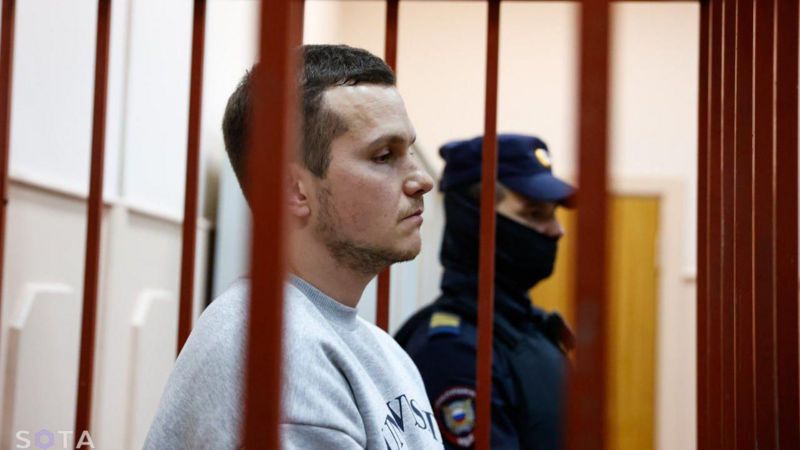
The International Commission of Jurists (ICJ) condemns the arbitrary detention and criminal prosecution of three lawyers who had been defending the prominent opposition figure, Alexei Navalny.
“These criminal proceedings, constituting persecution of lawyers, severely compromise the administration of justice in Russia and undermine the ability of all lawyers to defend their clients’ human rights and uphold the rule of law”, said Temur Shakirov, interim Director of ICJ Europe and Central Asia Programme.
On 13 October 2023, Vadim Kobzev, Alexey Liptser and Igor Sergunin – who had been acting as Navalny’s defence lawyers — were arrested and detained at Basmanny District Court in Moscow on charges of purportedly participating in an “extremist community”, with a potential sentence of up to six years’ imprisonment if convicted. As such, the criminal proceedings against Vadim Kobzev, Alexey Liptser and Igor Sergunin amount to persecution.
The charges are reportedly based on accusations that the three lawyers facilitated Navalny’s communication with the outside world while in detention.
Moreover, another lawyer representing Navalny, Alexander Fedulov, apparently fearing being arrested, was forced to flee the country following the arrest of his three colleagues.
The arrest and detention of the three lawyers and Fedulov’s flight significantly disrupt Navalny’s ability to defend himself through the assistance of qualified, independent legal counsel of choice, and his ability to challenge the criminal convictions and sentences, which led to his detention since 2022 as a result of a series of criminal cases against him widely believed to be politically motivated.
“The detention of Navalny’s lawyers is likely to constitute part of a wider strategy to isolate him even further. Moreover, it sends a chilling message to anyone wishing to defend human rights and political activism”, said Shakirov. “This is contrary to the right of lawyers to practise their profession freely, and it denies Navalny his right to legal representation, a fair trial guarantee protected under international human rights law binding on the Russian Federation”.
The ICJ stresses that the harassment and arbitrary detention of lawyers contravene the Russian Federation’s obligations under international law, including under the International Covenant on Civil and Political Rights and the UN Basic Principles on the Role of Lawyers. They affirm the crucial role of lawyers in upholding the rule of law and protecting human rights. It is crucial to ensure that lawyers can perform their legitimate professional functions without intimidation, hindrance, harassment, or improper interference, as guaranteed under the Basic Principle on the Role of Lawyers.
“The ICJ calls on the Russian Federation: to immediately stop this flagrant violation of the guarantees afforded to lawyers under international human rights law; for an end to these persecutory criminal proceedings; for all charges against Vadim Kobzev, Alexey Liptser and Igor Sergunin to be dropped; and for them to be immediately released”, added Shakirov.
Furthermore, the ICJ urges the Russian authorities to cease the persecution and harassment of lawyers and to take steps to ensure a safe environment where lawyers can operate without fear of reprisal for their work.
Background:
According to the UN Basic Principles on the Role of Lawyers, governments must ensure that lawyers are able to perform all of their professional functions without intimidation, hindrance, harassment or improper interference and must not face sanctions for discharging their duties in accordance with professional standards and ethics (Principle 16). Furthermore, lawyers must not be identified with their clients or their clients’ causes as a result of discharging their functions. (Principle 18).
The UN Basic Principles also specify that lawyers like others have a right to freedom of expression and in particular the right to take part in public discussion of matters concerning the law, the administration of justice and the promotion and protection of human rights” (Principle 23)
The arrest of the three lawyers has prompted a call for a strike within the Russian legal community to demonstrate against the hostile environment within which lawyers in the Russian Federation operate, particularly those defending human rights and representing political activists.