Oct 9, 2009
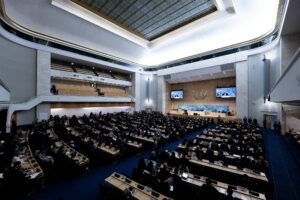
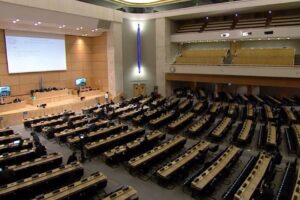
In this submission, the ICJ explores key aspects of the “Protect, Respect, Remedy” framework established by the Special Representative to the Secretary General John Ruggie (photo).
In its resolution 8/7 of June 2008, the Human Rights Council requested the Office of the High Commissioner for Human Rights to organize, within the framework of the Council, a two-day consultation “in order to discuss ways and means to operationalize the framework, and to submit a report on the meeting to the Council”.
The consultation was conceived of as a means to respond to calls from civil society for the Council to ensure wide and non-selective participation by grass-root organizations and victims groups in the debates around the issue of corporate human rights responsibilities.
Guided by United Nations instruments, the ICJ attaches great importance to the development of an approach that is centred on the individual, including victims or potential victims of abuse, their rights and needs.
The ICJ submission discusses the need for a normative approach to holding corporations accountable for their human rights violations, and it applies the findings of the ICJ Expert Panel Report on Corporate Complicity to elaborate on corporations’ legal responsibility to conduct due diligence into their suppliers, buyers, partners and subsidiaries.
The submission also highlights the obstacles victims face to achieving redress through national judiciaries, including corruption, a lack of judicial independence, capacity, and enforcement, as well as significant procedural hurdles. Finally, the submission discusses the weaknesses of current international mechanisms and the need for exploration into alternatives.
ICJ Submission for the Consultation on Business and Human Rights-Position Papers-2009 (full text PDF)

Sep 17, 2009
This Memorandum, submitted to the government of Nepal by the ICJ and other NGOs, includes some comments and recommendations on the latest draft of the Disappearances of Persons Bill 2066.
The organizations welcome the opportunity to comment on the draft and look forward to a constructive dialogue with the government of Nepal.
Nepal-Joint Memorandum on the Disappearances of Persons Bill-Position Papers-2009 (Full text PDF)

Jul 22, 2009
This ICJ position paper points to the necessity for EU measures to protect procedural rights in EU criminal justice co-operation.
The organizations call on the Swedish Presidency to make explicit that the adoption of these rights will be a prioritized issue during the Presidency and as a result will be included in the Stockholm Programme on justice and home affairs.
Procedural Rights and Safeguards in Criminal Proceedings-position paper-2009 (full text, PDF)
May 11, 2009
The ICJ is concerned by the Government’s participation in – and failure to protect its people from – forced evictions.
In its comments on the Initial Report of Cambodia on the implementation of the International Covenant on Economic, Social and Cultural Rights, the ICJ also drew attention to the harassment and absence of protection for human rights defenders who focus on economic, social and cultural rights, particularly those working on housing and land rights.
It also urged the Government to ensure and guarantee the independence and impartiality of judiciary, unhindered access to justice and the right to a remedy for victims of human rights violations.
Cambodia-ICJ’s comments on the Initial Report-Position papers-2009 (full text, PDF)
Dec 5, 2008
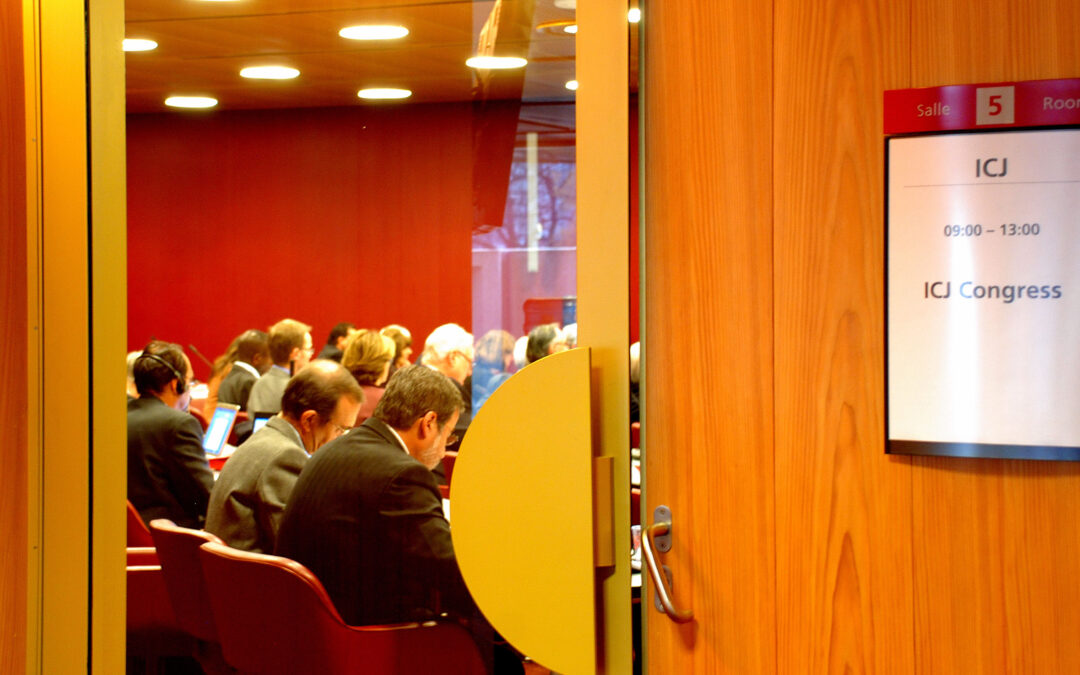
At its World Congress, the ICJ adopted the Declaration and Plan of Action on Upholding the Rule of Law and the Role of Judges and Lawyers in Times of Crisis.
The Declaration reaffirms the essential role of judges and lawyers in safeguarding the Rule of Law and human rights during a range of crises, including public emergencies, armed conflict, political instability, terrorism and social, economic or financial upheaval.
It sets out 13 fundamental principles, which reflect fundamental and well recognized Rule of Law and human rights standards, to be upheld by governments and the legal community in crisis situations.
These include protection of the independence of judges and lawyers, and guarantees of fair administration of justice, including the right to a fair trial and effective remedy
ICJ Declaration and Plan of Action-Position papers-2008-Eng (full text, PDF)
ICJ Declaration and Plan of Action-Position papers-2008-French (full text, PDF)
ICJ Declaration and Plan of Action-Position papers-2008-Spanish (full text, PDF)

![Smoke rises after an Israeli air strike on the village of Taybeh in southern Lebanon [Source: Al Jazeera]](https://www.icj.org/wp-content/uploads/2026/03/Screenshot-2026-03-20-at-15.56.24-300x200.png)