Sep 14, 2019
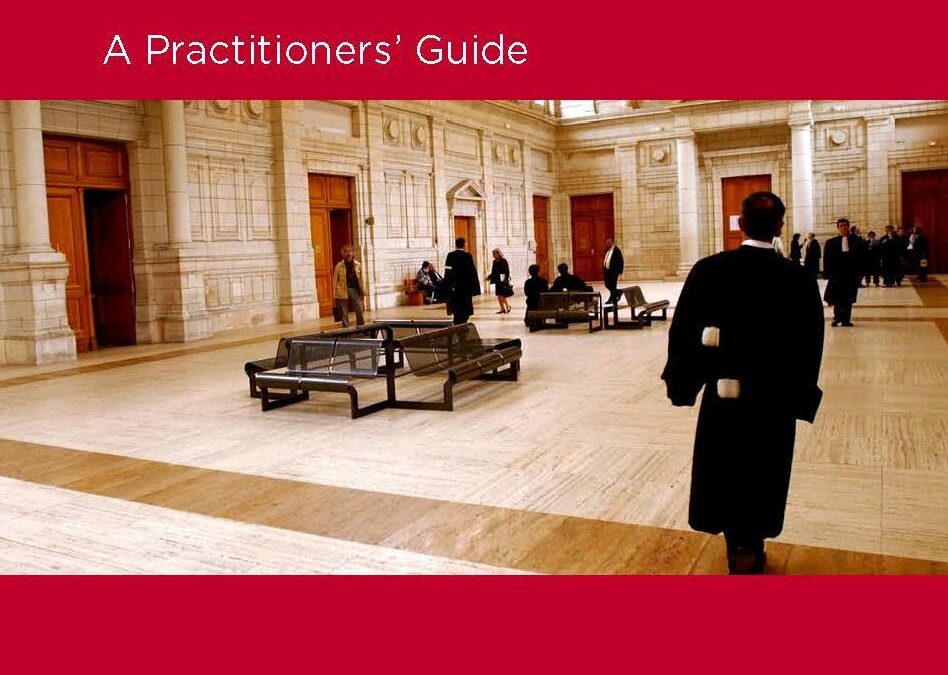
ICJ Practitioners’ Guide no. 14 Investigation and Prosecution of Potentially Unlawful Death aims to help legal practitioners ensure that potentially unlawful death is investigated in a manner that respects international human rights law and, where responsibility is identified, that appropriate measures of accountability ensue.
At the heart of the Guide is the Minnesota Protocol on the Investigation of Potentially Unlawful Death (2016), which was published by the Office of the United Nations High Commissioner for Human Rights (OHCHR) in 2017.
The revised Minnesota Protocol (2016) is the Revised United Nations Manual on the Effective Prevention and Investigation of Extra-legal, Arbitrary and Summary Executions, the revision of which involved expertise from the International Commission of Jurists and other leading organizations.
It is a companion document to the UN Principles on the Effective Prevention and Investigation of Extra-legal, Arbitrary and Summary Executions (1989), and sets a common standard of performance in investigating potentially unlawful death and a shared set of principles and guidelines for States, as well as for institutions and individuals who play a role in death investigations.
Topics covered by the Practitioners’ Guide include:
- Potentially unlawful death and the duty to prosecute;
- The duties of states to investigate and prosecute;
- The rights of victims’ families and of witnesses;
- General principles of forensic investigation of potentially unlawful death;
- Forensic investigation of potentially unlawful death: types of evidence and the chain of custody;
- Forensic investigation of potentially unlawful death: crime scene management and victim identification;
- Forensic investigation: the autopsy;
- The effective prosecution of individuals responsible for unlawful death;
- Specific guidance for prosecutors and defence lawyers; and
- Potentially unlawful death in armed conflict.
This Practitioners’ Guide builds on earlier Guides, especially:
– The right to a remedy and reparation for gross human rights violations – 2018 update to Practitioners’ Guide no. 2
– International Law and the Fight Against Impunity: ICJ Practitioners’ Guide no. 7
– Enforced Disappearance and Extrajudicial Execution: Investigation and Sanction – ICJ Practitioners’ Guide no. 9
– Enforced Disappearance and Extrajudicial Execution: the Right of Family Members – ICJ Practitioners’ Guide no. 10
The Practitioners’ Guide would not have been possible without the financial support of the Ministry of Foreign Affairs of Finland and was produced as part of the ICJ’s Global Accountability Initiative.
Download the full report
Universal-PG 14 Unlawful death-Publications-Reports-Practitioners Guides series-2019-ENG (PDF of English version)
Universal-PG 14 Unlawful death-Publications-Reports-Practitioners Guides series-2021-THA (PDF of Thai version)
Universal-PG 14 Unlawful death-Publications-Reports-Practitioners Guides series-2020-SPA (PDF of Spanish version

Aug 30, 2019
The purpose of the new ICJ Guide on the Enforcement and Adjudication of Economic, Social and Cultural Rights (ESCR) in South Africa is to act as a resource to legal practitioners and human rights defenders on both South African constitutional standards and international human rights law standards on ESCR.
The Guide may also be useful to international human rights practitioners and domestic and international practitioners in other jurisdictions.
ICJ Commissioner Jamesina King, who formally launched the guide at Constitutional Hill in South Africa said:
“As an advocate for the protection of human rights defenders, as a member of the quasi-judicial African Commission on Human and Peoples’ Rights, and as a sitting judge in my home country Sierra Leone I am passionate about the role of such commissions, tribunals and forums in ensuring access to justice for abuses and violations of ESCR. In my view, international human rights law rightly recognizes that a right (and a corresponding obligation) without an effective remedy is not a meaningful right at all.”
While, to some extent, South African law does reflect international human rights law standards on ESCR, the specifics of international standards are practically useful to South African practitioners and human rights defenders.
The Guide can be used by judges, magistrates, advocates, lawyers, governmental administrators, legal advisors, paralegals, legal researchers, human rights defenders and academics.
Additionally, the Guide should be useful to international human rights practitioners and domestic and international practitioners in other jurisdictions.
Basing its analysis of ESCR in the present South African context, the Guide may also assist the South African government in evaluating South Africa’s compliance with its international human rights obligations. This is especially important given the UN Committee on Economic, Social and Cultural Rights concluding observations to South Africa issued in October 2018.
In summary, the Guide comprehensively details the following:
- How and why international human rights law must be considered in the interpretation of the South African Constitution;
- What the meaning of certain key operational provisions relating to ESCR are which are common to domestic, regional and international instruments. Such provisions include detail explanations of the meanings of:
- “progressive realization” and “immediate realization”;
- the “minimum core” obligations of states;
- “reasonableness” as an evaluation standard for rights violations; and
- the broader meaning of “available resources” both as positive budgetary obligation and a potential state defense for failing to secure ESCR.
- The implications of the need for equality and non-discrimination in access to ESCR, using examples of, in particular;
- Gendered ESCR needs and rights;
- Disability-conscious understandings of ESCR; and
- ESCR protections as specified to the circumstances of LGBTIQ persons.
- The application of ESCR obligations to “private”, “non-state” entities including but not limited to businesses.
- The remedies that are available to victims of ESCR violations on a domestic, regional and international level.
The Guide includes references to African and international standards throughout, weaving them into the sophisticated jurisprudence and body of knowledge developed in the South African context. It aims to add some value to the already large body of excellent publications on ESCR in South Africa.
Download
South Africa-Guide ESCR-Publications-Thematic Report-2019-ENG

Aug 21, 2019
On the occasion of the second United Nations’ International Day of Remembrance of and Tribute to Victims of Terrorism, the ICJ has today published a compilation of international sources on human rights of victims of terrorism.
The compilation features a preface by the UN Special Rapporteur on the promotion and protection of human rights and fundamental freedoms while countering terrorism, Ms Fionnuala Ni Aolain.
It collects relevant UN General Assembly, Human Rights Council, and Security Council resolutions; findings and recommendations of the Special Rapporteur; and other UN and regional sources.
Human rights of victims of terrorism are set to receive new attention and focus at the global level.
Among important current developments are the following:
- The Human Rights Council’s most recent renewal, in March, of the mandate of the UN Special Rapporteur, highlighted and endorsed the ongoing efforts of current Special Rapporteur Fionnuala Ni Aolain to mainstream and highlight the human rights of victims of terrorism in relation to country visits and thematic work carried out by the mandate.
- In June in New York, a group of States led by Afghanistan and Spain launched a “Group of Friends of Victims of Terrorism” with the aim of bringing additional focus and activity at the United Nations to this topic.
- In July the General Assembly adopted for the first time a resolution on “Enhancement of international cooperation to assist victims of terrorism”.
- The UN Office of Counter-Terrorism is preparing to convene a global Congress of Victims of Terrorism in June 2020.
Many governments have long invoked the suffering of victims of terrorism in seeking to justify counter-terrorism measures that do not comply with human rights law, or indeed the rule of law more generally, while failing in practice to adopt and implement concrete measures at the national or global level to respect, protect and fulfil the actual human rights of victims of terrorism.
The ICJ accordingly welcomes the renewed focus and cooperation within the United Nations on concrete measures to ensure that the human rights of victims of terrorism are fully respected, protected and fulfilled.
Civil society, including groups that specifically represent victims as well as other organizations with a range of relevant experience and expertise, has an important role to play, not only in implementing but also in helping to shape those efforts.
The ICJ hopes the present publication will be found useful by all engaged in these processes, and looks forward to further engagement and progress towards the better realization of human rights of victims of terrorism in the years to come.
For more information, contact un(a)icj.org
Download
Universal-Compil Victims of Terrorism USLet-Publications-reports-thematic reports (full compilation in PDF)

Jul 8, 2019
The Venezuelan authorities must take immediate steps to recover the country’s democratic institutions and the functioning of the rule of law, including disbanding the National Constituent Assembly and allowing the National Assembly to resume its Constitutional authority, the ICJ said today in a new report and at a webcast event.
No Room for Debate, the latest in a series of reports on human rights and the rule of law in Venezuela, addresses the deeply problematic aspects concerning the creation, composition and functioning of the National Constituent Assembly (NCA) of Venezuela, presently wielding legislative power, and its devastating effect on the rule of law in the country.
The report shows how the National Constituent Assembly, installed on 4 August 2017 pursuant to an executive decree by President Nicolás Maduro, has displaced the authority of the country’s constitutionally established legislature.
“The NCA was created unilaterally by the President, without popular endorsement through a referendum, in blatant violation of the Constitution, and ever since has acted in an unchecked manner and beyond the rule of law,” said Sam Zarifi, ICJ Secretary General.
Initially convened to prepare a new Constitution, the National Constituent Assembly has been used to usurp legislative functions in order to pass electoral, administrative and legislative measures in support of the Executive Branch’s agenda, the ICJ report says.
It documents how the National Constituent Assembly called early presidential elections; rescinded legislative immunity for National Assembly deputies to enable their arrest and prosecution; appointed top-ranking executive authorities; and adopted discriminatory measures that penalize freedom of expression and association.
Among several recommendations, the ICJ urges the State authorities to:
- Rescind the National Constituent Assembly and restore the Constitutional powers of the National Assembly.
- Allow the National Assembly to review the orders issued by the National Constituent Assembly, to render them totally or partially ineffective, immediately or conditionally, in the interest of ensuring legal certainty.
Contact:
Sam Zarifi, ICJ Secretary General, t +41 79 726 44 15 ; e sam.zarifi(a)icj.org
Santiago Martínez, ICJ Consultant; santiago.mn(a)gmail.com
Venezuela-No room for debate-Publications-Reports-Fact finding mission reports-2019-ENG (full report in PDF)
Watch the video (mostly in Spanish) of a side event on the human rights crisis in Venezuela, organized jointly with Amnesty International.
https://www.facebook.com/ridhglobal/videos/1206399322898690/

Mar 13, 2019
The ICJ said today in an new report that Moldova remained a significant way from having a functionally independent judiciary, which is an indispensable element in the country’s capacity to deliver justice for its people and institutions.
The report ”Only an empty shell” – The undelivered promise of an independent judiciary in Moldova sets out a number of specific recommendations for reform which with a view to achieving a fully independent judiciary and effective justice system.
The report followed its field mission to Moldova in November 2018, which built upon the work of previous missions undertaken in 2004 and in 2012.
“While many significant legislative reforms have been undertaken, judicial independence is far from being achieved in Moldova,” said Massimo Frigo, Senior Legal Adviser for the ICJ Europe and Central Asia Programme,
“Reforms are needed in the law, but more than that a change is needed the mindset and working culture of many judges themselves that must protect and promote judicial independence in all of their work,” he added.
The ICJ acknowledged that important progress had been achieved in many areas, including in efforts to secure audio-recordings of all court hearings, the introduction of a system of random allocation of cases, and staff and salary increases for all judges.
However, the ICJ has concluded that the implementation of the most crucial legal reforms is significantly lagging behind and often lacks political will and conviction.
A culture of excessive hierarchy in the judiciary and of the judge remained prevalent among judges.
The ICJ is concerned at reports that the Superior Council of Magistracy (SCM) – a judicial self-governance body – instead of playing its crucial role of defending the independence of the judiciary, institutionally and in respect of individual judges, has become an instrument of pressure on individual judges and a threat to their independence.
“During our mission, we were presented with witness statements and stories of judges living often in a condition of fear: fear to express their opinions on the situation of the judiciary; and fear of criminal prosecution solely for issuing a decision contrary to the requests of the prosecutor’s office or of other powerful interests,” said Massimo Frigo.
Achieving judicial independence requires a change of attitude towards the judiciary from the executive and other sources of State and private power, but most importantly from the judiciary itself.
Contact
Massimo Frigo, Senior Legal Adviser, Europe and Central Asia Programme, International Commission of Jurists, massimo.frigo@icj.org
Download
The full story with additional information:
Moldova-Only an empty shell report launch-News-press releases-2019-ENG
The full version of the report and full set of recommendations is available in English and Romanian:
Moldova-Only an empty shell-Publications-Reports-Mission reports-2019-ENG
Moldova-Only an empty shell-Publications-Reports-Mission reports-2019-ROM