
Submission to the Independent Expert on Protection Against Violence and Discrimination Based on Sexual Orientation and Gender Identity by the People’s Matrix, the Seinoli Legal Centre and the International Commission of Jurists
This Joint Submission is responding to the “Call for input to thematic report to HRC62: Violence and discrimination experienced by lesbian, bisexual, and queer (LBQ) women”, in preparation for the thematic report on violence and discrimination experienced by lesbian,...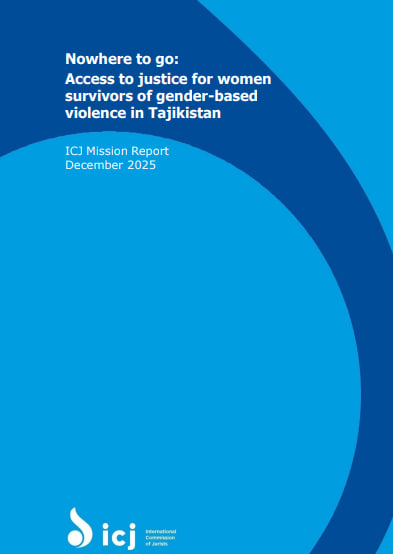
Tajikistan: barriers faced by survivors of gender-based violence
Gender-based violence (GBV) remains a serious and persistent human rights concern in Tajikistan, a report published today by the International Commission of Jurists (ICJ) finds. While laws and policies have been adopted, many survivors continue to face an environment in which violence against women is underreported and insufficiently addressed, with limited legal remedies and accountability.
This report is based on a mission conducted by the ICJ to Tajikistan in September 2024. The mission examined why the justice system continues to fall short in effectively responding to GBV and identified the barriers women face in seeking protection and justice. Despite the adoption of national laws and strategies on equality and domestic violence, the mission identified significant gaps in their implementation in practice.

Tajikistan: barriers faced by survivors of gender-based violence
Gender-based violence (GBV) remains a serious and persistent human rights concern in Tajikistan, a report published today by the International Commission of Jurists (ICJ) finds. While laws and policies have been adopted, many survivors continue to face an environment in which violence against women is underreported and insufficiently addressed, with limited legal remedies and accountability.
Eswatini: Independent lawyers under increasing threat in a repressive climate
Lawyers in Eswatini are facing daunting obstacles in operating independently, amidst serious and ongoing threats to their lives, intimidation, harassment and surveillance, as highlighted in an upcoming report of the International Commission of Jurists entitled “No Situation is Permanent” – Repression, Intimidation, Harassment and Killing of Lawyers in Eswatini.
Recent News
 HRC63: ICJ Calls for Renewal and Strengthening of the Venezuela Fact-Finding Mission21 Sep 2026
 Joint Statement: Attacks on the Rule of Law, Judicial Independence and Access to Justice in Zambia17 Sep 2026
 HRC63: ICJ Raises Concern over Widespread and Systematic Arbitrary Detention in Egypt16 Sep 2026
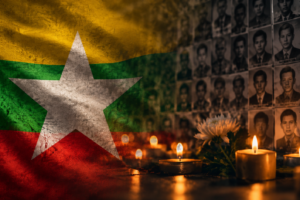 Myanmar: As armed conflict rages and military rule continues, critical measures can be taken towards eventual justice and accountability for victims of Enforced Disappearance10 Sep 2026