Nov 28, 2015 | News
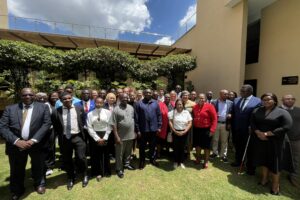
The ICJ co-hosted the Joint Zimbabwe Judicial-Legal Practitioners Colloquium in Zimbabwe. The meeting was held in conjunction with the Law Society of Zimbabwe (LSZ) and the Judicial Services Commission (JSC) of Zimbabwe.
The meeting took place on 27 – 28 November 2015 under the theme “Access to Justice: Barriers and Solutions (A Bar-Bench Dialogue)”.
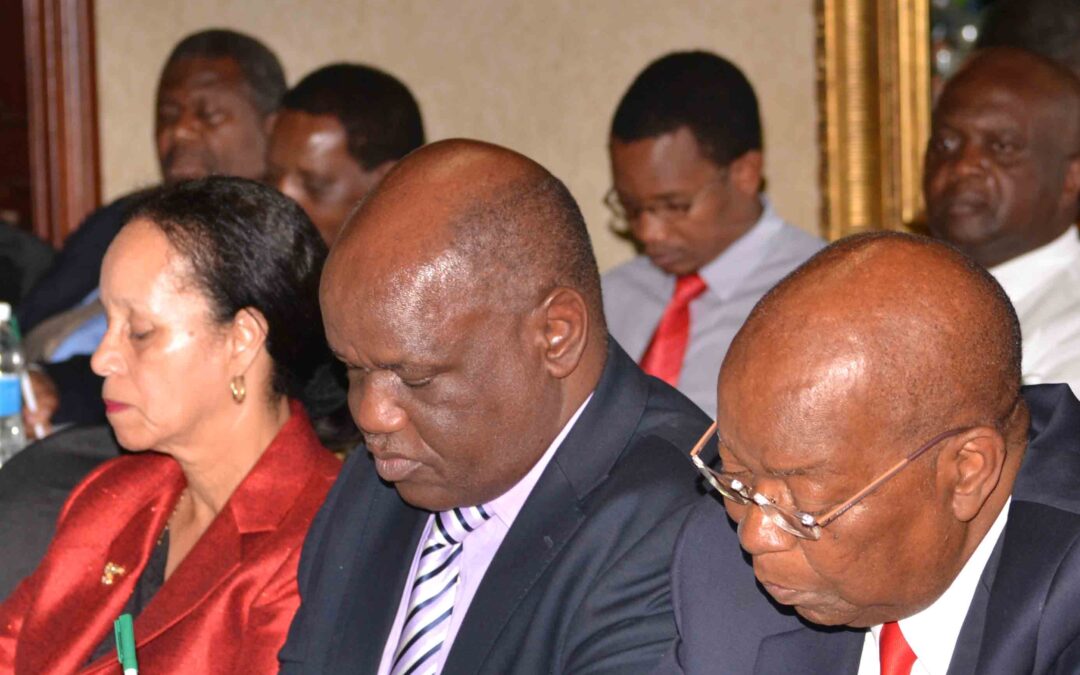
This year it congregated 30 legal practitioners and 60 Judges who sought to have an honest discussion on the challenges that affect access to justice in Zimbabwe in an attempt to seek practical solutions to these challenges for greater access.
The Chief Justice Godfrey Chidyausiku, and the President of the Law Society Mrs Vimbai Nyemba, in their opening remarks both highlighted the importance of this dialogue platform to justice delivery in Zimbabwe.
They both noted how the colloquium has over the years contributed towards the construction of bridges between the bar and the bench and the doing away of hostilities for the betterment of Justice delivery.

Nov 15, 2015
This new Guide published today by the ICJ aims at providing legal practitioners and human rights advocates with updated knowledge about the applicable standards for the protection of economic, social and cultural rights (ESC rights) in Zimbabwe.
The Guide is an adaptation of existing publications elaborated by the ICJ in the past years. It is largely based on the ICJ Practitioners Guide No. 8: “Adjudicating Economic, Social and Cultural Rights at National Level”.
It can be downloaded here: Zimbabwe-Guide ESCR web-Publications-Thematic Report-2015-ENG (full report in PDF)
Nov 10, 2015
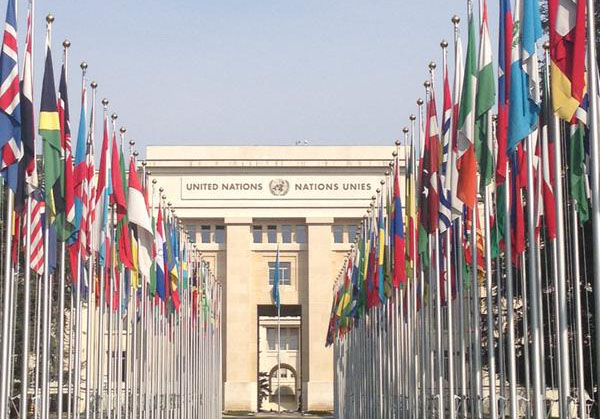
The ICJ today joined other organisations in calling for a special session of the UN Human Rights Council to address the rapidly deteriorating human rights situation in Burundi.
The joint letter cited, among other concerns, continuing unlawful killings and other human rights violations and abuses, as well as the use of incendiary language by a number of high-level officials in the last two weeks. The organisations fear that Burundi may be on the verge of widespread violence. The UN High Commissioner for Human Rights has expressed extreme concern about the situation.
On 6 November, the body of Welly Nzitonda, the son of prominent human rights defender Pierre Claver Mbonimpa, was found dead a few hours after he was arrested in the Mutakura neighborhood of Bujumbura where protests have taken place. On 3 August, Mr. Mbonimpa was himself shot in the face and neck. He was forced to seek medical treatment abroad. His son-in-law, Pascal Nshimirimana, was shot dead outside his home in Bujumbura on 9 October.
The open letter can be downloaded here (in english, PDF format): Burundi-UN-OpenLetter-2015
(en français): Burundi-UN-OpenLetter-2015-FR
Nov 10, 2015 | Plaidoyer
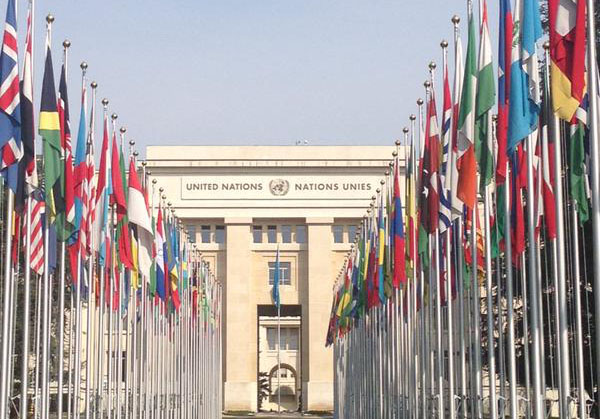
Appel à la tenue d’une session spéciale du Conseil des droits de l’Homme afin de contribuer aux efforts onusiens et régionaux visant à prévenir la commission d’atrocités au Burundi
Lors de sa dernière session ordinaire, le Conseil des droits de l’Homme a exprimé de vives inquiétudes quant à la situation des droits humains au Burundi et a démontré sa capacité à répondre à une situation d’urgence en matière de droits humains en adoptant la résolution 30/271, qui lui permettra de discuter de la situation au Burundi à l’occasion de dialogues interactifs devant se tenir lors de ses trois sessions ordinaires en 2016.
Malheureusement, le Gouvernement du Burundi a échoué à répondre à l’appel à la retenue envoyé par le Conseil (notamment son appel à « s’abstenir de toute action susceptible d’exacerber les tensions au Burundi »), et la détérioration rapide de la situation des droits humains dans le pays ne permet pas au Conseil d’attendre sa trente-et-unième
session (mars 2016) pour prendre des mesures additionnelles afin de prévenir la commission d’atrocités au Burundi.
Suite dans le PDF ci-dessous:
Burundi-UN-OpenLetter-2015-FR (Lettre complète en PDF)
Nov 7, 2015 | News
The ICJ, Lawyers for Human Rights Swaziland (LHR(S), Lawyers for Human Rights South Africa (LHR), and Southern Africa Litigation Centre (SALC) organized a training on strategic litigation for lawyers and human rights defenders from 6-7 November 2015 in Ezulwini.
The training was intended to empower Swazi lawyers and human rights defenders with tools for legal empowerment through litigation.
Further the training provided an opportunity for introducing the participants to international, regional and domestic mechanisms for strategic litigation and analysis of strategic litigation cases, opportunities and challenges in Swaziland.
Participants were drawn from different private law firms, human rights organisations, and the office of the Attorney General and women’s rights organisations.
To nurture regional peer learning and approaches the President of the Law Society of Lesotho Advocate Shale gave the key note presentation borrowing on lessons from other regions and Lesotho.
Resources persons included David Cote (LHR), Caroline James (SALC), Otto Saki (ICJ) and Thabiso Mavuso (Swaziland).
The expected impact is that increasingly lawyers and human rights defenders will take up strategic litigation as part of contributing to the achievement of systemic change and positive enforcement of fundamental rights and freedoms.
This training was held with the generous support of the European Union (EU) through the EU Delegation to Swaziland.
Contact:
Arnold Tsunga, ICJ Regional Director for Africa, t: +27 73 131 8411, e: arnold.tsunga(a)icj.org
Mandla Mkhwanazi LHR Swaziland Chairperson, t: +268 7602 6320, e: m.z.mkhwanazi(a)swazi.net
Caroline James, Lawyer, Southern Africa Litigation Centre t: 27 72 200 1813, e: CarolineJ(a)salc.org.za
David Cote, Programme Manager: Strategic Litigation Programme, LHR (South Africa) t: +27 11 339 1960, e: david(a)lhr.org.za