Jul 30, 2015
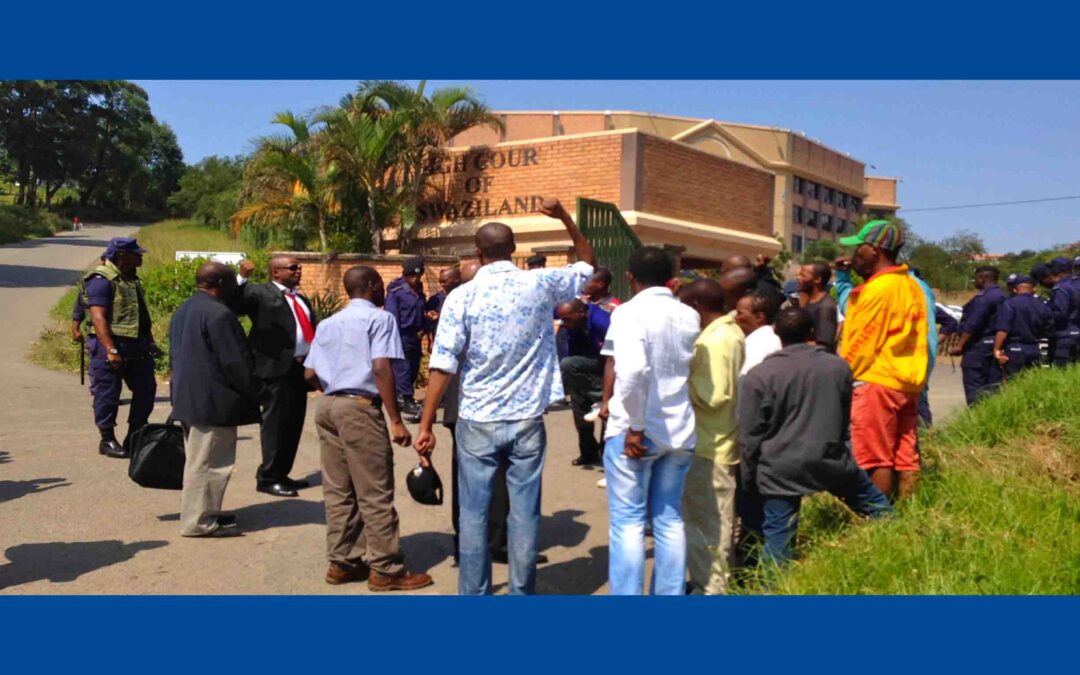
The ICJ today released its trial observation report of the trial in 2014 before the High Court in Mbabane, Swaziland, in The King v The Nation Magazine, Bheki Makhubu, Swaziland Independent Publishers (Pty) Ltd, and Thulani Maseko.
In February 2014, Thulani Maseko and Bheki Makhubu wrote an article entitled “Speaking my mind”, published in the Nation Magazine, which is owned by Swaziland Independent Publishers (Pty) Ltd. In March 2014, Thulani Maseko wrote a second article entitled ‘Where the law has no place’, also published in the Nation Magazine.
The articles criticized the manner in which the former Chief Justice of Swaziland, Justice Michael Ramodibedi, had handled an allegation of contempt of court against Bansthana Vincent Gwebu in January 2014.
The charges against the four defendants arose from the fact that the articles were published before the case against Bansthana Vincent Gwebu had been disposed of.
The defendants were accused of unlawfully and intentionally issuing statements contemptuous of the court.
The ICJ’s report The Failure of Justice: Unfair Trial, Arbitrary Detention and Judicial Impropriety in Swaziland concludes that the arrest and detention, trial, conviction and sentencing of the defendants involved multiple violations of the Constitution of the Kingdom of Swaziland, the African Charter on Human and Peoples’ Rights, the Principles and Guidelines on the Right to a Fair Trial in Africa and the International Covenant on Civil and Political Rights.
Thulani Maseko and Bheki Makhubu were subjected to unlawful and arbitrary arrest and detention, including violation of their right to legal counsel and their right to a public hearing with respect to their initial appearance before the Chief Justice in his chambers.
All aspects of the trial, including pre-trial proceedings before the Chief Justice and the trial judge, involved violation of the right of all defendants to a hearing by an impartial tribunal.
The defendants were improperly convicted, in violation of the right to freedom of expression. Even had the convictions been proper, they were sentenced to disproportionately severe sentences, particularly in the case of the sentences of two years’ imprisonment of Thulani Maseko and Bheki Makhubu.
Although the improper convictions and disproportionate sentences have been ‘self-corrected’, through the Supreme Court of Swaziland’s unopposed setting aside of convictions and sentences, it remains the case that Thulani Maseko and Bheki Makhubu were arbitrarily deprived of their liberty, including because this resulted from the legitimate exercise of their freedom of expression.
Swaziland-Maseko Trial Observation-Publications-Trial observation report-2015-ENG (download full report, in PDF)
Jul 8, 2015 | News
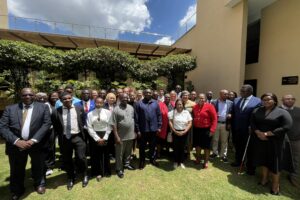
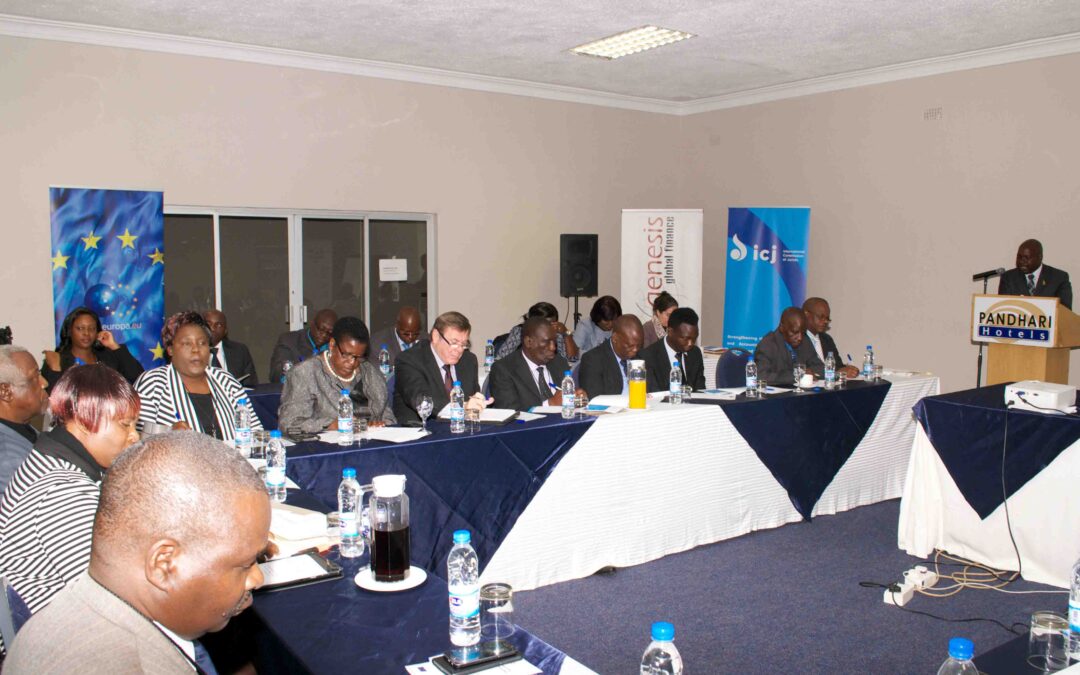
The National Prosecuting Authority (NPA) of Zimbabwe convened its first strategic planning workshop with technical support from the ICJ, under recently launched European Union (EU) funded project to contribute to an improvement in administration of justice in Zimbabwe.
The strategic planning workshop took place in Harare from 6 to 8 July 2015.
The NPA is established under section 259 of the 2013 Constitution as a separate, independent and accountable institution responsible for instituting and undertaking criminal prosecutions on behalf of the State, promoting a just and fair system for all persons approaching the courts and protecting the rights of the arrested and detained persons as provided for by the Constitution.
The strategic plan will allow the NPA to set its vision, objectives and including stakeholders’ expectations as guided by the Constitution and the National Prosecuting Authority Act for the next 5 years.
The NPA held this strategic plan as its first ever strategic stakeholder’s engagement since its establishment under the Constitution in May 2013.
To validate and ground the strategic plan and outputs, the NPA invited civil society organizations, law based institutions, human rights advocates, women lawyers associations, legal aid institutions, the Parliament Thematic and Standing Committee representatives, law enforcement agencies, and law professors, among others.
The Judicial Service Commission and Law Society of Zimbabwe, ICJ’s partners in EU funded project on improvement in the administration of justice, also attended the NPA strategic planning session.
The strategic plan will inform further interventions and activities for strengthening the observance of the rule of law, fair trial and access to justice by the NPA with support from ICJ’s EU funded project.
Once developed and adopted, the strategic plan will further open opportunities for other technical partnerships and funding opportunities for the NPA.
Contact:
Arnold Tsunga, ICJ Regional Director for Africa, t: +27 73 131 8411, e: arnold.tsunga(a)icj.org
Jun 30, 2015 | News
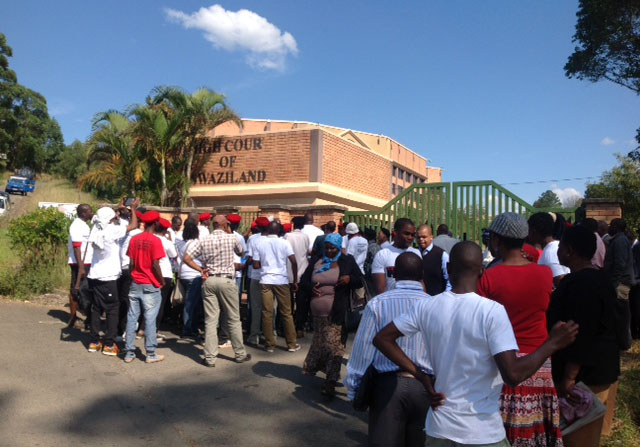
The ICJ welcomes the decision of the Supreme Court of Swaziland to uphold the appeal of imprisoned human rights defenders Thulani Maseko and Bheki Makhubu and ordering their immediate release.
“The decision marks a victory for the rule of law in Swaziland,” said ICJ Secretary-General Wilder Tayler. “We hope that this is but the first of many steps to come in restoring the integrity of the courts and reinforcing the respect for the rule of law that has undergone so much erosion in recent years.”
The ICJ considers that while the release of the two men is a necessary step for justice for the two men, alone it is not enough.
The government of Swaziland should ensure adequate reparation for their wrongful imprisonment.
More broadly, it must engage in legal and structural reforms necessary to ensure the fair and effective administration of justice, the independence of the judiciary and respect for human rights in the country.
Thulani Maseko and Bheki Makhubu were arrested on 17 March 2014 under contempt of court charges for having written articles criticizing the manner in which the then Chief Justice (CJ), Michael Ramodibedi, had handled the case of another defendant, Bhantshana Gwebu.
Mr. Gwebu had been arraigned before the CJ without legal representation, charge sheet or being informed of his rights to apply for bail.
The trial of Thulani Maseko and Bheki Makhubu was riddled with violations of basic due and fair trial principles, as affirmed by the UN Working Group on Arbitrary Detention (WGAD), which ruled on a complaint in Thulani Maseko’s case.
Background
The trial of Thulani Maseko and Bheki Makhubu resulted in their conviction and a two-year prison sentence It was improperly conducted before a presiding judge, Mpendulo Simelane, who was a potential witness and had a direct interest in the case.
They had been in custody since their arrest, save for a three-day release in June 2014, and were due for final release on the 17 July 2015.
The ICJ has previously issued a number of statements after conviction by the High Court, underscoring that the prosecution and trial Court’s judgment had constituted a breach of Swaziland’s obligations to respect the rights to freedom of expression and fair trial.
The UN WGAD opinion issued on 22 April 2015 held that the deprivation of liberty of the accused was arbitrary and in contravention of the Universal Declaration of Human Rights and Swaziland’s obligations under the International Covenant on Civil and Political Rights (ICCPR).
The WGAD also emphasized that Swaziland should release the accused and facilitate the enforceable right to compensation in accordance with article 9 of the ICCPR.
In the appeal hearing yesterday, the Crown conceded most of the legal arguments by defence counsel and in particular that Judge Simelane ought to have recused himself from presiding over the case.
The Supreme Court’s written judgment is expected to be issued at the end of the session of its sitting.
Read also:
Swaziland: ICJ condemns the harsh prison term imposed on Thulani Maseko and Bheki Makhubu
Swaziland: ICJ condemns the conviction of celebrated human rights lawyer and prominent journalist on charges of contempt of court
Swaziland: ICJ concerned at detention of human rights lawyer and journalist
American Bar Association’s statement
Contact:
Arnold Tsunga, Director, ICJ Africa Regional Programme, t +27 716 405 926 or +41 76 239 90 32 e: arnold.tsunga(a)icj.org
Matt Pollard, Senior Legal Adviser, ICJ’s Centre for the Independence of Judges and Lawyers, t: +41 22 979 38 12, e: matt.pollard(a)icj.org
Jun 24, 2015 | News
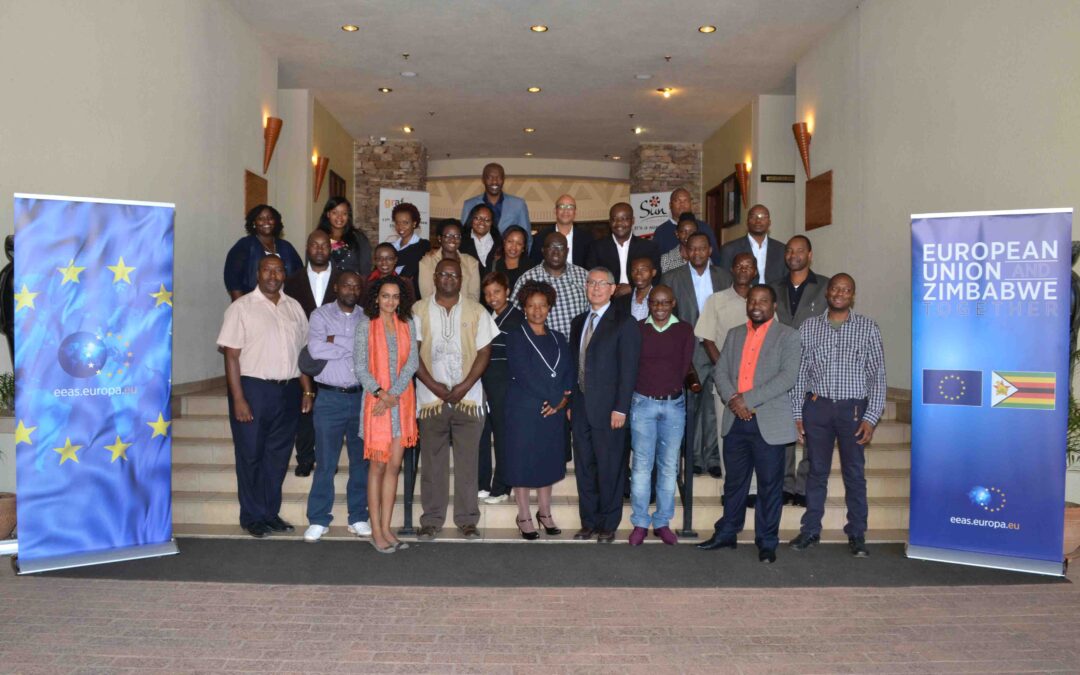
The workshop took place from 22-24 June in Victoria Falls and had a special focus on children’s rights as a particularly vulnerable group.
Its primary objective was to create a pool of jurists and activists with the knowledge and ability to undertake strategic litigation before national or regional courts in the interest of victims of human rights abuse by business enterprises in the Southern/Eastern Africa region.
To this end the meeting brought together legal practitioners and Human Rights Defenders involved in human rights legal accountability of business enterprises.
This workshop gathered together a selected group of human rights advocates from Malawi, Zambia, Botswana, Zimbabwe, Uganda, Kenya and Tanzania working on cases relating to business’ human rights abuse.
In East and Southern African countries mining represents a significant part of the national economies and annual GDP.
Tanzania, Malawi, Zambia, South Africa, Botswana and Mozambique have seen the inflowing investments grow in recent years, but it is not clear that this trend has meant improvements in the realization of human rights, especially economic and social rights.
Child labour is endemic, and its occurrence in tobacco plantations subject children to additional hazards to their health and wellbeing.
Mining and oil exploration creates problems to local communities who are not properly consulted or benefit from the activity and usually bear the brunt of environmental degradation and pollution associated with those extractive industries.
Business enterprises are in many instances complicit with State’s violations of human rights.
The meeting also sought to provide legal and other tools to community representatives and litigators who want to start strategic litigation in the public interest.
This flows from the realisation that effective remedy and reparation for victims of business human rights abuses, especially in a transnational context, remains elusive as ever and confronts a series of legal and procedural obstacles.
Access to effective remedy and justice is a priority objective in the context of work relating to the human rights responsibilities of business enterprises.
Jun 10, 2015 | News
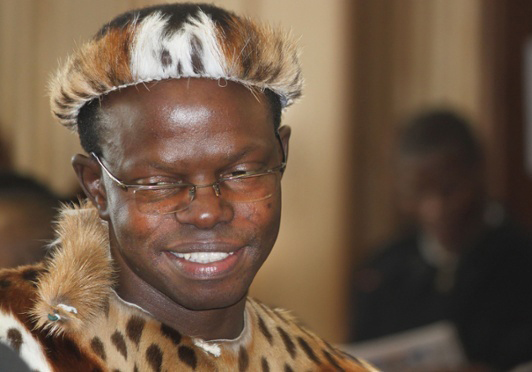
The ICJ today welcomed the opinion by The United Nations Working Group on Arbitrary Detention (UNWGAD) condemning as arbitrary the detention of prominent human rights lawyer Thulani Maseko and calling on the Government of Swaziland to ensure his immediate release.