Mar 7, 2014 | News, Publications, Reports
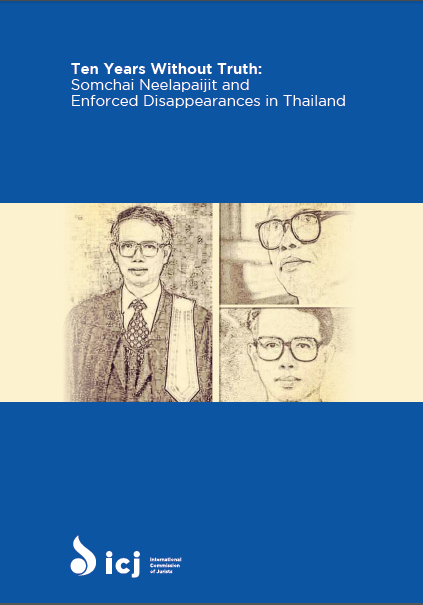
A new ICJ report criticizes the Thai Government’s failure to take the steps necessary to establish the fate and whereabouts of missing lawyer Somchai Neelapaijit, saying it illustrates the challenges of achieving justice in cases of serious human violations in Thailand.
In the report, Ten Years Without Truth: Somchai Neelapaijit and Enforced Disappearances in Thailand, the ICJ documents the tortuous legal history of the case.
It highlights several key problems, such as poor use of forensic evidence, failure to follow and develop leads, unduly restrictive interpretation of national and international law, and above all, a lack of political will to resolve a case that remains emblematic of the culture of impunity in Thailand.
“Over the past 10 years, this case has taken many unexpected turns, including the disappearance of a prime suspect, admissions of Somchai’s death from officials while the courts have rejected such a finding, and most recently, a statement from the Department of Special Investigations that it had lost, and then found, the case files,” said Sam Zarifi, ICJ’s Regional Director for Asia and the Pacific.
“The Royal Thai Government has not exhausted all potential areas of inquiry and it must continue this investigation. There is no statute of limitations on an enforced disappearance and Somchai’s case is not forgotten in Thailand or around the world.”
Somchai, a lawyer and human rights defender, was stopped at a Bangkok roadside on March 12, 2004 and pulled from his car by a group of men. He has not been seen since.
At the time, Somchai was defending clients from Thailand’s restive southern provinces who were accused of attacking a military base as part of the ongoing insurgency in the region. Somchai had alleged police tortured the Muslim suspects.
Ten years later, Somchai’s wife, Angkhana Neelapaijit, and her family are no closer to knowing the truth about what happened to him.
“Somchai’s enforced disappearance, and the failure of the Royal Thai government to provide accountability or even basic information about his fate are emblematic of the challenges of achieving justice in cases of serious human rights violations in Thailand,” said Zarifi. “Enforced disappearance is not only a serious human rights violation but also a crime under international law.”
Thailand signed, but has not yet ratified, the Convention Against Enforced Disappearance in January 2012. Pending the ratification, Thailand must desist from any acts that would defeat the objective and purpose of the convention, which places an obligation on State Parties to make enforced disappearance a criminal offence and treat family members of a ‘disappeared’ person as victims in their own right.
The ICJ has followed Somchai’s case closely and worked with Angkhana Neelapaijit since 2004.
“The Royal Thai government’s failure to shed any more light on the enforced disappearance of Somchai Neelapaijit, despite providing compensation for his family and finding him to be ‘disappeared’, contradicts multiple past declarations of its commitment to seeking justice, or at least truth, including by several former Prime Ministers, Attorneys General, and officials,” the report says.
“It also contradicts official commitments before the United Nations Human Rights Council in March 2008.”
The ICJ’s report calls on the Royal Thai government to prioritize and advance the investigation into Somchai’s disappearance in a manner that conforms to its international obligations. It also recommends that Thailand:
–Ratify the Convention Against Enforced Disappearance;
–Enact legislation that makes enforced disappearance a specific crime in Thai domestic law, together with penalties that recognize its extreme seriousness;
–Amend existing Thai law to conform to the Convention Against Enforced Disappearance, as well as the State’s obligations, including with respect to effective remedy and reparation, under the ICCPR and CAT;
–Provide Angkhana Neelapaijit and her family with effective remedy and full reparation, in particular knowledge and clarification of the facts leading to the enforced disappearance and the progress and results of the Department of Special Investigations, and;
–Address the recommendations the ICJ made to the DSI in its letter of February 4, 2014 with respect to its investigation.
CONTACT
Sam Zarifi, ICJ Asia-Pacific Regional Director, (Bangkok), t:+66 807819002, e-mail: sam.zarifi(a)icj.org
Craig Knowles, ICJ Media & Communications, (Bangkok), t:+66 819077653, e-mail: craig.knowles(a)icj.org
Download the full report in PDF:
Ten Years Without Truth- Somchai Neelapaijit and Enforced Disappearances in Thailand – report – 2014
Thailand-Ten Years Without Truth-Publications-Reports-2014-THAI

Mar 6, 2014
An opinion piece by International Commission of Jurists’ (ICJ) legal adviser Reema Omer on Pakistan’s lack of willingness to address the serious crime of enforced disappearances.
On 26 February 2013, the United Nations Working Group on Enforced and Involuntary Disappearances (WGEID) published its report on Pakistan, following the WGEID’s visit to the country in September 2012.
The report expressed concern at the continuing practice of enforced disappearances in Pakistan and made a series of recommendations to the Government.
A year later, despite the growing scale of the practice, Pakistan is further than ever from meaningfully addressing the serious crime of enforced disappearances.
Many of the laws and policies adopted by the Government this past year have made a mockery of the Working Group’s report and Pakistan’s national and international human rights commitments.
A close look at the report, and particularly its recommendations, is essential, especially as Pakistan is in the process of drafting a law on enforced disappearances.
Enforced Disappearance is a serious crime under international law.
An enforced disappearance occurs when State agents or those acting with their authorization, support or acquiescence, abduct or detain a person and then refuse to recognize the detention or conceal the person’s fate or whereabouts, placing such a person outside the protection of the law.
The Working Group acknowledged that Pakistan was facing grave security challenges.
However, it pointed out that under international law and standards, including Article 7 of the Declaration on the Protection of All Persons from Enforced Disappearance and the International Covenant on Civil and Political Rights (ICCPR), enforced disappearances cannot be justified under any circumstances.
In this context, the WGEID was particularly concerned over the extensive powers given to security agencies under Pakistan’s anti-terror regime and recommended that Pakistan amend provisions of the Anti-terrorism Act 1997 and the Actions (in Aid of Civil Power) Regulations 2011, which appeared to facilitate the practice of enforced disappearances.
The Government ignored the WGEID’s recommendation and promulgated perhaps the most draconian anti-terrorism law the country has seen in the form of the Protection of Pakistan Ordinance, 2013 (PPO).
Section 9 of the PPO allows the Government to withhold information regarding the location of detainees, as well as their place and grounds of detention for any “reasonable cause”.
This provision is an affront to the rule of law.
It seeks to place detainees beyond the protection of the law, and denies them legal personality, which is absolutely prohibited under the ICCPR and general rule of law principles. Effectively, it seeks to legalize the practice of enforced disappearance.
The Working Group also emphasized that fighting impunity for perpetrators of human rights violations is essential and expressed concern that no State agent has been convicted in relation to acts of enforced disappearance.
The Supreme Court of Pakistan too reiterated the Working Group’s call to bring perpetrators of enforced disappearance to account.
Quite appallingly, following the Court’s judgment in the Muhabat Shah case delivered in December 2013, the Government filed for a review of the judgment, asking the Court to delete remarks implicating the security agencies in enforced disappearances as such findings could “demoralize the troops”.
The PPO also grants blanket immunity to all State agents for acts done in “good faith” in the performance of their duties.
It provides that any person detained by the armed forces before the coming into force of the Ordinance shall be deemed to have been detained pursuant to the Ordinance.
This retrospective immunity to the armed forces undermines the little progress made in the last few years by the superior courts of Pakistan to bring perpetrators of enforced disappearance to account and is likely to entrench the already pervasive impunity enjoyed by the security forces, particularly related to human rights violations.
Furthermore, the WGEID urged Pakistan to ratify the International Convention for the Protection of All Persons from Enforced Disappearance (Convention on Enforced Disappearance).
Numerous States made this recommendation during Pakistan’s Universal Periodic Review in 2012 as well.
The Government has so far made no progress toward ratification.
Instead, it has sought to undermine an attempt made by the Supreme Court to apply the principles enshrined in the Convention.
In the Muhabat Shah case referred to above, the Supreme Court held that the principles of the Convention on Enforced Disappearances were applicable in Pakistan as the Convention was inextricably linked with the right to life, guaranteed by the Pakistan’s Constitution.
The right to life is also recognized by the ICCPR, which Pakistan ratified in 2010.
The Government, however, challenged the ruling, arguing that as Pakistan has not ratified the Convention, the Court could not hold it to be applicable in Pakistan.
The WGEID also recommended that the crime of enforced disappearance be included in the Criminal Code of Pakistan in line with the definition given in the Convention on Enforced Disappearances.
Despite hundreds, if not thousands, of people “missing” in Pakistan following apparent abduction by or with the complicity of the State, enforced disappearances are still not specifically criminalized in the country.
This is particularly deplorable as Pakistan accepted recommendation 122.20 made during its 2012 Universal Periodic Review, which called on the Government to criminalize enforced disappearances in the penal code.
One hopes that the proposed law on enforced disappearances -reported to be in its final stages- takes the Working Group’s recommendations more seriously.
Refusal to do so will be a damning indictment of Prime Minister Nawaz Sharif’s Government’s failure to meet its commitment to uphold Pakistan’s international human rights obligations.
Mar 5, 2014 | Advocacy
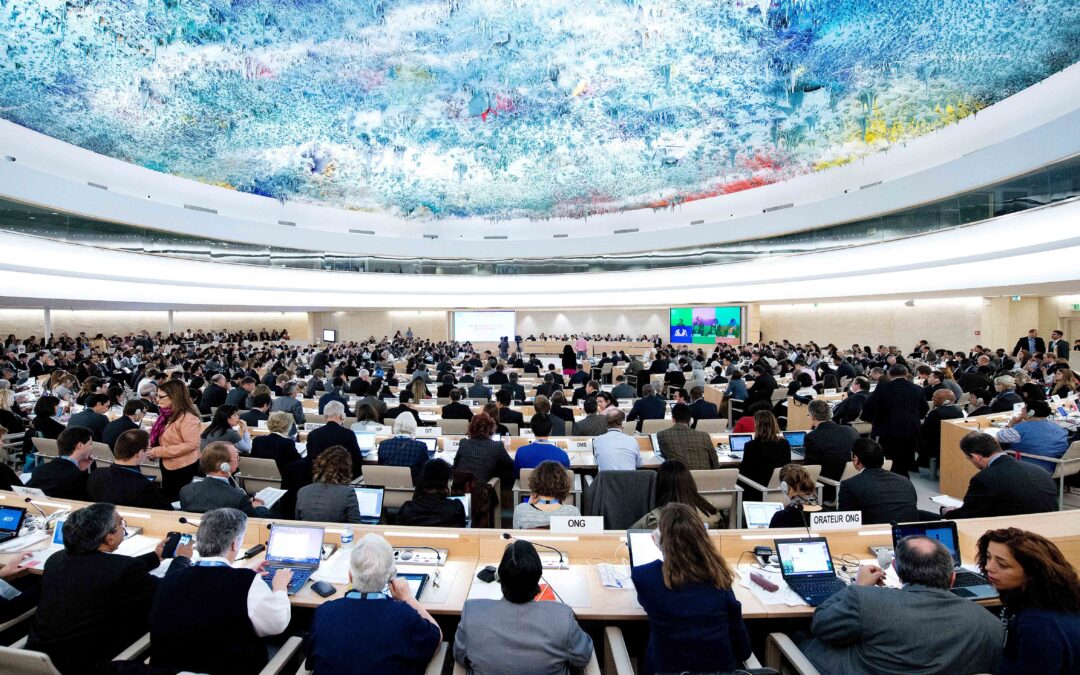
The ICJ has submitted a written statement to the Human Rights Council, on lack of progress in Nepal to end impunity.
The written statement, published by the United Nations today, notes that in 2012 the Government of Nepal adopted a plan to implement the recommendations made during its 2011 Universal Periodic Review (UPR) by the Human Rights Council.
However, Nepal has failed to take necessary measures to implement recommendations on ending impunity.
Key concerns include:
- the failure to implement recommendations for strengthening the National Human Rights Commission (NHRC),
- failure to draft constitutional provisions consistent with international legal principles on the protection of human rights, rule of law and the right to effective remedy,
- failure to establishment of credible transitional justice measures,
- failure to take the necessary practical steps in relation to individual cases, towards ending impunity
Nepal-WrittenStatement-HRC25-Advocacy-2014 (download PDF)

Mar 4, 2014 | Agendas, Events
This side event to the 25th Human Rights Council session will take place on Friday, 7 March 2014, 12.00 – 14.00 pm, in Geneva, Palais des Nations, Room XXI.
The panel, which includes family members of victims of enforced disappearance, will discuss unresolved cases of enforced disappearances in Southeast Asia, including human rights defenders Somchai Neelapaijit (Thailand) and Sombath Somphone (Laos).
The panel will also discuss the response of the ASEAN Intergovernmental Commission on Human Rights (AICHR), the regional human rights body composed of representatives from all ASEAN Member States, to these two cases and more generally to enforced disappearances of human rights defenders in the region.
Speakers:
Aileen Diez-Bacalso
Secretary General, Asian Federation Against Involuntary Disappearances (AFAD)
Angkhana Neelapaijit
Chairperson, Justice for Peace Foundation
Emerlynne Gil
International Commission of Jurists (ICJ), Southeast Asia
Chair/moderator:
Wilder Tayler
Secretary General, the International Commission of Jurists
The presentations by panelists will be followed by an open interaction with the audience. Copies of ICJ’s legal memorandum on the case of Sombath Somphone and the report Ten Years without Truth: Somchai Neelapaijit and enforced disappearances in Thailand will be available. Light refreshments will also be available immediately before the event.

Mar 4, 2014
An opinion piece by International Commission of Jurists’ International legal adviser for Southeast Asia Emerlynne Gil.
When the ASEAN Intergovernmental Commission on Human Rights (AICHR) meets in Jakarta this week, its urgent priority must be improving how it communicates and engages with civil society in Southeast Asia and responds to human rights issues.
ASEAN civil society, representing more than 500 million people from the region, has signaled its eagerness to harness the potential of the AICHR. But the Commission has been widely criticized as being “toothless” and lacking a clear mandate since its creation in 2009.
Human rights issues among its member states need to be prioritized and addressed.
While some member states, including Indonesia and the Philippines have shown a degree of willingness to address them, others have not been so forthcoming.
AICHR is the regional human rights body composed of government representatives from all ASEAN Member States.
At its last meeting (its 14th official meeting since its inception in 2009) the AICHR discussed a set of draft guidelines on its relations with civil society organizations, intended to improve the way the AICHR communicates and engages with civil society. But no deadline or target date has been set — or at least made public — for the finalization and adoption of these guidelines.
AICHR’s founding terms of reference failed to establish a formal procedure for engagement with civil society, and none was set up during AICHR’s initial meetings.
This is unacceptable.
Some commissioners met in their personal capacity with civil society organizations in their own countries because they understand the importance of engagement with civil society and the principles of participation and transparency.
But not all commissioners feel this way, and even those who do are constrained from expressing their views, lest they be criticized or even reprimanded by their colleagues.
Significantly, AICHR commissioners are not independent human rights experts. They are representatives of Member States, who have to answer to their respective State authorities.
The AICHR’s method of dealing with civil society too often reflects the system of patronage that is deep-rooted in many Southeast Asian countries.
The most favored groups; typically those who are not too critical of the AICHR, are given the privilege to take a peek into the workings of the AICHR and are invited to consultations and meetings.
These “favored ones”, in turn, hesitate to relay information to others or refrain from sounding too critical of the AICHR in order to maintain their position.
This creates divisions and hierarchies within the human rights movement in the region, which is regrettable and contrary to AICHR’s stated aim “to further contribute to the development of the ASEAN community post-2015”.
The failure to engage meaningfully with regional civil society has seriously hampered AICHR’s ability to provide institutional responses to key human rights issues in the region, including human rights crises in member states.
AICHR commissioners who are more open to engaging with civil society are criticized by their colleagues who see these responses as “unauthorized”.
The attempt of some commissioners to discuss key human rights issues in the region are often shot down by their less independent colleagues as “an interference in the internal affairs” of ASEAN States.
In January 2013, the International Commission of Jurists (ICJ), in a public statement, pointed out to the AICHR that it is within its Terms of Reference (ToR) to discuss the enforced disappearance of Sombath Somphone, a prominent social development advocate from Lao People’s Democratic Republic (PDR). The ICJ pointed to paragraph 4.11 of the ToR, under which the AICHR should “develop common approaches and positions on human rights matters of interest to the ASEAN”.
During a workshop held by the Working Group for an ASEAN Human Rights Mechanism held in Bangkok in June 2013, the ICJ reiterated to the AICHR commissioners that the enforced disappearance of Somphone and others must be discussed as a matter of urgency. Enforced disappearances constitute gross human rights violations and crimes under international law.
Ambassador Rosario Manalo, from the Philippines, replied that the commissioner from Lao PDR should respond to ICJ’s query. But the Lao PDR commissioner invoked the principle of non-interference, saying the Lao PDR government considered the issue as meddling in its internal affairs.
The issue of enforced disappearances should be a matter of vital importance to ASEAN Member States, including the Philippines, Thailand, and Indonesia, which have experienced a number of cases. Interestingly, the commissioners of these three countries were the ones most open to discussing in the AICHR the issue of enforced disappearances.
The AICHR must adopt formal guidelines for engagement with civil society that allows for open, transparent and meaningful engagement.
However, such guidelines alone will not be enough, as commissioners representing particular ASEAN Member State will likely shoot down any proposal to discuss important human rights issues by invoking the non-interference principle. This is contrary both to objects of the AICHR and the pledge made by all states as far back as the Vienna World Conference on Human Rights in 1993, when the universality and universal interest of human rights were affirmed.
Until all ASEAN member states make a firm commitment to addressing human rights issues, the AICHR will continue to attract criticism that it lacks credibility and the ability to effectively engage in addressing serious human rights issues in Southeast Asia.
Next year’s formation of the ASEAN Economic Community, which will formally integrate its nations, cannot be based solely on competitive economic, business and trade interests. The human rights of its citizens need to be maintained and civil society given a voice. Otherwise, the AEC will face serious international criticism.