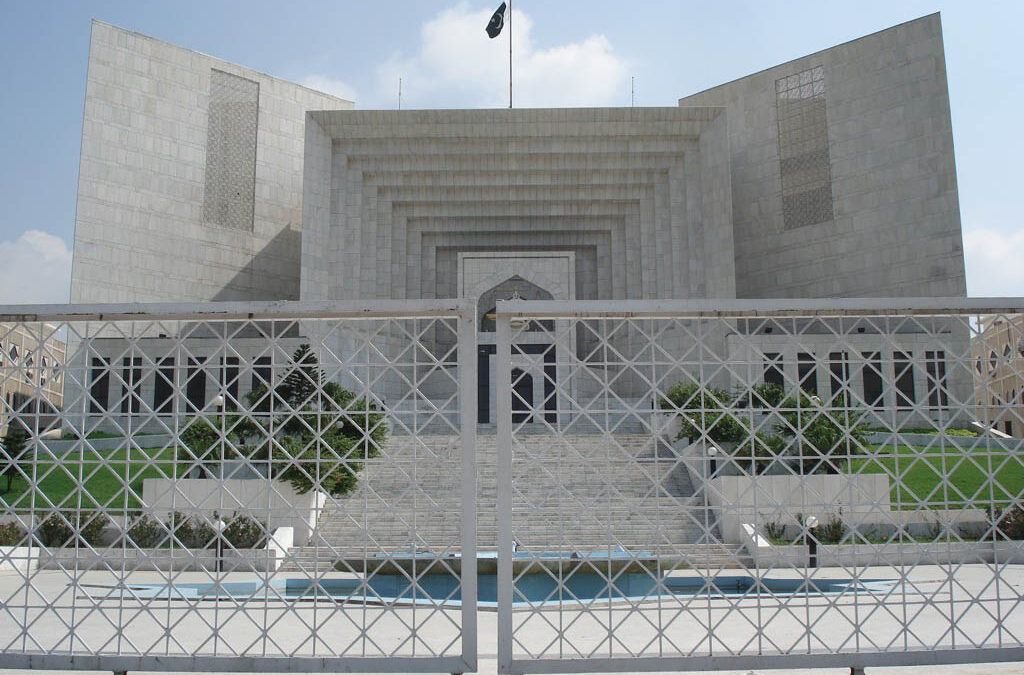
Justice for Pakistan’s ‘disappeared’

Justice for Pakistan’s ‘disappeared’

An opinion piece by Reema Omer, Legal Adviser for the ICJ.


The Attorney General of Pakistan recently informed the Supreme Court that over 500 persons reported to be ‘missing’ were in the custody of security agencies.

This revelation comes after security agencies had for years denied involvement in cases of enforced disappearances in the country.

Three years ago, Pakistan ratified the International Covenant on Civil and Political Rights (ICCPR), undertaking to safeguard the right to life and liberty, including freedom from arbitrary detention, of its people.

Coupled with a newly restored independent Supreme Court committed to defend human rights, many Pakistanis hoped the ratification would help improve Pakistan’s grave human rights situation.

But the expected improvements have not taken place – in fact, in some cases, the human rights situation has deteriorated. This remains true especially for enforced disappearances, which continue with complete impunity.

Time to take the necessary steps

It is now time for the Supreme Court to take the necessary steps to hold those state agencies (and agents) accountable that have subjected hundreds, if not thousands, of Pakistanis to enforced disappearance.

Under international law, enforced disappearance is the arrest, detention, abduction or any other form of deprivation of liberty by State agents or by persons or groups of persons acting with the authorization, support or acquiescence of the State, followed by a ‘refusal to acknowledge the deprivation of liberty or by concealment of the fate or whereabouts of the disappeared person, which place such a person outside the protection of the law.’

The UN General Assembly has repeatedly described enforced disappearance as ‘an offence to human dignity’ and a grave and flagrant violation of human rights and international law.’

Pakistan’s Supreme Court first assumed jurisdiction of enforced disappearances in December 2005 by taking suo motu notice of a news report. Chief Justice Chaudhry acknowledged evidence that many of the ‘disappeared’ were being held in security agencies’ custody and committed to ‘deliberate on the role of agencies and pass a detailed judgment’ at a later stage.

Seven years later, and following many more remarks on the culpability of security agencies, there are still no judgments, prosecutions, or convictions related to the multiple ‘missing persons’ petitions pending in the Supreme Court.

When questioned about the fate of ‘disappeared’ persons, security agencies either deny knowledge, or in blatant defiance of Court orders, resist releasing those found to be in their custody. A primary tool to facilitate enforced disappearance is the Actions (in Aid of Civil Powers) Regulations 2011 (FATA/PATA Regulations), a law that empowers the military to detain suspected militants indefinitely without presenting them before a court.

Suspects are often kept incommunicado, and denied access to family, legal counsel, and human rights groups.

The Supreme Court’s efforts to assume jurisdiction of human rights violations and trace ‘disappeared’ persons are commendable first steps towards combating impunity for enforced disappearances.

Pakistan’s obligations not met

However, these steps alone do not meet Pakistan’s human rights obligations under international law.

Under International law, States are obligated to prevent human rights violations, and undertake prompt, thorough, independent and impartial investigations where violations take place.

The United Nations Impunity Principles specifically require States to ensure ‘that those responsible for serious crimes under international law are prosecuted, tried and duly punished.’ Obligations under international law are binding on all branches of the State – including the judiciary.

Multiple factors allow impunity for enforced disappearances to continue such as a compromised criminal justice system, inadequate witness protection laws, and the absence of civilian oversight of the military.

The executive authorities must discharge their responsibility to conduct prompt, thorough and impartial investigations into allegations of enforced disappearance, with a view both to determining the fate and whereabouts of ‘missing persons’ and prosecuting those responsible.

The Supreme court can play a more effective role

Pakistan’s independent and assertive Supreme Court has done well to trace ‘missing persons’ and seek a comprehensive strategy on enforced disappearances from the Government.

However, it can play a more effective role in ensuring that ‘disappeared’ persons are either released or, if charged with a recognizable crime, receive a fair trial before an independent and impartial civilian court.

They can also ensure perpetrators for enforced disappearances are brought to account and that victims or their families are able to access a remedy and reparation for the human rights violations they have suffered.

First, the Supreme Court could invalidate sections of the FATA/PATA Regulations that are incompatible with Pakistan’s obligations under national and international human rights law.

Recently, the Court declared the Contempt of Court Act 2012, a law that sought to curtail the judiciary’s contempt powers, void in less than two months after it was passed by Parliament.

However, petitions challenging laws decried by human rights organizations for facilitating enforced disappearances have been pending in the Supreme Court for years with little progress.

Second, the Court could direct and supervise criminal investigations, as well as order institution of criminal proceedings against members of security agencies implicated in enforced disappearances.

The Supreme Court has frequently exercised this authority in corruption cases, but has so far not invoked this power effectively to address enforced disappearances and other violations carried out by agencies of the armed forces.

Third, the Supreme Court could use the wide range of contempt powers at its disposal to compel authorities to implement its orders.

In recent years, the Court has used these powers frequently against journalists, lawyers, and even former Prime Minister Gillani, resulting in his disqualification from office. Security agencies, however, have so far escaped such action despite their failure to follow directions of the Court in cases of enforced disappearances.

Source of hope

At a time when public trust in other State institutions is low, the Supreme Court still remains a source of hope for justice for the thousands of ‘disappeared’ persons and their families.

The Court has recognized the seriousness of the situation. However, it would do well to move beyond merely tracing ‘disappeared’ persons to recovering them and holding perpetrators accountable.

This will bring Pakistan closer to meeting its obligations under international law and be instrumental in combating impunity enjoyed by the security forces for their role in perpetrating human rights violations.



Vietnam: ICJ calls for release of human rights lawyer Le Quoc Quan after trial postponed indefinitely

Vietnam: ICJ calls for release of human rights lawyer Le Quoc Quan after trial postponed indefinitely

The ICJ today called for the immediate release of Le Quoc Quan, after the People’s Court of Hanoi announced on 8 July 2013 the postponement of his trial, without setting any new dates for the case. The reason given for the hastily informed adjournment was that the judge had suddenly taken ill.

The ICJ considers that Le Quoc Quan’s continued detention is in violation of Vietnam’s penal law and the State’s international legal obligations.

Le Quoc Quan, a lawyer and human rights defender, was arrested on 27 December 2012 and charged for tax evasion under article 161 of Vietnam’s 1999 Penal Code.

The postponement of the trial appears to signal that Le Quoc Quan will continue to remain in jail. Since his arrest last year, he has already been detained for more than six months.

“The continued detention of Le Quoc Quan is akin to him being punished even before the trial has commenced. This is a clear violation of his right to being presumed innocent,” said Andrew Khoo from the Malaysian Bar Council, an expert appointed by the ICJ, who had traveled to Hanoi to observe Le Quoc Quan’s trial.

On 29 December, two days after Le Quoc Quan’s arrest, his wife filed an application for bail to the police and procurator. She had also applied for release on his own recognizance. There are no specific detailed procedures spelled out in law governing bail procedures. Under article 92 of the Criminal Procedure Code, only family members are permitted to act as guarantors. To date, neither the police nor the procurator have replied to her applications.

Under article 9 of the International Covenant on Civil and Political Rights (ICCPR), to which Vietnam is a party, it should not be the general rule that persons are detained while awaiting trial, and release pending trial may only be subject to conditions to ensure appearance at the trial.

“There is no reason to believe that if released Le Quoc Quan would not appear for trial, and in any event his family has made representations to act as guarantors”, said Emerlynne Gil, the ICJ’s International Legal Adviser on Southeast Asia, who was also in Hanoi to observe the trial. “The People’s Court of Hanoi must order Le Quoc Quan’s release either on bail or his own recognizance.”

The ICJ notes that the postponement also violates Le Quoc Quan’s right to a speedy trial. Under international law, including ICCPR article 14, an accused has the right to be tried without undue delay and within a reasonable period of time. This prevents any unnecessary continuing deprivation of liberty and ensures that the interest of justice is properly served.

“We would expect that the People’s Court of Hanoi will notify promptly the public of the next date of Le Quac Quan’s trial and ensure that his right to a fair and public trial is upheld,” said Emerlynne Gil.

The ICJ looks forward to returning to Vietnam to continue monitoring this case and ensuring that the rights of Le Quoc Quan, including his right to liberty and to a fair trial, are fully respected and protected.

CONTACT:

Ms. Emerlynne Gil, International Legal Adviser for Southeast Asia, tel. no. +662 6198477; email: emerlynne.gil(a)icj.org


Pakistan: renew the official moratorium on the death penalty

Pakistan: renew the official moratorium on the death penalty

The Government of Pakistan should renew the official moratorium on the death penalty, with a view to definitively abolishing the practice in law, says the ICJ.

The Government signaled its intention to resume executions on Thursday, 4 July 2013 when it failed to renew a 2008 Presidential order imposing a moratorium on executions. It is estimated that approximately 8000 people are currently on death row in Pakistan.

“Resuming executions would be a major step backwards for Pakistan in protecting human rights,” says Sheila Varadan, ICJ Legal Advisor for South Asia. “The prospect of lifting the moratorium is all the more alarming given the extraordinarily high number of people on death row.”

The announcement apparently comes as part of the newly elected Government’s strategy to tackle high levels of crime and insecurity in Pakistan.

The ICJ condemns the death penalty as a violation of the right to life and a form of cruel and inhuman punishment. Moreover, it is widely accepted that the practice cannot serve as a deterrent to crime or be administrated without error or discrimination.

More than 150 of the 192 United Nations members States have either abolished the death penalty or imposed a moratorium on its practice.

In December 2012, the United Nations General Assembly adopted its fourth resolution calling on all States retaining the death to place a moratorium on the practice with a view towards abolition.

Of the 186 member States present, 111 member States voting in favour and only 41 member States against, an increase from the previous three resolutions.

“Pakistan is part of a dwindling minority of States who continue to retain the death penalty and carry out executions,” Varadan. “The ICJ urges the newly elected Government of Pakistan to demonstrate its commitment to upholding human rights and to desist from licensing the State deliberately to take the life any person in its custody.”

CONTACT:

Sheila Varadan, ICJ Legal Advisor, South Asia Programme (Bangkok), t: +66 857200723; email: sheila.varadan(a)icj.org


Pakistan: assassination attempt on High Court judge is assault on rule of law

Pakistan: assassination attempt on High Court judge is assault on rule of law

The ICJ condemns the attempted assassination of Justice Maqbool Baqir, a judge of the Sindh High Court, who also sits on the anti-terrorism court in Karachi, Pakistan.

A bomb blast injured Justice Maqbool Baqir and thirteen others and killed at least nine people.

“This is the second bombing targeting the Pakistani judiciary in under six months. The ICJ is extremely concerned that these attacks signal a renewed challenge to the ability of the Pakistani judiciary to function as an independent institution,” said Sheila Varadan, ICJ’s South Asia Legal Advisor.

According to local media sources, the Tehreek-e-Taliban Pakistan (TTP), an armed group operating in northwestern Pakistan, has claimed responsibility for the bombing, admitting that it specifically targeted Justice Maqbool Baqir for his ‘anti-shariah’ judgments and ‘ruling against the mujahideen’.

“Any physical attack on a judge constitutes a serious threat to the rule of law and the independence of the judiciary. If the TTP or another armed group is deliberately targeting judges, it could constitute a crime under international law,” Varadan added.

Under international standards, including the United Nations Basic Principles on the Independence of Judges, Pakistan is responsible for taking measures to ensure the protection of members of the judiciary from acts of violence or other threats to their safety.

Earlier in March 2013, the ICJ condemned the suicide bombing inside a Peshawar courthouse killing four people and injuring thirty others.

CONTACT:

Sheila Varadan, ICJ Legal Advisor, South Asia Programme (Bangkok), t: +66 857200723; email: sheila.varadan(a)icj.org


Translate »