Jun 28, 2018 | News
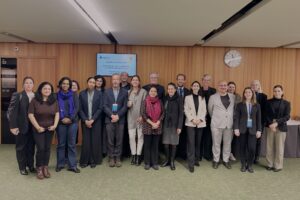
On 24-25 June, ICJ Commissioners from the Latin America region came together in Bogotá, Colombia, to consider and enhance ICJ strategies to combat past and resurging trends in extrajudicial executions and enforced disappearances in the region.
The meeting was the first of its kind to bring together ICJ Commissioners on a regional basis: Carlos Ayala (Venezuela); Miguel Carbonell (Mexico); Gustavo Gallón (Colombia); Roberto Garretón (Chile); Juan Mendez (Argentina); Victor Rodriguez Rescia (Costa Rica); Alejandro Salinas Rivera (Chile); Mónica Pinto (Argentina); Belisário dos Santos Júnior (Brazil); and Wilder Tayler (Uruguay).
The meeting was followed by a preparatory mission (involving two Commissioners and the ICJ’s legal representative in Colombia) on the transitional justice mechanisms envisaged under the Havana Agreement, with a particular emphasis on the jurisdiction and operation of the ‘Special Jurisdiction for Peace’. A full high-level mission will follow in September, at which time the ICJ intends to identify minimum benchmarks for the effective operation and sustainable impact of those mechanisms.
In all regions of the world, recourse to enforced disappearances and extrajudicial killings continues; victims and their families (the overwhelming majority of whom are women, children and indigenous peoples from rural areas dominated by poverty and social and political exclusion, as well as trade unionists and human rights defenders) struggle to obtain prompt and effective remedies and reparation; and perpetrators enjoy impunity through inadequate or improper laws, ineffective institutional frameworks, selective recourse to accountability mechanisms and/or political interference in the functioning of those mechanisms.
The meeting confirmed that these challenges are particularly evident in Latin America, where there has been a resurgence in recourse to enforced disappearances and extrajudicial killings in countries throughout the region and where violations of the past have in very many cases been inadequately addressed. By way of example:
- In Brazil, official statistics from 2016 attest to the occurrence of 62,000 violent deaths and potentially up to 22,000 enforced disappearances each year.
- 45 years after the coup d’état in Chile, about 800 people have been convicted and sentenced to imprisonment, but those figures belie the extensive occurrence and levels of responsibility for gross violations of human rights that occurred.
- In Colombia, more than 70,000 cases of enforced disappearance were documented by the Attorney General for the period 1970-2015 and there is general consensus that the number of missing persons likely exceeds 100,000. The wide and persistent extent of extrajudicial killings has been noted by UN and Inter-American experts and bodies as well as the Office of the Prosecutor of the International Criminal Court.
- In Guatemala, only 34 convictions for conduct involving conflict-era violations have been secured, despite the fact that the internal armed conflict of 1960-1996 involved massive and systematic human rights violations. Impunity has undermined redress and accountability and severely weakened the prevention of violations, with the National Civil Police having recorded more than 25,000 people ‘disappeared’ in 2003-2014, more than half of which were women.
- Peru’s internal armed conflict of 1980-2000 resulted in more than 69,000 people killed and ‘disappeared’, but less than 100 convictions have been secured under the judicial subsystem established in 2004 that specializes in accountability for gross human rights violations.
- In Venezuela, civil society reports at least 12,000 real or perceived political opponents having been arbitrarily detained between January 2014 and April 2018; and almost 6,000 alleged extrajudicial killings between 2012 and 2016.
In all the countries from which the Commissioners originate, several common factors were identified:
- The intrinsic risks to continuation of and lack of redress and accountability for gross human rights violations posed by executive action that undermines the rule of law;
- Also inherent to the rule of law, the critical need for independent and impartial judicial mechanisms and individual judges and lawyers to allow for transitional justice, in particular for victims and their families to access effective remedies and reparation and for the holding to account of perpetrators;
- A high level of correspondence between impunity for gross human rights violations and the corruption of public officials;
- The increased, and in some cases extensive, recourse to arbitrary and detention, which in many cases precede and allow for the occurrence of extrajudicial executions and enforced disappearances;
- A similar inter-relationship between enforced disappearances and the occurrence of torture and other forms of ill-treatment;
- The detrimental impact to ensuring accountability for violations of the past when omitting non-State and paramilitary actors from transitional justice processes; and
- The increase in highly conservative (political and popular) sentiments and movements within the region and the corresponding need to tailor responses depending on the democratic versus autocratic nature of government and its institutions.
Noting that the ICJ has long sought to combat extrajudicial executions and enforced disappearances, including through the development of UN and regional instruments and standards and through its action in Latin America and the globe, the ICJ’s Commissioners urged the ICJ to continue and expand its engagement. Noting also the increasing call by local civil society actors for support and intervention by the ICJ, the meeting considered the organization’s role in seeking redress and accountability for, and prevention of, gross violations of human rights.
Commissioners reinforced, and commented on the effective parameters of, the ICJ’s strategic and victim-centred approach to address and prevent gross human rights violations, including extrajudicial executions and enforced disappearances. Having regard to the ICJ’s mandate and worldwide network of judges and lawyers, Commissioners emphasized the unique role that the organization has by grounding its work on the transformative role of the law, justice institutions and justice actors.
The particular means by which this role can be achieved by the ICJ were discussed against the background of recent and planned activities in the region and beyond. Commissioners overwhelmingly supported these plans and the Secretariat is now poised to continue implementation of its strategies in its current programmes of work and in the development of future projects.
Jun 24, 2018 | News
“Judges from the High Risk Tribunals in Guatemala, including Ericka Aifán, Yassmín Barrios, Miguel Ángel Gálvez and Pablo Xitumul, are facing unjustified disciplinary hearings,” nine Latin American Commissioners from the ICJ, meeting in Bogotá on 24 June, stated today.
The Commissioners understand that these judges are facing unjustified disciplinary hearings instigated by groups or persons who are displeased with judicial rulings in high-impact cases involving transitional justice or corruption.
They expressed serious concern about the precarious state of the independence of the judiciary in Guatemala. Judges are subjected to on-going attacks that seek to impact their work as honourable and impartial justice operators.
According to international standards, judges should exercise their functions free of any extraneous influence and with total impartiality; without any limitations, inducements, pressures, threats or interference, direct or indirect, from any quarter or any reason.
The Commissioners also expressed their complete support for Commissioner Iván Velásquez, head of the International Commission against Impunity in Guatemala (CICIG), who because of the exercise of his functions, has also suffered from a series of hostile acts and smear campaigns.
The ICJ Commissioners extend their full support to the CICIG in its struggle against impunity and corruption.
The Commissioners request that the international community continues to support the CICIG with sufficient human and financial resources.
At the same time, the Commissioners call upon the Inter-American Commission of Human Rights, the Sub-Committee of Human Rights of the European Parliament and the UN Special Rapporteur on the Independence of Judges and Lawyers, to visit Guatemala and to verify “in situ” the precarious state of judicial independence in the country.
The nine ICJ commissioners who issued the statement
Carlos Ayala, Vice-President of the International Commission of Jurists (Venezuela)
Mónica Pinto, Commissioner (Argentina)
Miguel Carbonnel, Commissioner (Mexico)
Victor Rodriguez Rescia Commissioner (Costa Rica)
Wilder Tayler, Commissioner (Uruguay)
Belisário dos Santos, Commissioner Brazil
Juan Mendez, Commissioner (Argentina)
Roberto Garretón, Commissioner (Chile)
Jun 24, 2018 | Artículos, Noticias
Las y los comisionados de la CIJ en América Latina se reunieron recientemente en Bogotá y firmaron la siguiente declaración conjunta.
Las y los comisionados firmantes de la Comisión Internacional de Juristas, expresamos:
- Nuestra profunda preocupación por la delicada situación de la Independencia Judicial en Guatemala. Tenemos conocimiento que varios jueces y juezas se encuentran bajo hostigamiento y presiones del régimen disciplinario, usados indebidamente por grupos y personas descontentas con las decisiones judiciales en casos de alto impacto. En efecto, Jueces y Juezas de los Tribunales de Mayor Riesgo como Ericka Aifán, Yassmín Barrios, Miguel Ángel Gálvez y Pablo Xitumul y otros han sufrido una serie de denuncias infundadas ante los órganos disciplinarios.
- La compleja función que cumplen los jueces y juezas en el contexto actual en Guatemala, hace evidente que son objeto de ataques que buscan afectar su función como operadores de justicia honestos e imparciales. Según los estándares internacionales, la exigencia de responsabilidad de un Juez o Jueza, no ampara atentados contra la independencia judicial. Además, dichos estándares establecen que al llevar a cabo sus funciones, las y los jueces deben poder hacerlo libres de cualquier influencia y con total imparcialidad; sin ninguna restricción, incitación, presión, amenaza, ni injerencia, directa o indirecta, de cualquier origen o por cualquier motivo que sea.
- Asímismo, expresamos nuestro total apoyo al comisionado Iván Velásquez, Representante de la Comisión Internacional contra la Impunidad (CICIG), quien debido al cumplimiento de sus funciones, también viene sufriendo una serie de actuaciones y campañas de difamación. Asímismo, apoyamos a la CICIG, por la función que cumple en la lucha contra la impunidad y corrupción.
Ante todo ello, solicitamos a la Comunidad Internacional que sigan apoyando a la CICIG con suficientes recursos humanos y financieros; además, hacemos un llamado a la Comisión Interamericana de Derechos Humanos, al Sub Comité de Derechos Humanos del Parlamento Europeo y al Relator de las Naciones Unidas sobre la Independencia de Jueces y Abogados, para que visiten el país y puedan verificar “in situ”, la delicada situación de la independencia judicial en Guatemala.
Carlos Ayala, Vicepresidente de la Comisión Internacional de Juristas (Venezuela)
Mónica Pinto, Comisionada (Argentina)
Miguel Carbonnel, Comisionado (México)
Víctor Rodríguez Rescia, Comisionado (Costa Rica)
Wilder Tayler, Comisionado (Uruguay)
Belisário Dos Santos, Comisionado (Brasil)
Juan Méndez, Comisionado (Argentina)
Aejandro Salinas Rivera, Comisionado (Chile)
Roberto Garretón, Comisionado (Chile)

Jun 22, 2018 | News
Conclusions of the Conference on Judicial Independence, Guatemala City, 18-19 June 2018
The ICJ is deeply concerned about the increase in the abuse of disciplinary measures against independent and impartial judges and about crimes committed against human rights defenders. These attacks are putting the rule of law at risk in Guatemala.
The ICJ therefore urges the Inter-American Commission on Human Rights, the Subcommittee on Human Rights of the European Parliament and the UN Special Rapporteur on the Independence of Judges and Lawyers to carry out visits to the country so as to verify the situation.
Judges facing malicious disciplinary proceedings
From 18-19 June 2018, the ICJ hosted a conference on the independence of judges with participants from different Central American judges’ associations.
The conference was able to verify that impartial and honourable judges face on-going disciplinary actions that seek to have then recused from trials or have them removed from office on account of their judicial decisions.
Judges are facing the malicious use of the judicial disciplinary system by groups or persons who disapprove of judicial rulings in high-impact cases.
The meeting was an opportunity for different justice sector institutions and judges, victims of attacks, to analyse fundamental concepts and international standards on the judiciary.
The conference concluded, the judicial career system must guarantee that a higher judicial authority can only sanction judges for legally established reasons as set down by international standards.
There was a full agenda of discussions with the participation of the Association of Guatemala Judges for Integrity (AGJI), the President of the Supreme Electoral Tribunal, the Supervisor General of Courts, judges from the Penal Chamber of the Supreme Court, the Commissioner of the International Commission against Impunity in Guatemala (CICIG) and the plenary of the Council of the Judicial Career.
The conference examined attacks against judges and their impact, case by case, in the light of international standards. The conference concluded that judges including Ericka Aifán, Yassmín Barrios, Miguel Ángel Gálvez, Carlos Ruano and Pablo Xitumul are facing disciplinary measures because they have acted independently and impartially.
The spurious complaints presented against them before the judicial disciplinary system or other State institutions should be excluded “in limine”.
Read the full Article in English (PDF): Guatemala-Conference-of-Judges-News-Web-stories-June-2018-ENG

Jun 18, 2018 | Artículos, Noticias
Jueces de Centroamérica, conjuntamente con la CIJ inician Jornadas sobre Independencia Judicial en Guatemala.
Con el objeto de llevar a cabo diferentes reuniones en el contexto de las Jornadas sobre Independencia Judicial en Guatemala, la Jueza de Paz en la ciudad de El Progreso, Departamento de Yoro y Presidenta de la Asociación de Jueces por la Democracia de Honduras; la Jueza de lo Contencioso Administrativo y Presidenta de la Asociación Costarricense de la Judicatura (ACOJUD); el Magistrado de la Cámara Penal de Santa Ana y Primer Vocal de la Junta Directiva del Foro De Jueces Democráticos de El Salvador y el Coordinador de la Oficina Técnica de la Asociacion de Jueces por la Democracia de Honduras, con el apoyo de la CIJ, realizarán una visita a Guatemala los días 18 y 19 de junio.
En el transcurso de su visita, se reunirán con diferentes funcionarios del Poder Judicial y analizarán la situación que se está presentando en Guatemala de ataques contra la Independencia del Poder Judicial y de jueces y juezas independientes y honestas como Ericka Aifán, Yassmín Barrios, Miguel Ángel Gálvez y Pablo Xitumul, entre otros.
Además, analizarán la situación de la Independencia Judicial en la región centroamericana.
La oportunidad será propicia para llevar a cabo dos conversatorios con jueces del Poder Judicial los días 18 y 19 de junio, para poder analizar in situ las acciones que se están presentando en contra de estos jueces y que contravienen los principios básicos y estándares internacionales.
Al final de su visita, darán a conocer las conclusiones generales a las que han llegado y las propuestas que consideran podrían aliviar en parte esta situación.