Feb 16, 2018 | News
The ICJ strongly condemns the attack against the Deputy Prosecutor for Human Rights, Sonia Elizabeth Montes Valenzuela, carried out on 15 February by unknown gunmen in the central Zone 1 of Guatemala City.
Sonia Montes was on her way to work at the Public Prosecutors Office when two gunmen on motorbikes drove past and fired six bullets into the car.
Fortunately both Sonia Montes and her driver, Néstor Valdes Antonio, were unharmed.
“This is a vile attack against the justice system in Guatemala and the whole human rights movement in the country. These types of attacks seek to destabilize democracy and the rule of law,” Ramón Cadena, the ICJ Director stated.
“We call on President Jimmy Morales to carry out a full and impartial investigation in order to identify the material and moral authors of these acts,” he added.
The ICJ also expresses its solidarity with the families of the victims of the attack and with the Attorney General, Thelma Aldana, and the Commissioner of the International Commission against Impunity (CICIG), Iván Velásquez.
The Public Prosecutors’ Office and the CICIG are working tirelessly to investigate crimes and to end impunity and corruption in Guatemala.
Feb 9, 2018 | Artículos, Noticias
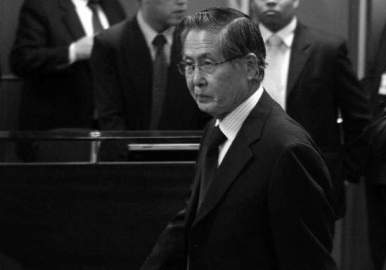
Hoy la CIJ y varias otras organizaciones presentaron un amicus curiae a la Corte Interamericana de Derechos Humanos (Corte IDH) en el contexto del proceso de supervisión de cumplimiento de las sentencias dictadas en los casos Barrios Altos y La Cantuta.
Esta supervisión se solicitó a causa de la Resolución Suprema N° 281-2017-JUS del 24 de diciembre de 2017, que concede al ex presidente Alberto Fujimori “el indulto y derecho de gracia por razones humanitarias”.
El indulto otorgado tiene como efecto que el ex mandatario se encuentre actualmente en libertad, a pesar de haber sido condenado a 25 años de prisión por la comisión de graves violaciones de derechos humanos, creando asi un incentivo a la impunidad en el país.
El amicus curiae sostiene que el indulto, tal como ha sido otorgado, es contrario a obligaciones internacionales asumidas por el Perú y, en concreto, desacata lo establecido por la Corte IDH en las sentencias de los casos Barrios Altos y La Cantuta.
El escrito plantea que la potestad presidencial para conferir indultos en el Perú debe ser ejercida en el marco de un Estado Constitucional y Democrático de Derecho.
Si bien el indulto es una atribución presidencial discrecional, ésta no debe ser ejercida arbitrariamente. Se trata de una institución que tiene límites y que debe ejercerse de manera excepcional, siguiendo las normas internas sobre la materia.
El indulto no procede en casos de graves violaciones a los derechos humanos o crímenes de lesa humanidad, como lo son Barrios Altos y La Cantuta.
Los términos en que fue concedido incumple la garantía de necesidad frente a otras medidas que pudiesen preservar la dignidad y la salud del señor Fujimori.
Amiciconcluye que el indulto y gracia otorgados a Alberto Fujimori son contrarios a las obligaciones internacionales en materia de derechos humanos asumidas por el Perú. Se pide a la Corte Interamericana ordenar al Estado dejar sin efectos la Resolución Suprema N° 281-2017-JUS.
Las otras organizaciones que presentaron el amicus curiae con la CIJ son Abogados sin Fronteras, la Clínica de Derechos Humanos de la Universidad de Ottawa, la Clínica de Derechos Humanos de la Universidad de Quebec en Montreal, la Fundación para el Debido Proceso, y el Instituto de Democracia y Derechos Humanos de la Pontificia Universidad Católica del Perú (IDEHPUCP).
Peru-Amicus Curiae CorteIDH Casos Barrios Altos y La Cantuta-Advocacy-Legal submission-2018-SPA (Amicus Curiae en PDF)
Jan 18, 2018 | Artículos, Noticias
La CIJ está hondamente preocupada por los últimos actos del poder ejecutivo y del Congreso de la República, que atentan contra la vigencia del estado de derecho y de los derechos humanos en Guatemala.
“Las autoridades del Estado de Guatemala al más alto nivel están implementando una política exterior fundamentada en una errónea interpretación de la soberanía nacional y en el absoluto desprecio por el derecho internacional de los derechos humanos, todo ello para defender los intereses personales de funcionarios de los tres poderes del Estado y así hacer prevalecer el sistema de impunidad que ha existido en el país, en las últimas décadas. Todo ello es parte del Pacto de Corrupción e Impunidad que existe en el país y que proviene de las autoridades al más alto nivel.”, declaró Ramón Cadena, Director de la CIJ para Centro América.
Por ende, y con fundamento en la Convención Interamericana contra la Corrupción y la Convención Americana sobre Derechos Humanos, la CIJ hace un llamado a la Comisión Interamericana de Derechos Humanos para que envíe una misión al país, con el mandato de investigar la existencia de este Pacto de Corrupción e Impunidad y evitar así, que avance y cause un grave daño irreparable a la democracia y al pueblo de Guatemala.
Asímismo, con fundamento en la Convención de Naciones Unidas contra la Corrupción, urge a la Representante Residente del Sistema de Naciones Unidas, a tomar las medidas adecuadas para evitar que continúe avanzando dicho pacto.
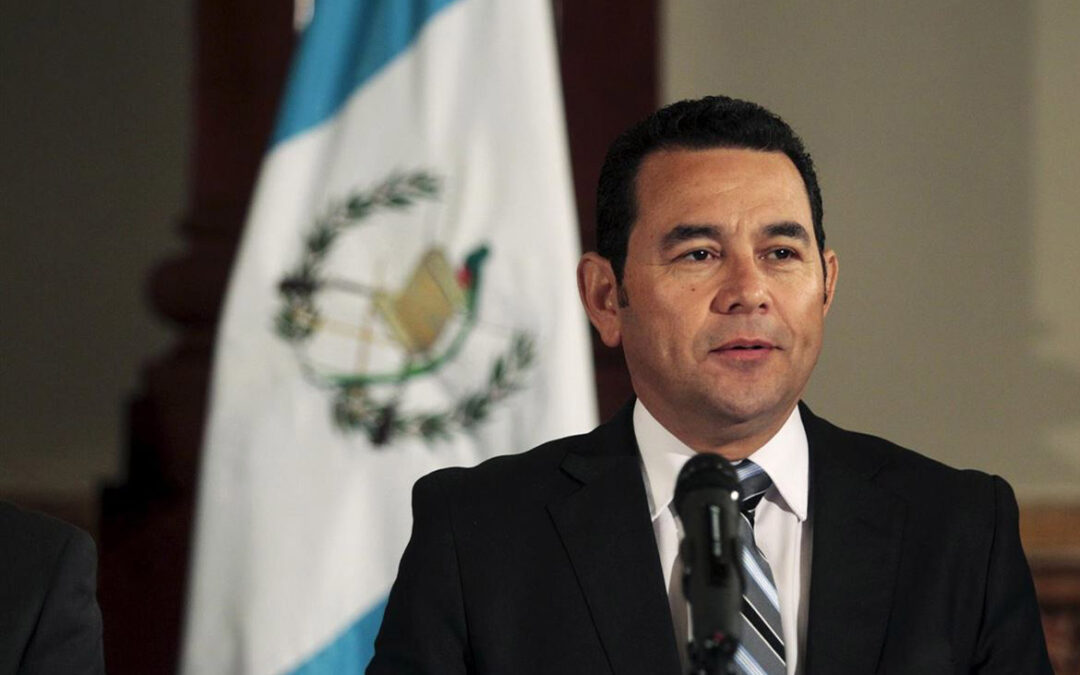
El Presidente Jimmy Morales (foto) declaró sin ningún fundamento, persona non grata al Comisionado de la Comisión Internacional contra la Impunidad en Guatemala (CICIG), Sr. Iván Velásquez; posteriormente, diputados y diputadas del Congreso de la República intentaron reformar el Código Penal; recientemente, el Superintendente de la Secretaría de Administración Tributaria (SAT) fue removido de su cargo; se han registrado intentos de destituir ilegalmente al Procurador de los Derechos Humanos por parte del Congreso de la República, ya que dicho funcionario ha cumplido con su mandato según la ley; el Presidente de la República está intentando modificar el mandato de la CICIG y/o expulsar al Comisionado Iván Velásquez del país. Estos gravísimos hechos demuestran que las autoridades del Estado de Guatemala, pretenden menoscabar el funcionamiento de la administración pública y promover la impunidad de sus actos.
Por medio de la negociación de la paz y con fundamento en el derecho humano a la paz, el Estado de Guatemala asumió el compromiso de reformar, fortalecer y modernizar la gestión pública, en procura de un manejo transparente y honrado en el uso de los recursos públicos, como condición para lograr que la administración pública tenga la capacidad de cumplir con el supremo deber impuesto al Estado de Guatemala por la Constitución Política, de garantizar a los habitantes del país el bien común.
La CIJ recuerda que es un principio aceptado nacional e internacionalmente, que le está prohibido a las autoridades en cualquier nivel, utilizar el poder que le confiere el ejercicio del cargo o empleo en las entidades del Estado, autónomas o descentralizadas, de participar o influir en la toma de decisiones en beneficio personal o de tercero. Hacerlo atenta en contra de la democracia y del estado de derecho.
El abuso de poder en el ejercicio de la función pública socava las bases del estado de derecho y constituye un acto ilícito, contrario a la Constitución, que debe ser investigado y castigado por las autoridades de justicia con prontitud.
De lo contrario, si no se toman ahora las medidas legales adecuadas, para detener la imposición del Pacto de Corrupción e Impunidad que las autoridades al más alto nivel vienen impulsando, las consecuencias pueden llegar a ser de una magnitud y consecuencias irreparables, causando graves daños a la población guatemalteca y al estado de derecho en Guatemala.
Dec 20, 2017 | News
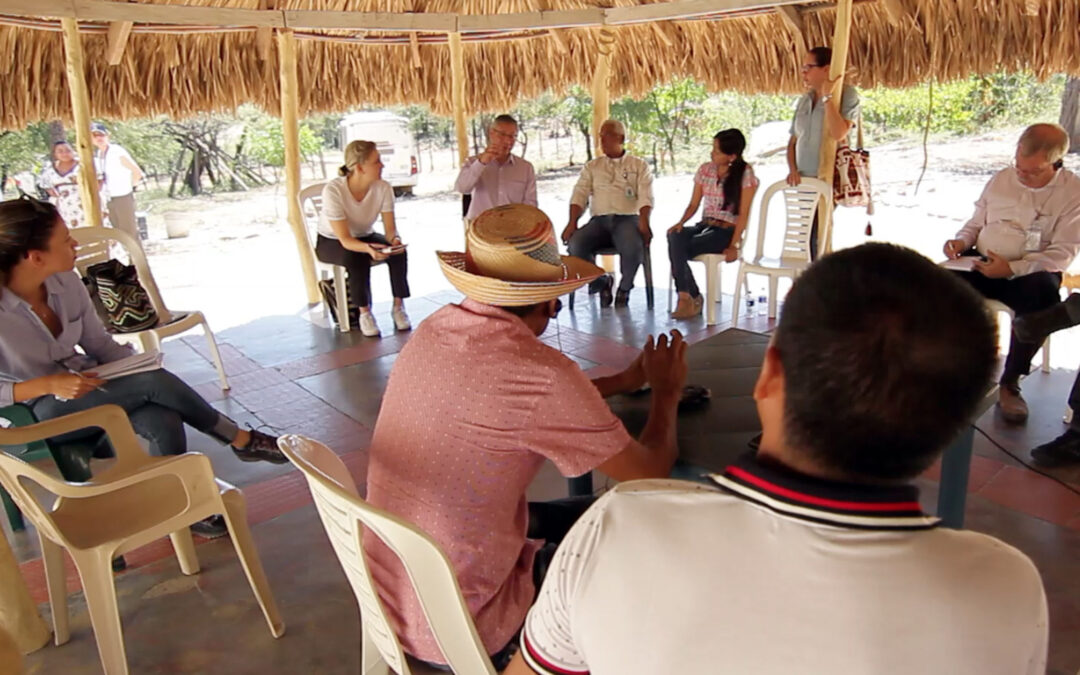
From 9-13 December, a delegation from the ICJ visited the company Carbones del Cerrejón LLC (El Cerrejón) to analyse the operation and effectiveness of its grievance mechanism.
The company, owned by Glencore plc, Anglo American and BHP Billiton, is located in the department of La Guajira, Colombia. The visit took place within the framework of the ICJ’s initiative on the effectiveness of grievance mechanisms established by companies to remedy negative impacts and human rights abuses.
The ICJ appreciated the collaboration of the Institute of Studies for Development and Peace (INDEPAZ) in the organization and facilitation of the visit.
It also acknowledges and thanks the company Carbones del Cerrejón for the welcome and all the facilities provided to the mission as well as the information shared with the delegation.
The ICJ also thanks the communities of Afro-descendants, peasants and indigenous Wayuu who welcomed and spoke with it.
This statement contains preliminary views and recommendations from the delegation regarding the company’s grievance system and the context in which it operates.
Subsequently, the ICJ will prepare a full report and will use this evaluation in the context of a general evaluation and recommendations on operational level grievance mechanisms.
The objective of the mission was to learn about and analyse the operation of the grievance mechanism established by the company and to evaluate in a preliminary way its effectiveness.
Cerrejón is one of the companies in the coal mining sector that started the process of establishing grievance and / or complaint mechanisms early.
Between 2009 and 2011 it was part of five pilot projects carried out by a team of the Special Representative of the UN Secretary General on business and human rights.
Contextualize the mechanism: Coal mining in La Guajira
La Guajira – province of Colombia on the border with Venezuela – besides its natural beauty and the friendliness of its people surprises visitors by the sharp contrast it presents between the great wealth generated by the extraction of coal and the poverty prevalent among its population.
The majority percentage of the population of La Guajira is made up of indigenous Wayuu populations and Afro-descendant communities, who generally live in poverty.
There is a lack of water and of employment opportunities or economic activities that are not linked to the operations of El Cerrejón, which accentuates the apparent dependence of the regional economy on the extractive activity of coal and raises doubts and questions about sustainability of the regional economy sitting on these bases in the short, medium and long term.
The information received by the delegation of the ICJ points to corruption as one of the main factors that influence and determine the lack of better health and education services, infrastructure and economic investment in the region by the State.
Corruption is more visible among the political class. Senior officials of the regional government were or are currently being prosecuted for corruption and murder.
La Guajira has had eight different governors in five years, which is a destabilizing and paralyzing factor in a highly centralized political system of government.
In this context, although considerable efforts are made by various actors, including El Cerrejón, distrust among the population is significant.
El Cerrejón, which operates in La Guajira, is one of the largest open-pit coal mining operations in the world and has an integrated operation that includes the extraction of coal, its transport by private railroad to Puerto Bolivar (150 kilometers away) and its cargo and transportation to consumer countries.
About 40 percent of the coal exported by Colombia goes to European markets. El Cerrejón is presented as an example of responsible mining both in the Colombian coal mining region and in the world and it has recently developed a series of social responsibility policies, including a due diligence process in the field of human rights.
The ICJ was informed that the experience and lessons learned from the grievance mechanism have influenced the design of these policies.
Colombia-Cerrejon-grievance-assessment-News-2018-ENG (Full text in PDF)
Watch the video (in Spanish):
Dec 20, 2017 | Artículos, Noticias
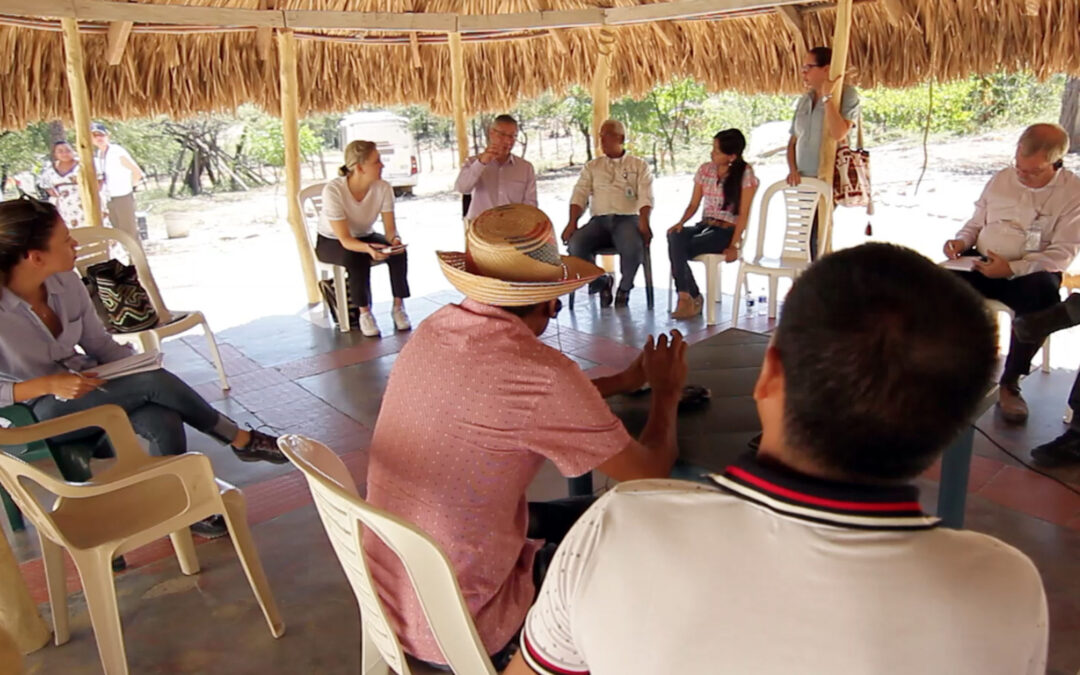
Entre el 9 y el 13 de diciembre, una delegación de la CIJ visitó el departamento de La Guajira para analizar el funcionamiento y eficacia del mecanismo de quejas de la empresa Carbones del Cerrejón LLC (El Cerrejón), propiedad de Glencore plc, Anglo American y BHP Billiton.
La visita se realizó en el marco de la iniciativa de la CIJ sobre la eficacia de mecanismos de reclamación establecidos por empresas para remediar impactos negativos y abusos de derechos humanos.
Los miembros de la delegación eran: Comisionado de la CIJ Marco Sassoli, accompañado con Sr. Carlos Lopez, Asesor Legal Senior de la CIJ, y Sra Laura Knopfel, Investigadora.
El texto de la declaración: Declaracion final
Ver la video: